
Are Bamboo Sheets Good for Eczema and Sensitive Skin?
When eczema keeps you or your child awake at night, the fabric touching your skin matters. The wrong sheets can trigger flare-ups overnight, turning manageable patches into raw, inflamed skin by morning.
Bamboo bedsheets are known for their smooth texture, cooling feel, and ability to wick away moisture.
These features can help with three things that often trigger nighttime scratching: friction on broken skin, heat that causes sweating, and sweat that stings inflamed areas. Bamboo sheets won’t treat eczema, but they can help cut down on common bedding triggers—like rough texture and trapped heat—that often make night-time itching worse.
This guide covers how bamboo works for sensitive skin, what to look for when you’re shopping, and how it stacks up against cotton, silk, and other options. You’ll also learn how to care for bamboo sheets and what to expect realistically.
Disclosure: As an Amazon Associate I earn from qualifying purchases at no extra cost to you.
Best Sheet Materials for Eczema & Sensitive Skin (Quick Comparison Guide)
| Material | Feel / Friction | Heat | Sweat | Easy Care | Best For | Watch-outs |
|---|---|---|---|---|---|---|
| Bamboo (viscose/rayon) | Smooth | Cool | Often better | Medium | Soft, drapey feel; common pick for heat + roughness sensitivity. | Quality varies; pilling/blends happen; gentle washing needed. |
| Bamboo (lyocell) | Very smooth | Cool | Often better | Medium | Similar comfort to bamboo viscose with a more “premium” finish. | Less available; can cost more; still avoid high heat. |
| TENCEL™ lyocell | Very smooth | Cool | Often better | Medium | Consistent, silky feel without heavy warmth. | Higher price; care matters for softness over time. |
| Cotton percale | Crisp | Best airflow | Can feel damp | High | Hot sleepers who want a breathable, easy-wash classic. | Lower quality can feel rough; finishes/dyes may irritate. |
| Cotton sateen | Smoother | Warmer | Can feel sticky | High | Softer cotton feel; gentler than crisp weaves for some skin. | Traps more heat than percale; snag/pill risk varies. |
| Silk | Lowest friction | Varies | Slick when sweaty | Low | Pillowcases for face/neck irritation; ultra-smooth feel. | Delicate and pricey; detergents/heat can damage it. |
| Linen | Textured | Great airflow | Dries fast | High | Warm climates; those who like “dry”, airy bedding once softened. | Can feel scratchy during flare-ups; break-in period. |
| Microfiber | Soft then grabby | Often warm | Can trap | High | Budget-first shopping where softness is the main goal. | Heat/clamminess and residue retention are common complaints. |
Are Bamboo Sheets Actually Good for Eczema?
Bamboo sheets may help many people with eczema, but results vary by individual. Here’s what bamboo sheets can potentially offer and where they have limitations.
Texture & The Friction Factor
Bamboo viscose sheets, especially those with a sateen weave, tend to have a notably smooth, almost slippery surface. For skin that’s raw or covered in scabs, even premium cotton can feel rough.
People with eczema often describe the ideal sheet as having minimal friction—something their skin can glide across when shifting positions, rather than catching or dragging. Bamboo sateen comes closer to this “silky” feel than most woven cottons, which can have microscopic texture variations that irritate broken skin.
Quality varies among bamboo sheets. Cheaper options or those that pill quickly lose this smoothness advantage. Some people with extreme sensitivity still find silk to be the only fabric smooth enough for their skin.
Temperature Control & Night Sweats
Bamboo fibers absorb 40% more moisture than premium cotton, reducing the dampness that can trigger eczema flare-ups. Bamboo’s fabric structure allows air to move through more freely than standard cotton weaves, and many people report that bamboo sheets feel noticeably cooler to the touch.
For eczema sufferers who are also hot sleepers, this cooling effect can help prevent the overheating-sweating-scratching cycle. Overheating triggers sweating, sweating stings inflamed skin, and that discomfort leads to scratching—which damages the skin further. Fabrics that maintain lower temperatures can help interrupt this pattern.
Bamboo won’t work miracles if your room is genuinely hot, but if you tend to wake up with damp patches on cotton sheets, bamboo’s breathability often performs better.
For optimal comfort, a thread count between 300 and 400 allows body heat to dissipate, making them an excellent choice for hot sleepers.
Moisture Management
Bamboo fibers wick moisture away from the skin more efficiently than cotton. Light perspiration gets pulled into the fabric and away from the body, where it evaporates more quickly.
This proves particularly helpful for babies and young children with eczema, who can’t regulate body temperature as effectively as adults. Keeping them dry through the night reduces a major trigger for flare-ups.
Allergens & Bacteria
While bamboo is marketed as “naturally antibacterial,” the chemical processing used to turn bamboo into viscose fabric removes most antimicrobial compounds present in raw bamboo plants.
However, bamboo viscose’s moisture-wicking and breathability create a less hospitable environment for bacteria and dust mites compared to fabrics that retain dampness. Cleaner, drier sheets mean fewer potential irritants sitting against skin overnight.
Regular washing still matters. No fabric stays “clean” on its own, and eczema-prone skin often does better with freshly laundered bedding more often than most people need.
What to Look for in Bamboo Sheets for Sensitive Skin
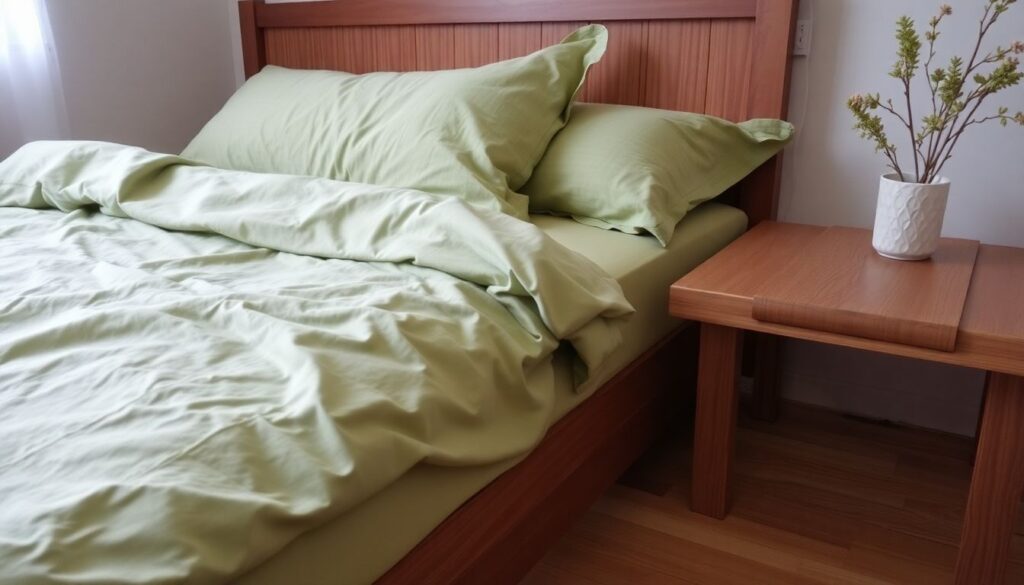
Here are the key features that make the most difference for sensitive skin:
- 100% Bamboo Viscose (Not Blends): Look for sheets labeled as 100% viscose from bamboo or 100% bamboo rayon. Blends with polyester or other synthetics can trap more heat and feel less smooth.
- Sateen Weave for Smoothness: Sateen weaves create a silkier, more lustrous surface than percale weaves. For friction-sensitive skin, this smoother finish is usually preferable. Percale bamboo sheets tend to feel crisper and slightly more textured.
- Thread Count Around 300: For bamboo, a thread count between 280-400 hits the sweet spot. Lower than this and the fabric may be too thin or rough. Higher numbers don’t necessarily mean better quality in bamboo—they can sometimes indicate tighter weaving that reduces breathability.
- Independent Safety Certifications: Look for OEKO-TEX Standard 100 certification, which tests for harmful chemicals and ensures the finished fabric is safe for direct skin contact. For people worried about chemical processing (common with eczema sufferers who’ve developed multiple sensitivities), this certification provides some reassurance.
- Reinforced Construction: Double-stitched seams and quality elastic on fitted sheets prove important with frequent washing. Eczema management often requires washing sheets more frequently, sometimes with stronger detergents during flare-ups. Sheets that hold up to this treatment reduce long-term costs.
How to Wash and Care for Bamboo Sheets
Proper care extends bamboo sheet lifespan and maintains their smooth texture. This becomes especially important with the frequent washing eczema management requires.
How to Wash Bamboo Sheets:
- Use cold or warm water (never hot—it can damage bamboo fibers and cause them to roughen or pill faster)
- Choose fragrance-free, dye-free detergents specifically formulated for sensitive skin (or plant-based options)
- Skip fabric softeners entirely—they coat fibers and can trap irritants against your skin
- Wash alone or with similar fabrics—zippers, hooks, and rough items can snag bamboo
- Use a gentle or delicate cycle to reduce mechanical stress on the fibers
- Always wash before first use to remove any manufacturing residue
Drying Tips:
- Air drying is ideal when possible
- If using a dryer, choose low heat and remove promptly to minimize wrinkles
- High heat breaks down bamboo fibers faster and increases pilling
Tips for Making Bamboo Sheets Last Longer
Quality bamboo sheets typically last 5-6 years, but eczema sufferers often wash them more frequently. You can extend their lifespan even further by:
- Air-drying when possible
- Using low heat if machine drying
- Rotating between multiple sets
- Avoiding harsh chemicals and bleach
Dealing With Frequent Washing: If you’re washing sheets multiple times per week due to nighttime scratching or ointment stains, consider rotating between two sets. This gives each set more recovery time between washes and extends their overall lifespan.
For stubborn stains, soak in cold water with a gentle enzyme cleaner before washing. Avoid bleach, which damages bamboo fibers and can leave residue that irritates skin.
How Bamboo Compares to Other Fabrics for Eczema
Understanding how bamboo performs against alternatives helps establish realistic expectations.
Bamboo vs. Cotton
Cotton (especially percale) is durable, affordable, and easy to care for. High-quality cotton like Supima or Egyptian can be very soft. But for broken eczema skin, even premium cotton often feels too textured or rough, especially in percale weaves. Cotton sateen comes closer to bamboo’s smoothness but typically doesn’t breathe as well or wick moisture as effectively.
Cotton wins on durability and lower maintenance. Bamboo wins on smoothness, cooling, and moisture management.
Bamboo vs. Silk
Silk is widely considered the gold standard for sensitive skin. It has the lowest friction of any natural fabric and naturally regulates temperature. Silk may outperform bamboo for severe eczema cases.
However, silk is expensive, delicate, and requires careful maintenance that can prove challenging for parents or those managing chronic conditions. Bamboo offers comparable (though slightly inferior) smoothness and temperature benefits at lower cost and with easier care requirements.
Bamboo vs. Tencel/Lyocell
Tencel (lyocell) is made from wood pulp using a more eco-friendly closed-loop process. It feels very similar to bamboo viscose—smooth, cooling, and moisture-wicking. Some people find Tencel slightly more durable and less prone to pilling.
For eczema purposes, Tencel and quality bamboo perform similarly. Your choice may come down to availability, price, or environmental preferences. Both are good options worth considering.
Bamboo vs. Linen
Linen is extremely breathable and becomes softer with repeated washing. It wicks moisture effectively and performs well in hot climates.
However, linen has a naturally textured, slightly rough feel (especially when new) that most people with active eczema find irritating. Even after softening with use, linen’s texture remains more pronounced than bamboo’s smooth surface.
Linen may work for people with mild eczema or those who prioritize breathability over smoothness. For raw, inflamed skin, bamboo is usually gentler.
Bamboo vs. Microfiber
Microfiber is inexpensive and initially feels soft and smooth. However, it’s typically made from polyester, which traps heat and doesn’t breathe well. Microfiber commonly triggers the overheating and sweating that causes flare-ups in people with temperature-sensitive eczema.
Bamboo Sheets for Eczema: DOZ Bamboo Sheet Set
For an easy starting point, the DOZ 100% bamboo viscose sheet set (available on Amazon) is one option that matches what many eczema and sensitive-skin shoppers look for: a smoother weave, cooler sleep, and clear material/testing details.
Here are some key highlights:
- Smooth sateen weave (300 thread count): helps reduce the “drag” feeling some people notice with crisp cotton weaves.
- Cooler, more breathable feel: useful for anyone whose itching gets worse with heat and sweating.
- Heavier fabric weight (145 GSM): can hold up better when sheets need more frequent washing.
- 16-inch deep pockets: keeps the fitted sheet more secure on thicker mattresses.
- Simple care instructions: cold wash, gentle cycle, low heat drying.
It’s not the only good bamboo bed sheet option, but the combination of a smooth surface, higher fabric weight, and clear safety testing is the same checklist many people use when shopping for bamboo sheets for eczema and sensitive skin.
Creating the Best Bedding for Eczema Sufferers: A Complete Approach
When building your ideal sleep environment, combining the right elements makes all the difference:
- Add bamboo pillows and pillowcases
- Consider a matching bamboo duvet cover for complete skin protection
- Choose natural fiber pajamas
- Consider a humidifier for extra moisture control
The Bottom Line: Are Bamboo Sheets Worth It for Eczema Sufferers?
Bamboo sheets can help with eczema because they tackle three problems that make symptoms worse at night: friction on inflamed skin, overheating that triggers itching, and trapped moisture that irritates.
The smooth texture of bamboo viscose, especially in sateen weaves, combined with its cooling and moisture-wicking properties, can make a noticeable difference if cotton feels too rough or you wake up feeling damp and uncomfortable.
The main downsides are cost and care requirements. Bamboo sheets cost more for a full set and need gentler washing to prevent pilling that destroys their smooth surface. Without proper care, they lose what makes them helpful for sensitive skin.
If you’re dealing with night sweats or find cotton too textured, bamboo is worth trying. When budget is tight or you need sheets that handle hot water washing, cotton or Tencel work better. For severely reactive skin where even bamboo irritates, silk offers the smoothest option, though it costs more and requires careful maintenance.
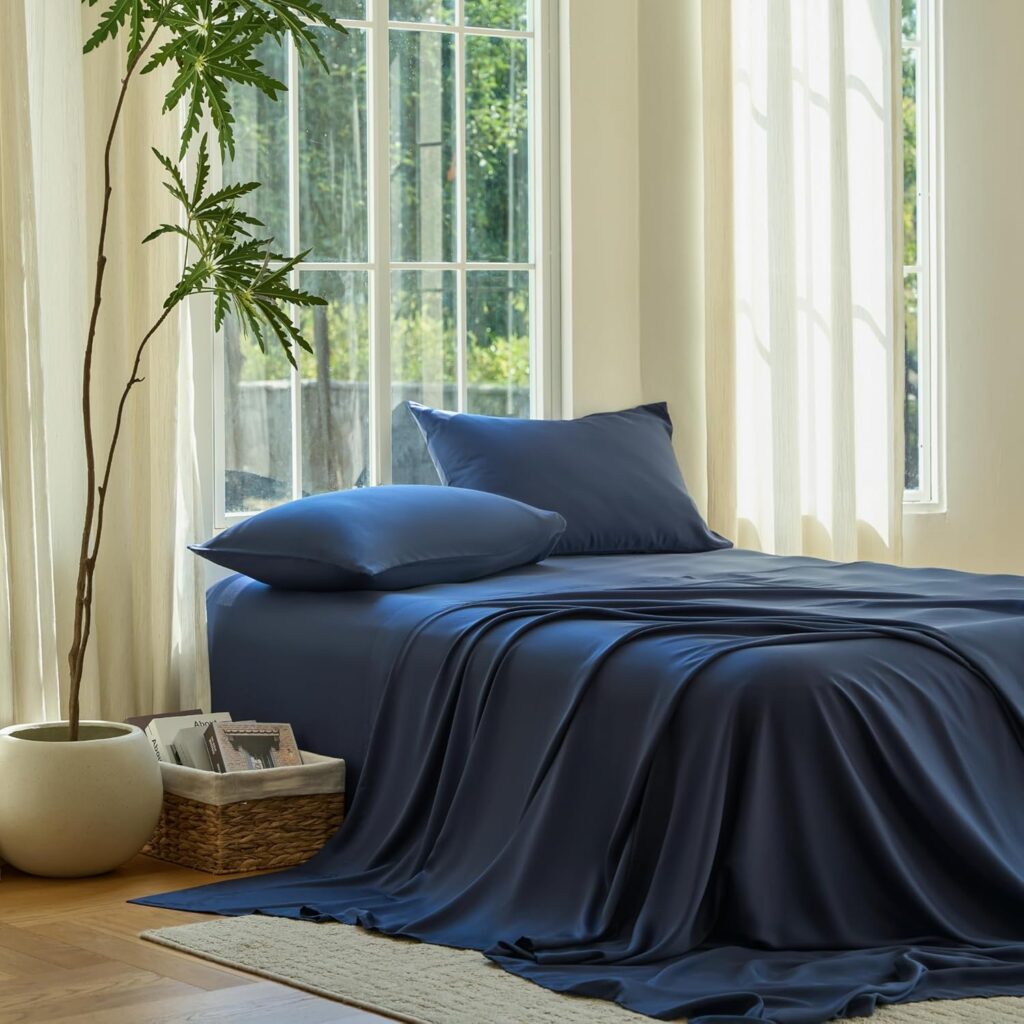
If you want somewhere to start, DOZ by SIJO are bamboo viscose sheets made from organically grown bamboo that check the main boxes: 300-thread-count sateen for smoothness, cooling properties, moisture-wicking, and reinforced stitching that handles frequent washing.
Bedding won’t cure eczema, but the right sheets can reduce what makes it worse at night.
People Also Asked
Do bamboo sheets help with eczema?
Bamboo sheets can help with eczema by reducing common triggers. Their smooth texture causes less friction on sensitive skin, they stay cooler than cotton which helps prevent overheating, and they wick moisture away to reduce sweat buildup. They won’t cure eczema, but many people find they reduce nighttime itching and flare-ups.
What is the downside to bamboo sheets?
Bamboo sheets cost more than cotton upfront and require gentler care to prevent pilling. They need cool or warm water washing and low heat drying. Lower-quality bamboo sheets can develop fuzzballs that make them rough and unhelpful for sensitive skin. They also don’t last as long with frequent washing as heavy-duty cotton.
What are the best sheets for eczema sufferers?
The best sheets depend on your specific needs. Silk offers the smoothest surface but costs more and needs special care. Bamboo and Tencel provide good smoothness with easier maintenance. High-quality cotton sateen works well if you need durability and simpler washing. Most people with eczema do best with sateen weaves rather than percale, regardless of fabric.
Does bamboo affect eczema?
Bamboo sheets can positively affect eczema by reducing triggers like friction, heat, and moisture that worsen symptoms. The smooth surface irritates skin less than textured fabrics, and the cooling properties help prevent the overheating that causes itching. However, bamboo doesn’t treat the underlying condition—it simply makes the sleeping environment less likely to trigger flare-ups.
What is the best fabric for eczema?
The best fabric for eczema varies by person. Silk has the lowest friction but requires careful maintenance. Bamboo viscose and Tencel offer smooth surfaces with good cooling and moisture management. High-quality cotton sateen provides a smooth feel with durability. Avoid microfiber (traps heat), rough linens, and fabrics with synthetic blends that don’t breathe well.
Medical Disclaimer: This article provides general information only and is not medical advice. If you or your child has severe eczema, infected skin, or symptoms that concern you, please consult a dermatologist or pediatrician. Bedding changes can help manage triggers, but they don’t replace proper medical treatment.

Sleep Essentials Hub is a sleep blog for readers who want helpful sleep guides and honest product recommendations. We’re passionate about better rest, with a focus on pillows and bedding, sleep aids, sleep apnea and CPAP gear, natural sleep supplements, sleep tech, and simple ways to improve your sleep environment. We’re here to help you choose products that support deeper sleep, greater comfort, and a better night’s rest without overspending.