
Best Light Therapy Lamps (10,000 Lux) for Morning Energy & Better Sleep
In winter, when alarms goes off before the sun’s up, it’s easy to feel drained before the day even begins.
For people dealing with Seasonal Affective Disorder (SAD), circadian rhythm disruptions, or persistent low energy during shorter days, a circadian light therapy lamp may be a helpful, a non-pharmaceutical way to support mood and sleep regulation.
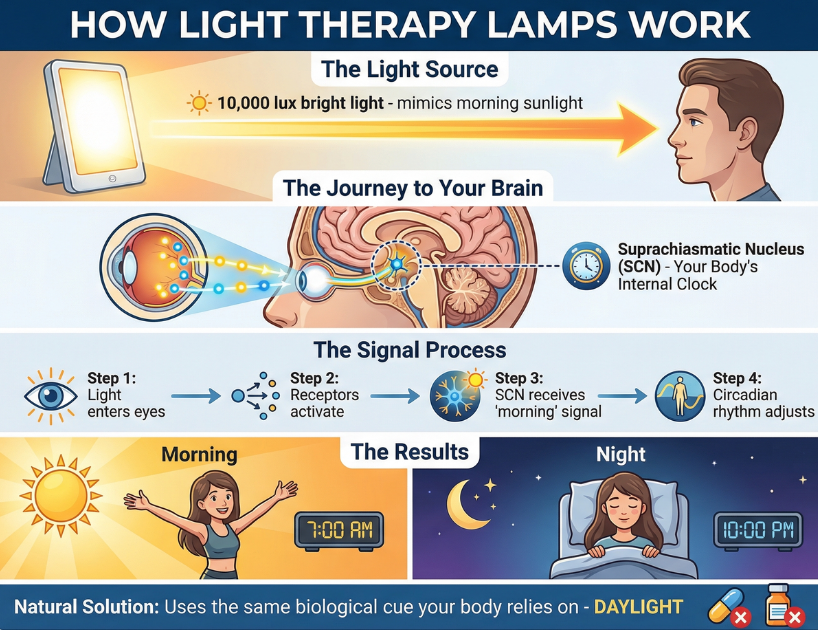
These devices deliver bright, full-spectrum light that mimics natural sunlight, helping reset your body’s internal clock and supporting consistent energy levels throughout the day.
The key is exposure timing and intensity. Most people aim for 10,000 lux at a comfortable distance, for a set period shortly after waking.
Whether you work in a dim home office, struggle with early starts, or notice your mood drop as daylight fades, the right lamp can make mornings feel noticeably lighter.
Disclosure: This article contains affiliate links. As an Amazon Associate I earn from qualifying purchases at no extra cost to you.
Top 7 Circadian Light Therapy Lamps for Sleep & Energy
| Pick | Product | Best For | 10,000 Lux Distance | Session Time | Highlights |
|---|---|---|---|---|---|
| 1 | Carex Day-Light Elite | Best overall | 12 inches | 20-30 min | 4 brightness settings (1,000-10,000 lux), 15.75″ x 13″ screen, height-adjustable stand, VESA mountable, 4000K |
| 2 | Circadian Optics Lumos 2.0 | Budget pick | 12-16 inches | 20-30 min | 3 brightness levels, folding panel, touch control, UV-free, 50,000 hr LEDs |
| 3 | Verilux HappyLight Luxe | Desk setup | Close range | 15-60 min | 4 brightness levels, 3 color temps, timer in 5-min steps, 144 LEDs, UV-free |
| 4 | Northern Light Technologies Boxelite | Focus & productivity | 14 inches | 20-30 min | Large light face, 3500K fluorescent bulbs, all-metal build, UV-filtered, 7-year warranty |
| 5 | Luminette 3 | Light therapy glasses | Wearable | 20-30 min | 3 intensity levels (500/1000/1500 lux), rechargeable (5-10 sessions), fits over glasses, UV-free |
| 6 | Luminette Drive | Travel & commutes | Visor mount | 20 min | 468 nm blue light, 3 intensities, magnetic visor mount, 10 sessions per charge, auto shut-off |
| 7 | Beurer TL95 | Winter blues | 10 inches | 20-30 min | 6 brightness levels, 30-120 min timer, memory function, 14.56″ x 11.81″ light surface, flicker-free, UV-free |
How Light Therapy Lamps Help Reset Your Circadian Rhythm for Better Sleep
Circadian light therapy lamps work by stimulating photoreceptors in your eyes that signal your brain’s suprachiasmatic nucleus, the control center for your circadian rhythm.
Morning exposure to bright light shifts your internal clock earlier, making it easier to wake naturally and fall asleep on schedule. Unlike supplements or prescription medications, light therapy works by using the same biological cue your body already relies on: daylight.
Key effects can include:
- Reducing melatonin earlier in the day, which supports morning alertness
- Moving your sleep schedule earlier (especially helpful for night owls and winter fatigue)
- Supporting mood-regulating pathways commonly linked with more stable daytime energy
- Strengthening your daily rhythm so sleep feels more predictable and restorative
So what should you actually look for in a lamp? The biggest differences come down to brightness at a usable distance, comfort (glare/flicker), adjustability, and how easy it is to stick with daily.
Best Overall Light Therapy Lamp: Carex Day-Light Elite (10,000 Lux at 12-14 Inches)
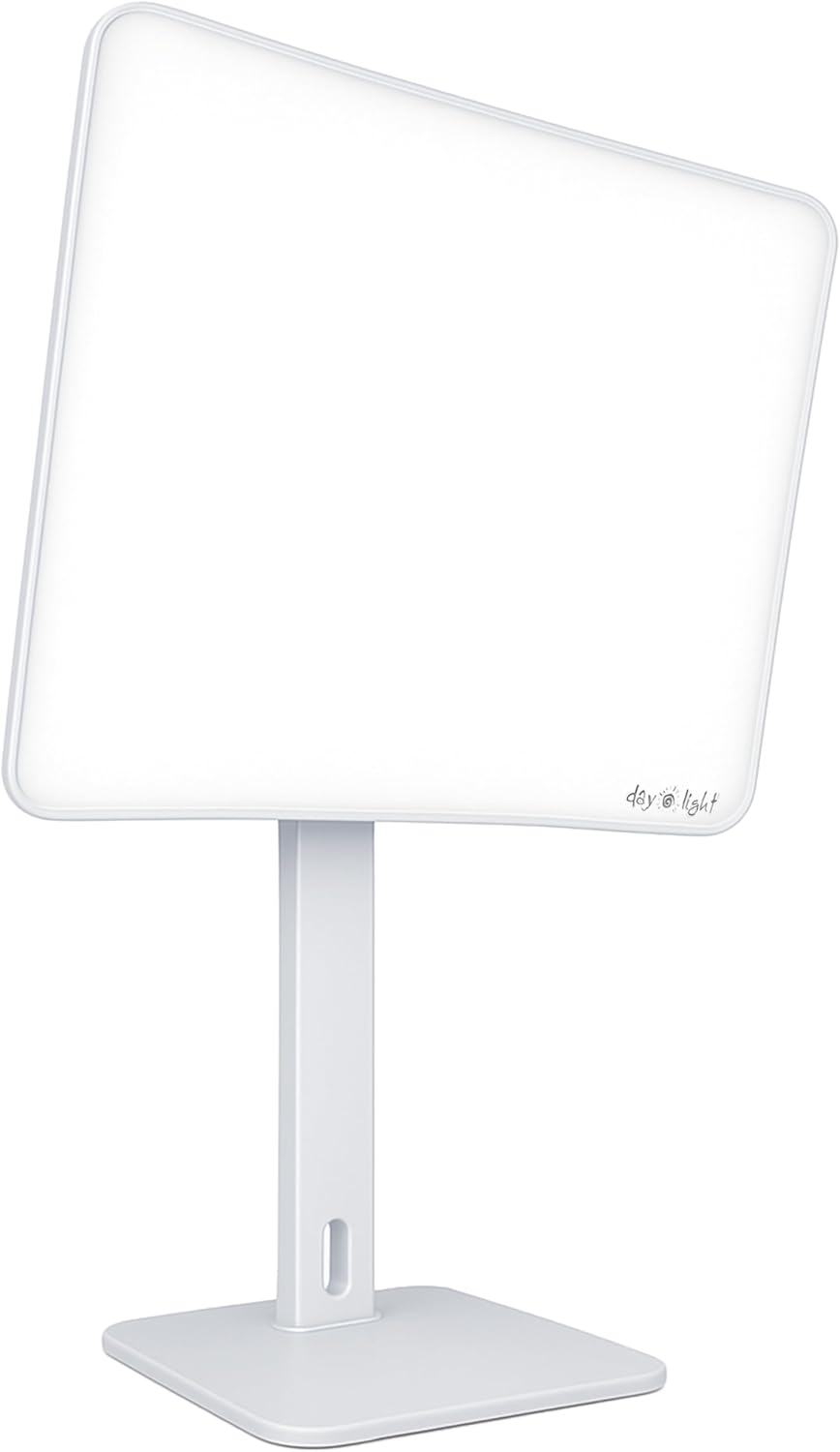
Plenty of SAD lamps only reach 10,000 lux when your face is a few inches from the panel. The Carex Day-Light Elite hits that level at 12 to 14 inches, a normal distance at a desk or breakfast table, which makes it the easiest full-strength lamp on this list to use every morning.
Its large 15.75″ x 13″ screen spreads light across your field of view, so you can read, eat, or shift in your chair without losing exposure. The stand angles light downward from above, matching how most clinical-style light boxes are designed.
Four brightness settings run from 1,000 up to 10,000 lux. New users can start low during the first week and build toward full brightness as their eyes adjust.
Key Features
- 10,000 lux at 12 inches
- Four brightness settings (10,000, 5,000, 2,500, and 1,000 lux)
- Large 15.75″ x 13″ light screen
- Height- and angle-adjustable stand
- Built-in timer with auto shut-off
- 4000K color temperature
- VESA and wall-mount compatible
- Blocks UV
Why We Love It
Full brightness at a real sitting distance removes the biggest frustration with smaller lamps. The 1,000 lux setting also helps light-sensitive people ease in, while the warmer 4000K tone feels softer than the cool blue-white light of many competitors.
Who It’s Best For
Great for night owls working to wake earlier, anyone resetting a delayed sleep schedule, and first-time buyers who want one lamp that gets the fundamentals right.
Good to Know
At 7.5 pounds and up to 26 inches tall, this isn’t a nightstand lamp, so plan for a desk or table spot. A good starting point is 15 minutes at a lower setting, building toward 20 to 30 minutes at full brightness.
Best Affordable Light Therapy Lamp: Circadian Optics Lumos 2.0
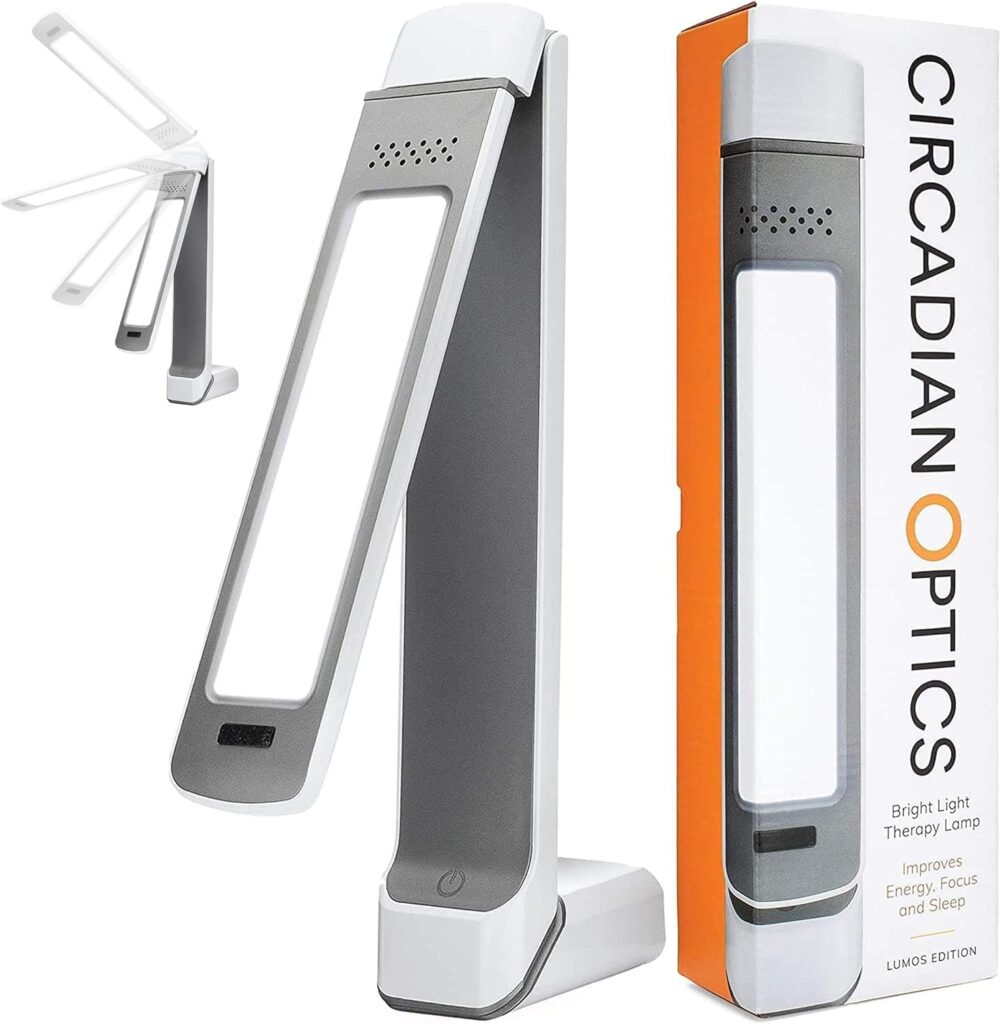
Circadian Optics Lumos 2.0 provides 10,000 lux with a compact, lightweight build that fits dorm rooms, small apartments, or shared spaces.
The unique folding mechanism allows positioning the light panel at multiple angles, while the weighted base keeps it stable during use. The straightforward design offers three brightness levels and simple touch control operation, making it practical for testing whether light therapy fits your routine before committing to a larger investment.
Key Features
- 10,000 lux at recommended distance for effectiveness
- Three brightness levels for graduated intensity
- Unique folding mechanism for flexible positioning
- Compact 6″D x 3″W x 10″H footprint
- Touch control operation
- 50,000 hour LED lifespan with UV-free output
Why We Love It
- Lower price for those trying light therapy for the first time
- Three brightness levels let you start gently and build intensity as your eyes adjust
- The tall, narrow design takes minimal desk space while the weighted base prevents tipping during position adjustments.
Who It’s Best For
Ideal for students managing early class schedules, first-time buyers testing benefits of light therapy, or anyone wanting reliable functionality without premium features or complex controls.
What to Watch For
Some users report mild eye strain during initial sessions—starting with the lowest brightness for 10-minute exposures and gradually building to 20-30 minutes helps your eyes adjust. To get the rated 10,000 lux, you typically need to sit about 12–16 inches away (check the manufacturer’s distance chart)
Best for Desk Setup: Verilux HappyLight Luxe
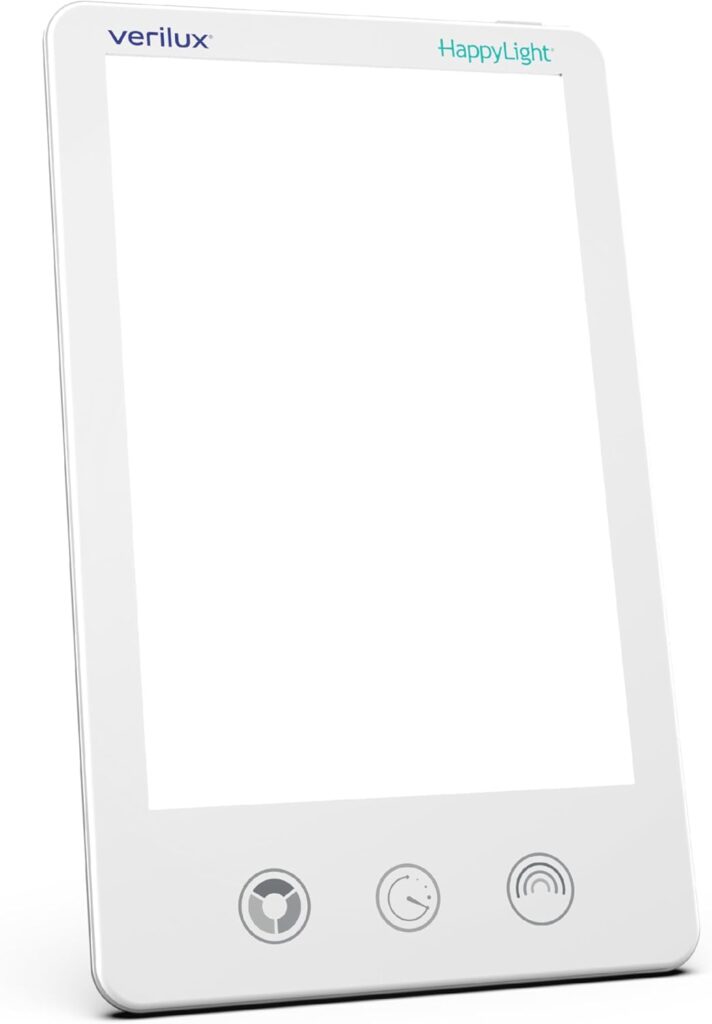
Verilux HappyLight Luxe combines 10,000 lux output with a slim profile designed to sit alongside monitors without crowding workspace.
Four brightness levels and three color temperature options let you customize intensity based on ambient room light and personal comfort, while the sleek housing blends into professional environments.
The programmable countdown timer runs in 5-minute increments up to one hour, and the lamp works during morning emails, video calls, or focused work sessions, turning therapy time into multitasking instead of a separate routine altogether.
Key Features
- 10,000 lux with 144 LEDs for even distribution
- Four brightness levels for ambient light matching
- Three HappyHue color temperature options
- Programmable countdown timer up to 1 hour in 5-minute increments
- Slim vertical design saves desktop real estate
- Touch controls for quick adjustments
Why We Love It
- The adjustable brightness means you can dial intensity down during video calls to avoid harsh lighting on your face, then increase it during solo work.
- The slim profile takes up minimal desk space while still providing adequate light surface area.
- Touch controls make adjustments quick without interrupting workflow, and the timer prevents overshooting your target session length.
Who It’s Best For
Perfect for remote workers managing windowless home offices, office employees in cubicles without natural light, or anyone spending morning hours at a computer who wants to combine work time with light therapy sessions.
Good to Know
Position the lamp slightly to the side rather than directly in front to reduce glare on monitors. Some people prefer placing it at roughly monitor height, running it during the first 30-60 minutes of their workday. The detachable stand and wall mount option provide flexibility for different workspace configurations.
Best for Focus and Productivity: Northern Light Technologies Boxelite
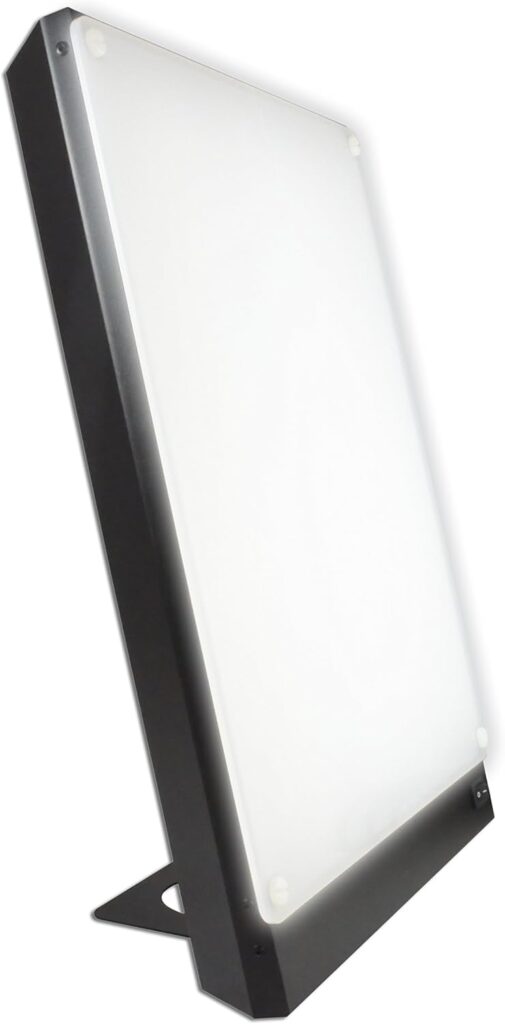
Northern Light Technologies Boxelite is rated for 10,000 lux at about 14 inches, using full-spectrum fluorescent bulbs, and its larger face helps spread light more evenly across your field of view than many compact lamps.
The all-metal construction houses two 36-watt fluorescent tubes that deliver warmer 3500K light temperature, with a stable base that allows hands-free positioning during morning work.
Key Features
- High-grade 10,000 lux at 14 inches
- Large surface area for broad light distribution
- Full-spectrum fluorescent bulbs at 3500K color temperature
- Adjustable angle for optimal positioning
- All-metal construction for durability
- Replaceable bulbs for long-term use
Why We Love It
- The larger light surface means you can sit slightly farther back while maintaining intensity, giving more flexibility in positioning during morning tasks.
- Clinically tested to naturally ease winter blues, shift work, circadian sleep disorders, jet lag, and low energy.
- The warmer 3500K color temperature mimics morning sunlight more naturally than cooler blue-tinted lamps.
Who It’s Best For
Best for people managing focus alongside winter mood dips, professionals handling complex morning tasks looking to benefit from mental clarity support, or anyone wanting high performance at home with a proven track record.
What to Watch For
The larger footprint needs some dedicated room, so measure your desk or table before ordering. A few users also report a clicking sound while the fluorescent bulbs warm up or cool down, but it usually fades once the lamp reaches its operating temperature.
Best Wearable Light Therapy: Luminette 3
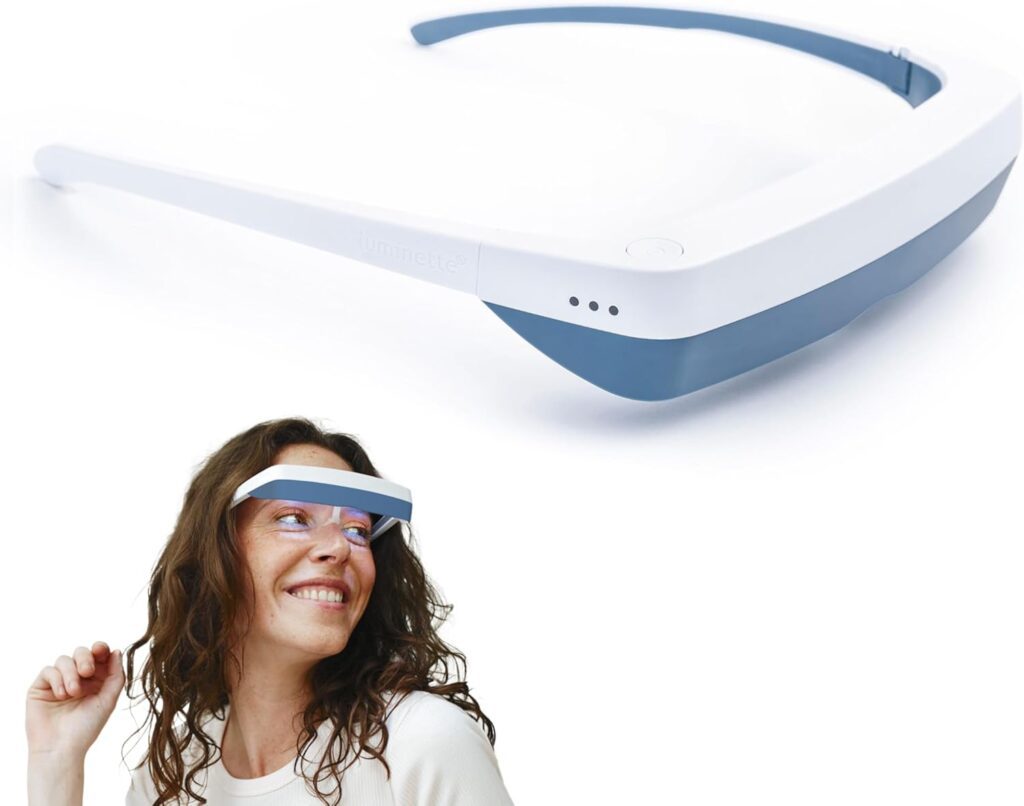
Having to sit still for 30 minutes every morning is the kind of hassle that makes light therapy hard to stick with. If mornings are already chaotic, wearable light therapy glasses like the Luminette 3 can help.
Luminette 3 glasses deliver light therapy through a wearable design that frees your hands and lets you move naturally during morning routines.
The glasses project blue-enriched white light into your peripheral vision at three intensity levels (500, 1000, or 1500 lux) while you make breakfast, pack lunches, or handle morning tasks.
At just 1.76 ounces, the lightweight frame sits comfortably over prescription glasses during 20-30 minute sessions with automatic shutoff. Rechargeable battery power provides 5-10 sessions per charge, eliminating cords that restrict movement.
Key Features
- Wearable design allows movement during sessions
- Three intensity settings: 500, 1000, and 1500 lux
- Weighs only 1.76 ounces for extended comfort
- Rechargeable battery for 5-10 sessions per charge
- 20-30 minute session duration with auto-shutoff
- Fits over prescription glasses
Why We Love It
- Hands-free use removes one of the biggest obstacles to regular light therapy: having to sit still for 30 minutes. You can prepare breakfast, get dressed, or take care of other morning tasks while you get your light exposure.
- The three intensity levels accommodate people sensitive to bright light who struggle with traditional lamps.
Who It’s Best For
Ideal for busy parents, professionals with packed schedules who can’t spare sitting time, or anyone who abandoned previous light therapy attempts due to lack of time.
Good to Know
Some users experience a brief adjustment period as they adapt to the peripheral light sensation. Start with the lowest 500 lux intensity setting for the first few sessions, then increase as comfort builds. The glasses work best during active movement rather than sedentary tasks like reading. The included carrying case protects the device during storage and travel.
Best Portable Light Therapy: Luminette Drive
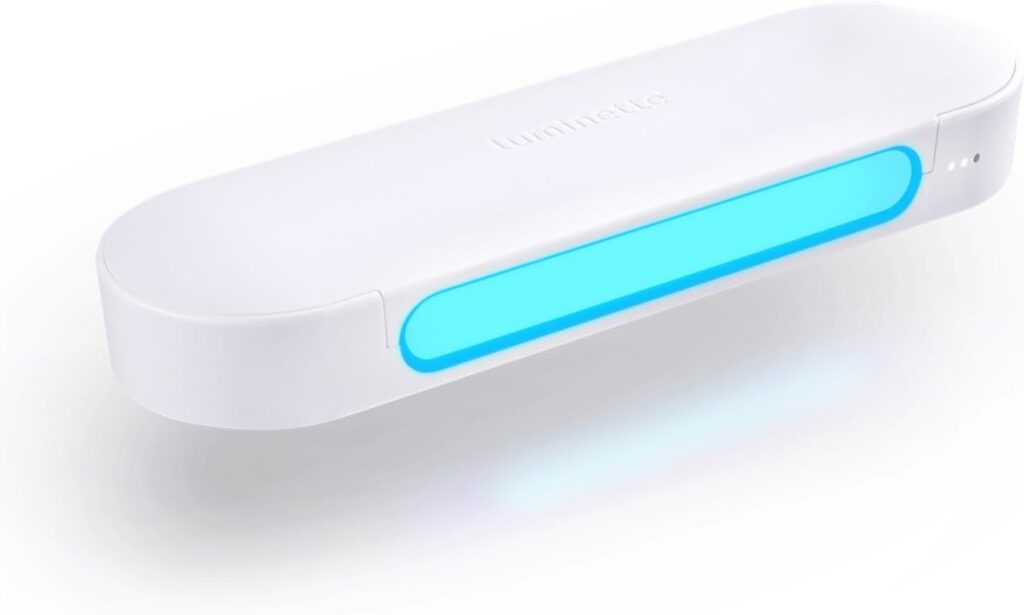
Luminette Drive provides light therapy in a travel-optimized package designed specifically for car commutes and portable use.
The device emits blue light at 468nm wavelength through three intensity levels, with a magnetic attachment system that mounts to your car’s sun visor in seconds. The elastic strap and USB-C charging make it adaptable for hotel rooms, airport terminals, or anywhere your schedule takes you.
Key Features
- Blue light centered at 468 nm, a wavelength often described as being especially stimulating for alertness.
- Three intensity levels for varying conditions
- Magnetic attachment system for quick car visor mounting
- 2200 mAh battery for up to 10 sessions per charge
- Automatic 20-minute shutoff for safety
- USB-C charging with car adapter included
Why We Love It
- The car-specific design turns your morning commute into productive therapy time without adding extra obligations to your schedule.
- The magnetic attachment takes seconds to install and remove, making it practical for shared vehicles or rental cars during travel.
- Blue light designed for circadian support, since the circadian system is especially sensitive to short-wavelength light.
Who It’s Best For
Perfect for frequent business travelers managing jet lag, shift workers with rotating schedules, commuters wanting to maximize drive time, or people relocating between time zones who need circadian support during transitions.
What to Watch For
Use the device during daylight hours when there’s already some natural ambient light. Don’t wear it while driving in darkness, since the light may affect visibility.
The battery lasts for several days, but bring the USB-C cable if you’ll be away for more than a week. At 1.21 pounds, it’s light enough to pack in a travel bag without taking up much space.
Best Light Therapy Lamp for Winter Blues: Beurer TL95 (6 Brightness Levels)
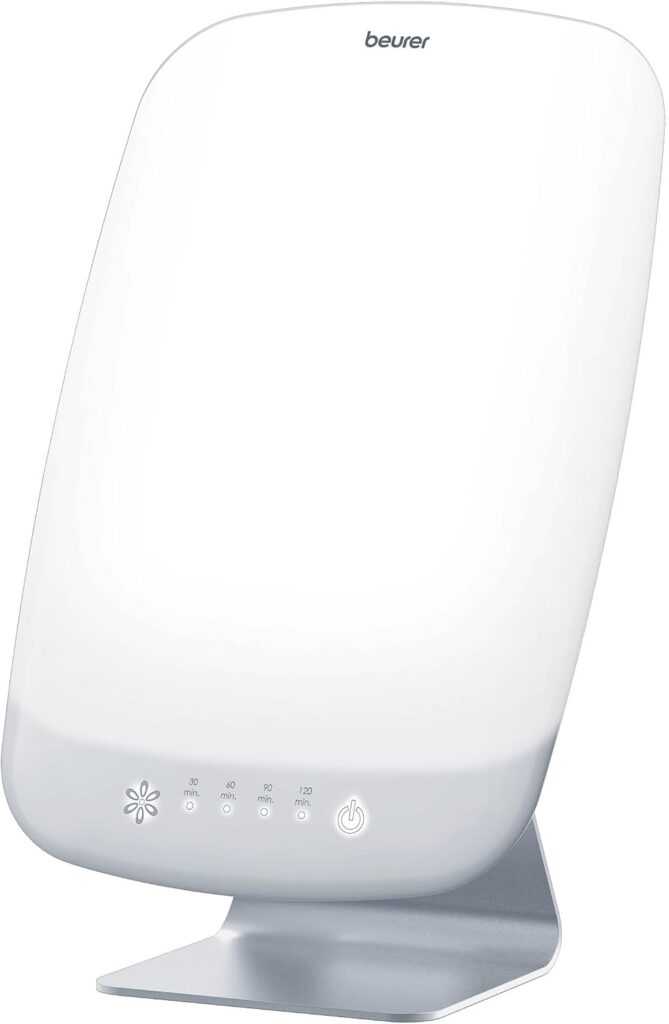
Short winter days can drag down mood and energy for months, and the Beurer TL95 brings bright daylight-style light indoors when the sun won’t cooperate. Its SunLike LEDs are built to produce a spectrum closer to natural daylight than standard LEDs.
Six brightness levels give finer control, and the timer runs from 30 to 120 minutes. A memory function saves your last setting, so each morning takes a single tap.
Key Features
- Up to 10,000 lux at about 10 inches
- Six brightness levels
- Timer options of 30, 60, 90, and 120 minutes
- Memory function
- Large 14.56″ x 11.81″ light surface
- Adjustable aluminum stand
- SunLike LEDs, flicker-free and UV-free
Why We Love It
The large surface spreads light evenly and reduces glare. At under 4.5 pounds with a slim profile and aluminum stand, it moves easily between a desk and breakfast table without looking clinical.
Who It’s Best For
Best for people in northern states who feel their energy dip every winter, and anyone who wants a premium lamp that looks good on a desk.
Good to Know
The 10,000 lux rating applies at about 10 inches, which is closer than the Carex Day-Light Elite. Plan to sit close during sessions or run longer sessions at a lower level. The light is very bright at full power, so starting on a lower level for the first few days helps your eyes adjust.
How to Choose a 10,000 Lux Light Therapy Lamp for Sleep
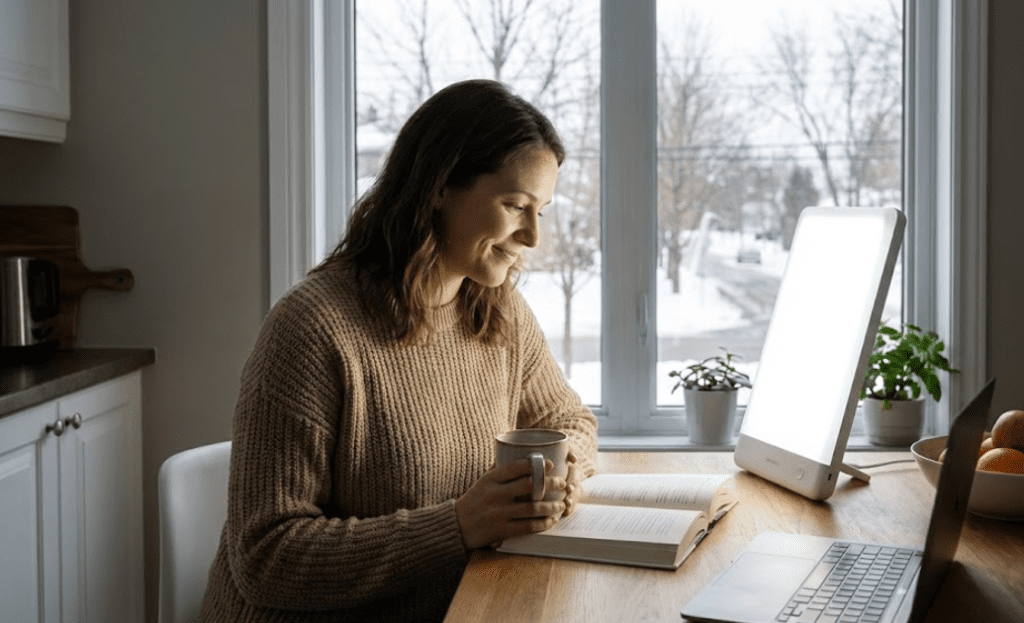
The best SAD lamp is the one you’ll use every morning, so comfort and convenience count as much as raw brightness.
Check Lux at a Real Sitting Distance
Many lamps only reach 10,000 lux when your face is a few inches away. Light intensity drops quickly with distance, so look for a lamp rated at 10,000 lux at around 12 inches or more for comfortable daily use.
Pick a Format That Fits Your Mornings
A stationary lamp works well at a desk or breakfast table, while light therapy glasses and visor units suit hectic mornings and commutes. A sunrise alarm clock like the Hatch Restore 3 offers a gentler option too, and our guide on if wake up lights work explains how dawn simulation compares.
Look for Adjustable Brightness and Low Glare
Early sessions can bring on eye strain or headaches for some people. Adjustable brightness, good diffusion, and a low-glare panel let you ramp up gradually.
Measure Your Space
Full-size light boxes need dedicated desk space, and small apartments may call for a compact or wearable option. Clear specs and a solid return policy also make a first purchase less stressful.
Which Light Therapy Lamp Is Best for Sleep?
For most people, the Carex Day-Light Elite is the best light therapy lamp for sleep because it delivers full 10,000 lux brightness at a comfortable 12 to 14 inches, with low settings that make the first week easier.
Shoppers on a tighter budget can start with the Circadian Optics Lumos 2.0, while the Verilux HappyLight Luxe fits neatly beside a monitor. Luminette glasses and the Luminette Drive suit people who need light therapy on the move, and the Beurer TL95 offers the finest brightness control for long winters.
Whichever lamp you choose, daily morning use makes the biggest difference, so give it two to three weeks before judging results.
Frequently Asked Questions
Do Light Therapy Lamps Help You Sleep Better?
Light therapy lamps may help you sleep better by shifting your body clock earlier when used in the morning. Bright morning light lowers melatonin sooner in the day, which can bring on sleepiness closer to your target bedtime. Results vary from person to person, and morning timing is key.
When Is the Best Time to Use a Light Therapy Lamp?
The best time to use a light therapy lamp is within the first hour after waking. Evening sessions can push your body clock later and make falling asleep harder. For evening light management, amber blue light blocking glasses can help reduce bright light exposure before bed.
How Far Should You Sit From a Light Therapy Lamp?
Sit at the distance the manufacturer lists for 10,000 lux, which is usually between 10 and 14 inches for the lamps on this list. Light intensity falls quickly as you move back, so sitting farther away can cut your dose significantly.
How Long Does It Take for a Light Therapy Lamp to Work?
Many people notice subtle changes in energy and mood within three to five days of daily morning use. Bigger shifts in sleep timing and winter mood may take a few weeks of 20 to 30 minute sessions. Using the lamp at the same time each morning gives your circadian rhythm the clearest signal.
Can a Light Therapy Lamp Cause Headaches or Eye Strain?
A light therapy lamp can cause mild headaches or eye strain during the first few sessions, especially in winter when your eyes are used to dimmer light. Starting with 10 to 15 minute sessions and building up over several days helps. Positioning the lamp slightly to the side rather than straight ahead also reduces strain.
Can You Use a Light Therapy Lamp While Working on a Computer?
You can use a light therapy lamp while working on a computer by placing it beside your monitor. Set it slightly to the side at eye level or above, angled toward your peripheral vision so it doesn’t glare on your screen.
Are Expensive Light Therapy Lamps Worth It?
Expensive light therapy lamps aren’t always more effective once a lamp meets the 10,000 lux standard at a comfortable distance. Higher prices usually reflect a larger light surface, adjustable stands, premium materials, or longer warranties. Prioritize lux at a realistic distance and comfort features over price alone.
Disclaimer: This article is for general informational purposes only and is not medical advice. Light therapy is not appropriate for everyone, and results can vary based on timing, duration, and individual health factors. If you have an eye condition, a history of bipolar disorder, migraines triggered by bright light, or you take medications that increase light sensitivity, talk with your doctor or optometrist before using a light therapy lamp. Always follow the manufacturer’s instructions for distance and session length, and stop use if you experience discomfort such as headaches, eye strain, agitation, or sleep disruption.

Sleep Essentials Hub is a sleep blog for readers who want helpful sleep guides and honest product recommendations. We’re passionate about better rest, with a focus on pillows and bedding, sleep aids, sleep apnea and CPAP gear, natural sleep supplements, sleep tech, and simple ways to improve your sleep environment. We’re here to help you choose products that support deeper sleep, greater comfort, and a better night’s rest without overspending.