
Do Probiotics Help You Sleep? Which Strains Have Evidence for Stress and Sleep Quality
Interest in the gut-brain connection is skyrocketing, and with good reason. As more people struggle with sleep, stress, and anxiety, scientists are uncovering the surprising ways our digestive health influences our minds and moods. Notably, certain probiotics (beneficial bacteria) have come under research for their potential to ease stress and support better sleep.
But with so many probiotic products on the market, how can you find one with real science behind it, and what should you look for on the label? This guide breaks down the evidence, highlights strains studied for sleep and stress, and offers advice on choosing a probiotic that might be right for you.
Understanding the Gut-Brain-Sleep Connection
Disclosure: This article is reader-supported and contains affiliate links.
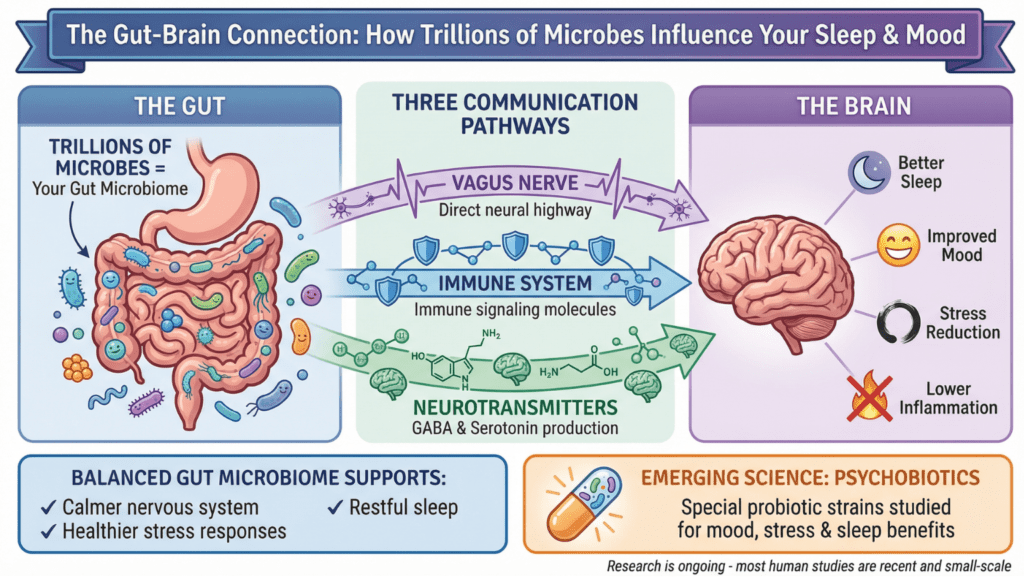
Your digestive tract is home to trillions of microbes known collectively as the gut microbiome. These bacteria play a key role in everything from digestion to immune function, and as recent studies reveal, even in signaling to your brain.
Microbes communicate with your brain via multiple pathways: the vagus nerve carries signals between the gut and brain, immune system activity influences inflammation and stress responses, and certain bacteria produce compounds that may influence neurotransmitter systems.
While gut bacteria can produce neurotransmitter-like compounds including GABA and serotonin precursors, these don’t directly cross into the brain. Instead, they appear to work through indirect pathways that researchers are still working to understand fully.
A balanced gut microbiome may support lower inflammation, healthier stress responses, and a calmer nervous system, all of which can be helpful for restful sleep.
The science is still young with most human studies being small and relatively recent, but the links between gut health, mental wellbeing, and sleep quality are increasingly promising.
Researchers are particularly excited about a category of probiotics called psychobiotics, which are strains specifically studied for their effects on mood, stress, and in some cases, sleep.
Key Probiotic Strains with Research for Sleep, Stress, and Anxiety

Some probiotics have more research supporting their effects on stress, anxiety, and sleep than others.
Here are the most studied strains and what the evidence shows. Keep in mind that strain specificity matters enormously, and results from one strain don’t necessarily apply to others in the same species.
Lactobacillus Strains
Lactobacillus rhamnosus comes in various forms including GG, HN001, and JB-1, each with its own research profile. Most of the exciting findings around anxiety reduction come from animal studies, particularly with the JB-1 strain in mice.
Human evidence for this species is more limited and mixed, with some trials showing stress-related benefits but not consistent sleep improvements. Some people who are sensitive to histamine report that certain L. rhamnosus strains can disrupt their sleep, though this is based on anecdotal reports rather than controlled studies.
Lactobacillus casei Shirota has been studied for its effects on mood and stress. Some research suggests it may support better sleep quality in individuals experiencing academic stress, though the evidence base is still developing. Results have been more consistent for stress-related outcomes than for sleep specifically.
Lactobacillus helveticus R0052 is often used in combination with Bifidobacterium strains and has been studied for its effects on psychological stress in both animal and human trials. When combined with B. longum R0175, some research has found reductions in stress and anxiety symptoms, though most studies have focused on psychological distress rather than sleep as a primary outcome.
Bifidobacterium Strains
Bifidobacterium longum comes in several well-studied forms including R0175 and 1714. The 1714 strain has been researched for its effects on stress, cognition, and sleep.
In one study of adults with lower sleep quality, B. longum 1714 showed improvements in certain sleep quality components and reduced daytime dysfunction due to sleepiness compared to placebo.
Another study in students during exam stress found improvements in sleep and stress measures. That said, the evidence base is still relatively small, and not all outcomes showed significant differences from placebo.
What makes B. longum 1714 noteworthy is that the published studies used specific doses (commonly in the 1–3 billion CFU/day range, depending on the trial) and defined durations, giving you a clearer roadmap if you want to try replicating the study conditions. However, individual responses vary, and the improvements seen in trials have generally been modest rather than dramatic.
Bifidobacterium breve CCFM1025 has been studied in both animal models and at least one human trial. A human study reported improvements in sleep quality measures, though more research is needed to confirm these findings and understand who might benefit most.
Multi-Strain Synbiotic Formulas
Many probiotic supplements now combine Lactobacillus and Bifidobacterium strains. The thinking here is that different strains might work synergistically, supporting multiple aspects of gut-brain communication at once.
The combination of Lactobacillus helveticus R0052 and Bifidobacterium longum R0175 (sold as Cerebiome or Probio’Stick) has been studied primarily for stress and anxiety outcomes.
Research has shown reductions in psychological distress and stress-related symptoms in several trials. While some participants in these studies reported subjective improvements in feeling more rested, the primary evidence is for mood and anxiety rather than sleep as a direct outcome.
This pairing has been researched both in animal models and in human subjects, making it one of the better-studied multi-strain options for stress support.
One thing to keep in mind is that not all probiotic formulas work the same way for everyone.
Some people report that certain strains or high-dose formulas disrupt their sleep or increase anxiety, particularly individuals who may be sensitive to histamine or have conditions like SIBO.
These reports are anecdotal, and we don’t yet have controlled studies identifying which strains are most likely to cause these reactions or why. Starting low and paying attention to how your body responds is a sensible approach.
What to Look For When Choosing a Probiotic for Sleep
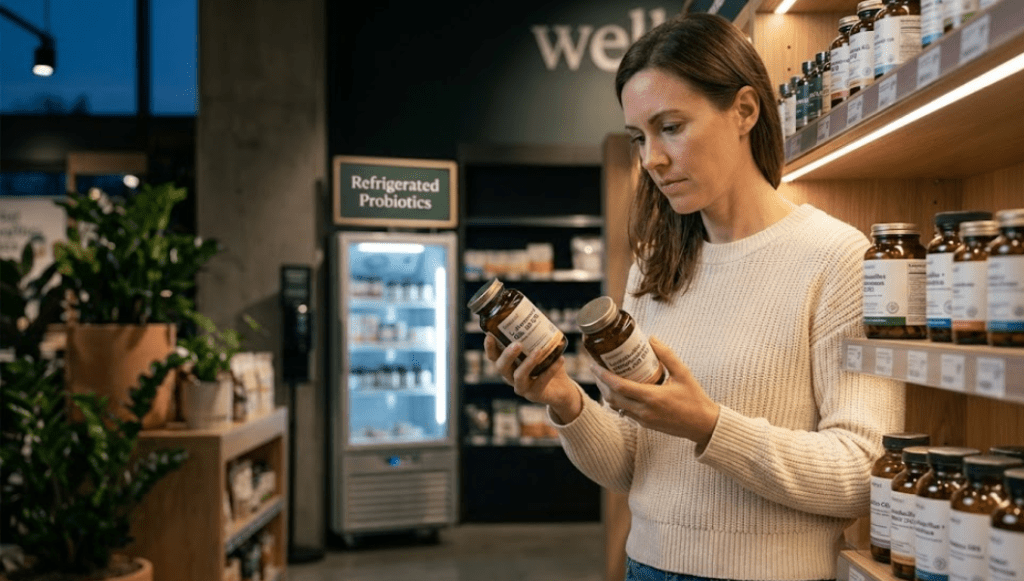
Not all probiotics are created equal, and the differences matter more than you might think. Here’s what separates products with research backing from generic options.
Strain Identification
Always look for full strain names with numbers or letters, such as Lactobacillus rhamnosus GG or Bifidobacterium longum 1714. Different strains can have vastly different effects, even within the same species, and this specificity is what connects a product to actual research.
If a product only lists generic species names without strain identification, you have no way of knowing whether you’re getting a formula that matches research findings or just a random assortment of bacteria.
Many people who’ve tried multiple probiotics find that one specific strain works well while others in the same family do nothing or even make things worse.
CFU Count and Dosing
Clinical trials studying probiotics for stress and sleep have used varying doses, typically measured in billions of CFUs (colony forming units).
Doses often range from 1 billion to 10 billion CFUs daily in research, though some trials use higher amounts. Importantly, more CFUs doesn’t automatically mean better results, and dose requirements are strain-specific.
Some users report anecdotally that very high CFU products (50 billion and above) disrupted their sleep, caused them to feel overheated at night, or made them feel wired rather than calm. However, these are individual experiences rather than findings from controlled research, and we can’t say for certain which doses are most likely to cause issues or for whom.
When you’re looking at labels, make sure potency is guaranteed through the end of shelf life, not just at manufacturing. This tells you the product will still be effective when you actually use it, rather than degrading over time in the bottle.
For those who are new to probiotics or have experienced sensitivity to supplements in the past, starting with a moderate dose can help you gauge how your body responds. You can always adjust from there based on your experience.
Delivery Method and Storage Requirements
Probiotics come as capsules, powders, or in fermented foods. Enteric-coated or delayed-release capsules are designed to help more live bacteria survive stomach acid and reach the intestines, where they can interact with the microbiome, which is why many formulas use this technology.
Some strains require refrigerated storage while others are shelf-stable. Check the label for storage instructions and follow them carefully to maintain potency, because improper storage can reduce the viable bacteria count significantly.
Keep in mind that fermented foods like kefir, kombucha, and yogurt contain probiotics, but they may also contain histamine or other compounds. Some individuals report sleep disruptions after consuming these foods, though controlled studies haven’t established clear cause-and-effect relationships.
For targeted supplementation based on specific strains studied in research, a well-formulated capsule or powder may be easier to work with than trying to get therapeutic doses from food alone.
Quality Markers Worth Looking For
| Quality Factor | What to Look For | Why It Matters |
|---|---|---|
| Third-party testing | Certification from USP, NSF, or ConsumerLab | Verifies what’s on the label is actually in the bottle |
| Expiration date | Clear date stamped on bottle | Ensures you know how long the product remains potent |
| Ingredient transparency | Full strain names and CFU counts listed | Allows you to match the product to research |
| Prebiotic disclosure | Clear listing of inulin, FOS, or other prebiotics | Helps you avoid ingredients that might disrupt your sleep |
| Storage instructions | Specific guidance on refrigeration | Protects the live bacteria from degradation |
Avoid proprietary blends that hide strain information or CFU counts behind vague terminology. You want to know exactly what you’re taking, especially when you’re experimenting with something as important as your sleep quality.
How to Choose the Right Probiotic for Your Situation
Shopping for a probiotic can feel overwhelming when you are looking at dozens of options that all promise different things. Here is a simple way to narrow it down:
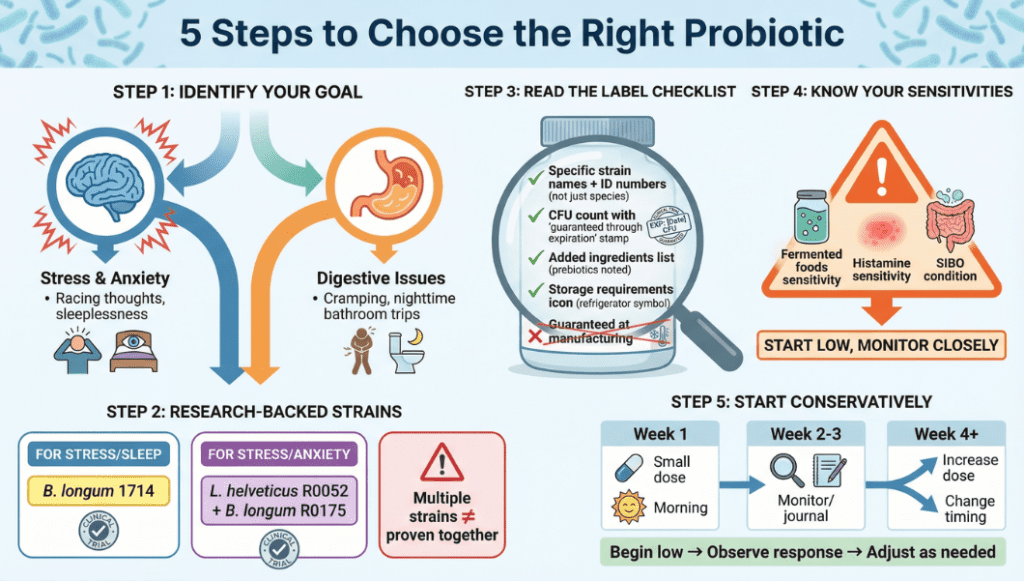
- Start by clarifying your goals. Are you losing sleep from stress and racing thoughts, or from gut issues like cramps and bathroom trips? Some probiotics have been studied more for stress and anxiety outcomes, while others have more evidence around digestive function. Knowing which category describes your situation can help guide your choice.
- Choose clinically studied strains. Look for products containing B. longum 1714 (studied for stress and some sleep outcomes) or combinations like L. helveticus R0052 with B. longum R0175 (studied primarily for stress and anxiety). These formulas have actual clinical trials behind them rather than just theoretical benefits. Many supplements list multiple strains, but that doesn’t mean all those strains have been studied together or in the doses provided.
- Read the label carefully. Make sure it lists full strain names and IDs, not just the species. Check CFU at expiration, scan for added prebiotics, and confirm storage needs so the probiotics stay effective.
- Consider your individual sensitivities. Some people report that certain probiotic formulas or fermented foods seem to worsen their sleep or increase anxiety. This appears to be more common in individuals who are sensitive to histamine-containing foods or who have digestive conditions like SIBO. If you fall into this category based on your past experiences with fermented foods or supplements, you may want to start with lower doses and monitor your response carefully.
- Start low and adjust. Begin with the lowest recommended dose and give it time. If it feels too stimulating at night, try taking it in the morning and increase slowly only if it agrees with you.
Who Probiotic Sleep Support Can Help Most
Probiotics studied for stress and mood may be worth considering if you feel your gut health and sleep quality are connected in some way.
Some people who experience nighttime digestive discomfort or general gut unease at bedtime report that addressing their microbiome helps settle their system enough to sleep more soundly, though this is based on individual experiences rather than large-scale studies.
If you often wake up in the middle of the night with your mind racing or feeling anxious despite being tired, and you’ve noticed that digestive issues seem to coincide with poor sleep, a probiotic strain studied for stress outcomes might be worth exploring.
This pattern is fairly common in people with IBS, where gut symptoms and sleep quality often seem to mirror each other.
People recovering from high-stress periods sometimes notice changes in both their digestion and sleep quality. For these individuals, probiotic strains with evidence for stress reduction might be one part of a broader approach to feeling more like themselves again, though it’s rarely a complete solution on its own.
Those interested in the science behind psychobiotics and willing to try specific, research-backed strains rather than generic blends may find these supplements more appealing than standard probiotic formulas.
Choosing a formula that matches the dose and strain used in clinical studies gives you a reasonable starting point, though individual responses vary and there’s no guarantee you’ll experience the same benefits seen in trials.
Who Should Approach Probiotics for Sleep with Caution
Not everyone should take probiotic supplements, and some people need to consult their healthcare provider before trying them. This is particularly important for:
- Individuals who are immunocompromised or have weakened immune systems
- People with central venous catheters or other indwelling medical devices
- Those with severe acute illness or who are critically ill
- Individuals with short bowel syndrome or compromised intestinal barriers
- Pregnant or breastfeeding women (consult your healthcare provider first)
- Anyone with a history of serious infections or recurrent infections
Some people report that their sleep actually worsens when they first start taking probiotics, experiencing increased anxiety, insomnia, or feeling overheated at night.
This appears to happen more often in individuals who are sensitive to histamine-containing foods or who have digestive conditions like SIBO, though we don’t have controlled studies confirming exactly why this occurs or which strains are most likely to cause these reactions.
If you’re sensitive to fermented foods, aged cheeses, or wine, you may want to approach probiotics more cautiously and start with very low doses. Some users report that high-CFU formulas (50 billion and above) or products with many different strains can feel overwhelming, though again, these are individual experiences rather than established findings from research.
People who have experienced adverse reactions to probiotics in the past should discuss their options with a healthcare provider who can help evaluate whether trying a different strain or formulation makes sense, or whether probiotics may not be appropriate for them at this time.
What to Realistically Expect from Probiotic Sleep Support
Probiotic supplements are not a cure-all, and it’s important to approach them with realistic expectations.
They may support aspects of stress resilience and gut health that indirectly influence sleep quality, but they’re not treatments for insomnia or clinical sleep disorders.
Individual responses vary quite a bit, with some people noticing subjective improvements in how they feel while others see little change or need to try different strains.
This process can take time and patience, and what works well for one person might do nothing for another, even if they have similar complaints. The improvements seen in clinical trials have generally been modest rather than dramatic, and not all study participants experienced benefits.
Your lifestyle and sleep habits still matter enormously, regardless of which supplements you’re taking.
Good sleep hygiene, stress management techniques, a nutrient-rich diet, and other foundational health practices all play essential roles in sleep quality. A probiotic might complement these efforts and make them more effective for some people, but it can’t replace them or overcome consistently poor sleep habits.
The adjustment period can sometimes include temporary digestive changes or shifts in how you feel as your microbiome responds to the new bacteria. This is why starting slowly and paying close attention to your body’s signals is important.
If your sleep or wellbeing declines after starting a probiotic, that’s a signal to reduce your dose, change the timing, or stop altogether and consult with your healthcare provider.
When to Consider a Complete Sleep Support Formula
If you’ve tried probiotics and other individual supplements with only modest results, you might benefit from a more comprehensive approach.
Products that combine multiple sleep-supporting ingredients in one formula can sometimes be more convenient than taking everything separately, particularly if juggling multiple bottles and dosing schedules feels overwhelming.
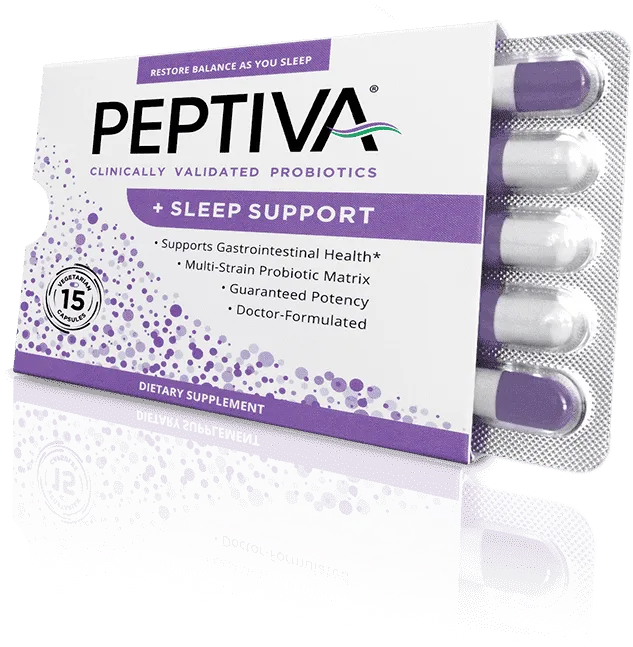
For example, Peptiva Sleep Support combines probiotics with melatonin and GABA in a single nighttime supplement. This type of formula can work well for people who want microbiome support alongside ingredients with more direct sleep-promoting effects.
That said, combination products are not for everyone. Some people prefer to introduce one ingredient at a time so they can identify exactly what helps and what doesn’t, which becomes nearly impossible when you’re taking several compounds at once.
Others find that having everything in one capsule improves consistency and makes their routine simpler, which can matter more than the ability to control individual components separately.
The Bottom Line
Certain probiotic strains, particularly specific Bifidobacterium longum and Lactobacillus helveticus types, have been studied for their effects on stress, mood, and in some cases, sleep quality.
The evidence is still developing, with most studies being relatively small and short-term, but the research is promising enough to make these strains worth considering if you’re interested in the gut-brain connection.
The key is choosing products that match the strains and doses used in research, with transparent labeling and proper strain identification rather than generic blends.
Before starting any supplement, consult your healthcare provider to make sure probiotics are appropriate for your situation, especially if you have existing health conditions, take medications, or fall into a higher-risk group.
Pay attention to how your body responds, start with moderate doses, and give any new probiotic at least a few weeks to show effects before deciding whether it’s working for you.
The field of psychobiotics is rapidly evolving, with new research emerging regularly about which strains affect which aspects of brain function and stress responses. As scientists continue to study these connections, we’ll likely see more targeted formulas and a better understanding of who benefits most.
Disclaimer: This article is for informational purposes only and is not medical advice. Probiotics can affect people differently, and research on sleep, stress, and psychobiotics is still emerging. If you are pregnant or breastfeeding, immunocompromised, have a serious medical condition, or take prescription medications, speak with a qualified healthcare professional before starting a probiotic or sleep supplement. Stop use and seek medical advice if you experience worsening symptoms or adverse reactions.