
Dodow Sleep Aid Review: Does This Breathing Light Really Help You Fall Asleep Faster?
If you’re the kind of person who lies down tired and feels your mind race the moment your head hits the pillow, Dodow was built with you in mind.
The Dodow light metronome has sold over a million units, earned recommendations from sleep physicians including Dr. Michael Breus, and found a loyal following among people who’ve cycled through melatonin, white noise machines, and every breathing app on their phone without lasting results.
This review covers how it works, who it’s right for, where it falls short, and whether it can improve sleep onset.
Disclosure: This article is reader-supported and contains affiliate links.
What is the Dodow Sleep Aid Device?
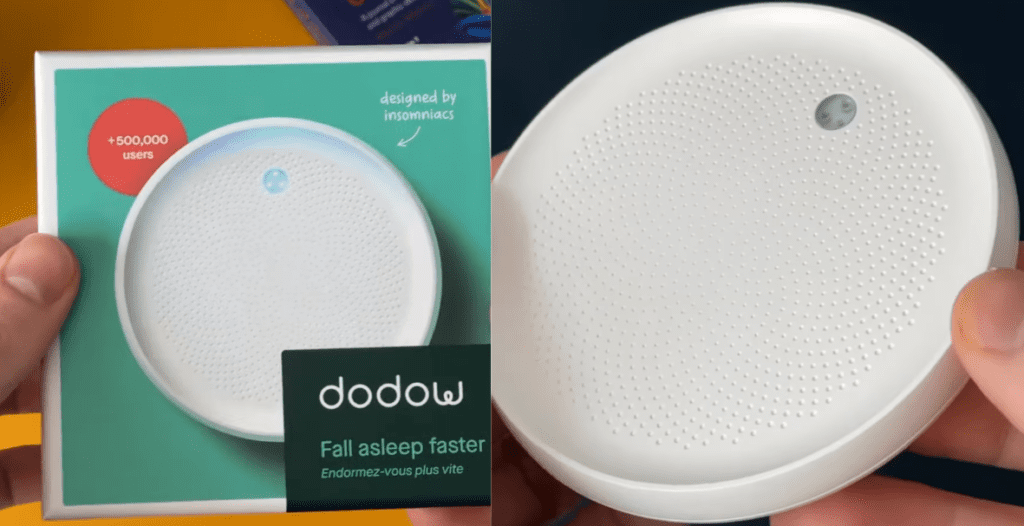
Dodow is a light metronome sleep aid designed by French company Livlab to help people fall asleep faster without medication.
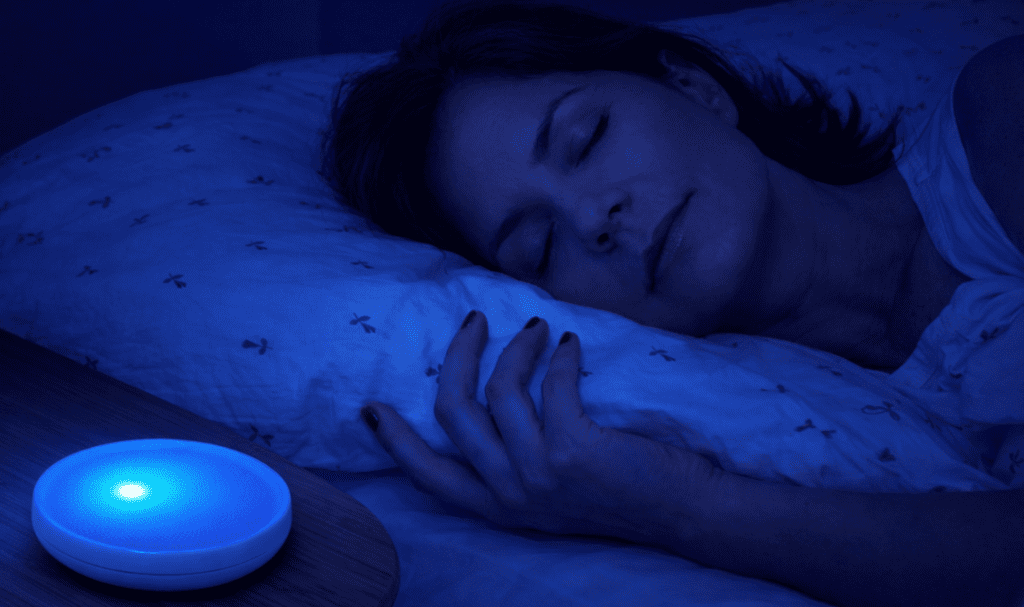
It sits on your nightstand, projects a soft blue light onto your ceiling, and guides your breathing through a slow, rhythmic pulse that eases your nervous system toward sleep.
Small, cordless, and straightforward from the first night, it’s a single-purpose device built around one idea: slow your breathing down and your mind will follow.
Dodow Features at a Glance
- Two session lengths, eight and twenty minutes, depending on how long your mind needs to settle
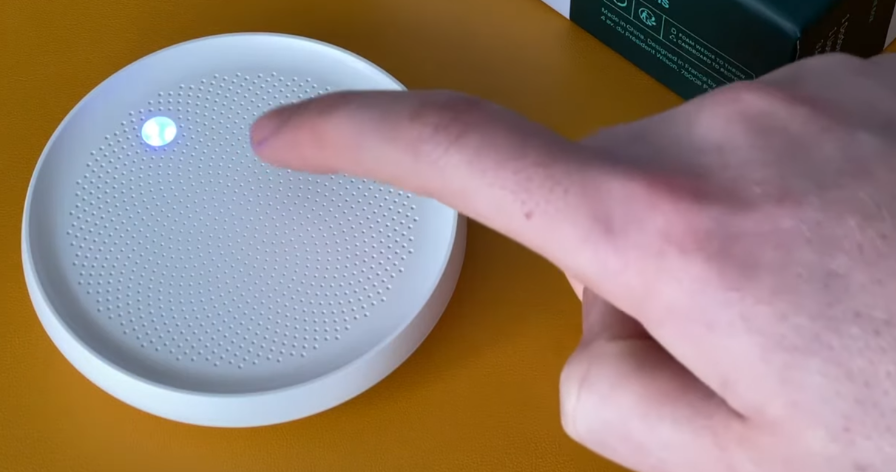
- Touch-sensitive surface for single-tap activation and brightness adjustment
- Soft blue light projected at under one lux, well below the threshold linked to melatonin suppression
- Battery-powered and cordless, making it easy to pack for travel, hotel rooms, and overnight shifts
- Automatic shutoff so you don’t have to reach over in the dark
- No app pairing, no Wi-Fi, no account creation required
- Suitable for children from age six upward
- Requires 3 AAA batteries
- 100-night money-back guarantee with a one-time purchase price and no ongoing fees
How to Use Dodow’s Light-Guided Breathing for Sleep Onset
To use the Dodow device, tap the surface once for an eight-minute session or hold it for twenty.
The light expands and contracts in a slow, steady pulse, and you breathe along with it, inhaling as it grows and exhaling as it shrinks.
Dodow turns itself off when the session ends, so there is no timer to watch and no alarm to dismiss.
That breathing rhythm is set at six breaths per minute, which is linked to cardiac coherence.
In that state, heart rate variability becomes more stable and the autonomic nervous system shifts away from sympathetic activation (the alert, stress-driven state that keeps anxious minds switched on), and toward the parasympathetic state where sleep can start to happen.
Longer exhales are a big part of that, and Dodow is built to stretch them out.
The main issue it’s trying to address is cognitive hyperarousal, which is the mental overdrive that can stop you from falling asleep even when your body is exhausted.
That is also why basic sleep hygiene advice often does not do much for anxious sleepers. Going to bed at the same time every night does not do much for a mind that will not slow down.
Dodow pulls from ideas used in yoga, behavioral therapy, and meditative breathing. It overlaps in some ways with techniques like 4-7-8 breathing, but with one big difference – the light keeps the pace for you.
If you have tried breathing exercises before and had trouble sticking with them because you lost count or got distracted, the breathing structure in Dodow can be helpful as you only have one thing to focus on.
👉 Click here to get 33% off the Dodow sleep aid device
Who Should Use the Dodow Sleep Aid?
Not every poor sleeper will get the same result from Dodow, so it helps to consider whether your sleep struggles match what this device is designed to support before buying.
Dodow is often a good fit for people who:
- Have trouble falling asleep or a longer sleep onset latency, rather than waking frequently through the night
- Lie awake with an overactive mind, revisiting the day or worrying about tomorrow even when their body is ready to sleep
- Want a drug-free option they can use nightly without worrying about dependence or side effects
- Have tried breathing exercises before but couldn’t stick with them without external guidance
- Travel often or work irregular hours and need something portable that doesn’t require a charged phone
- Want a calming bedtime tool they can use with anxious children (Dodow is suitable from age six)
- Have an overactive mind and respond well to clear, structured external cues at bedtime
Dodow probably isn’t the right fit if you:
- Sleep on your side or stomach and find lying on your back uncomfortable
- Have very high ceilings where the projected light becomes too faint to follow
- Share a room with a partner who’s sensitive to even low-level light
- Are dealing with severe or long-standing insomnia with a medical or psychiatric component, in which case CBT-I or a sleep specialist is the more appropriate starting point
- Already use a wearable or app with guided breathing you find yourself returning to consistently
Potential Benefits of Using the Dodow Sleep Aid Device
Dodow offers a simple, non-drug approach for people who have a hard time winding down at night, especially when stress or a busy mind keeps them awake.
Here are some of the potential benefits of using Dodow nightly:
1. Quiet a Busy Mind at Bedtime
Dodow is mainly aimed at people who feel tired but cannot switch their mind off. If your sleep issues are tied to overthinking, stress, or bedtime anxiety, the pulsing light helps give you something neutral to focus on instead of staying stuck in your own thoughts.
2. May Help Some People Fall Asleep Faster
The sleep aid guides your breathing with a slow, steady light pattern that gives you something simple to follow at bedtime. For people who struggle to switch off, that built-in rhythm may make it easier to settle down and ease into sleep.
3. Useful for Middle of the Night Wakeups
Dodow is not only for bedtime. Some people use it after waking up in the middle of the night, especially if checking the time or reaching for a phone makes it harder to fall back asleep. It gives you a simple way to refocus without adding more stimulation.
4. It’s a Non-Drug Sleep Aid
One of the main reasons people look at Dodow is that it doesn’t involve any medication or supplements. It’s a battery powered device that uses light guided breathing, serving as a non-drug alternative to try before bed.
5. It’s Simple and Low Maintenance
Dodow doesn’t require an app, Wi Fi, or much setup. You tap it, follow the light, and it shuts off on its own. That kind of simplicity is a big reason people keep it by the bed or pack it for travel.
Dodow vs. Melatonin and Other Natural Sleep Aids
| Sleep Aid | Best For | Main Drawback | Works With Dodow? |
|---|---|---|---|
| Melatonin | Jet lag, circadian disruption | Grogginess, diminishing returns, doesn’t address anxiety | Yes |
| White noise machine | Masking environmental sound | Doesn’t quiet internal mental noise | Yes |
| Sleep apps | Variety, guided meditation, tracking | Requires screen use, subscriptions, notification risk | Yes, as an alternative |
| 4-7-8 breathing | Free, no equipment needed | Hard to maintain focus without external pacing | Dodow replaces the counting |
| Weighted blanket | Physical restlessness, comfort | Doesn’t address cognitive hyperarousal | Yes |
| CBT-I | Chronic, complex insomnia | Requires time, access, and cost | Yes, Dodow complements it |
| Prescription sleep aids | Severe short-term insomnia | Dependency risk, side effects, tolerance | Consult your doctor |
Melatonin is probably the comparison people make most often, but the two do different things. Melatonin is usually used to support sleep timing, which is why people often use it during jet lag or schedule changes. Dodow is more about giving you a breathing rhythm to follow when your mind will not settle.
White noise machines can also be used alongside Dodow. White noise is there to cover background sound, while Dodow is meant to give you a visual cue for slower breathing at bedtime.
4-7-8 breathing is another common comparison. It uses the same general idea of slowing your breathing, and it doesn’t cost anything to try. The difference is that Dodow sets the pace for you, which some people may find easier than counting breaths in the dark while trying to relax.
CBT-I is still the standard option for chronic insomnia. Dodow may complement it as a simple bedtime tool, but it’s not a replacement for structured treatment.
Where to Buy the Dodow Sleep Aid
Dodow is available through the official website and select retailers, but the best pricing and the 100-night money-back guarantee are typically found through the official channel.
Buying directly also means you’re covered by Livlab’s customer support and return policy without going through a third-party seller.
Final Verdict: Is Dodow Worth Buying?
Dodow is a sleep aid device made for people who feel tired but cannot switch their mind off. If racing thoughts, bedtime anxiety, or stress are what keep you awake, its guided breathing light offers a more targeted approach than products that only try to make you drowsy.
It may be a good fit for people who prefer a non-drug sleep aid, especially if they struggle with sleep onset, middle of the night wakeups, or an irregular schedule.
Dodow is simple to use, easy to keep by the bed, and built around paced breathing that may help some people relax and fall asleep faster.

Sleep Essentials Hub is a sleep blog for readers who want helpful sleep guides and honest product recommendations. We’re passionate about better rest, with a focus on pillows and bedding, sleep aids, sleep apnea and CPAP gear, natural sleep supplements, sleep tech, and simple ways to improve your sleep environment. We’re here to help you choose products that support deeper sleep, greater comfort, and a better night’s rest without overspending.