
Lumo Therapy Lamp Review: Bright, Compact, and Surprisingly Helpful
Darker mornings can make it harder to wake up feeling alert. If you’re looking for a light that mimics natural daylight without taking up desk space, the Lumo Therapy lamp is a compact LED option designed to support morning energy and focus.
It uses UV-free full-spectrum light with adjustable brightness and color temperature, plus a sunrise simulation feature for gradual wake-ups.
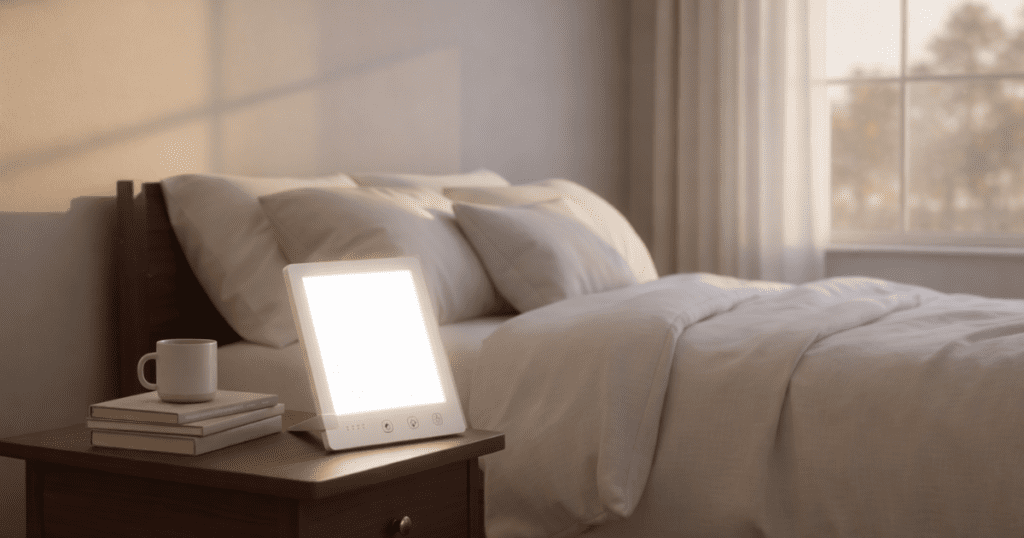
Some people keep it on their desk for a midday boost in focus. Others place it on the nightstand to help them feel more awake in the morning.
In this Lumo Therapy lamp review, I break down how it works, what the specs actually mean for daily use, who it suits best, and what to expect from a lamp this size and brightness level.
Disclosure: This article is reader-supported and contains affiliate links.
Understanding How Light Therapy Lamps Work
Light therapy lamps are designed to supplement natural daylight, particularly during months when sunrise happens late or cloud cover limits bright light exposure. The concept is straightforward: exposure to bright light in the morning may help regulate circadian rhythms and support alertness.
Here’s what these lamps typically offer:
- Mimics Daylight Spectrum: Full-spectrum LEDs produce light similar to natural outdoor light, which can help signal your brain that it’s time to be awake and alert.
- Supports Circadian Rhythm: Bright light exposure in the morning may help reinforce your sleep-wake cycle, particularly if you wake before sunrise or work in spaces with limited natural light.
- Adjustable Intensity: Most lamps range from soft ambient light to 10,000 lux (the brightness level commonly used in light therapy), letting you customize based on comfort and time of day.
- UV-Free Output: Modern LED lamps filter out ultraviolet wavelengths, so you get bright light without the skin or eye exposure concerns that come with direct sunlight.
- Gradual Wake-Up Features: Some models include sunrise simulation that slowly increases brightness to ease you into waking, rather than jolting you awake with an alarm.
These lamps aren’t medical devices unless specifically marketed and cleared as such. They’re wellness tools designed for general use in morning routines, desk setups, or spaces where natural light is limited.
The Lumo Therapy lamp follows this model, offering adjustable brightness and color temperature in a compact form designed for close-range personal use.
What is the Lumo Therapy Lamp?
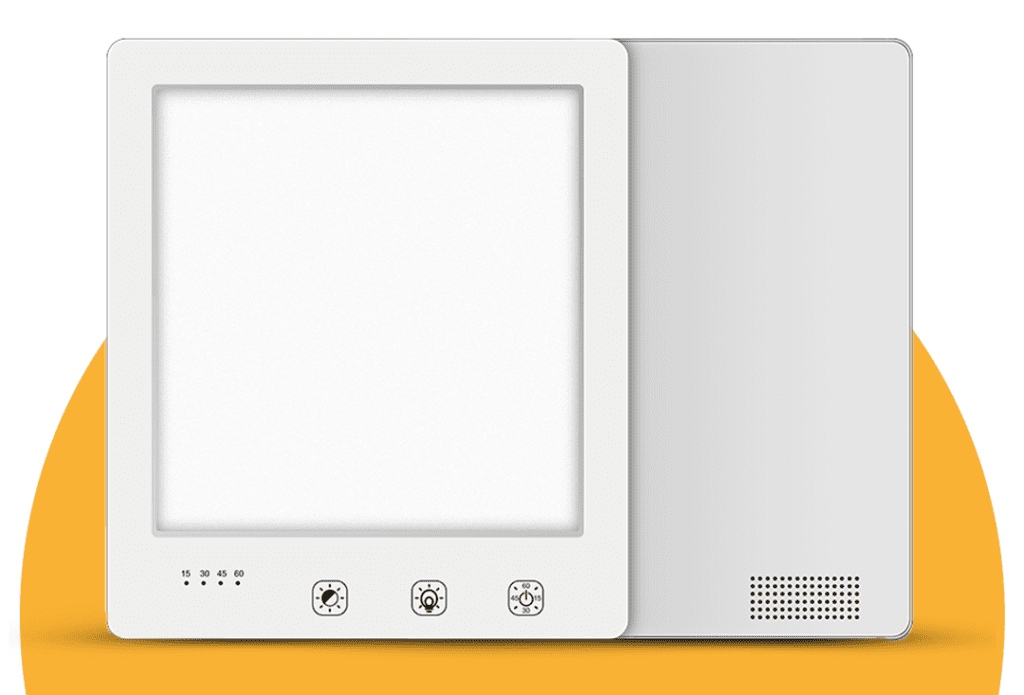
The Lumo Therapy lamp is designed as a personal daylight lamp for early mornings, desk work, or winding down in the evening. It’s not a clinical-grade therapy device, but it does offer features commonly used during light therapy sessions.
The lamp emits full-spectrum LED light that’s UV-free, meaning you get bright white light similar to natural daylight without the wavelengths that can affect skin or eyes over time.
The brightness range goes from 350 lux up to 10,000 lux, which is the level often recommended for morning light exposure.
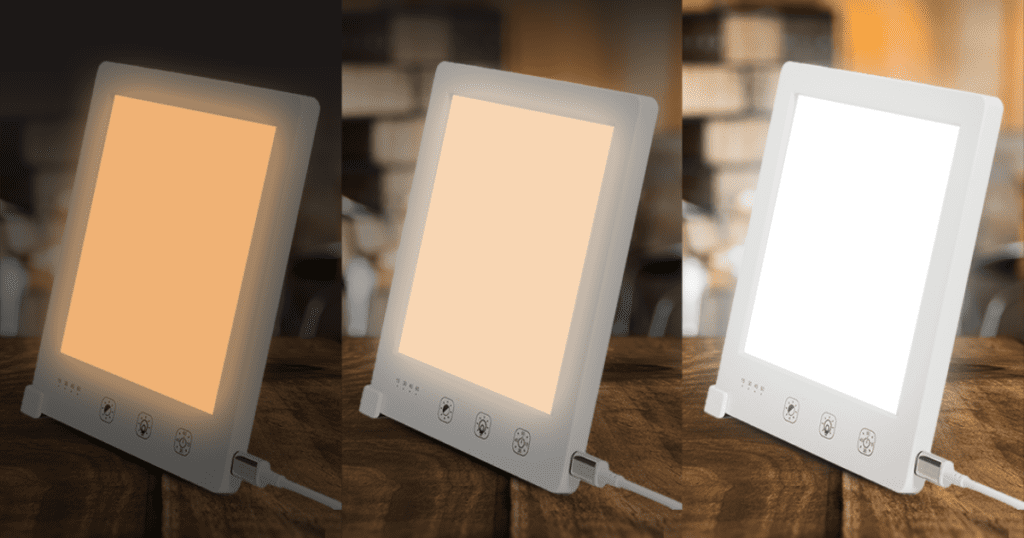
Color temperature is adjustable from 3000K (warm, amber-toned) to 6500K (cool, bright daylight).
Warmer tones work well for evening reading or winding down. Cooler tones mimic midday sunlight and may help with alertness during the early morning or afternoon slumps.
The sunrise simulation feature gradually increases brightness over a set time, designed to wake you more gently than an alarm. You can set timers for 15, 30, 45, or 60 minutes depending on your routine. It’s generally recommended to start low and work your way up to give time for the body to adjust.
If you’re looking for clinical light therapy for diagnosed seasonal affective disorder or other conditions, this lamp isn’t a replacement for medical guidance. It’s designed as a wellness tool for general energy support and routine use, not as a treatment device.
👉 Check Price & Availability of the Lumo Therapy Lamp
How the Lumo Therapy Lamp Works: Specs and Light Output
Understanding the technical side helps set realistic expectations. The Lumo Therapy lamp is relatively small at 160mm x 140mm x 10mm (about 6.2 inches wide, 5.5 inches tall, and less than half an inch deep).
While it may be smaller than some people expect, it’s also the same reason why it works well on crowded nightstands and small desks.
The light output is stepless adjustable, meaning you can fine-tune brightness anywhere between 350 lux and 10,000 lux rather than being locked into preset levels.
The same goes for color temperature, it’s fully adjustable between 3000K and 6500K without fixed intervals so you can find the perfect setting that suits you.
At 10,000 lux, it’s surprisingly powerful for a lamp this small and light. The key detail is that lux is measured from a specific distance. With a compact lamp like this, you’ll get the full effect when it’s fairly close to you, usually around 12 to 18 inches away, like on a nightstand or the corner of your desk.
If it’s pushed to the back of a wide desk, it can still look bright, but you won’t be getting the same intensity. The tabletop mount is adjustable, so you can tilt the angle to direct light where you need it.
The touch controls are straightforward. Tap to cycle brightness, adjust color temperature, and set a timer. It also remembers your last settings, so you can turn it on and go without redoing everything.
Power is via USB at 6.5W and it needs a 5V 2A adapter or a USB port that can supply that. There’s no battery, so it’s best for a spot where you can leave it plugged in.
See Full Details of the Lumo Therapy Lamp →
Lumo Therapy Lamp Brightness and Comfort in Daily Use
Lumo Therapy’s light therapy lamp can feel very different depending on distance and color temperature.
At 10,000 lux with a 6500K daylight setting, the Lumo Therapy Lamp looks and feels bright when it is placed close on a bedside table or desk. Many buyers highlight how strong the brightness feels for a compact lamp.
Lower brightness levels and warmer settings like 3000K create a softer light that feels gentler in the evening and works well as a bedside lamp alternative to harsh overhead lighting, especially when reading before bed.
If you’re sensitive to bright light first thing in the morning, start with a lower lux setting and gradually increase over a few days. The stepless adjustment means you can fine-tune to a comfortable level rather than jumping between fixed presets.
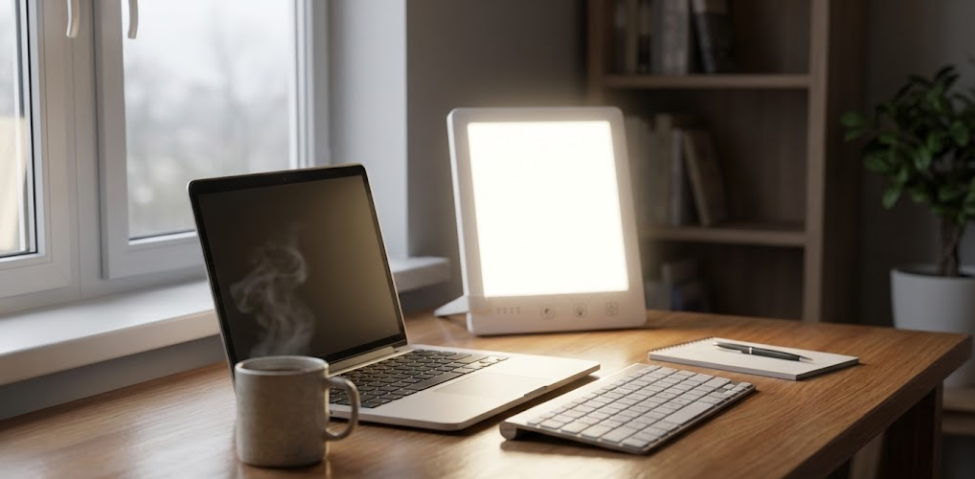
For desk use, reading, or computer work, the adjustable angle helps direct light onto your workspace without glare. The full-spectrum LED output also helps colors look more natural compared to warm-only or cool-only desk lamps.
👉 Click Here to Get Started with Lumo Therapy
Light Therapy Sunrise Simulation: How It Works and Who It is For
The Lumo Therapy Lamp includes a sunrise simulation mode that ramps the light up slowly over your chosen duration of 15, 30, 45, or 60 minutes. The idea is a gentler awakening by bringing light into the room gradually instead of jolting you awake all at once and leaving you groggy.
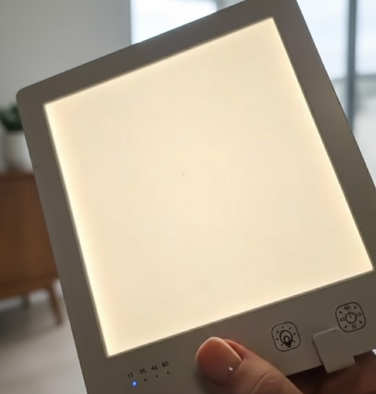
This feature is timer based rather than schedule based.
You choose the duration when you use it, but it does not run on an automatic daily program like a smart wake up light.
If you want it every morning, you will need to set it accordingly.
Some people find gradual light exposure helps them feel more alert when they wake up, especially during darker months.
Others may not notice much difference, particularly if they already wake easily or use blackout curtains or a blackout sleep mask that block all light until their alarm goes off.
The timer shuts off automatically once the set duration ends, so you don’t need to remember to turn it off manually.
How to Use the Lumo Therapy Lamp for Morning Energy and Focus
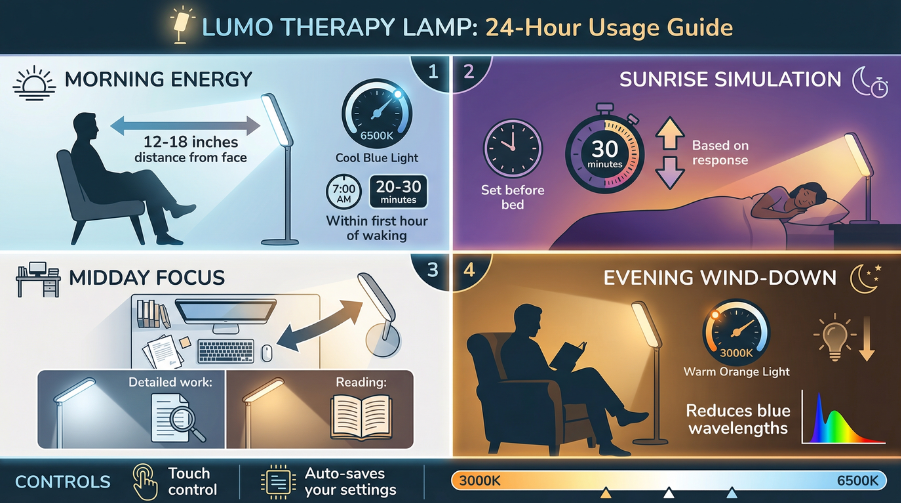
Use the Lumo Therapy Lamp like a targeted light therapy session, not just a room light. Small placement changes make the biggest difference for morning energy and focus.
- Distance: Keep it 12 to 18 inches from your face for full brightness
- Height: Place it at eye level or slightly above and slightly off to the side
- Morning setting: Use cool daylight around 6500K for alertness
- Timing: Aim for 20 to 30 minutes within the first hour after waking
- Desk positioning: Set it beside your monitor to reduce glare while still getting light exposure
- Evening setting: Switch to warm 3000K and lower brightness for softer light later in the day
- Sunrise simulation: Set the timer before bed start with 30 minutes then adjust to 15, 45, or 60
- Controls: Use touch controls to change brightness color temperature and timer quickly
Remember that you don’t need to stare into the lamp. Let it sit in your peripheral vision while you read, plan your day, or work.
If you want the best light therapy lamp results from a compact 10,000 lux device, treat distance as the main dial. Closer placement delivers the strongest effect for morning energy and daytime focus.
Lumo Therapy Lamp: Pros and Cons
Pros
- Compact design fits on crowded desks and small bedside tables without taking up much room
- Adjustable brightness (350–10,000 lux) and color temperature (3000K–6500K) let you customize for different times of day
- UV-free LED light is safe for extended use near eyes and skin
- Sunrise simulation with timer options (15, 30, 45, 60 minutes) for gradual wake-ups
- Touch controls and memory function make it easy to use daily without constant adjustments
- Lightweight build makes it easy to move between rooms or pack for travel
Cons
- Small size means brightness is strongest at close range, may be less effective if used further than 18 inches away
- No battery option, requires a power connection at all times
Conclusion
If shorter days leave you sluggish or you keep hitting a midday slump while working, the Lumo Therapy Lamp delivers bright, full-spectrum light at your bedside or desk without taking up much space.
As a compact UV-free LED light therapy lamp, it can sit right where you already spend your time like your nightstand or the corner of your desk which makes it much easier to use every day and get real value from light therapy.
Some people notice better energy or alertness within a few days of consistent morning use. Others feel little change, especially if they already get strong morning light from windows or if their low energy is tied to sleep quality, stress, or other factors.
The lamp is designed for general wellness use, not as a treatment for medical conditions. If you are dealing with persistent low mood, fatigue, or sleep issues, it is worth checking in with a healthcare provider rather than relying on a light therapy device alone.
If you do try it, treat it like a small daily upgrade and keep it easy to stick with. Start with lower brightness settings during your first few uses to see how your eyes and energy respond.
Position it 12 to 18 inches from your face during morning sessions, and adjust the angle to avoid glare during desk work. Angle it slightly off to the side during desk work so it supports focus without being in your line of sight.
When placed where you spend the most time, you are much more likely to use it often enough to start noticing the benefits.
Frequently Asked Questions
Can I use the Lumo Therapy lamp while working on a computer?
Yes you can use the Lumo Therapy lamp while at a computer. Position it to the side of your screen rather than directly behind or in front of it to avoid glare. Adjust the brightness and color temperature to a comfortable level that doesn’t overpower your screen. Many people use it during morning desk work or video calls to add natural-looking light.
How long should I use the Lumo Therapy lamp each morning?
A common guideline for light exposure is 20 to 30 minutes within the first hour of waking up, positioned 12 to 18 inches from your face. This isn’t a strict rule, and individual needs vary. Start with shorter sessions (10 to 15 minutes) if you’re sensitive to bright light, and increase gradually.
Does the Lumo Therapy lamp help with sleep if used at night?
It’s not recommended to use the Lumo Therapy lamp on the bright, cool-toned settings when winding down. Bright blue-toned light in the evening may interfere with melatonin production and delay sleep readiness. If you want to use it at night, switch to the warmest color temperature (3000K) and lowest brightness to provide functional light without disrupting your sleep.
Where is the best place to put a light therapy lamp?
For morning energy support, place the light therapy lamp at eye level or slightly above, about 12 to 18 inches from your face. Many people keep it on a desk or bedside table where they naturally spend time in the morning. Avoid positioning it directly in your line of sight—slightly off to the side works well. For evening use with warm settings, anywhere in your workspace or reading area works.
Can I take the Lumo Therapy lamp with me when I travel?
Yes the Lumo Therapy lamp is travel-friendly. The compact size and lightweight build make it easy to pack. You’ll need access to a USB power source (adapter or power bank). The memory function means you don’t need to reset your preferred settings after unplugging it.
How do I clean the Lumo Therapy lamp?
To clean the Lumo Therapy lamp, first unplug it. Wipe the surface with a soft, dry cloth to remove dust. Avoid water or cleaning solutions on the LED panel, as moisture can damage the electronics. The plastic stand and base can be wiped down with a slightly damp cloth if needed.
Who should not use a light therapy lamp?
If you have a diagnosed eye condition, take medications that increase light sensitivity, or have a history of bipolar disorder, check with a healthcare provider before using bright light therapy. Some medications and health conditions can make eyes more sensitive to intense light. If you experience headaches, eye strain, or agitation after use, stop and consult a professional.
Do light therapy lamps give you vitamin D?
No, light therapy lamps do not produce vitamin D. Light therapy lamps filter out UV wavelengths, which are necessary for vitamin D production in skin. The UV-free design makes them safe for extended use near eyes and skin, but it also means they won’t support vitamin D synthesis the way natural sunlight does. If you’re concerned about vitamin D levels, talk to a healthcare provider about testing and supplementation.
Disclaimer: This review is for informational purposes only and is not medical advice. If you have a diagnosed condition or take medications that affect light sensitivity, consult a healthcare provider before using light therapy products.

Sleep Essentials Hub is a sleep blog for readers who want helpful sleep guides and honest product recommendations. We’re passionate about better rest, with a focus on pillows and bedding, sleep aids, sleep apnea and CPAP gear, natural sleep supplements, sleep tech, and simple ways to improve your sleep environment. We’re here to help you choose products that support deeper sleep, greater comfort, and a better night’s rest without overspending.