
Pulsetto vs Sensate: Which Vagus Nerve Device Is Better for Anxiety, Stress & Sleep?
Chronic stress and anxiety affect millions of adults, often disrupting sleep and overall well-being. Pulsetto and Sensate are two non-invasive vagus nerve stimulation devices designed to help regulate your nervous system without medication.
These devices work differently and target different user needs. Understanding how each performs, what users actually experience, and the key differences can help you choose the right option for your wellness goals.
Pulsetto vs Sensate: Key Differences at a Glance
| Feature | Pulsetto | Sensate |
|---|---|---|
| Price | Check Today’s Deal | Check Price on Amazon |
| Stimulation Type | Electrical pulses via neck electrodes | Near-infrasound vibrations via bone conduction on the sternum (chest bone) |
| Placement | Around neck (visible when worn) | On chest (discreet under clothing) |
| Setup Requirements | Conductive gel needed each use | No gel; just place and start |
| Session Length | 10-15 minutes typical | 10-30 minutes with soundscapes |
| During Use | Hands-free; can multitask | Lie down or sit still for best experience |
| App Dependency | Requires phone nearby to control | Requires phone for soundscapes |
| Core Features | Free with device purchase | Free with device purchase |
| Optional Subscriptions* | Premium features ~$15/month | Extra soundscapes $50/year |
| Ongoing Costs | Replacement gel ($15-25/month with regular use) | None (unless you want additional soundscapes) |
*Prices change frequently with promotions and sales. Check current pricing for the most accurate information.
Disclosure: An an Amazon Associate and affiliate partner we may earn a small commission on qualifying purchases at no extra cost to you.
What Is a Vagus Nerve Stimulator?
The vagus nerve connects your brain to major organs and plays a key role in your parasympathetic nervous system, which controls rest, digestion, and recovery from stress. When you’re chronically stressed, this nerve can become dysregulated, keeping you in a heightened state.
Vagus nerve stimulation devices use gentle electrical pulses or vibrations to activate this nerve, which may help your body move toward a calmer state.
These are wellness tools meant to support nervous system regulation, not medical treatments for specific conditions. If you’re dealing with diagnosed health issues, it’s worth talking with your healthcare provider before trying any new device.
What is Pulsetto?
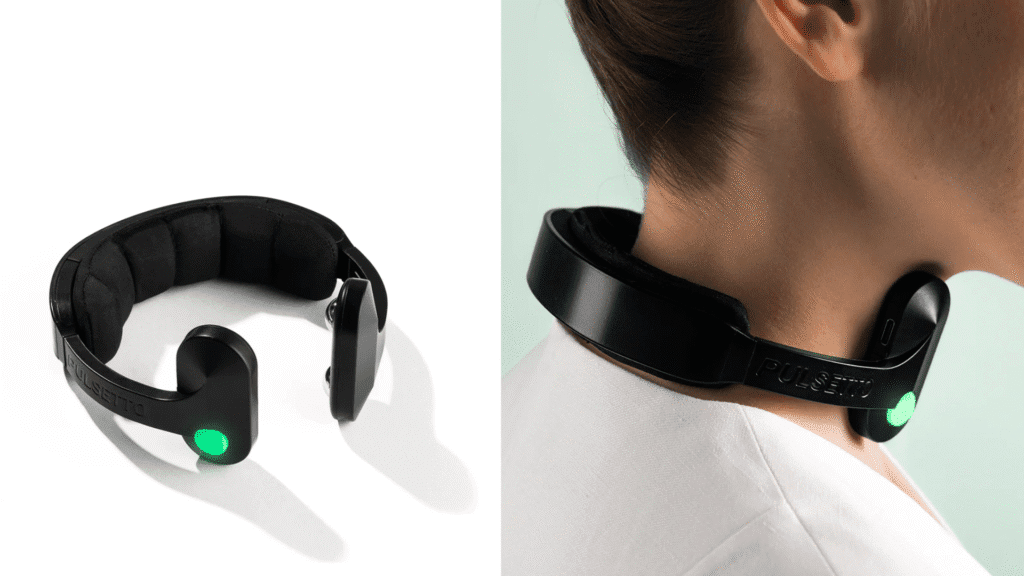
Pulsetto is a non-invasive, neck-worn stimulation device that pairs with a mobile app. Sessions typically last 10-15 minutes, and offers different programs for sleep, stress, anxiety, and burnout.
If you’re considering multiple vagus nerve devices, you might find our Pulsetto vs Truvaga comparison helpful as well.
How to Use Pulsetto
The setup for Pulsetto is fairly straightforward:
- Apply a small amount of conductive gel (either to your neck or directly to the device electrodes)
- Place the device so the electrodes touch the skin
- Connect to the Pulsetto app via Bluetooth and choose a program
- Start your session.
After you’re done, wipe the gel off your neck and the device as it’s not meant to stay on your skin. The whole process takes a few minutes once you get the hang of it.
What Does Pulsetto Feel Like During Use?
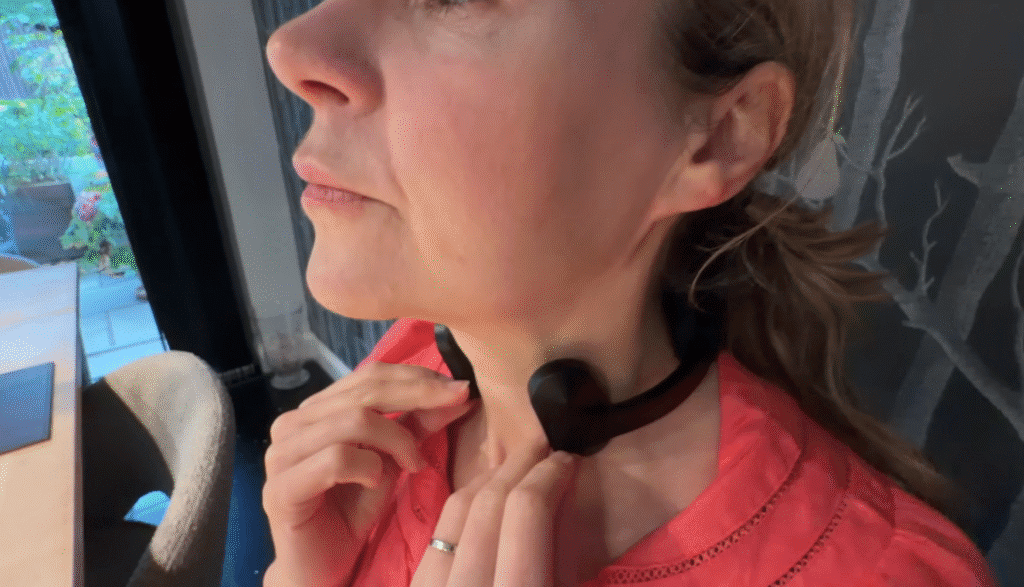
Pulsetto is not a subtle vibration device. Most people feel noticeable muscle contractions where the electrodes sit, and the guide notes that this is normal and should stop when the session ends.
Some describe it as a prickling sensation, and a few mention their lip twitching slightly during use. If you skimp on gel, it can feel sharper or more uncomfortable, so using enough gel makes a real difference in how the session feels.
If the sensation feels too intense at first, start at the lowest settings (1-3) and work your way up slowly. Many people say it feels weird initially but you adjust to it pretty quickly.
The big plus: it’s hands-free. You can keep your phone nearby (it controls the device) and go about your usual evening routine—reading, journaling, watching something—without needing to hold it in place or stay perfectly still.
Important Notes About Pulsetto
- Subscription: Pulsetto offers an optional Premium app subscription (often started via a free trial) that auto-renews at around $15/month unless you cancel. The device’s basic use does not require the subscription, however Premium unlocks extra in-app features like additional stimulation modes, a meditation library, breathing exercises, affirmations, and deeper insights —so if those extras matter to you, it’s worth checking what’s included before you decide.
What is Sensate?
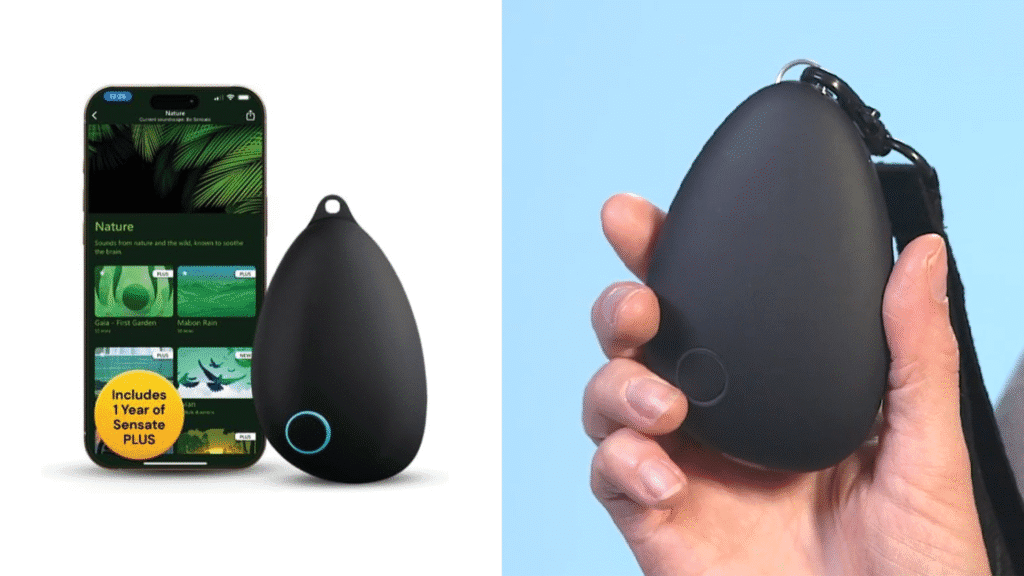
Sensate is a pebble-shaped device you wear on your chest (over your sternum) using a lanyard. It uses near-infrasound resonance via bone conduction, paired with soundscapes in the Sensate app. You place it on your sternum, connect via Bluetooth, choose an audio track, and let the vibration work alongside the sound to create a calming experience.
How to Use Sensate
The setup for Sensate is straightforward:
- Place the device on your chest (typically on your sternum) if lying down, or use the lanyard to position if sitting up.
- Connect to the Sensate app via Bluetooth
- Choose a soundscape from the app library (10, 20, or 30-minute options)
- Start your session
You’ll need your phone nearby for the audio, and most people use earbuds or headphones to hear the soundscapes clearly.
What Does Sensate Feel Like During Use?
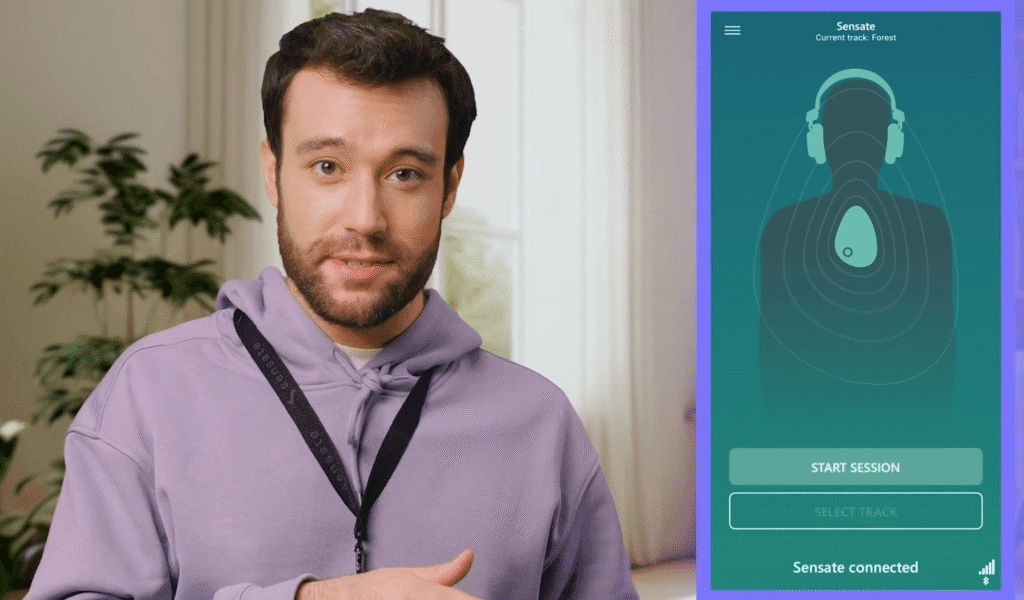
Sensate’s vibration hums with a deep, low-frequency pulse. In reviews, it’s frequently compared to the feeling of a purring cat resting on your chest, or the resonating sensation you feel when singing or humming.
The vibration pulses against your sternum and creates a resonating sensation inside your ribcage. A lot of people say it feels like a deep, gentle vibration through the chest, almost like a slow “unclenching” that helps you settle. It’s not sharp or intense. It’s more of a soothing sensation that’s easy to sit with.
It also doesn’t feel like you’re doing a session in the clinical sense. Most people use it the same way they’d use a wind down routine at night. The vibration gives you something steady to tune into, and the audio helps fill the space, which can be useful if silence gets your mind racing.
That said, some people with sensory sensitivities find the soundscapes or vibration intensity uncomfortable, even at lower settings. A rare few users also mention the device making rattling or chirping noises during certain sessions, which can be disruptive.
Important Notes About Sensate
- Subscription: Sensate includes basic soundscape tracks with the device purchase (roughly 10-12 free tracks across different categories). An optional PLUS subscription ($50/year) unlocks the full library with additional tracks that update regularly. The free tracks work well for many people, though you’re limited to 1-2 free options per category.
- Activation (if buying with PLUS): Some packages advertise “with PLUS” included, but activation may require emailing customer service rather than being automatic. If you purchase a PLUS package, you may need to reach out to activate your subscription.
- LED Light: The device has a bright LED light when in use, which bothers some people trying to relax in a dark room. Covering it with a blanket or cloth helps.
- Charging: The device uses a proprietary charging cable rather than USB-C, so you’ll need to keep track of the specific cable that comes with it.
Pulsetto vs Sensate for Anxiety and Stress
Pulsetto and Sensate both get brought up for stress, but they don’t feel interchangeable. The difference shows up fast once you actually try to use them:
Active vs Passive Experience
Pulsetto creates a noticeable physical sensation during sessions that some people find grounding when their mind won’t settle. Instead of trying to “empty your mind,” you have a noticeable feedback point that can help you stay anchored.
Sensate feels very different. It’s more of a gentle chest vibration paired with soundscapes, so the experience leans toward creating a calming environment rather than a strong physical feeling.
So the choice usually comes down to sensitivity. Users that prefer a more direct, noticeable sensation are more likely to lean towards Pulsetto. If stronger sensations tend to feel too much, or leave you feeling keyed up, Sensate’s softer style is often the easier one to stick with.
Multitasking vs Dedicated Time
Pulsetto tends to blend into whatever you already do at night. Because it’s hands-free, you can put it on and carry on with your usual wind-down habits like reading, watching a show, or journaling.
Sensate is a bit more of a “pause and do this” experience. You normally use it sitting back or lying down with the device on your chest, so it works best when you’re willing to set aside a few quiet minutes for the session.
Neither approach is better, it’s just a different fit. If you want something you can stack onto what you’d normally be doing, Pulsetto sessions can be seamlessly integrated. If you like the idea of carving out some time so that you switch off for the night, Sensate may be a better fit.
What You Can Realistically Expect
Experiences with both devices vary quite a bit. Some people notice they’re feeling different within a week or two. Others find any changes develop more gradually or stay subtle. A smaller group finds that using the device at too high an intensity actually makes them feel more on edge rather than less.
Starting with low intensity and short sessions—around 5 to 10 minutes—tends to be the easier way to figure out how your body responds. You can always adjust from there. Neither device will work the same way for everyone, and what one person finds helpful might not make much difference for someone else.
Pulsetto vs Sensate for Sleep
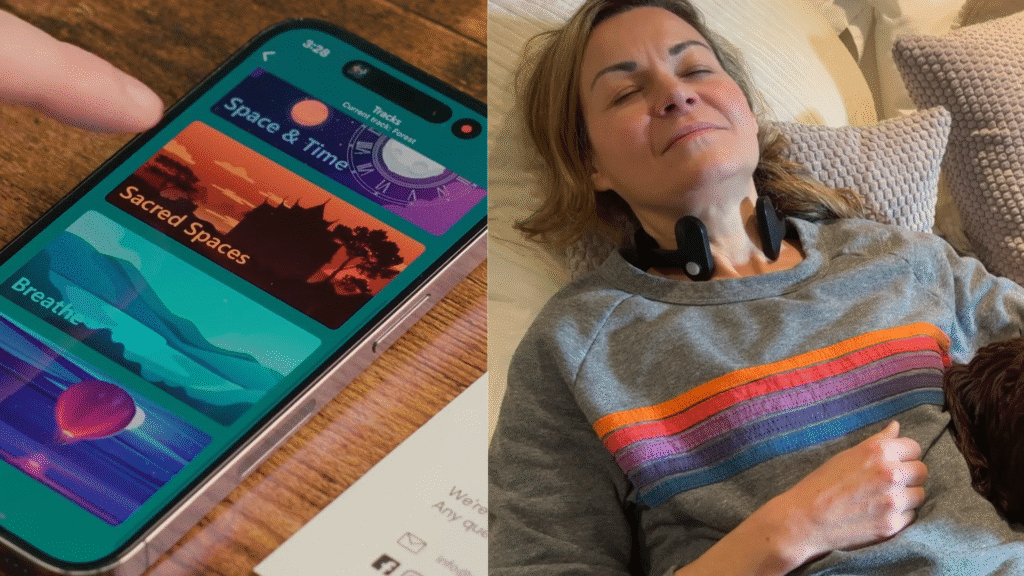
Vagus nerve stimulation activates your parasympathetic nervous system, which governs rest and recovery.
Research suggests this activation may help your body transition from alert wakefulness to relaxed sleepiness. For people whose minds race at bedtime or who experience physical tension, this may be particularly helpful.
Pre-Sleep Routine vs Sleep-Inducing Session
Pulsetto’s Sleep program operates at a specific frequency (4750 Hz) designed for bedtime use. Because it’s hands-free, you can run a session while doing the things you’d normally do before bed.
Sensate works more like a deliberate transition into sleep. You lie down, start a soundscape (10, 20, or 30 minutes), and let the combination of vibration and audio guide you toward drowsiness.
Quick Sessions vs Longer Wind-Downs
Pulsetto sessions for sleep typically run 10-15 minutes, though you can adjust the duration. If you prefer shorter, targeted sessions that don’t require lying down immediately, this structure might suit you better.
Note that Pulsetto requires gel application which means adding a step to your routine when you’re already tired. Some people don’t mind this. Others find it counterproductive at bedtime.
Sensate sessions are longer and assume you’re already in bed or close to it. If committing 20-30 minutes to a lying-down session feels like too much when you’re exhausted, the shorter Pulsetto approach might fit more naturally.
Note that with Sensate you need your phone nearby for the soundscapes and likely headphones, which means managing cords or Bluetooth earbuds. The device can also be accidentally bumped out of place if you move around too much, and the LED light bothers some people in dark rooms.
How to Use VNS Devices for Sleep
If you’re trying either vagus nerve stimulator for sleep, start with the lowest intensity and time sessions for 30-60 minutes before you actually want to be asleep. This gives your system time to settle in rather than expecting instant results right at lights-out.
Remember that these VNS devices are tools that may help regulate your nervous system, which may improve sleep. Clinical insomnia or sleep apnea requires professional medical guidance.
Safety and Side Effects of Vagus Nerve Devices
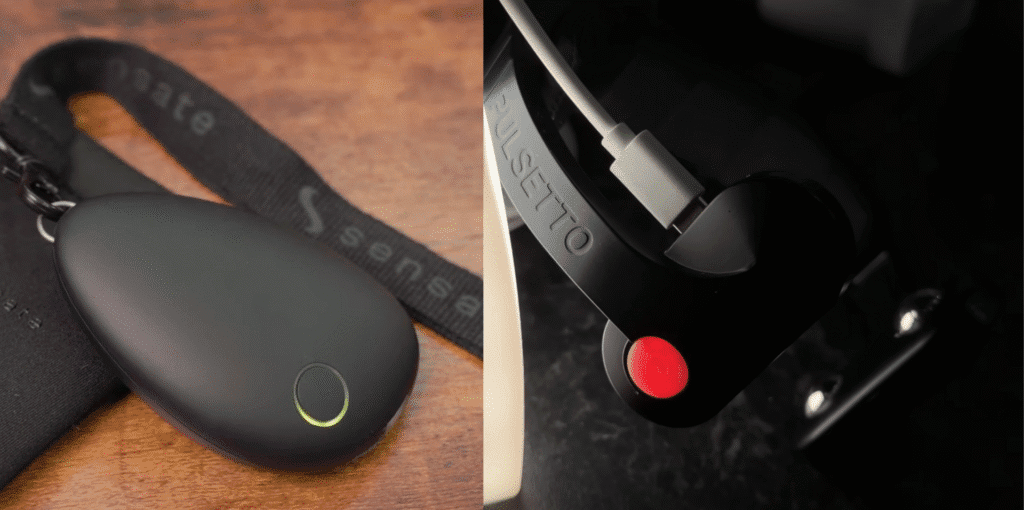
Both VNS devices are wellness tools rather than medical treatments. However, since they interact with your nervous system, side effects can occur for some people.
Pulsetto: the most commonly listed issues are local and sensation-related (like skin irritation or discomfort at the contact point, tingling, muscle twitching, headache, or dizziness).
Sensate: the user guide says to discontinue if irritation or symptoms occur, and it also says not to use it if you’re pregnant or if you have a pacemaker or other medical device fitted.
If you decide to try either device, start with 5-minute sessions at the lowest intensity setting. Increase gradually over several days only if you’re tolerating it well. Stop immediately if you feel worse rather than better.
People with heart conditions, pacemakers, epilepsy, or serious psychiatric conditions should talk with their doctor before using any vagus nerve device. The same goes for pregnant individuals and those dealing with pre-existing conditions.
If you have ongoing health concerns or experience persistent side effects, consult a healthcare provider. These devices aren’t FDA-cleared medical treatments and shouldn’t take the place of professional medical care.
Pulsetto vs Sensate: Which Should You Choose?
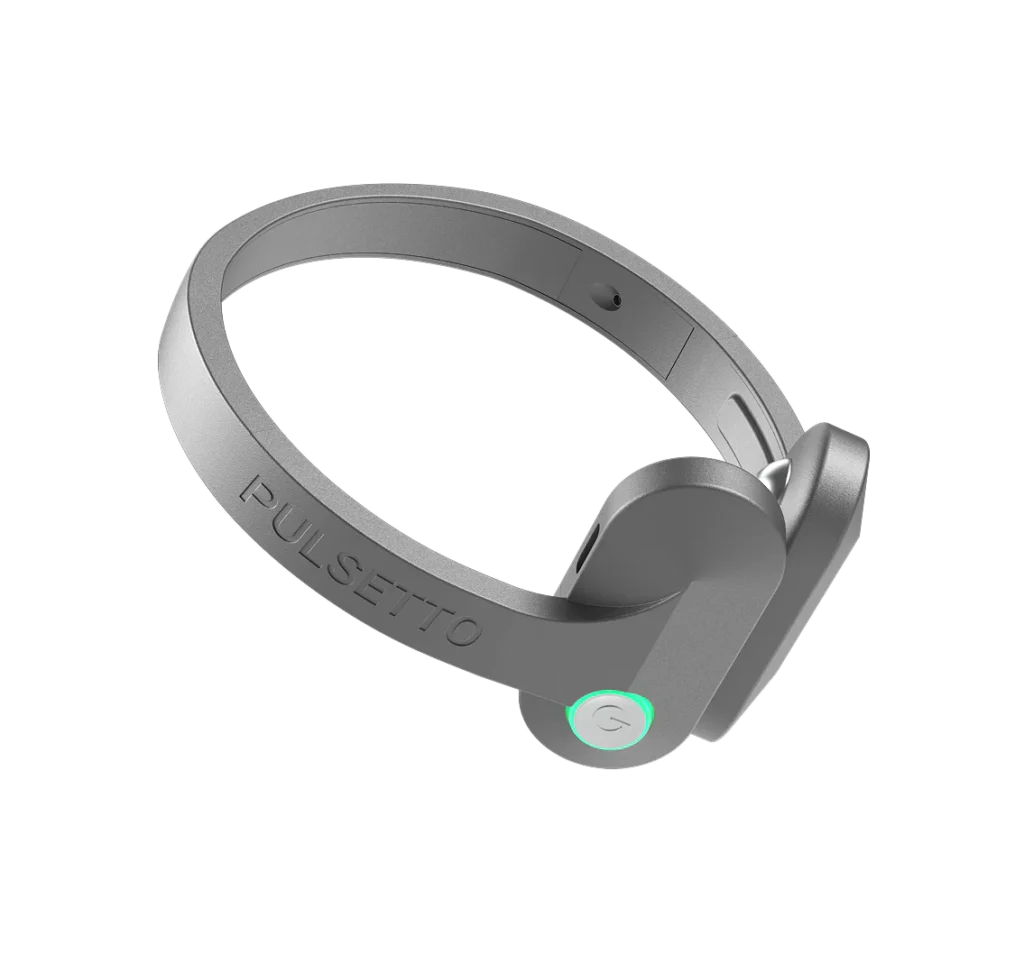
Choose Pulsetto If:
- You want hands-free sessions for bedtime or evening routines
- You like having guided programs in an app and a structured session you can easily follow
- You prefer a more noticeable, physical sensation (rather than subtle vibration)
- You are comfortable with a quick setup step before each session
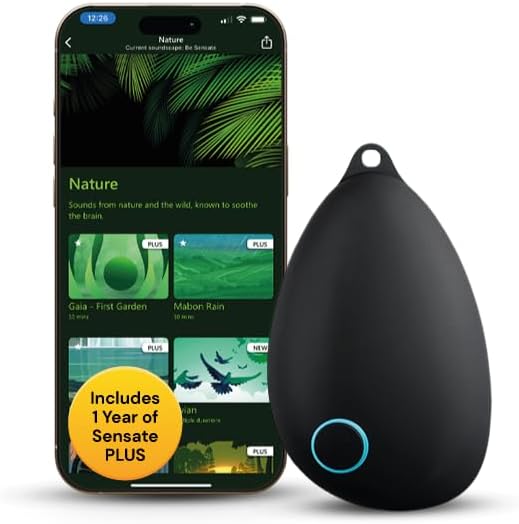
Choose Sensate If:
- You want a gentler experience built around vibration plus soundscapes
- You prefer a simple “place it and press play” setup
- You like the idea of setting aside a dedicated decompression session, usually sitting back or lying down
- You tend to be sensitive to stronger sensations and want something easier to relax into
- You want discreet chest placement for office or travel use
Pulsetto vs Sensate: Which Vagus Nerve Device Is Right for You?
Both Pulsetto and Sensate offer different approaches to vagus nerve stimulation.
Pulsetto delivers hands-free electrical stimulation you can use while reading or winding down—sessions run 1-15 minutes and fit into existing routines without needing dedicated time.
Sensate uses gentle chest vibration with soundscapes, requiring 10-30 minutes lying down or sitting still.
Pulsetto can be an easy starting point if you want a lower-priced option, shorter sessions, and something you can use while multitasking. You can also use the core programs without a subscription, which helps keep ongoing costs down.
If you try either device, ease into it. Start on a lower setting, keep sessions simple, and give yourself a few uses to see how it fits your routine. If you have any medical concerns or you’re unsure whether it’s appropriate for you, it’s worth checking in with a healthcare professional first.
Remember to keep expectations realistic. Some people love these devices, others feel very little. The goal is to find the option you’ll actually use consistently, because that’s what usually matters most.
Check Pulsetto pricing | See Sensate on Amazon
Health Disclaimer: The information in this article is for general informational purposes only and should not be considered medical advice. Pulsetto and Sensate are wellness devices, not medical treatments. They are not designed to diagnose, treat, or cure any medical conditions. Always consult a qualified healthcare professional before using any vagus nerve stimulation device, especially if you have pre-existing health conditions, are pregnant, have implanted medical devices, or take medications affecting your nervous system. Individual results vary widely, and these devices should not replace professional medical care or treatment.