
How to Create a Non-Toxic Sleep Sanctuary with Organic Bedding

Creating a non-toxic sleep sanctuary isn’t just about choosing organic sheets; it’s about designing an entire environment that promotes health, well-being, and sustainability. A non-toxic bedroom can improve your sleep quality, reduce exposure to harmful chemicals, and help you live a more eco-conscious lifestyle.
In this guide, we’ll show you how to create the ultimate non-toxic sleep space, from bedding to decor.
Could Your Bedroom Be Harming Your Health?
It’s not something that most people think about, but the cause of your morning headaches, skin irritation, or restless nights could be right beneath you. Or even wrapped around you. Your bedroom is actually one of the most chemically dense rooms in the average home. From the foam in your mattress to the finish on your furniture, the air you breathe while you’re sleeping can be carrying a significant toxic load.
Conventional Bedding: Flame Retardants, Formaldehyde, and Pesticide Residues
Conventional mattresses must meet federal flammability standards by law in the U.S. To meet these standards, most manufacturers douse foam and fabric in chemical flame retardants.
These retardants include polybrominated diphenyl ethers (PBDEs) and organophosphate compounds. Studies have linked these to hormone disruption, neurological damage, and developmental issues in children.
It may surprise you to learn how many bedding products contain formaldehyde.
This chemical is often used as a finish on conventional cotton sheets to prevent wrinkles and shrinking, and it can stick around in the fabric long after the sheets have been made.
Conventional cotton is also one of the most pesticide-heavy crops in the world. Synthetic pesticide, herbicide, and fertilizer residues can stay stuck in the fiber and be in direct contact with your skin throughout the night.
Artificial dyes are another cause for worry. A lot of traditional bedding items utilize azo dyes, disperse dyes, and colorants based on quinoline, which have been linked to skin sensitization and allergies.
Bearing in mind that your skin is the biggest organ in your body and that you are in extended contact with these substances every night, the cumulative exposure is substantial.
Common Chemicals Found in Conventional Bedding:
| Chemical | Where It Is Found | Potential Health Impact |
|---|---|---|
| Flame Retardants (PBDEs) | Mattress foam and fabric | Hormone disruption, neurological damage |
| Formaldehyde | Wrinkle-resistant sheet finishes | Skin irritation, respiratory issues |
| Pesticide Residues | Conventional cotton fiber | Skin sensitization, long-term toxicity |
| Azo and Disperse Dyes | Colored bedding and pillowcases | Allergic reactions, skin sensitization |
| Phthalates | Synthetic mattress covers | Endocrine disruption |
| PFAS (Forever Chemicals) | Waterproof mattress protectors | Immune system interference |
Why You Absorb More Toxins at Night Than During the Day
During sleep, your body temperature rises slightly and your skin becomes more permeable, which means you absorb more of whatever is in direct contact with you.
Couple that with the fact that you are breathing in a small, enclosed space for six to nine hours, and the concentration of volatile organic compounds (VOCs) off-gassing from synthetic materials can reach levels far higher than you would encounter during waking hours.
Children are especially vulnerable because they sleep longer and their smaller body mass means a higher relative dose of any chemical exposure.
How to Know If Your Bedding Is Really Organic
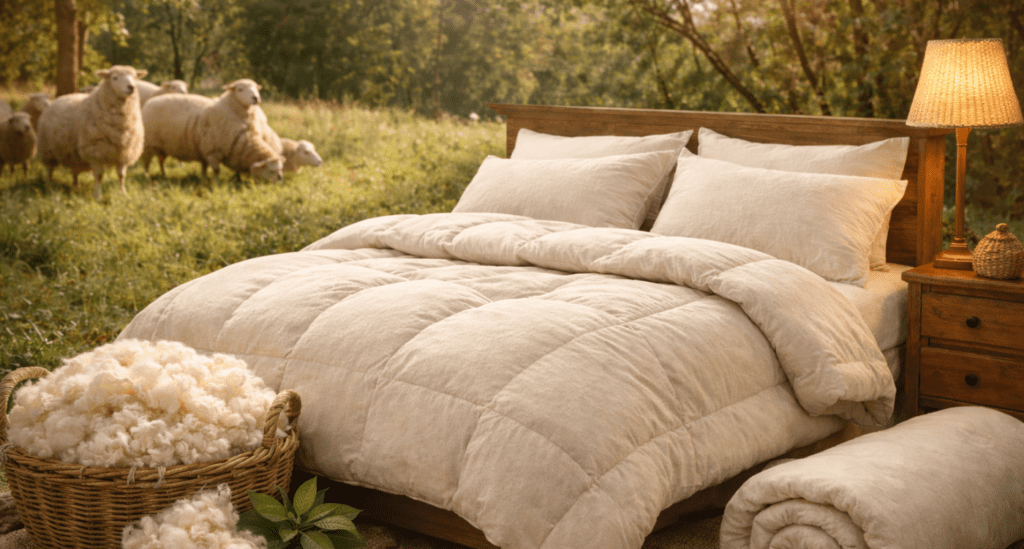
Just because a bedding label says “organic” doesn’t mean it’s entirely organic.
Without third-party certification, a company can use the term “organic” to describe one ingredient or part of a process, while the rest of the product is made with conventional chemicals. To avoid greenwashing and buy products that truly protect your health, you need to know what to look for on a label.
GOTS Certification: The Gold Standard for Organic Textiles
When it comes to organic fiber products, the Global Organic Textile Standard (GOTS) is the most thorough certification out there.
It examines the entire supply chain, from the raw fiber in the field to the final product on the shelf. To earn GOTS certification, a product must contain at least 95% certified organic fibers, and every step of processing must meet strict environmental and social criteria.
This includes prohibiting toxic dyes, synthetic finishes, and a long list of harmful chemicals at every stage of production. If a bedding brand carries the GOTS label, you can trust that what you are buying is genuinely chemical-free from farm to bedroom.
OEKO-TEX vs GOTS: Which Certification Really Matters
OEKO-TEX Standard 100 is a well-known certification that tests the completed textile product for harmful substances.
It verifies that the final product doesn’t contain chemicals beyond a certain limit. However, it doesn’t regulate how the product was made or if the raw materials were organically grown. GOTS, on the other hand, regulates both the inputs and the process.
For a truly non-toxic sleep sanctuary, GOTS is the better choice, although OEKO-TEX Standard 100 is still a significant improvement over uncertified conventional bedding.
Just Because a Label Says “Natural” Doesn’t Mean It’s Free From Chemicals
Let’s take bamboo as an example. It’s often sold as a natural, environmentally-friendly fiber, but the majority of bamboo fabric you’ll find is actually bamboo rayon or bamboo viscose, which is made through a process that involves a lot of chemicals like sodium hydroxide and carbon disulfide.
The fabric that comes out of this process might feel soft and luxurious, but it’s not the natural, chemical-free material that the marketing might lead you to believe it is. So always make sure you’re looking past what the raw material is supposed to be and check how it’s processed and whether or not it’s certified before you buy it.
Choosing the Right Organic Materials for Your Bedroom
Organic materials can greatly vary in their performance when used in a sleeping environment.
The fiber you choose can impact temperature control, moisture management, durability, and how the material withstands years of washing. By understanding the advantages of each material, you can create a sleeping system that is not only free from toxins but also genuinely comfortable and practical.
Organic Cotton: Soft, Breathable, and Free of Chemicals
Organic cotton is the most versatile and readily available option for non-toxic bedding. It is grown without the use of synthetic pesticides or fertilizers, is soft to the touch, highly breathable, and becomes even softer with each wash.
Sheets made of GOTS-certified organic cotton are free from finishes containing formaldehyde, synthetic dyes, and petrochemical processing aids. For those with sensitive skin, eczema, or respiratory sensitivities, simply switching to organic cotton sheets can make a noticeable difference in the quality of your sleep and the health of your skin.
For help choosing the right fabric for reactive skin, see our guide to the best bedding materials for sensitive skin.
Organic Wool: The Secret to a Comfortable and Safe Sleep
Organic wool is a hidden gem when it comes to creating a non-toxic sleep sanctuary.
It’s a natural temperature regulator, meaning it can wick away moisture from your body and adjust to your body’s thermal environment.
This makes it perfect for anyone who tends to sleep hot or cold. But there’s more to it – wool is naturally flame-resistant without needing any chemical treatment. Because of this, organic mattresses often use organic wool as a natural flame barrier, so they don’t need the chemical flame retardants that conventional foam mattresses use.
Wool is naturally antimicrobial, which means it can resist dust mites and mold. This can make your sleeping environment cleaner and healthier over time.
If you’re looking for pillows and duvet inserts, consider organic wool fill. This is a breathable, temperature-balancing alternative to synthetic polyester fiberfill. For a full bed upgrade, an organic wool comforter can regulate temperature across all four seasons, making it a practical year-round investment.
You can also layer an organic wool mattress topper over your existing bed for added comfort and temperature regulation. Synthetic polyester fiberfill can trap heat and harbor off-gassing chemicals.
If you prefer a synthetic-free option without animal products, our best down alternative comforters roundup covers several non-toxic picks.
Organic Bamboo: Keeps You Cool and Allergy-Free
Authentic organic bamboo, which is mechanically rather than chemically processed, is a fantastic choice for those who tend to overheat or sweat during the night.
This material naturally draws moisture away from the body and dries quickly, ensuring your bed stays cool and dry all night. Plus, it’s naturally hypoallergenic and dust mite resistant, making it an excellent option for those with allergies.
If eczema is a concern, you may also be interested in our guide on the bamboo sheets for eczema and sensitive skin.
At the end of the day, you should know exactly what you are buying. Look for bamboo linen or mechanically processed bamboo, and check that the product has GOTS or OEKO TEX certification. Despite being prevalent in the bedding market, bamboo viscose and bamboo rayon are chemically processed and should not be thought of as genuinely non-toxic alternatives.
Organic Latex: A Non-Toxic Substitute for Memory Foam
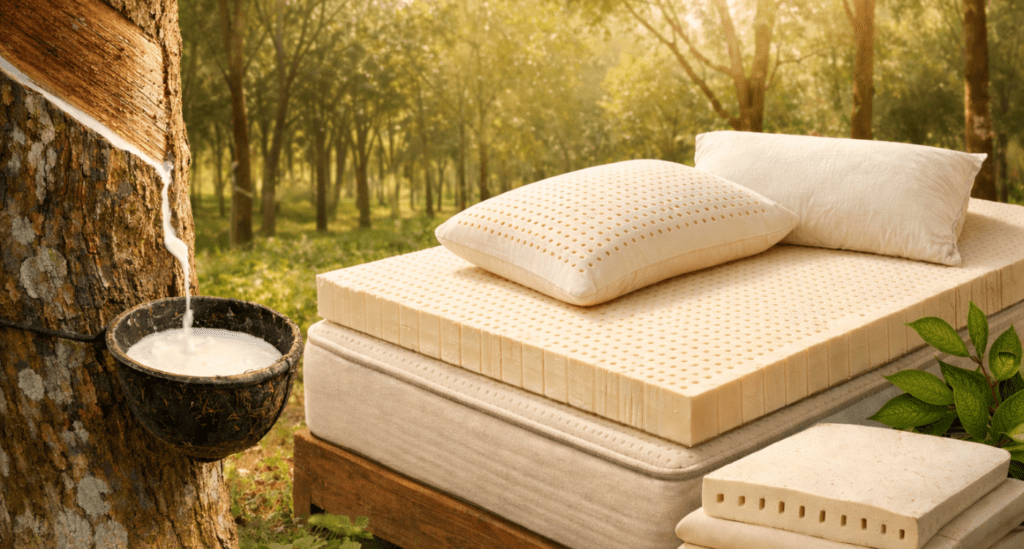
Organic latex comes from the sap of rubber trees and, if it’s certified by GOLS (Global Organic Latex Standard), it’s one of the cleanest and most long-lasting materials you can use for mattresses, mattress toppers, and pillows.
Our organic Talalay latex mattress guide covers the top-rated options in detail.
Unlike traditional memory foam, which is made from petroleum-based polyurethane and can emit VOCs like toluene and benzene, organic latex is breathable, responsive, and doesn’t go through synthetic chemical processing.
One of the most impressive features of natural latex is its longevity. A high-quality GOLS-certified latex mattress or topper can last between 10 and 20 years without showing major signs of wear and tear. This makes the initial cost of purchase a good investment in the long run.
If you are not in a position to replace your entire mattress, you can add a certified natural latex topper over your existing mattress. This will create a barrier between you and any harmful chemicals that may be released from your conventional mattress.
Creating Your Non-Toxic Sleep Sanctuary Step by Step
Creating a non-toxic sleep sanctuary doesn’t mean you have to replace everything all at once. The most sensible way to approach this is to start with the layer closest to your body and work your way out, replacing items as they become worn out or as your budget allows.
By focusing on the items that are closest to your skin and that you’re exposed to for the longest amount of time, you’re ensuring that you get the most benefits from each purchase.
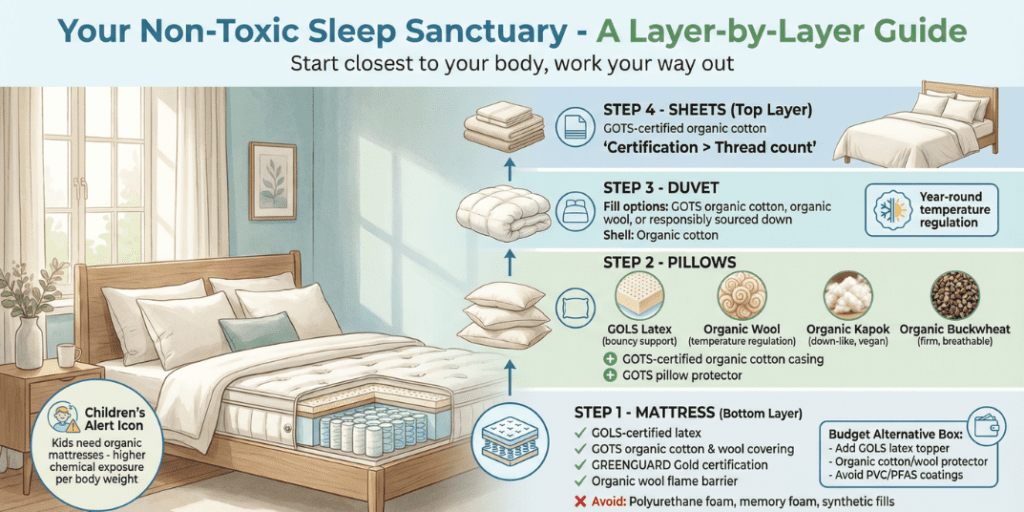
Begin With a Non-Toxic Mattress and Mattress Protector
Your mattress is the base of your sleep setting and your primary source of chemical exposure while sleeping. When looking for a non-toxic mattress, seek the following certifications and materials:
When you’re shopping for a mattress, look for the following:
- Latex components with GOLS certification
- Covering materials made of organic cotton and wool with GOTS certification
- Low chemical emissions with GREENGUARD Gold certification
- A natural flame barrier made of organic wool, not chemical flame retardants
- Avoid polyurethane foam, memory foam, or synthetic fiber fill
If you can’t replace your mattress right away, you can still make it healthier. Put a GOLS-certified natural latex topper on your existing mattress. This will reduce your direct contact with conventional foam. Use a non-toxic mattress protector made from organic cotton or organic wool. Avoid the waterproof PVC or PFAS-coated synthetic covers that are common in stores.
It’s crucial to invest in a certified organic mattress for kids from the very beginning. Since kids sleep more than adults and have a smaller body mass, any exposure to chemicals will result in a higher dose. An organic crib or toddler mattress made with GOTS-certified cotton and an organic wool flame barrier is the best way to ensure your child’s sleep environment is safe.
Select Organic Pillows That Offer Support Without Releasing Harmful Gases
Standard pillows, particularly those stuffed with synthetic polyester fiberfill or memory foam, are positioned only inches from your nose and mouth throughout the night. They can release VOCs, provide a home for dust mites, and gather chemical residues from synthetic dyes and finishes.
Transitioning to an organic pillow is one of the most effective and economical changes you can make in your sleep sanctuary.
When selecting your fill, you should consider:
- Latex that is certified by GOLS for its bouncy, pressure-relieving support
- Organic wool for its ability to regulate temperature and its natural antimicrobial properties
- Organic kapok fiber for its light, down-like feel without the use of animal products
- Buckwheat hulls that are certified organic for their firm, adjustable, and fully breathable support
If overheating is your main issue, cooling bamboo pillows are another option worth considering for hot sleepers who prefer a softer, moisture-wicking feel.
No matter what fill you go with, you should make sure that the pillow casing is made from cotton that is certified organic by GOTS. Even the best non-toxic fill can be ruined by a casing that uses formaldehyde finishes or synthetic dyes that are pressed directly against your face.
Don’t forget about pillow protectors. They’re just as important as the pillow. An organic cotton pillow protector that’s GOTS-certified can protect against dust mites and moisture. It can also keep your pillow clean for longer periods of time without adding any extra chemicals.
Change Your Duvet Insert to an Organic Fill Alternative
Typically, duvet inserts are filled with polyester fiberfill, which comes from petroleum and can shed microplastics over time. If you replace your duvet with one that’s filled with GOTS-certified organic cotton, organic wool, or responsibly sourced down wrapped in an organic cotton shell, you can get rid of another major source of chemical exposure during your sleep.
Organic wool duvets are especially good at regulating temperature across different seasons, so they’re a practical investment for all year round instead of just a seasonal change.
For anyone dealing with flare-ups, we also have a dedicated guide to the best duvets for eczema.
Swap Out Regular Sheets for Organic Cotton Sheets Certified by GOTS
Your sheets are the only layer that remains in constant contact with your skin throughout the night.
Regular cotton sheets are often treated with finishes that resist wrinkles and contain formaldehyde, synthetic dyes, and optical brighteners that do not completely wash out.
If you replace them with organic cotton sheets certified by GOTS, you can alleviate all of these worries in one simple swap that doesn’t cost much more than a high-quality regular set.
The quality of the fiber and its certification are more important than the thread count. A 300-thread-count GOTS-certified organic cotton percale sheet will last longer and be healthier than a 600-thread-count conventional sheet. Organic cotton also gets softer with each wash instead of breaking down, so your investment will maintain its quality over years of regular use.
More Than Just Sheets: Other Bedroom Hazards to Consider
What you choose to sleep on is very important, but it’s not the only thing in your bedroom that might be releasing harmful chemicals.
Walls, floors, furniture, and decorations can also be sources of toxins. To make your bedroom truly non-toxic, you need to consider the whole space, not just the bed. Luckily, most of these changes are easy and won’t break the bank.
It’s better to opt for solid wood furniture that uses a natural oil or water-based finish, rather than furniture made from particleboard or MDF. The reason is that these materials often use adhesives based on formaldehyde, which can continue to release gases for years.
If you can’t replace your furniture right away, then at least make sure your bedroom is well ventilated. This will lower the concentration of VOCs in the air and help your body cope with lower levels of exposure while you sleep.
Adding a HEPA air purifier for your bedroom can also help filter out VOCs, dust, and allergens while you sleep.
Choosing Low-VOC and Zero-VOC Paint for Your Bedroom
Traditional indoor paint can release VOCs like benzene, formaldehyde, and ethylene glycol while it’s being applied and for months or even years after.
In a bedroom where windows may be shut for the night, this ongoing off-gassing can significantly add to your overall toxic load during sleep. By selecting a zero-VOC paint when you’re redoing your bedroom, you can almost completely eliminate this source.
Many trustworthy brands are now selling interior paint with zero volatile organic compounds (VOCs) in all shades, without giving up on coverage or durability. Even in a zero-VOC base, the color pigments used to tint paints can add VOCs, so if you’re opting for a color other than white or off-white, ask your paint supplier specifically for zero-VOC tinting systems.
Steer Clear of PVC Decals and Synthetic Rugs That Release Harmful Gases
Wall decals made from PVC and vinyl flooring products are frequently found to contain phthalates, a type of plasticizer used to maintain the flexibility of PVC. Phthalates are known to disrupt endocrine function and can be released into the air at room temperature, accumulating in household dust.
Synthetic rugs, especially those with latex backing or made from nylon or polypropylene, can also release harmful gases such as formaldehyde, PFAS, and heavy metals. Opting for a natural fiber rug made from organic wool, organic cotton, or jute with a natural backing can help eliminate this source of bedroom pollution and contribute to a cleaner sleep environment overall.
Properly Cleaning and Maintaining Your Organic Bedding
You’ve made the decision to purchase certified organic bedding to minimize your exposure to harmful chemicals. However, if you’re not careful, your laundry routine could reintroduce many of the same toxins you’ve been trying to avoid.
Conventional fabric softeners, dryer sheets, and heavily scented detergents often contain synthetic chemicals such as phthalates, optical brighteners, and quaternary ammonium compounds. These chemicals can bind to the fibers in your fabric and remain there for several wash cycles. Properly caring for your organic bedding not only protects your health but also extends the life of the bedding materials.
Laundry Detergents That Don’t Counteract Your Organic Efforts
Opt for a laundry detergent that is plant-based, fragrance-free, and has a short list of ingredients you can understand. Some examples include Seventh Generation Free & Clear, Branch Basics Laundry Concentrate, and ECOS Free & Clear. These brands are widely available and clean effectively without using synthetic fragrance, optical brighteners, or chlorine bleach.
Steer clear from any detergent that includes “fragrance” in the list of ingredients, as this term can legally be used to cover up a mix of hundreds of undisclosed synthetic chemicals and reconsider usage of fabric softeners or dryer sheets at all.
Organic cotton and wool naturally become softer with washing and don’t need chemical softening agents. A half cup of white distilled vinegar added to the rinse cycle acts as a natural fabric softener and helps to remove any leftover detergent residue without leaving a smell on the fabric.
Washing Frequency for Each Layer for a Hygienic Sleep Environment
Each layer of your bedding absorbs body oils, moisture, and dust mites at varying rates, so there isn’t a one-size-fits-all washing schedule. Here is a handy guide to keeping your entire sleep system truly clean:
Here are some tips for maintaining your organic bedding:
- Sheets and pillowcases: These should be washed every one to two weeks in warm water. Warm water is hot enough to kill dust mites but won’t degrade the organic cotton fibers over time.
- Pillow protectors: These should be washed every two to four weeks along with your sheets to maintain consistent hygiene.
- Pillows: These should be washed every three to four months using a gentle cycle. Make sure they are thoroughly dried to prevent moisture from building up inside the fill.
- Duvet covers: These should be washed every two to four weeks. You may need to wash them more frequently during warmer months when there is more direct skin contact.
- Duvet inserts: These should be washed every three to six months. Make sure to follow the specific care instructions for wool or down fill to avoid shrinkage or clumping.
- Mattress protector: This should be washed every one to two months, or immediately after any spill or illness.
When drying your organic bedding, always use a low to medium heat setting or line dry when possible. High heat can degrade natural fibers over time and can cause organic cotton to shrink unevenly. Wool and latex components should never be exposed to high heat, as this can permanently damage the material structure and shorten the lifespan of the product.
Conclusion: Is Organic Bedding Worth It?
Yes, organic bedding is often more expensive than conventional bedding. For example, a GOTS certified organic cotton sheet set can cost two to three times more than a conventional set, and a certified organic mattress can be a major expense.
But the upfront price is only part of the picture. It also helps to think about the cost per year of use, the possible health upside of less chemical exposure over thousands of nights, and the environmental cost of synthetic materials that shed microplastics and end up in landfills after only a few years.
High quality organic cotton bedding, with proper care, can last longer than traditional cotton bedding because it has not been weakened by chemical processing during production. A GOLS certified natural latex mattress can last 15 to 20 years, compared with the seven to ten year lifespan of a conventional foam mattress.
Once you factor in how often bedding needs to be replaced, the price gap between organic and traditional bedding over time may not be as large as it first seems. More than that, reducing chemical exposure over years of sleep can matter for long term health in ways that are hard to put into dollars and cents.
Commonly Asked Questions
What is the least toxic bedding?
The least toxic bedding is usually made from simple, minimally processed natural materials such as organic cotton, linen, or wool. These materials are generally preferred because they can be produced with fewer chemical finishes, flame retardants, and synthetic additives than many conventional synthetic fabrics. Certifications such as GOTS or OEKO-TEX can help identify products tested for certain harmful substances. The overall toxicity of bedding also depends on dyes, waterproof coatings, adhesives, and foam components, not just the main fabric.
How do you create a sleep sanctuary?
A sleep sanctuary is a bedroom set up to support quiet, darkness, comfort, and good air quality. This usually means keeping the room cool, dark, and quiet, reducing clutter, and choosing comfortable bedding and a supportive mattress. Limiting bright screens, harsh lighting, and strong odors before sleep can also help. Good ventilation and regular cleaning can reduce dust, allergens, and stale air.
How do you make a bedroom eco-friendly?
An eco-friendly bedroom uses fewer resources, creates less waste, and relies on more durable and lower-impact materials. Common steps include choosing long-lasting furniture, using organic or recycled textiles, switching to LED lighting, and improving insulation or airflow to reduce energy use. Buying secondhand furniture can also lower environmental impact by extending product life. The overall result depends on product durability, sourcing, and how often items are replaced.
How Does Organic Cotton Differ from Regular Cotton?
Organic cotton is cultivated without the use of synthetic pesticides, herbicides, or chemical fertilizers. If it is GOTS-certified, it is also processed without toxic dyes, formaldehyde finishes, or synthetic chemical treatments at any point during manufacturing. On the other hand, regular cotton is one of the crops that require the most pesticides worldwide. The chemical residues from both farming and processing can linger in the final fabric. Apart from the health benefits, organic cotton farming methods also promote soil health, biodiversity, and decreased water pollution, in contrast to traditional cotton farming.
How Can I Determine If a Bedding Brand Is Truly Organic?
Don’t rely on marketing language, but instead look for third-party certifications. The most reliable certifications for bedding are GOTS (Global Organic Textile Standard) for the complete textile supply chain, GOLS (Global Organic Latex Standard) for latex parts, and OEKO-TEX Standard 100 as an additional measure of low chemical content in the final product. A brand that is truly organic will have certification numbers that can be confirmed on the certifying body’s website. Beware of ambiguous claims like “made with natural materials,” “eco-friendly,” or “green” if they don’t come with a verifiable third-party certification.
How to Care for Organic Bedding to Make It Last Longer?
Caring for organic bedding is not a complex process, but there are a few habits that can make a big difference in how long it lasts. Washing in warm water instead of hot, using a plant-based detergent that is free of fragrance, avoiding fabric softeners and dryer sheets, and drying on a low to medium heat or line drying when you can all help. Chlorine bleach should be avoided at all costs because it breaks down natural fibers and takes away the structural integrity that makes organic cotton last much longer than conventional options.
When it comes to organic wool items, always make sure to look at the care label. Most organic wool comforters and pillows are either spot-clean or dry-clean only, and washing them in a machine could cause them to shrink permanently. Natural latex pillows and toppers should not be put in the washing machine or dryer. If you need to clean latex, use a damp cloth and mild soap to spot clean it, and let it air dry completely out of direct sunlight, which can break down the latex structure over time.
What are the 3 R’s of eco-friendly?
The 3 R’s of eco-friendly living are reduce, reuse, and recycle. Reduce means using less and avoiding unnecessary purchases or waste. Reuse means using items again, repairing them, or giving them a second life. Recycle means processing eligible materials so they can be made into new products.

Sleep Essentials Hub is a sleep blog for readers who want helpful sleep guides and honest product recommendations. We’re passionate about better rest, with a focus on pillows and bedding, sleep aids, sleep apnea and CPAP gear, natural sleep supplements, sleep tech, and simple ways to improve your sleep environment. We’re here to help you choose products that support deeper sleep, greater comfort, and a better night’s rest without overspending.