
Moonbird Breathing Device Review: An Honest Look at the Handheld Breathing Coach for Anxiety and Sleep
Stress has a way of making even the simplest calming techniques feel out of reach. In theory, breathing exercises are easy enough. In practice, they can be surprisingly hard to hold onto when your thoughts are spiralling, especially at bedtime.
If you’ve downloaded the breathing apps, tried the guided meditations, and still find yourself lying awake at night with your thoughts running at full speed, it’s time to try something different. The Moonbird breathing device expands and contracts in your palm, guiding your breath through touch so your body can follow the rhythm without your mind having to keep up.
After a thorough review of the product, the research behind it, and hundreds of real user experiences, here’s everything you need to know before buying.
Disclosure: This article is reader-supported and contains affiliate links. We may earn a commission if you purchase through our link, at no extra cost to you.
What is the Moonbird Breathing Device and How Does it Work?
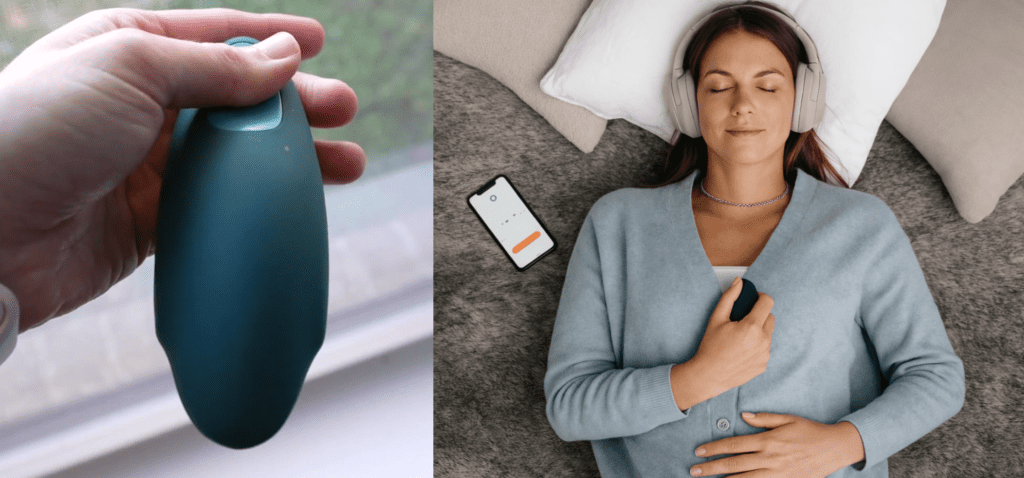
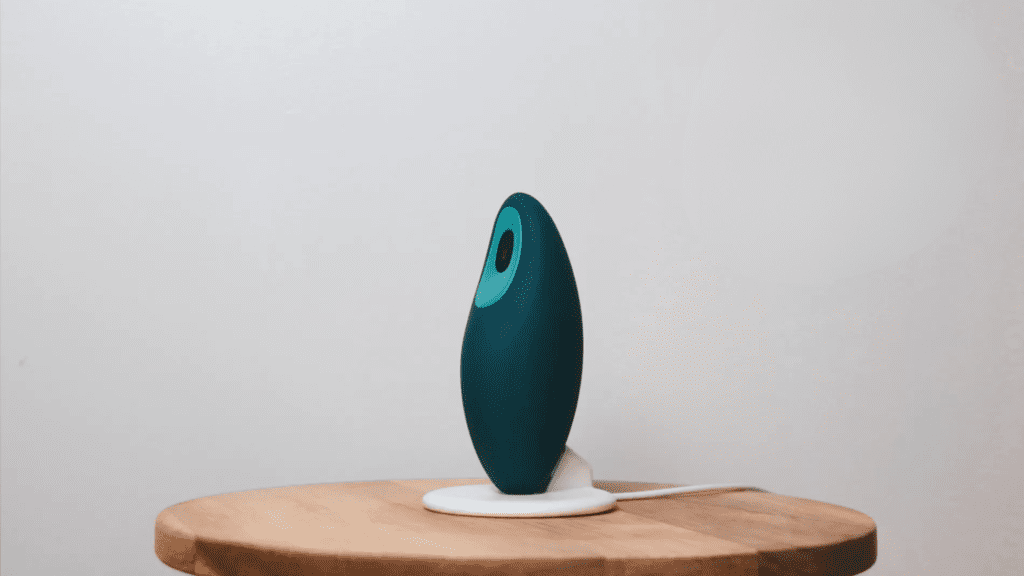
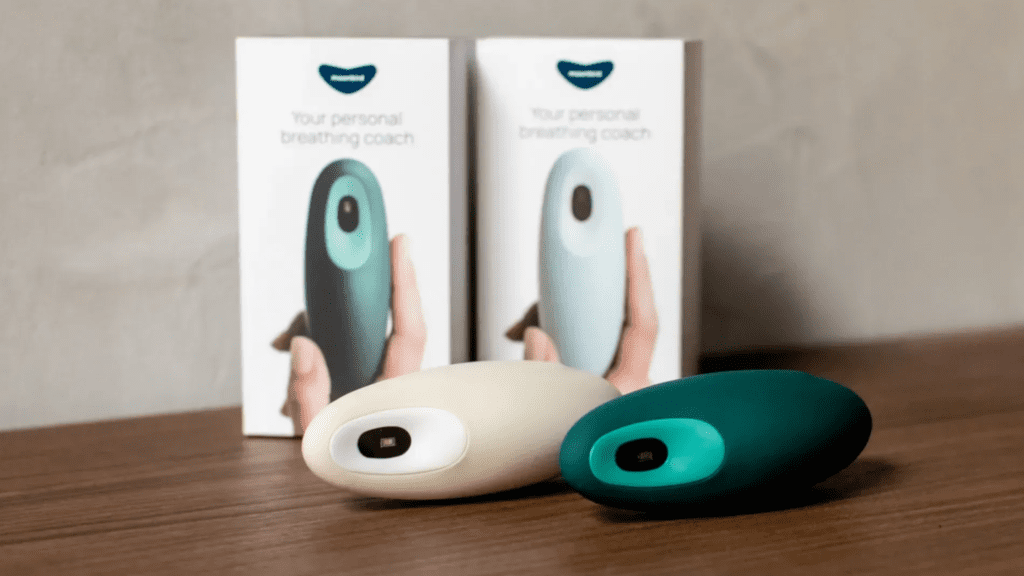
The Moonbird breathing device is a handheld breath pacer made from soft, medical-grade silicone, roughly the size of a large egg and designed to fit naturally in one hand.
To use it, give the device a gentle shake to activate it, then rest your thumb on the sensor. It begins expanding and contracting against your palm, physically guiding your inhale and exhale through touch rather than through sound or a screen.
Why Physical Breath Pacing Works Better Than Counting
During acute stress, the prefrontal cortex, the part of the brain responsible for deliberate focused tasks, becomes less available. Counted breathing demands that level of focus. Moonbird removes the requirement by giving your nervous system something physical to sync with, so your body can follow the rhythm without having to consciously manage it.
Moonbird Breathing Pattern Options
Preset options include box breathing, 5-5-5, and 4-6-4 breathing, covering most of the techniques people are already familiar with. The ability to set a fully custom rhythm is worth highlighting for anyone who has tried guided breathwork before and found the default inhale or exhale lengths didn’t suit them.
The app also includes optional audio guidance and a mute option for those that are easily over-stimulated and prefer to focus purely on the physical rhythm only.
👉 See how Moonbird makes breathing exercises easier to stick with. Check today’s price and availability here.
Standalone Mode vs. the Companion App
There are two ways to use Moonbird.
In standalone mode, no phone is needed at all. You shake the device awake, rest your thumb on the sensor, and it runs your saved default session.
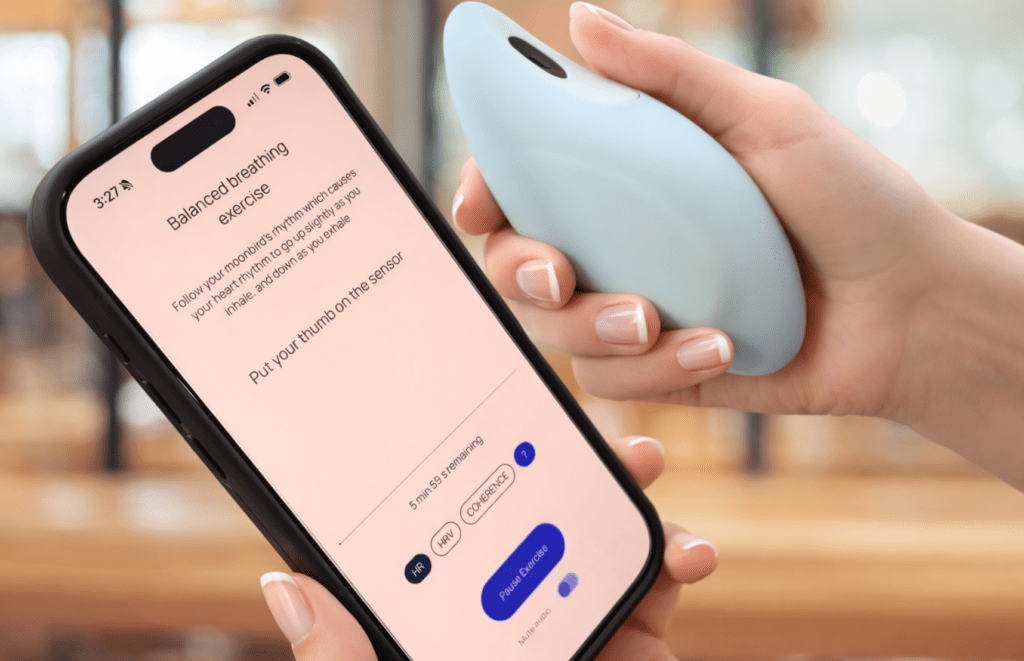
The companion app, free to download, adds a fuller set of options including five preset breathing exercises, a customisable rhythm you can build yourself, and session durations ranging from two to thirty minutes.
Battery Life and Charging
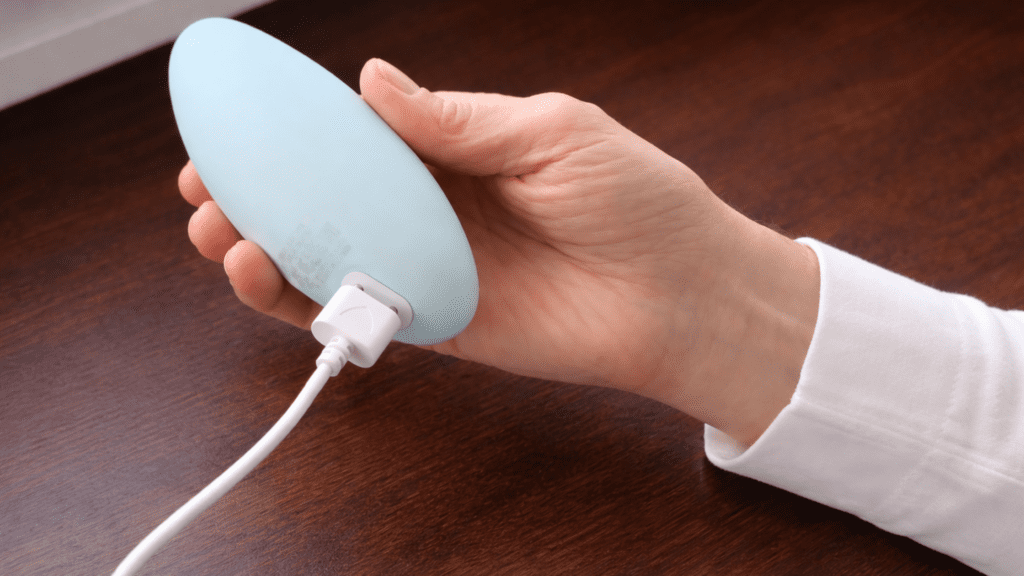
Moonbird is rated for around two hours of active use. For shorter daily sessions of two to five minutes, that stretches to several weeks between charges.
For longer twenty-minute sessions used daily, you’d be charging after roughly six sessions. The device uses a proprietary charging cable rather than a standard USB-C, which is a small inconvenience worth knowing before you travel with it.
Biofeedback and HRV Tracking
The companion app tracks heart rate and HRV in real time during each session. Treat the readings as a helpful guide, not a clinical measurement. Like other consumer biofeedback devices, it’s best used to spot trends in your sessions and monitor your own patterns over time, rather than rely on every number as medically precise.
Benefits of the Moonbird Breathing Device
No Phone or Screen Required
Shake to activate, breathe, set it down. For people building a bedtime wind-down routine that doesn’t involve a screen, standalone mode is one of Moonbird’s most useful features.
Every app-based breathing tool requires you to pick up the device that’s most likely keeping you awake, whereas Moonbird doesn’t.
Tactile Breath Guidance That Keeps You Present
Fitness watches and smartwatches include breathing reminders, but they deliver a small haptic pulse on your wrist.
Moonbird physically expands in your palm, simulating the sensation of a breath rather than just prompting one. People who use it describe the tactile feedback as more grounding and harder to mentally drift away from mid-session, particularly those who find audio guides easy to zone out from.
Customisable Breathing Patterns
Unlike most breathing tools that lock you into preset rhythms, Moonbird lets you build your own. If the standard inhale and exhale lengths don’t suit your body or your existing practice, you can adjust them.
Your preferred session saves as the default, so the device runs it automatically in standalone mode without needing the app open. See full details on the official Moonbird website.
Peer-Reviewed Research Behind the Design
Neurologist Dr. Steven Laureys studied Moonbird using EEG brain scans and observed measurable changes in brain activity following use. A 2022 NIH pilot study with 39 participants produced consistent findings. Both studies are preliminary in scale, but the evidence is peer-reviewed and published.
One-Time Price, No Subscription
In a wellness market packed with recurring subscriptions, the Moonbird breathing device is a one-time purchase.
That alone will appeal to anyone who has paid for meditation apps they barely used and eventually had to cancel. Instead of adding another monthly fee, Moonbird offers a simpler model that feels easier to justify and easier to keep.
Real-Time HRV Tracking for People Who Want to See the Data
A lot of people find it hard to trust that a breathing exercise is doing anything, especially when they’re stressed and don’t feel it working right away.
The companion app tracks heart rate variability and heart rate during each session, so you can watch the physiological response as it happens. For users already monitoring recovery through a sleep or fitness tracker, that live data adds useful context and makes it easier to see HRV trends building over time.
Silent and Discreet Enough for Everyday Use
Moonbird makes no sound during a session (only a gentle vibration). It’s compact enough to use at a desk, in a car, in a waiting room, or anywhere else you need a quick reset without drawing attention.
You don’t need headphones, a quiet room, or even a free hour.
Who Should Use the Moonbird Breathing Device
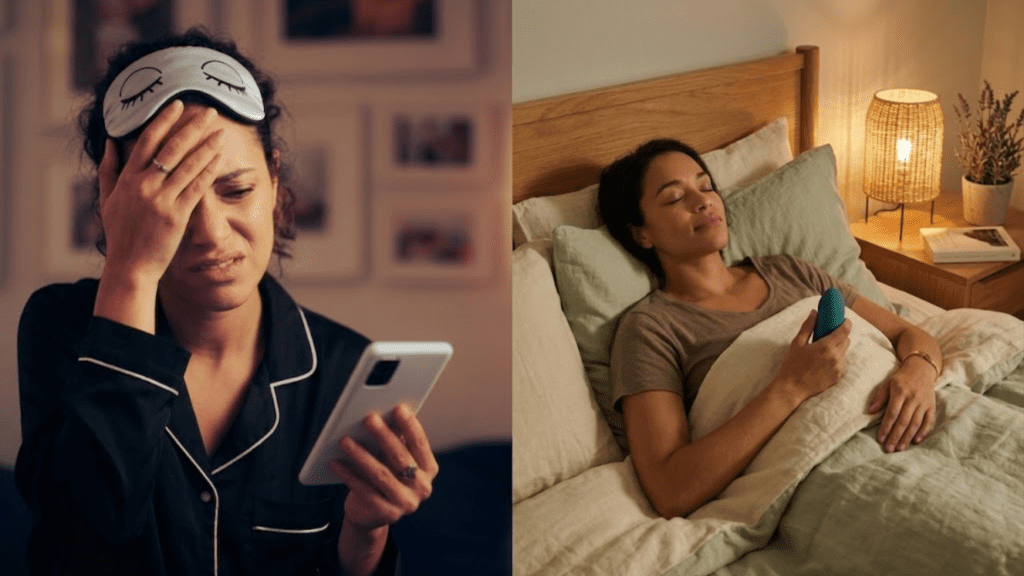
The Moonbird breathing device is a natural fit for people who describe themselves as failed meditators, or who’ve given up on meditation apps after finding they couldn’t maintain a consistent habit.
It also works well for people who know breathwork helps in principle but can’t follow through during real anxiety episodes or high-stress moments.
People who struggle with racing thoughts at bedtime and habitually reach for their phone are another strong fit. So are people who find it hard to stay focused during breathing exercises without something physical in their hand. The device works continuously throughout a session, which makes it easier to stay with the breath rather than drift.
For anyone in a high-pressure work environment, the silent operation and compact size mean a two-minute session between meetings is entirely manageable without any setup.
For people managing long-term stress, burnout, or nervous system fatigue rather than short bursts of anxiety, Moonbird fits naturally into a daily regulation routine. It isn’t a medical device and isn’t designed to treat any condition, but the low-effort physical rhythm makes it easier to build a consistent habit than most techniques that rely on willpower or concentration.
For anyone already practising cardiac coherence training or tracking HRV, Moonbird adds an active breathing component that complements a data-driven routine well.
It’s a weaker fit for anyone who already has a breathwork or meditation practice they’re satisfied with, or anyone looking for guided audio content, sleep programs, or a broader wellness platform.
If you’re considering it as a gift for someone who struggles with stress or sleep, the device is compact, comes packaged well, and the 30-day return policy means the recipient isn’t stuck if it’s not something that suits them.
Moonbird Breathing Device Pros and Cons
What works well
- Fully phone-free and screen-free, with the app available as an optional extra for biofeedback and custom settings
- Physical expansion creates a more grounded tactile breathing experience than any wearable breathing feature
- Five preset breathing patterns including box breathing, 5-5-5, and 4-6-4, plus a fully customisable rhythm option
- Audio guidance can be muted for people who prefer to focus on the physical feedback alone
- One-time purchase with no subscription or recurring fees
- Session duration adjustable from two to thirty minutes
- Compact and silent enough to use at a desk, in a waiting room, or in a public setting
- Battery lasts approximately two hours of active use, stretching to several weeks for short daily sessions
- 30-day money-back policy
👉 See current pricing and order the Moonbird breathing device here
Where it falls short
- The price sits at the premium end, which reflects the product’s build quality
- Full breathwork courses inside the app require the device to be powered on and connected
- It paces breathing and isn’t a meditation program, sleep tracker, or content library
- Uses a proprietary charging cable rather than a standard USB-C
- The device has an unconventional shape that several reviewers have noted, worth being aware of before purchasing it as a gift
- Biofeedback data should be treated as directional rather than clinically precise
Moonbird vs. Other Breathing Devices and Stress Relief Tools
Meditation and mindfulness apps give you far more content, but require a phone, an active subscription, and opening a relaxation app on the same device where your email and social feeds live. For users dealing with app fatigue, the format is often the real problem, not the lack of content.
Fitness watches and smartwatches with built-in breathing features can feel cost-effective if you already own one. The tradeoff is a simple wrist tap instead of a full physical breathing cue, delivered through the same device that also handles texts, notifications, and calendar alerts. A dedicated device strips away that friction and makes the experience easier to settle into.
Wearable vibration devices like Apollo Neuro, priced around $300, use passive vibration rather than guiding active breath pacing. The passive approach doesn’t work for everyone, and the higher entry price raises the stakes. Chest-worn relaxation devices like Sensate sit in a similar price range and require lying down and staying connected to an app, which suits longer rest sessions more than a quick midday stress reset.
The Komuso Shift necklace runs around $95 to $115 and slows the exhale through a small breathing tube. It’s more affordable and always wearable, but guides only the exhale, offers no biofeedback, and doesn’t pace the full inhale-exhale cycle.
Among handheld breathing devices in this price range, Moonbird occupies a rare position. It brings together tactile breath pacing, customizable breathing patterns, and real-time biofeedback in one dedicated device, which makes it a stronger and more complete option than many alternatives.
Final Verdict
If you’ve been through the apps and the guided meditations and still find yourself lying awake at night or white-knuckling your way through a stressful day, the Moonbird breathing device is worth trying. Not because it’s a miracle, but because it solves the specific problem those tools don’t: you can’t count breaths or follow instructions when your nervous system is already in overdrive.
With the Moonbird, you simply hold the device, feel it expand and contract in your hand, and your body follows along.
The breath pacing is physical rather than mental. You don’t have to remember a technique, maintain focus, or push through the discomfort of trying to meditate when your mind won’t cooperate.
For people who’ve written themselves off as someone who just can’t meditate, that’s often a different experience from anything they’ve tried before.
It is also one of the few breathing tools you can use with your phone in another room, in the dark, between meetings, or even in a hospital waiting room without drawing attention. You can use it for two minutes at your desk before a difficult conversation or hold it at night when your thoughts refuse to settle.
If you have ever wanted a way to be calmer for the people around you but struggled to stick with anything, having a breathing practice that feels this simple and unobtrusive can make all the difference.
It isn’t a substitute for professional support, and it won’t be the right fit for everyone. But for people who are tired of approaches that only work when they’re already calm, the Moonbird breathing device can be a helpful addition to a stress management routine.
Frequently Asked Questions About the Moonbird Breathing Device
Can you set your own custom breathing pattern on Moonbird?
Yes, you can set your own custom breathing pattern on Moonbird. The Moonbird app includes five preset breathing exercises and a fully customisable option where you set your own inhale, exhale, and hold lengths. Your preferred session can be saved as the default so the device runs it automatically in standalone mode without needing the app open.
Does the Moonbird breathing device work without a phone?
Yes. Moonbird’s standalone mode requires no phone or Bluetooth connection. Shake the device awake, place your thumb on the sensor, and it runs your saved default session. If travel mode is enabled in the app settings, standalone activation may be less reliable. Turning travel mode off resolves this.
What breathing patterns does Moonbird support?
Moonbird supports box breathing, 5-5-5, 4-6-4, and other preset patterns, as well as a fully customisable rhythm. You can set your own inhale, exhale, and hold durations to match your existing practice or personal preference.
Can you mute the audio guidance on Moonbird?
Yes. The app includes a mute option that turns off the guided audio so you can focus purely on the physical movement of the device. The customisable breathing exercise runs without audio by default.
Can Moonbird be used for breath hold training or interval breathwork?
Moonbird is designed for continuous guided breathing sessions. While you can set custom inhale, exhale, and hold durations within a session, the app doesn’t currently support chaining different interval sequences together automatically across multiple rounds without interacting with the app in between. For standard breathwork and cardiac coherence training it works well, but complex interval or freediving protocols would require a different tool.
How accurate is the Moonbird biofeedback data?
The companion app tracks heart rate and HRV using the thumb sensor. As with all consumer wellness devices, the readings are best understood as useful indicators of how a session is affecting your body rather than clinical measurements. The data is most valuable for tracking your own patterns over time rather than as a precise medical reference.
How long does the Moonbird battery last?
Moonbird is rated for approximately two hours of active use. For short daily sessions of two to five minutes, that typically stretches to several weeks between charges. For longer twenty-minute daily sessions, you’d charge after roughly six sessions.
Related Reading
- Dodow Sleep Aid Review
- Navy SEAL Breathing Technique
- Pulsetto vs Sensate
- Pulsetto Vagus Nerve Stimulator Review
- Pulsetto vs Truvaga
Health Disclaimer: The Moonbird breathing device is a general wellness tool and is not intended to diagnose, treat, cure, or prevent any medical condition. Consult a healthcare professional if you have concerns about anxiety, sleep, or any other health issue.

Sleep Essentials Hub is a sleep blog for readers who want helpful sleep guides and honest product recommendations. We’re passionate about better rest, with a focus on pillows and bedding, sleep aids, sleep apnea and CPAP gear, natural sleep supplements, sleep tech, and simple ways to improve your sleep environment. We’re here to help you choose products that support deeper sleep, greater comfort, and a better night’s rest without overspending.