
6 Best Anti-Snoring Mouthpieces That Actually Work
Snoring often starts when the jaw and tongue relax, narrowing the airway during sleep. An anti-snoring mouthpiece, also called a mandibular advancement device, helps by moving the lower jaw slightly forward so air can pass more freely.
The best fit depends on jaw comfort, mouth size, airflow, and adjustability. Adjustable mouthpieces give you more control because you can make small changes over time instead of forcing your jaw into one fixed position on the first night.
If you’re new to mouthguards for snoring or have a smaller mouth, gradual adjustment can feel easier than starting with one fixed jaw position.
The six anti-snoring mouthpieces below cover different fit needs, mouth sizes, comfort levels, and experience levels.
Disclosure: This article is reader-supported and contains affiliate links. As an Amazon Associate I earn from qualifying purchases at no extra cost to you.
Top 6 Anti-Snoring Mouthpieces in 2026
Quick Comparison Chart
| Product | Best For | Highlights | Where to Buy |
|---|---|---|---|
| SnoreRx | Fine nightly tuning | 1mm adjustments, custom mold, FDA cleared | Check Price |
| SleepZee | First-try buyers | Simple boil-and-bite, adjustable lock | Check Price |
| QuietLab Pro | Slim, low-bulk wear | Thin profile, adjustable jaw, BPA-free | Check Price |
| VitalSleep | Women and smaller jaws | 10% smaller size option, breathing hole, 1mm tuning | Check Price |
| Somnofit S | Graduated tension control | Swiss-made bands, FDA cleared, jaw mobility | Check Price |
| ZQuiet Starter Pack | First-time wearers | No molding, two sizes, Living Hinge | Check Price |
Important note: Anti-snoring mouthpieces are designed for snoring, not for diagnosing or treating sleep apnea. If you gasp during sleep, wake choking, feel very tired during the day, have high blood pressure, or your partner notices pauses in breathing, speak with a doctor or sleep specialist before using an over-the-counter mouthpiece.
How an Anti-Snoring Mouthpiece Can Help
Most snoring happens when throat tissue relaxes and partly blocks the airway during sleep. The tissue vibrates as air pushes past, creating that grating sound that wakes up everyone in earshot.
An anti-snoring mouthpiece may help by:
- Holding the lower jaw slightly forward to widen the airway
- Reducing tissue vibration that causes loud snoring
- Allowing for natural breathing during sleep
- May help some people when nasal strips and pillow changes don’t do enough
The main difference between devices is how they fit, how far they advance the jaw, and whether they feel comfortable enough to wear all night.
Best Overall: SnoreRx Anti-Snoring Mouthpiece
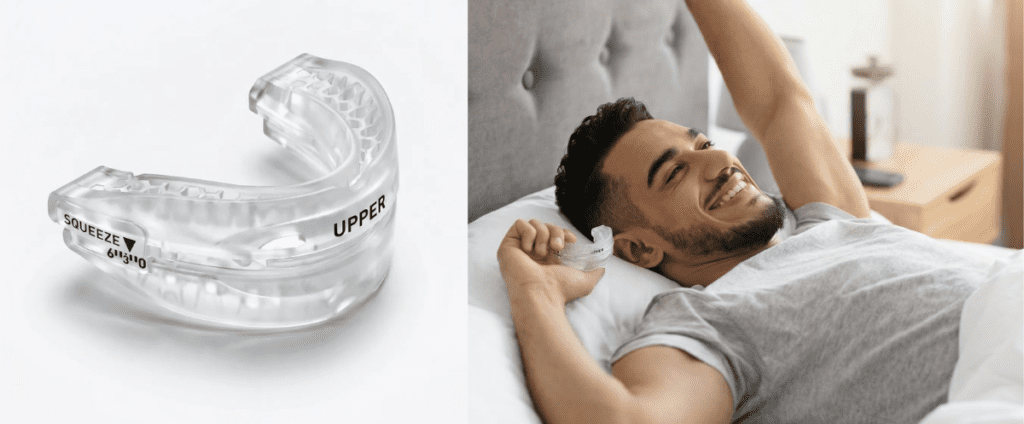
SnoreRx is one of the most adjustable options available without a prescription. This mandibular advancement device uses medical grade materials and comes with FDA clearance for snoring reduction.
You start by using the boil and bite process to custom mold the device to your teeth, which takes about 10 minutes and confirms a secure fit.
You mold it to your teeth at home with a boil-and-bite process that takes about 10 minutes. Once fitted, the front calibrator lets you move your lower jaw forward in 1 mm increments, starting at the original 1 mm setting. That level of control helps you find the smallest adjustment that reduces snoring without pushing your jaw too far.
It’s best suited for snorers who want precise jaw adjustment, a custom molded fit, and more flexibility than a fixed-position mouthguard.
Key Features
- Thermal Matrix shell to mold a custom fit
- 1 millimeter advancement for precise tuning
- Built-in calibrator to show exact position
- Slim, lightweight profile for nightly wear
- FDA cleared design backing safety standards
- 30-night return window for at-home testing
Why We Like It: The micro adjustments give real control over how far the jaw moves, so you can dial in the exact setting that quiets your snoring without straining your jaw. Long-term reviews mention years of nightly use without the fit loosening. The slim build keeps it from feeling jammed against the tongue, which is a frequent complaint with bulkier guards.
Who It’s Best For: Chronic snorers who want a non-CPAP option they can fit at home. Works for back sleepers and side sleepers alike, and pairs well with someone whose partner has hit a wall with the noise.
Good to Know: Mild jaw or tooth soreness in the first week is normal as the mouth adapts. Start at the lowest setting and advance one increment every couple of nights.
Best Simple Boil-and-Bite Mouthpiece: SleepZee
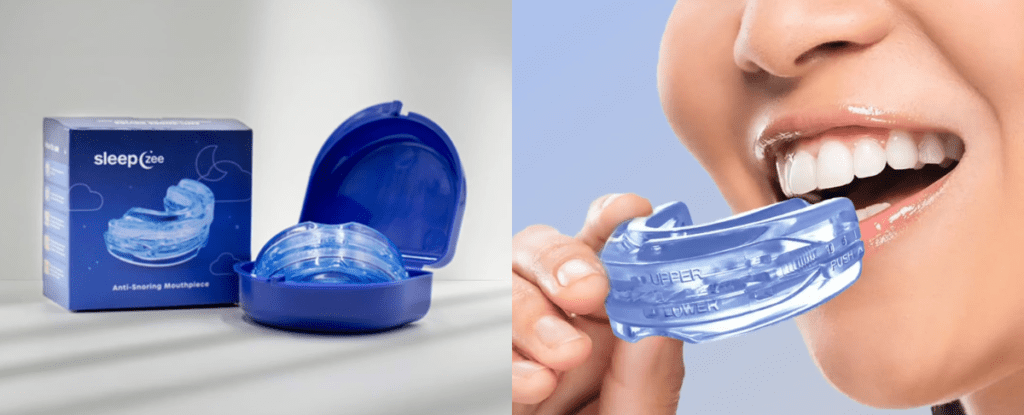
SleepZee offers a similar boil-and-bite mandibular advancement device at a budget friendly price point. You heat the mouthpiece in hot water, bite down to create a custom impression of your teeth, then wear it nightly to advance your jaw and reduce snoring.
This device lacks the micro adjustment features of SnoreRx or the ready made convenience of ZQuiet, so it works best as an entry level option if you want to test whether mandibular advancement helps your snoring before investing in a more expensive or feature rich device. The simple design means fewer parts to break, but also less ability to fine tune the fit.
If you’re comparing a molded device with a no-mold option, the SleepZee vs ZQuiet breakdown may make the choice easier.
Key Features
- Hot-water molding for at-home custom fit
- Adjustable lock to hold your jaw position
- BPA and latex-free body for safe wear
- Reusable build to last up to six months
- Hard plastic shell to keep its shape
- 30-night return window for low-risk testing
Why We Like It: The hot-water molding takes about five minutes and gives the mouthpiece a snug, personal fit. The adjustable lock lets you set the jaw position you find most comfortable, then change it later if you need more advancement to quiet your snoring.
Who It’s Best For: First-time buyers who want to test whether mandibular advancement helps their snoring before upgrading to a more feature-rich device. Also a good pick for partners shopping on behalf of a hesitant snorer.
Good to Know: Getting a clean mold takes a steady hand. Follow the heating instructions closely the first time to avoid a loose impression that won’t hold the jaw forward.
Best Slim Anti-Snoring Mouthpiece: QuietLab Pro
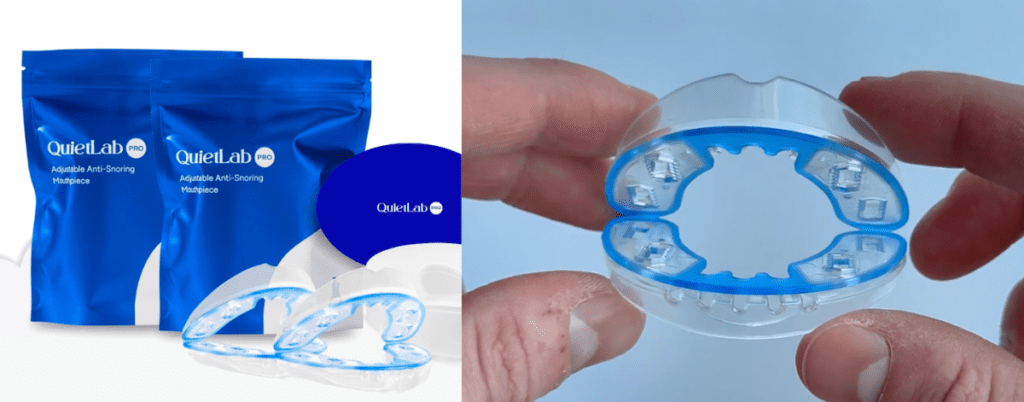
QuietLab Pro emphasizes a slim, low profile design that feels less bulky than many competing devices. This adjustable mandibular advancement device uses orthodontic design principles to gently move your lower jaw forward while staying comfortable enough for all night wear.
The device targets snoring linked to jaw position and airway narrowing. User reviews highlight the thin construction, which can make a big difference if you have a strong gag reflex or feel claustrophobic with thicker guards.
QuietLab Pro offers adjustability to fine tune jaw advancement, though the exact mechanism varies by model and tends to be less granular than SnoreRx.
You don’t need a prescription, and the company markets fast results for people with mild to moderate snoring.
Key Features
- Slim, low-profile design for less bulk
- Adjustable jaw advancement for personal fit
- Orthodontist-designed shape for natural feel
- BPA-free body for safe nightly wear
- Travel case included for portability
Why We Like It: The thinner build makes QuietLab easier for first-time mouthpiece wearers to keep using at night. Thick guards can feel bulky fast, especially if you already dislike sleeping with something in your mouth. Its shape is based on orthodontic principles, so it feels more like a fitted dental appliance than a basic ready-made guard. The adjustable lower-jaw advancement also gives you room to fine-tune the fit, helping you reduce snoring without jumping straight to an aggressive jaw position.
Who It’s Best For: Those who might have a stronger gag reflex or anyone who has tried a bulky mouthpiece and felt overwhelmed by the size in their mouth. Also a good fit for sleepers who want a more refined feel than basic drugstore options.
Good to Know: The slimmer profile may wear out faster than thicker mouthguards.
Best Anti-Snoring Mouthpiece for Women – VitalSleep
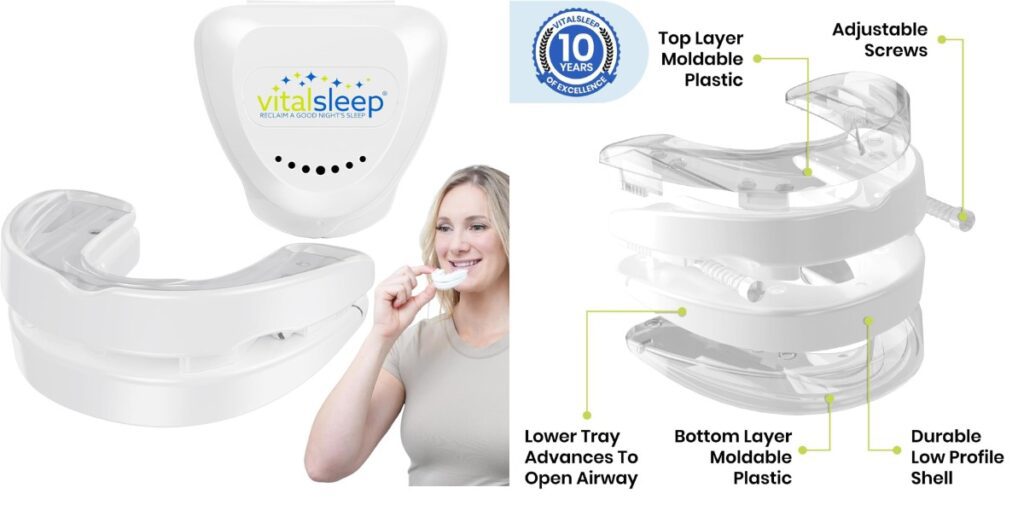
VitalSleep uses a boil-and-bite custom fit process combined with an adjustable hex screw system that let’s you advance the lower tray in small increments. The device comes in two sizes, regular and small, to accommodate different mouth sizes.
Women, smaller dental arches, and narrower mouths may prefer the smaller version.
VitalSleep also features a large front breathing hole, which makes mouth breathing easier if you have nasal congestion or naturally breathe through your mouth at night.
VitalSleep offers a good middle ground between fully customizable devices like SnoreRx and simpler one piece designs.
The adjustment mechanism is easy to use with a small hex key that comes with the device.
Key Features
- Women’s size built 10% smaller for fit
- Accu-Adjust System for 1mm jaw tuning
- Boil-and-bite custom mold for snug feel
- Front breathing hole for mouth breathing
- BPA-free body made in the USA
Why We Like It: The 10% smaller women’s size addresses a common fit problem with bulkier anti-snoring mouthpieces. It’s better suited to smaller mouths, narrower arches, or anyone who struggles with oversized guards. The front breathing hole helps if nasal congestion or natural mouth breathing keeps you from using sealed-jaw guards. The hex-key adjustment also makes it easier to fine-tune lower-jaw advancement in small steps until the device feels tolerable and the snoring drops.
Who It’s Best For: Women and anyone with a smaller dental arch who has struggled with standard-size mouthpieces feeling jammed or oversized. Also a strong pick for mouth breathers.
Good to Know: The hex-key adjustment takes a few seconds to learn before it becomes second nature. Keep the small key with your case so it doesn’t get misplaced over time.
Best Customizable Anti-Snoring Mouthpiece: Somnofit S
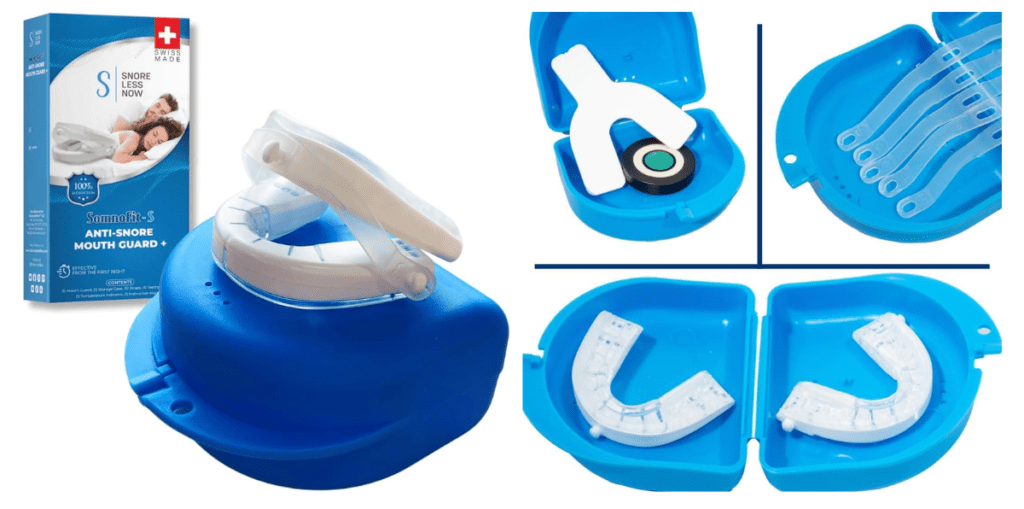
Somnofit S uses a Swiss engineered design with elastic bands to control jaw advancement. Instead of fixed trays or built-in adjustment mechanisms, you get different elastic band strengths that pull your lower jaw forward by varying amounts.
This system gives you more gradual control than a fixed-position mouthpiece.
The device molds to your teeth and includes ventilation holes for airflow. The strap system looks technical at first glance, but it allows progressive adjustment as your mouth adapts and your snoring needs change.
The band system may take a little more patience than a dial-style mouthpiece, but it gives you room to adjust over time without replacing the device.
Key Features
- Boil-and-bite molding for custom tooth fit
- Numbered elastic bands for graduated tension
- Adjustable straps to let jaw move freely
- Swiss medical polymers for durable build
- BPA, phthalate, and latex-free body
Why We Like It: The replaceable elastic bands let you advance slowly without buying a new device. The strap design keeps the jaw movable enough to drink water or speak briefly without the guard slipping out.
Who It’s Best For: Sleepers who want graduated control over jaw advancement, including those who like the option to drink water or talk briefly at night without taking the device out. A good fit for partners who want maximum customization.
Good to Know: Each new band strength should be worn for three to five nights before increasing tension. Rushing the process can cause jaw soreness and slow adaptation.
Best for Beginners: ZQuiet Starter Pack
For someone who has never worn a mouthpiece, the molding process can feel intimidating.
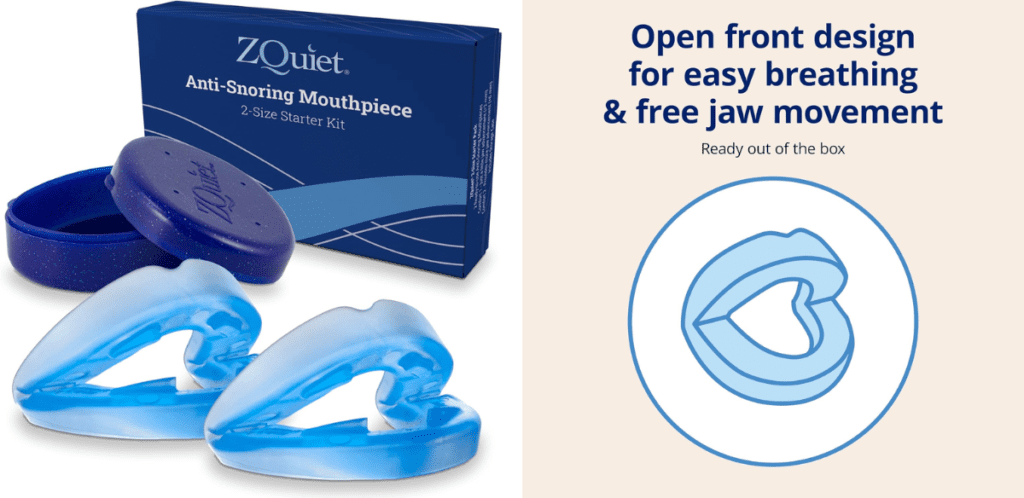
ZQuiet skips boiling and biting entirely, using two pre-formed sizes so you can test different levels of jaw advancement without creating a custom mold. If you’re comparing SnoreRx vs ZQuiet, the choice usually comes down to no-mold simplicity versus finer jaw adjustment.
Its patented Living Hinge lets your jaw move more naturally than rigid mandibular advancement devices, so you can open and close your mouth, talk, drink water, and breathe while wearing it.
First use takes about 30 seconds. Just rinse the device, place it in your mouth, and start with the lower-advancement option before moving up if needed. This may be useful if hot-water molding worries you because of crowns, bridges, veneers, or other dental work, but check with your dentist first if you have expensive or fragile dental work.
Key Features
- Two pre-formed sizes for fast comparison
- Living Hinge for open and close jaw motion
- Soft, flexible body for first-night comfort
- Open-front design for easier mouth breathing
Why We Like It: The no-molding design makes ZQuiet a low-stress starting point if hot water and bite molding make you nervous. Just rinse it and wear. The Living Hinge gives your jaw more natural movement, so you can talk, sip water, and breathe through your mouth without feeling locked in. Two sizes per kit means you can find the right advancement level without buying twice.
Who It’s Best For: First-time mouthpiece buyers, anyone avoiding boiling and biting, and travelers who want a compact backup option for hotels and shared rooms.
Good to Know: Comfort Size 1 advances the jaw slightly, while Comfort Size 2 advances it further. Start with Size 1 and only move to Size 2 if snoring continues after a few nights of nightly wear.
How to Choose the Right Anti-Snoring Mouthpiece for You
The right mouthpiece depends on your jaw shape, your sleep style, and how much hands-on adjustment you want.
- Pick adjustable models if your snoring varies night to night or you want to start gentle
- Check sizing if you have a smaller jaw or arch, since most standard guards run large
- Confirm FDA clearance for safety standards before nightly use
- Look for a 30 to 60-night return window so you can test the fit without a long commitment
- Skip boil-and-bite designs if you have heavy dental work like bridges or crowns
The best anti-snoring mouthpiece is the one you can wear through the night while reducing snoring without jaw soreness, tooth pressure, or breathing discomfort.
Final Thoughts on the Best Anti Snoring Mouthpiece
Finding the best anti snoring mouthpiece starts with fit, jaw comfort, and how much control you want over lower-jaw advancement. A good mandibular advancement device should help reduce airway vibration without leaving you with sore teeth, jaw tension, or a guard you remove halfway through the night.
The SnoreRx anti-snoring device is the strongest choice for precise adjustment, with small 1mm changes that let you fine-tune your jaw position. SleepZee is a lower-commitment option for trying an anti-snoring mouthpiece without spending as much upfront. QuietLab Pro is the better pick if bulky mouthguards have felt too large or awkward in the past.
Before choosing, compare the adjustment range, mouth size, breathing design, FDA clearance, and return window. Give your mouth a few nights to adapt before judging the result, since the right setting often takes gradual changes.
With the right fit, snoring can drop, sleep can feel less interrupted, and both sides of the bed can get a quieter night.
Frequently Asked Questions
How do you know if you need a mouthpiece or CPAP for your snoring?
Mouthpieces work for simple snoring and sometimes mild obstructive sleep apnea, while CPAP is the standard treatment for moderate to severe sleep apnea. If your snoring includes choking or gasping, you feel severely tired during the day despite getting enough hours of sleep, you have morning headaches, or your partner has seen you stop breathing, get a sleep study before relying on an over the counter mouthpiece.
If snoring is your main symptom and you otherwise feel relatively normal during the day, a mandibular advancement device is a reasonable first step.
How long does it take to adjust to sleeping with an anti snoring mouthpiece?
Most people need one to two weeks to fully adapt. The first few nights may bring extra drooling, mild jaw stiffness in the morning, or awareness of the device in your mouth that makes sleep harder. With adjustable devices, starting at the lowest advancement setting and increasing slowly reduces soreness.
Can these mouthpieces damage your teeth or jaw?
Any device that changes your jaw position has potential to cause problems, especially if you have existing TMJ issues, loose teeth, or extensive dental work. Many people use these devices for years without serious issues, but side effects can include morning jaw stiffness, temporary changes in how your bite feels, or pressure on certain teeth.
If you experience strong pain, jaw clicking, or your bite still feels off hours after waking, stop using the device and ask a dentist familiar with oral appliances.
Sometimes you need a different device style, a smaller advancement setting, or a custom dentist made appliance.
Do anti snoring mouthpieces help with sleep apnea or just snoring?
Most over the counter mouthpieces are FDA cleared for snoring reduction, not for treating obstructive sleep apnea. However, the same mechanism that reduces snoring can also reduce apnea events in people with mild OSA.
If you have a diagnosed sleep apnea condition, do not replace prescribed CPAP therapy or a custom oral appliance with an over the counter mouthpiece without medical guidance.
Some people use these devices as CPAP backups for travel or when they can’t tolerate CPAP, but this should be medically supervised, especially with moderate or severe apnea.
Which works better, boil and bite or ready to use mouthpieces?
Boil and bite devices like SnoreRx and VitalSleep mold closely to your teeth for a secure, custom fit and usually offer more detailed adjustment options. They take more setup time and some patience with the molding process.
Ready to use devices like ZQuiet work right out of the box with no hot water or molding needed. They offer simpler, faster setup and can feel less bulky.
Some people find them more comfortable, while others prefer the locked in feel of a custom molded device. If you like having control and don’t mind some initial setup work, boil and bite with micro adjustments is usually more effective.
If you want a quick, low commitment trial, ready to use devices are easier to start.
What maintenance do anti snoring mouthpieces need?
Daily care prevents odor, staining, and bacteria buildup. Rinse the device with cool or lukewarm water immediately after removing it in the morning.
Brush it gently with a soft toothbrush and mild soap.
Avoid very hot water that can warp the material. Let it air dry completely before storing it in its case, since moisture in closed spaces encourages bacteria and mold.
Once or twice weekly, soak the device briefly in denture cleaner or a manufacturer recommended solution, then rinse thoroughly.
Avoid regular toothpaste because it can be too abrasive and scratch the surface. Most devices last six months to two years depending on the material quality and how much you grind your teeth.
What should you try if a mouthpiece does not reduce your snoring enough?
If you gave a properly fitted MAD a fair two week trial at an suitable advancement setting and snoring stays significant, combine extra strategies. Sleep on your side instead of your back using a positional device or try an anti-snoring pillow.
Reduce or eliminate alcohol and sedatives near bedtime since they relax airway muscles.
Work on fat loss if you carry excess weight around your neck, which narrows the airway. Treat nasal congestion with saline rinses or suitable medications if stuffiness contributes.
If snoring stays loud despite these changes, or if you have apnea symptoms, ask for a sleep study.
Some people need CPAP or a custom dentist made oral appliance tailored to their specific jaw and airway structure.
Health Disclaimer: Anti-snoring mouthpieces are designed to help reduce snoring, but they are not a substitute for medical advice, diagnosis, or treatment. If you suspect sleep apnea, wake up gasping, feel very tired during the day, or have jaw, dental, or breathing concerns, speak with a doctor or dentist before using one.

Sleep Essentials Hub is a sleep blog for readers who want helpful sleep guides and honest product recommendations. We’re passionate about better rest, with a focus on pillows and bedding, sleep aids, sleep apnea and CPAP gear, natural sleep supplements, sleep tech, and simple ways to improve your sleep environment. We’re here to help you choose products that support deeper sleep, greater comfort, and a better night’s rest without overspending.