
Sleep Earbuds vs Earplugs: Which is Better for Sleeping and Snoring?
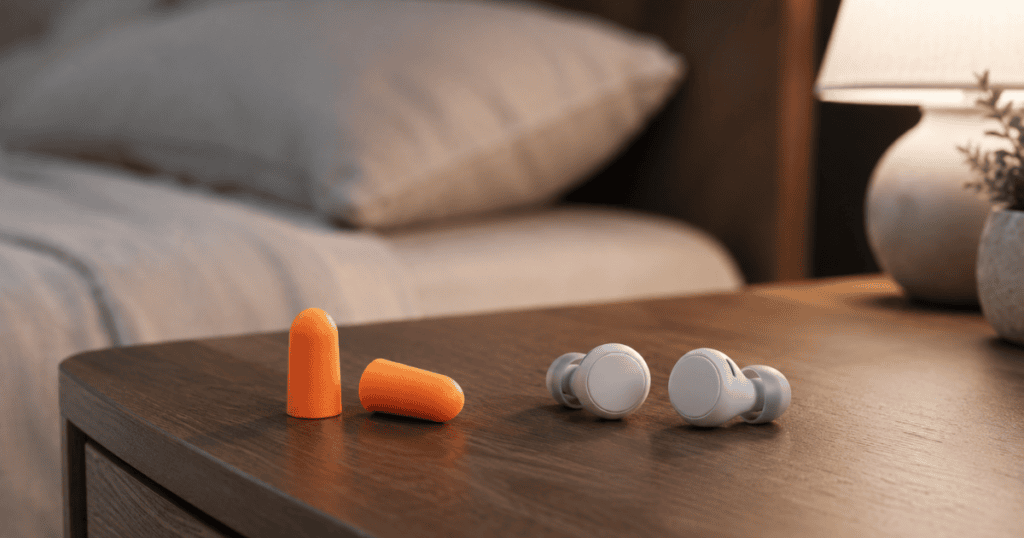
People trying to block a partner’s snoring often compare sleep earbuds with regular earplugs, but the two reduce nighttime noise in different ways.
Earplugs reduce sound through a physical seal, with no batteries, charging, Bluetooth, or audio settings. Sleep earbuds may use a similar seal but add masking sounds, streaming, private alarms and, on some models, active noise cancellation.
Disclosure: As an Amazon Associate I may earn on qualifying purchases at no extra cost to you.
Sleep Earbuds vs Earplugs: The Quick Answer
Choose earplugs if you want an inexpensive, low-maintenance way to reduce snoring and bedroom noise. A correctly fitted foam pair can provide strong passive sound reduction without needing to be charged.
Choose sleep earbuds if you want white noise, brown noise, music, podcasts or other masking audio. Purpose-built models are also flatter than standard earbuds, which may make them more comfortable against a pillow.
For snoring, the quality of the fit matters as much as the type of product. Snoring isn’t confined to one frequency range, and studies have identified acoustic peaks across both low and higher frequencies.
That means neither foam earplugs nor ANC can guarantee complete silence.
Sleep Earbuds vs Earplugs – Comparison Chart
| Aspect | Earplugs | Sleep Earbuds | Better Choice |
|---|---|---|---|
| Noise control | Passive sound reduction through foam, silicone, wax or a custom mold | Passive isolation, masking audio and, on some models, ANC | Depends on the fit and earbud model |
| Snoring | Reduces the overall volume reaching the ear | Can reduce noise and cover what remains with masking audio | Earplugs for simple blocking, earbuds for masking |
| Side sleeping | Low bulk, but insertion pressure may become uncomfortable | Flatter than regular earbuds, but pillow pressure can still cause soreness | Personal fit determines the winner |
| Overnight use | No battery or setup required | Requires charging and may depend on an app or Bluetooth | Earplugs for simplicity |
| Audio playback | None | Many models play sleep sounds, music or spoken audio | Depends on personal preference |
| Price | Low, particularly for disposable foam | Higher upfront cost | Earplugs |
| Alarms and safety sounds | May reduce how clearly they’re heard | May reduce external alarms, although some offer private in-ear alarms | Check your setup before overnight use |
How Noise Reduction for Sleep Works
Sleep earbuds and earplugs may look similar once they’re in your ears, but they can use three different methods to manage noise.
Passive Noise Isolation
Passive isolation comes from physically sealing the ear canal. Foam earplugs expand inside the canal, while silicone tips, wax plugs and molded products create a barrier that reduces how much sound reaches the eardrum.
Sleep earbuds also rely on their ear tips for passive isolation. Even an earbud with ANC needs a suitable seal to control noise properly.
Active Noise Cancellation
Active noise cancellation uses microphones to detect surrounding sound and produces an opposing signal to reduce it.
ANC is generally most useful against steady, lower-frequency sounds such as engines, air conditioning and traffic hum. It may be less consistent against speech, sudden noises and rapidly changing sounds.
Some sleep earbuds now include ANC, but many don’t.
Sound Masking
White noise, brown noise and similar sounds don’t physically block snoring. Instead, they reduce the contrast between the snoring and the background sound, which may make each snore less noticeable.
Studies have found that broadband or white noise may help some people sleep in noisy environments, although reviews of auditory sleep aids have found that results vary between studies.
People who dislike wearing anything inside their ears may get a similar masking effect from a white noise machine for snoring.
Noise Reduction Rating
The Noise Reduction Rating, or NRR, is a laboratory rating commonly printed on earplug packaging. A higher number indicates greater potential sound reduction under test conditions.
What Are Earplugs?
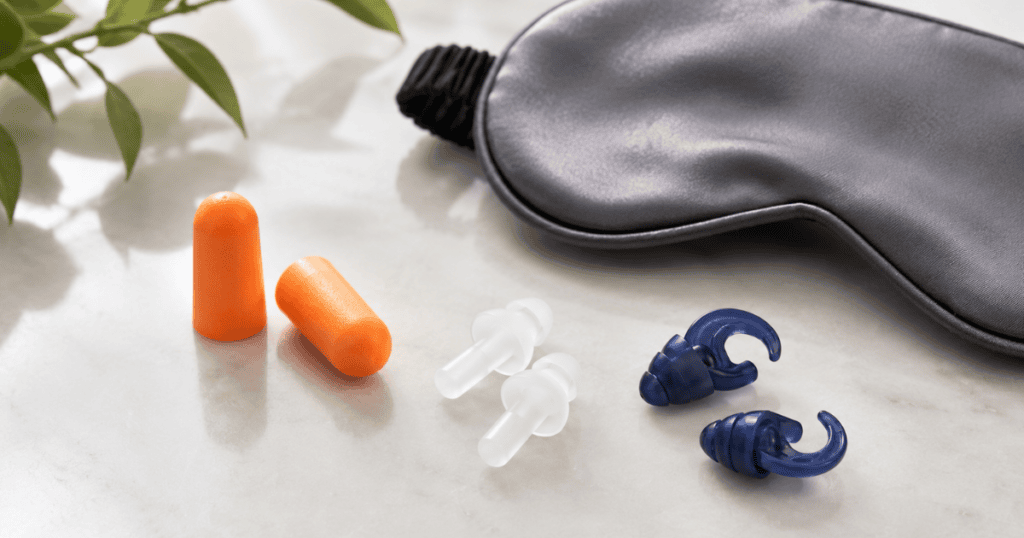
Earplugs are passive devices that reduce sound without electronics. The main types used for sleeping include:
- Foam earplugs: Compressed before insertion and allowed to expand inside the ear canal.
- Pre-molded earplugs: Reusable plugs with a fixed shape, often made from silicone or another flexible material.
- Moldable silicone or wax: Shaped over the entrance of the ear canal rather than pushed deeply inside.
- Custom earplugs: Made from an impression of the individual ear for a more personalized fit.
Foam plugs often provide the highest labeled NRR at the lowest price, but they need to be inserted correctly. A plug that’s barely sitting inside the ear won’t provide the same reduction as one that has expanded into a proper seal.
Earplugs also require little preparation. There’s no app to open, connection to check or battery to charge before bed. That makes them practical for travel, occasional use and sleepers who don’t want audio playing overnight.
However, comfort is something to keep in mind. A plug that’s too large, inserted too deeply or pushed by a pillow may leave the ear canal feeling sore by morning. Trying different sizes and materials is often more useful than assuming all earplugs will feel the same.
What Are Sleep Earbuds?
Sleep earbuds are smaller, flatter versions of regular wireless earbuds intended for overnight use. Their housings are shaped to protrude less from the ear, reducing the amount of hardware pressed between the ear and pillow.
Features vary considerably between models. Depending on the product, sleep earbuds may include:
- Passive noise isolation
- White noise and other masking sounds
- Bluetooth streaming
- Active noise cancellation
- Private alarms
- Automatic audio shutoff
- Sleep-position or movement tracking
Not every pair includes all of these features. Some sleep earbuds play masking audio but don’t have ANC, while others provide ANC without Bluetooth music or sleep sounds.
Sleep Earbuds vs Earplugs for Snoring
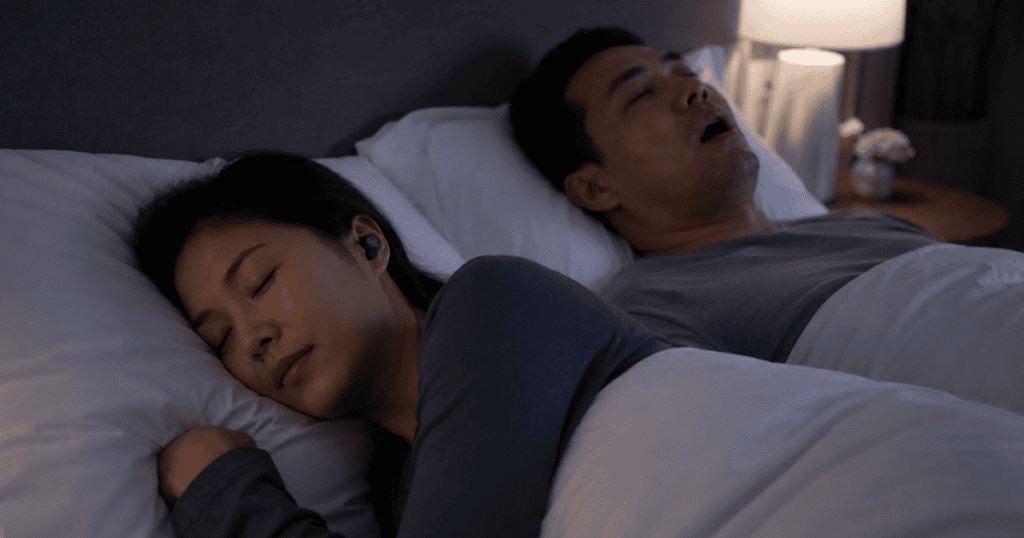
For passive noise reduction, well-fitted foam earplugs are hard to beat on price. They reduce sound across a broad range of frequencies without batteries, Bluetooth, or audio playback.
Sleep earbuds take a different approach. Their ear tips lower the volume of snoring, while white noise or another masking sound covers part of what remains. Models with active noise cancellation may also reduce some lower-frequency noise.
Snoring varies considerably between people and can change throughout the night. Its volume, frequency and rhythm may shift with sleeping position, congestion and where the airway is restricted. That variation is one reason the same earplug or earbud may work better for one sleeper than another.
As a result:
- Start with foam earplugs when the goal is affordable, straightforward noise reduction.
- Consider sleep earbuds when snoring still cuts through the plugs or when masking audio helps you fall asleep.
- Look for a model that explicitly lists ANC when active cancellation is important. Don’t assume every sleep earbud includes it.
Earplugs and earbuds only reduce what the other person hears. They don’t treat the snoring itself. Persistent snoring may need to be addressed with positional changes, nasal breathing support or appropriately selected anti-snoring mouthpieces.
Are Earplugs or Sleep Earbuds More Comfortable for Side Sleepers?
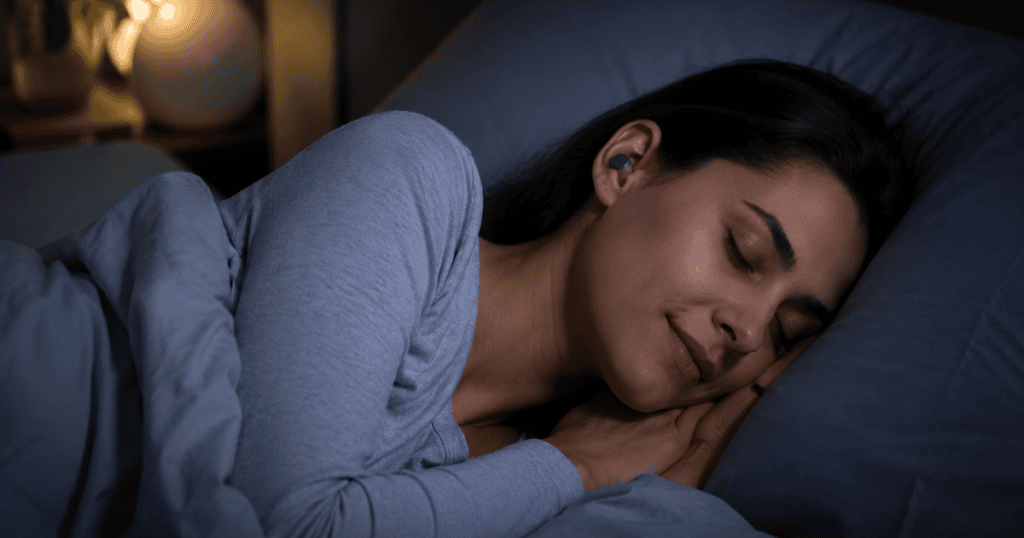
There’s no universal winner for side sleeping because ear shape, pillow firmness and sleep position all affect comfort.
Sleeping on Your Side With Earplugs
Foam earplugs don’t have a hard electronic housing, but a pillow can press against the outer ear and push the plug farther into the canal. An oversized or deeply inserted plug may become uncomfortable after several hours.
Moldable silicone or wax plugs can be a better option for people who dislike deep insertion because they cover the canal entrance rather than expanding inside it.
Sleeping on Your Side With Sleep Earbuds
Purpose-built sleep earbuds sit closer to the ear than AirPods and other standard earbuds. This reduces pillow pressure but doesn’t eliminate it.
Side sleepers may need to change ear-tip sizes, adjust the earbud position or use a softer pillow when they experience pressure.
A low-profile design is therefore an advantage, not a guarantee of pain-free use.
People who want audio but can’t tolerate an in-ear product may prefer a sleep mask with headphones, which places flat speakers over the ears instead.
Overnight Usability
Earplugs require less maintenance. Once inserted properly, they keep blocking noise until they move out of place or are removed. There’s no battery to charge and no Bluetooth connection to drop.
Sleep earbuds need to be charged and correctly fitted before bed. Battery life varies by model and mode, with features such as Bluetooth streaming, alarms and ANC often using more power.
Those extras may be worthwhile when you use masking sounds every night. However it may also feel unnecessary when you simply want less noise.
Fit can change during the night with either option. Foam earplugs may slowly work loose, while sleep earbuds can rotate or lose their seal as you change position. Try several tip sizes while lying on your usual pillow rather than judging the fit while sitting upright.
Price and Long-Term Value
Foam earplugs have the lowest upfront cost and are easy to replace. They’re a practical starting point when you aren’t sure whether blocking the noise will be enough.
Reusable silicone, wax or pre-molded plugs cost more initially but don’t need to be discarded after every use. They still require cleaning and eventual replacement when the material wears down or no longer seals properly.
Sleep earbuds carry a much higher upfront price. They don’t require a new disposable pair each night, but batteries gradually lose capacity and ear tips may need to be replaced.
For occasional travel or an unusually noisy night, foam earplugs usually offer better value. Sleep earbuds become more appealing when their audio, alarms and masking features are used regularly.
Sound and Audio Options
Earplugs only reduce incoming sound. For people who sleep best in quiet, that may be all that’s needed.
Sleep earbuds give you more control over what replaces the unwanted noise. Depending on the model and listening mode, options may include:
- White, pink or brown noise
- Rain, waves or fan sounds
- Music
- Podcasts and audiobooks
- Meditation or breathing audio
- Private alarms
Check the product’s playback restrictions before buying. Some models can stream any Bluetooth audio, while others only play sounds supplied by the manufacturer.
Ear Health and Overnight Safety
Wearing something in the ear canal for hours can contribute to irritation, trapped moisture or earwax buildup. Earbuds may also push existing wax deeper into the canal. Dirty ear tips or reusable plugs can introduce debris and bacteria.
To reduce problems:
- Use the correct size instead of forcing a tight fit.
- Keep reusable tips and plugs clean and dry.
- Replace disposable plugs as directed.
- Keep audio at the lowest level that provides useful masking.
- Stop using the product if it causes persistent pain, itching, discharge or changes in hearing.
Hearing risk from sleep earbuds comes primarily from sound level and exposure time rather than the fact that they’re marketed for sleep. Playing audio loudly for several hours can damage hearing over time.
Both sleep earbuds and earplugs can also make alarms, smoke detectors, a baby crying or other safety sounds harder to hear. Test whether essential alarms remain audible before relying on either option throughout the night.
Who Should Choose Earplugs?
Earplugs are likely the better choice when you:
- Want the lowest-cost option
- Prefer silence rather than masking audio
- Don’t want to charge another device
- Need something simple for travel
- Want strong passive reduction from a correctly fitted foam plug
- Don’t need music, podcasts or a private alarm
They’re also the logical place to start because you can test several foam or silicone styles without making a large purchase.
Who Should Choose Sleep Earbuds?
Sleep earbuds may suit you better when you:
- Find masking sounds more helpful than silence
- Want to listen to music, podcasts or audiobooks in bed
- Need a lower-profile alternative to standard earbuds
- Want an alarm that plays privately through the earbuds
- Are willing to charge and configure the device
- Want passive isolation combined with masking or ANC
Check the specifications carefully. Sleep earbuds don’t always include ANC, support every type of audio playback, or provide a full night of battery life in every mode.
Earplugs vs Sleep Earbuds – Which is Right For You?
Earplugs are the better starting point for most people who simply want to reduce a partner’s snoring. They’re inexpensive, require no charging and can provide strong passive noise reduction when inserted correctly.
Sleep earbuds are better when noise blocking alone isn’t enough. Masking sounds, Bluetooth playback and private alarms give you more control over the bedroom sound environment, while low-profile housings are designed to reduce the pillow pressure caused by regular earbuds.
For side sleepers who want passive blocking and masking audio, the Soundcore Sleep A20 is the recommended pick. It offers up to 14 hours in Sleep mode and a flatter shape intended for overnight wear, but it doesn’t include active noise cancellation.
When loud snoring is accompanied by gasping, choking, pauses in breathing, morning headaches or excessive daytime tiredness, blocking the noise shouldn’t be the only response. Those signs can be associated with obstructive sleep apnea, and an at-home sleep study may help determine whether further assessment is needed.
FAQ: Sleep Earbuds vs Earplugs
Which Blocks More Noise, Sleep Earbuds or Earplugs?
A correctly fitted, high-NRR foam earplug may provide stronger passive noise reduction than a sleep earbud that doesn’t have ANC. However, real-world performance depends on the seal and individual fit.
Sleep earbuds may be more useful when masking audio or active noise cancellation helps cover sounds that remain audible through passive isolation.
Are Sleep Earbuds Better Than Earplugs for Snoring?
Sleep earbuds aren’t automatically better for snoring. Earplugs are often the stronger choice for simple, affordable sound reduction.
Sleep earbuds become more useful when white noise, brown noise or ANC helps make irregular snoring less noticeable. Check whether the model actually includes ANC before buying.
Can Sleep Earbuds Damage Your Hearing?
Sleep earbuds may damage hearing when audio is played too loudly for extended periods. Use the lowest volume that provides enough masking and avoid turning up the sound to overpower loud snoring.
Can Earplugs Cause Earwax Buildup?
Regular earplug use can contribute to wax buildup by interfering with the ear’s normal process of moving wax outward. Earbuds may do the same and can push existing wax deeper.
Seek medical advice if you develop persistent blockage, pain, discharge, tinnitus or reduced hearing.
Can You Sleep With Earplugs Every Night?
Many people use earplugs nightly, but fit and hygiene remain important. Keep reusable products clean, replace disposable foam regularly and stop using them when they cause irritation or pain.
Do Sleep Earbuds Fall Out Overnight?
Sleep earbuds can fall out when the ear tips are too small, the wings aren’t positioned correctly or the sleeper moves frequently. Foam earplugs can also loosen as the seal changes overnight.
Testing the fit while lying on your usual pillow gives a better indication than testing them while sitting up.
Are Sleep Earbuds Comfortable for Side Sleepers?
Purpose-built sleep earbuds are flatter than standard earbuds and may reduce pillow pressure. They can still become uncomfortable if the housing, ear tip or wing presses against sensitive parts of the ear.
Trying multiple tip sizes and using a softer pillow may improve comfort.
Health Disclaimer: This article is for educational purposes only and isn’t a substitute for medical advice, diagnosis or treatment. Earplugs and sleep earbuds may reduce the sound of snoring but don’t treat its cause or obstructive sleep apnea. Speak with a qualified healthcare professional about persistent or concerning snoring symptoms.

Sleep Essentials Hub is a sleep blog for readers who want helpful sleep guides and honest product recommendations. We’re passionate about better rest, with a focus on pillows and bedding, sleep aids, sleep apnea and CPAP gear, natural sleep supplements, sleep tech, and simple ways to improve your sleep environment. We’re here to help you choose products that support deeper sleep, greater comfort, and a better night’s rest without overspending.