
Best Coconut Husk Mattresses for Back Pain
If you have been waking up stiff and sore, your mattress could be part of the problem. Back pain is one of the biggest reasons people start looking for a new sleep surface, and plenty of people who try memory foam end up disappointed when the support starts to fade after a year or two.
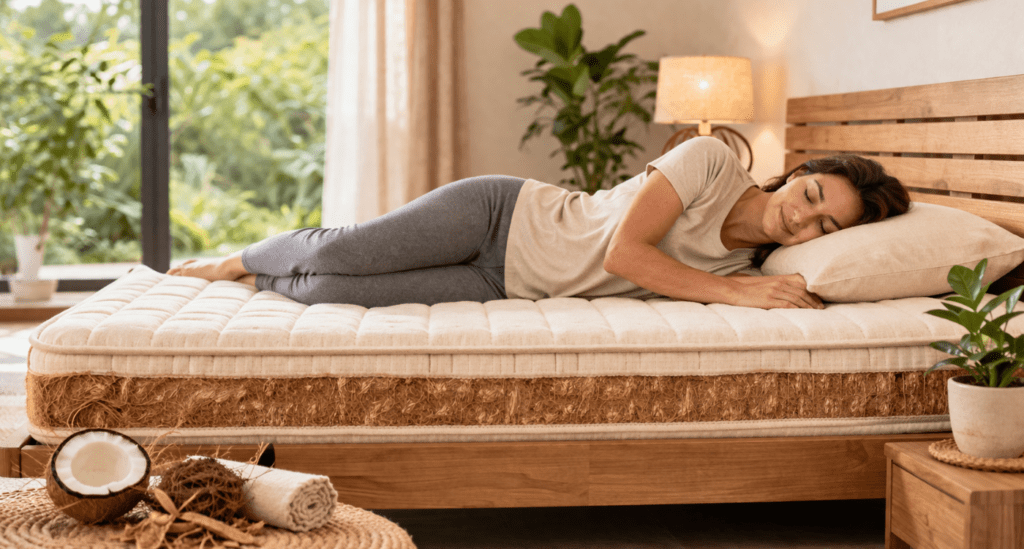
Coconut husk mattresses, also known as coir mattresses, take a very different route. Instead of foam that slowly compresses, they use natural compressed coconut fiber that holds its firmness for years.
This is still not a mainstream mattress category so there are fewer choices and less name recognition than you get with other mattress brands. But for back and stomach sleepers who want firm, steady spinal support without synthetic materials, coconut coir can be a strong option.
Disclosure: This article may contain affiliate links.
Top Picks: Coconut Husk Mattresses for Back Pain
1. Comfort Pure CocoSupport Mattress
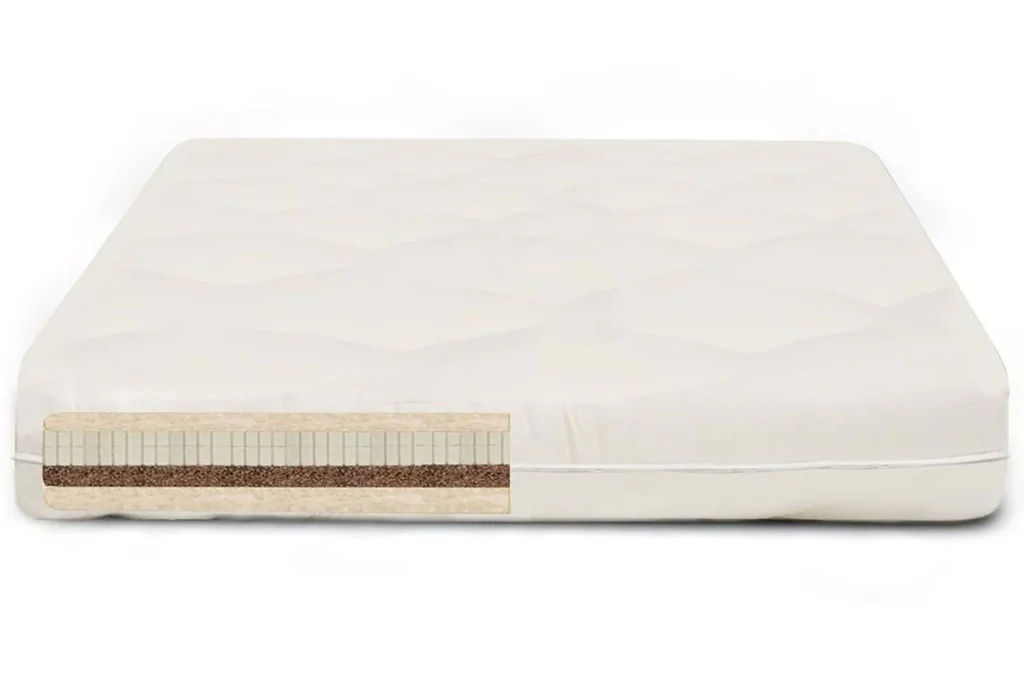
This mattress pairs a coconut coir base with four inches of Dunlop latex on top, creating a sleep surface that stays firm where you need support but offers enough give to cushion your shoulders and hips. The cover uses organic cotton quilted with virgin wool, which pulls moisture away from your body throughout the night.
The OEKO-TEX certification confirms the materials meet strict safety standards. People who’ve switched from softer mattresses report feeling less stiffness in their lower back within the first few weeks.
Motion transfer stays minimal, so you won’t feel your partner rolling over during the night.
Where to Buy: Comfort Pure CocoSupport Mattress
2. The Futon Shop CocoMax Plus
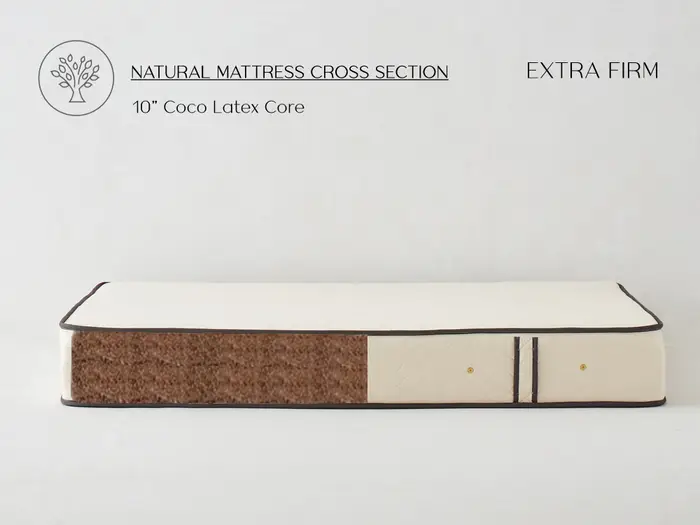
Built with a dense coconut coir core, this mattress targets people over 200 pounds or anyone who sleeps primarily on their stomach. The firmness prevents the sagging that often causes back pain to worsen over time.
The materials contain no synthetic chemicals or flame retardants.
Air moves freely through the coconut fibers, keeping the sleeping surface cooler than foam choices. You can add a latex topper if you want more contouring around pressure points.
The manufacturer estimates 20 years of usable life with proper care.
Where to Buy: The Futon Shop CocoMax Plus
3. Honest Sleep Organic Cocorest
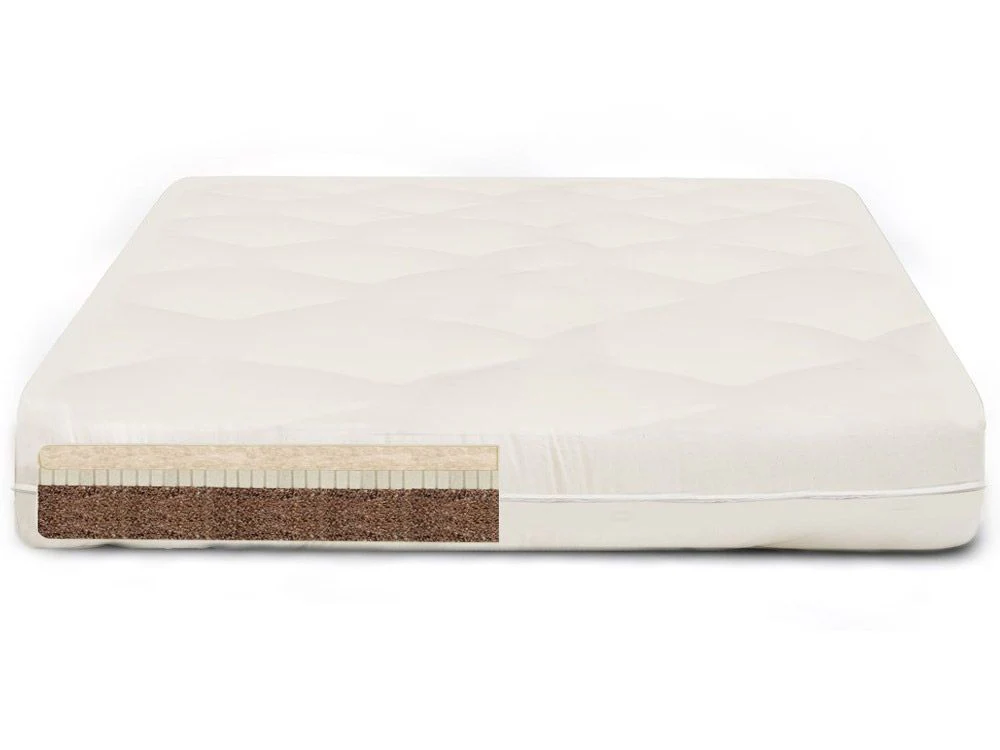
This option layers four inches of organic coconut coir beneath GOTS-certified cotton and Dunlop latex. The natural materials resist dust mites and mold without chemical treatments.
People with allergies often notice they breathe easier and wake up less congested.
The coir distributes your weight evenly across the surface, reducing stress on person joints. The construction avoids flame retardants and synthetic adhesives, keeping the sleep environment as pure as possible.
Where to Buy: Honest Sleep Organic Cocorest Mattress
Why Coconut Husk Mattresses Can Help with Back Pain
The basic appeal comes down to structural consistency. Coconut coir is a dense natural fiber that holds its shape much better than foam.
Memory foam mattresses often start getting soft spots and body impressions after 12 to 18 months, and that slow sagging can lead to lower back pain or make it worse over time. Coir stays more consistent for years, so the support you get at the start is much closer to what you will still have later on.
Coir also has natural breathability built into its open-fiber structure. Unlike memory foam, which traps body heat, coconut fiber allows air to circulate throughout the night. That’s worth mentioning because overheating disrupts sleep quality even when it doesn’t fully wake you up, and many people who struggle with back pain are also dealing with disrupted sleep cycles.
There is also the issue of chemical exposure. Regular foam mattresses can release VOCs, especially when they are new. Coconut coir does not contain petrochemicals, flame retardants, or synthetic fillers, which is why many people choose it when they are trying to cut down on chemicals in the home.
Who Coconut Husk Mattresses Work Best For
- Back and stomach sleepers tend to get the most benefit. Firm, flat support keeps the spine in a neutral position for both of these sleeping positions, and coconut coir delivers that consistently. Stomach sleepers in particular often find that softer mattresses allow their hips to sink, which creates lower back strain that builds up over the night.
- People who’ve been let down by memory foam are another strong fit. If you’ve bought a medium-firm foam mattress that felt great for six months and then gradually started causing morning stiffness, a natural coir mattress offers a meaningfully different construction that doesn’t soften the same way.
- Health-conscious and chemically sensitive buyers may also find coconut coir worth looking at. If you’ve been researching non-toxic, organic mattresses, coir-based options tend to score well on certification standards like GOTS and OEKO-TEX, and they lack the VOC off-gassing that concerns many organic mattress shoppers.
Who Should Look Elsewhere
- Side sleepers are the main group for whom pure coir mattresses may not be the right fit. The firmness that benefits back and stomach sleepers can create uncomfortable pressure at the shoulders and hips when you’re lying on your side. If you’re a side sleeper with back pain, a coir-latex hybrid may provide a workable balance, but pure coir is typically not ideal.
- Lighter-weight sleepers sometimes find extra-firm mattresses harder to adjust to, since the surface doesn’t contour at all to body shape. If you’re under around 130 lbs, maximum-firmness coir may feel harsher than it needs to be.
- Anyone expecting a cloud-like feel should recalibrate expectations. These are firm surfaces designed for support, not comfort in the traditional plush sense. The adjustment period is real, and most people need one to two weeks before the surface starts to feel normal.
What to Consider Before You Buy
- Firmness and sleep position should drive your decision more than anything else. If you’re a back or stomach sleeper who needs firm, stable support, a pure coir or coir-latex hybrid is worth considering. If you’re not sure, look for a dual-sided design that gives you some room to experiment.
- Certifications matter in this category. Because coconut coir is positioned as a natural, non-toxic option, look for GOTS, GOLS, or OEKO-TEX certification on anything you’re seriously considering. Brands that don’t display certifications in this space can be harder to evaluate for material quality.
- Sleep trials and return policies are something to check carefully. Mainstream mattress brands typically offer 100 to 365-night trials with free returns, and coir brands in the US often have shorter or more restrictive policies. That’s a real consideration when you’re buying a firm mattress you’ve never tried before.
- Foundation requirements are worth looking at too. Coconut coir mattresses typically need a solid platform base or slatted frame with slats no more than 3 inches apart. Box springs or soft foundations may undermine the support the mattress is designed to provide.
Caring for a Coconut Husk Mattress
A well-maintained coir mattress can last 10 to 15 years, which is considerably longer than most foam alternatives. Rotate it every three to six months to distribute wear evenly.
Use an organic mattress protector to guard against moisture, and air it out for a few hours every few months if possible. Spot clean spills with a mild detergent and dry cloth; avoid saturating the material with water.
Keep it away from direct sunlight for extended periods, which can degrade the natural fibers over time.
The Bottom Line
Coconut husk mattresses aren’t for everyone, and they’re not trying to be. They’re designed for a specific kind of sleeper: someone who needs firm, lasting support, prefers natural materials over synthetic foam, and has possibly been let down by softer mattresses before.
If you’re shopping for a chemical-free mattress with lasting spinal support, coconut coir is worth serious consideration. The material is durable, breathable, and genuinely different in construction from what dominates the mainstream market.
Just make sure the firmness level matches your sleep position, check that the brand carries recognized organic certifications, and look closely at the return policy before you buy. Getting those three things right will put you in a good position to find a coconut husk mattress that actually works for your back.
Frequently Asked Questions
What is a coconut coir mattress?
A coconut coir mattress is made from the fibers found between the hard internal shell and outer coat of a coconut. These fibers are compressed and molded to create a firm, supportive mattress core.
What is the difference between coconut fiber and coir?
Coir and coconut fiber are the same thing – both terms refer to the natural fibers found between the hard internal shell and outer coat of a coconut.
Is a coconut fiber mattress good for back pain?
A coconut fiber mattress can be a good option for back pain if you prefer a firmer surface.
Some people find that a firmer mattress gives them more support and keeps their body from sinking too much. Comfort still depends on your sleep position, body type, and how firm the mattress feels to you.
Is a coconut husk mattress good?
Yes, coconut husk mattresses provide excellent support, natural temperature regulation, and hypoallergenic properties while being environmentally sustainable.
Are coconut mattresses eco-friendly?
Yes, coconut mattresses are considered eco-friendly. Coconut coir is a renewable resource, and the production process typically has a lower environmental impact compared to synthetic mattress materials.
Can coconut mattresses help with allergies?
Coconut coir is naturally resistant to dust mites, mold, and other common allergens, making it a good choice for allergy sufferers. However, it’s important to check all materials used in the mattress if you have specific allergies.
How firm are coconut coir mattresses?
Coconut coir mattresses are generally firm to extra-firm. However, many manufacturers combine coir with other materials like latex or memory foam to offer a range of firmness options.
Do coconut mattresses sleep hot?
Coconut coir is naturally breathable, which helps regulate temperature. Most coconut mattresses sleep cooler than traditional memory foam mattresses. If you need additional cooling relief, you can add a cooling pad for extra comfort.
How do I clean a coconut coir mattress?
Most coconut coir mattresses should be spot cleaned with a mild detergent and water. Always check the manufacturer’s specific care instructions.
What are the side effects of a coir mattress?
While not side effects, some users may need time to adjust to the firm support of a coir mattress, and the natural materials can be heavier than synthetic alternatives.
Key Takeaways
- Coconut husk mattresses offer natural, firm support that can help reduce back pain by promoting proper spinal alignment.
- These mattresses are eco-friendly, durable, and naturally resistant to allergens and dust mites.
- Different models offer varying levels of firmness and comfort, from extra-firm orthopedic support to plush-top options for side sleepers.
- Consider factors like your sleep position, body weight, and type of back pain when choosing a coconut husk mattress.
- Proper maintenance, including regular rotation and using a mattress protector, can extend the life of your coconut husk mattress.

Sleep Essentials Hub is a sleep blog for readers who want helpful sleep guides and honest product recommendations. We’re passionate about better rest, with a focus on pillows and bedding, sleep aids, sleep apnea and CPAP gear, natural sleep supplements, sleep tech, and simple ways to improve your sleep environment. We’re here to help you choose products that support deeper sleep, greater comfort, and a better night’s rest without overspending.