
Best CPAP Machines with Humidifier (2026 Buyer’s Guide)
Dry mouth. Sore throat. Waking up congested even though you used your CPAP all night.
If that sounds familiar, your CPAP machine probably isn’t humidifying your airflow well enough. And that’s not a minor comfort issue. Airway dryness is one of the top reasons people stop using their CPAP entirely, which puts them right back where they started with untreated sleep apnea.
The fix? A CPAP machine with a built-in heated humidifier that warms and moisturizes the air before it reaches your mask. One streamlined device, simple setup, no separate attachments or extra equipment on your nightstand.
After comparing the current lineup of CPAP machines with integrated humidification, the ResMed AirSense 11 AutoSet stands out as the best overall pick.
It gives you auto adjusting therapy, heated humidification, and heated tubing in one simple package, which can make a real difference if dryness and congestion are getting in the way of consistent CPAP use.
Here’s how all four of our picks compare, followed by detailed breakdowns of each.
Disclosure: This article is reader-supported. When you buy through links on this page, we may earn a commission at no extra cost to you.
Top CPAP Machines with Integrated Humidifiers – Compared
| Feature | ResMed AirSense 11 | ResMed AirSense 10 | Luna G3 Auto | DreamStation 2 |
|---|---|---|---|---|
| Our Verdict | Best Overall | Best Proven Value | Best Budget Pick | Most Compact |
| Weight | 2.5 lbs | 2.75 lbs | 3.75 lbs | ~2.3 lbs |
| Noise Level | 27 dB | 26.6 dB | <28 dB | ~27 dB |
| Heated Tubing | ClimateLineAir 11 | ClimateLineAir (included) | Yes (included) | Optional add-on |
| Auto-Adjusting | Yes (AutoSet) | Yes (AutoSet) | Yes | Yes |
| Humidification | HumidAir (automatic) | HumidAir (adjustable) | Heated with pre-heat | Adaptive |
| Pressure Relief | EPR (3 levels) | EPR (3 levels) | Yes | Yes |
| App / Data | myAir (Bluetooth) | myAir (Bluetooth) | iCodeConnect (cellular) | DreamMapper (Bluetooth) |
| Mask Compatibility | Universal | Universal | Universal | Universal |
| Pressure Range | 4-20 cmH₂O | 4-20 cmH₂O | 4-20 cmH₂O | 4-20 cmH₂O |
| FAA Approved | Yes | Yes | Yes | Yes |
| Best For | Most trusted all-rounder | Upgraders and ResMed loyalists | Out-of-pocket and first-time buyers | Small nightstands, limited space |
| Check Price | Check Price | Check Price | Check Price | |
| All machines include integrated heated humidifiers and support worldwide voltage (100-240V). Prices vary by retailer. Check with your FSA/HSA plan administrator for eligibility. | ||||
Top Picks: CPAP Machines with Integrated Humidifiers
1. Best Overall – ResMed AirSense 11 AutoSet with HumidAir
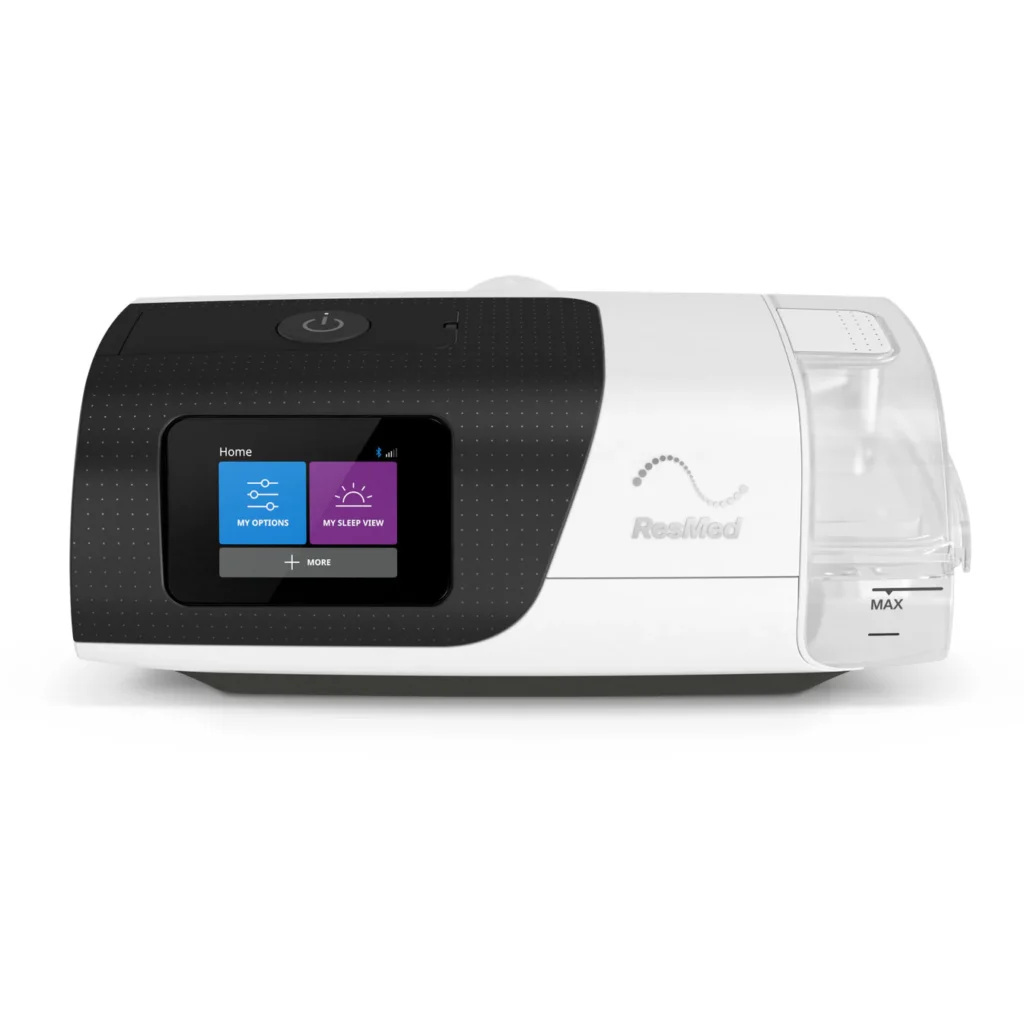
The ResMed AirSense 11 is one of the most widely recommended CPAP machines in 2026, and it’s easy to see why. It pairs ResMed’s proven AutoSet algorithm with an integrated HumidAir heated humidifier and optional ClimateLineAir 11 heated tubing that work together to maintain consistent moisture levels throughout the night.
Why the humidification works well: The HumidAir system automatically adjusts moisture and temperature based on your room conditions, which helps prevent both dryness and rainout (that annoying condensation buildup in your tubing).
When paired with the ClimateLineAir 11 heated tube, the air stays warm and humidified all the way from the machine to your mask, so you’re not breathing in air that cooled down in the tubing.
Other Highlights:
- AutoRamp starts therapy at a low, comfortable pressure and gradually increases once it detects you’ve fallen asleep
- Expiratory pressure relief (EPR) reduces air pressure when you exhale, so breathing feels more natural
- AutoSet for Her mode offers a gender-specific algorithm for breathing patterns more common in women
- myAir app tracks your nightly data, coaches you on improving therapy, and helps troubleshoot mask fit issues
- Touchscreen interface with ambient light sensor that dims automatically in dark rooms
- Operates at 27 dB, roughly the volume of a whisper
The trade-offs: The AirSense 11 is the most expensive option on this list. The heated tubing and HumidX cartridges are sold separately in some configurations, which adds to the total cost. The unit is also not as compact as some competitors if nightstand space is tight.
Best for: Anyone who wants the most trusted, feature-complete CPAP machine available. A good fit if you can only buy one machine and want to get humidification right from the start.
2. Best Value – ResMed AirSense 10 AutoSet with HumidAir & ClimateLineAir
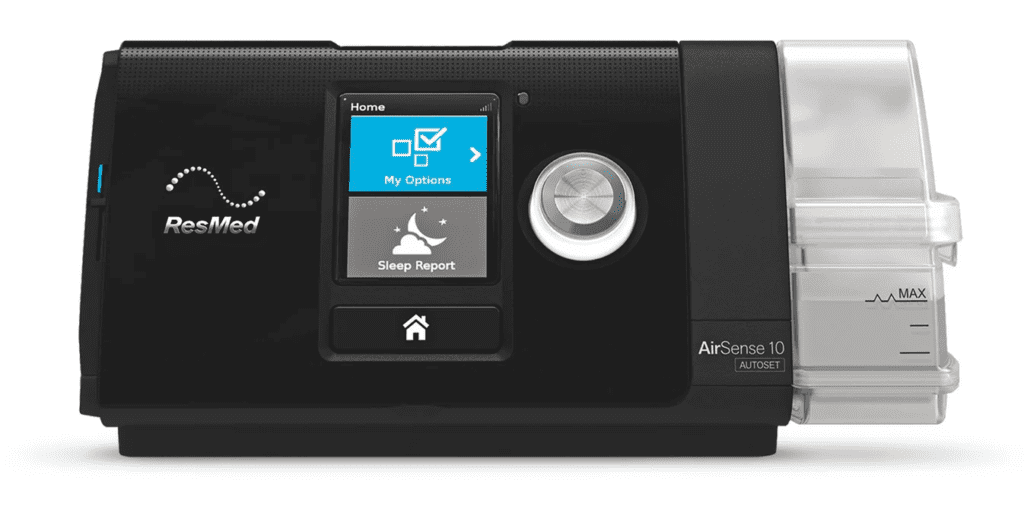
The ResMed AirSense 10 is the CPAP machine that sleep therapists have been recommending for years, and it remains widely available and well-supported heading into 2026. It uses the same core AutoSet algorithm as the AirSense 11 but at a lower price point, making it the best option if you want ResMed reliability and heated humidification without paying for the latest touchscreen and Bluetooth features.
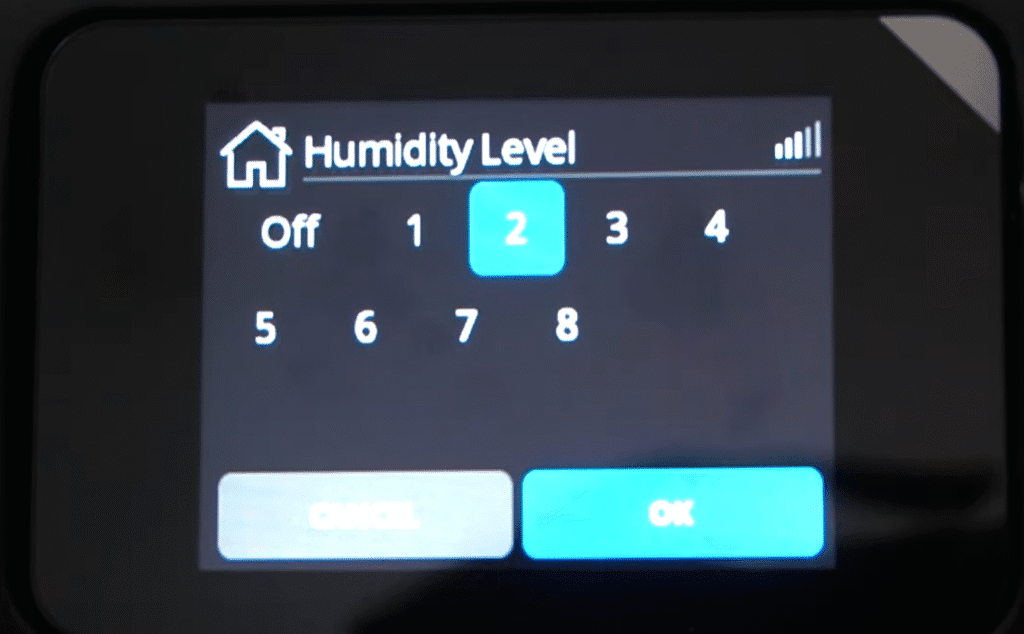
Why the humidification works well: The AirSense 10 includes the HumidAir heated humidifier with adjustable humidity settings (levels 1–8), so you can fine-tune moisture delivery to match your comfort and climate. The included ClimateLineAir heated tubing maintains temperature from the machine to your mask, which significantly reduces rainout.
Other Highlights:
- AutoSet auto-adjusting pressure that responds to your breathing patterns breath by breath
- Smart Start automatically powers the machine on when you put your mask on and off when you remove it
- EPR (Expiratory Pressure Relief) at three comfort levels
- myAir app for nightly therapy tracking and compliance data
- Operates at just 26.6 dB, one of the quietest CPAPs on the market
- All AirSense 10 accessories (humidifier chambers, tubing, filters) are widely available and affordable
The trade-offs: The interface uses a dial-and-button setup rather than a touchscreen, which feels dated compared to the AirSense 11. The design is slightly larger and heavier. As the older model, it may eventually be phased out by ResMed, though it’s still widely stocked.
Best for: Buyers who want proven ResMed quality with full heated humidification without paying for the latest model. Also a smart choice if you’re replacing an existing AirSense 10 and already have compatible accessories.
3. Best Budget – Luna G3 Auto CPAP with Heated Humidifier
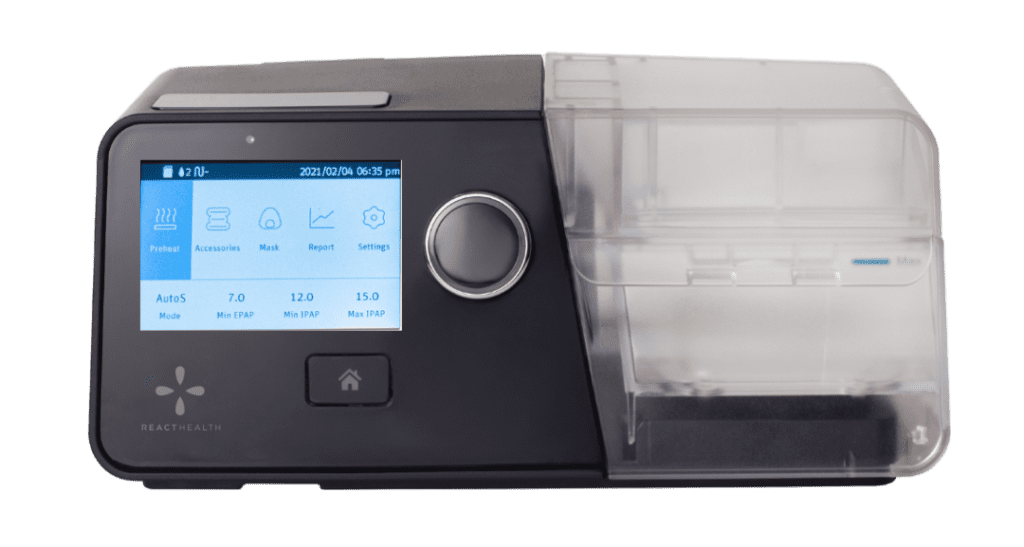
The Luna G3 Auto includes an integrated heated humidifier and heated tubing as standard, which are features that premium brands often sell separately. For anyone paying out of pocket or wanting a fully featured CPAP without the higher price, the Luna G3 offers real value.
Why the humidification works well: The built-in humidifier includes a pre-heat function that warms the water chamber before you go to bed, so your therapy is comfortable from the very first breath. The included heated tubing helps prevent rainout without needing to buy it as an add-on. The water chamber is also easy to remove, fill, and clean.
Other Highlights:
- Auto-adjusting pressure that adapts to your breathing throughout the night
- 3.5-inch full-color LCD display with knob-and-button controls
- AutoRamp starts at lower pressure and gradually increases as you fall asleep
- Built-in cellular modem for automatic compliance reporting to your healthcare provider via iCodeConnect
- Operates at under 28 dB, keeping things quiet for you and your bed partner
- Bedside clock mode on the display
The trade-offs: At 3.75 lbs, the Luna G3 is heavier and bulkier than the ResMed units. The interface uses physical buttons and a knob rather than a touchscreen. The smartphone app ecosystem also isn’t as polished as ResMed’s myAir.
Best for: First-time CPAP users, out-of-pocket buyers, and anyone who wants heated humidification and heated tubing included in the box without paying separately for each component.
4. Most Compact – Philips DreamStation 2 Auto CPAP with Humidifier
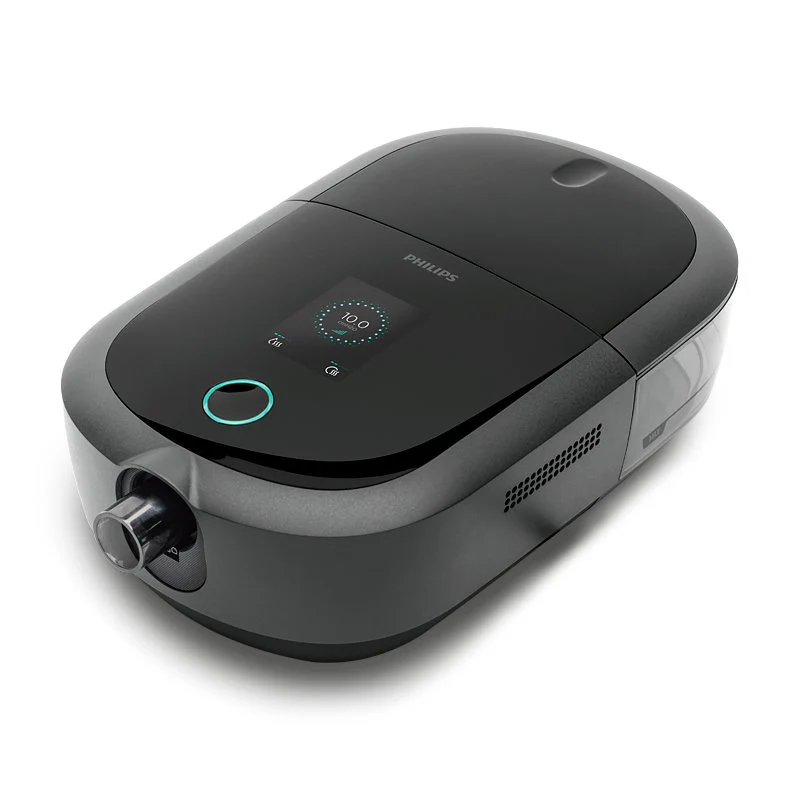
The Philips DreamStation 2 packs a full-size CPAP machine with integrated humidification into one of the most compact footprints in the home CPAP category. If nightstand space is limited or you want a machine that doesn’t dominate your bedroom, the DreamStation 2 is worth considering.
Good to know: The DreamStation 2 was not part of the 2021 Philips foam recall. It was designed as the replacement using different materials. The FDA did issue a separate safety communication in 2023 about overheating reports (not a recall), so follow the manufacturer’s safety guidelines for placement and daily water reservoir care.
Why the humidification works well: The DreamStation 2 uses adaptive humidification that fine-tunes moisture levels based on room conditions to maintain comfortable airflow and reduce condensation. An optional heated tube gives you additional temperature control for the air traveling to your mask.
Other Highlights:
- Auto-adjusting pressure that responds to your breathing patterns
- Compact, space-saving design that takes up less nightstand room than most full-size units
- Easy-to-clean components designed for quick daily maintenance
- DreamMapper app for therapy tracking via Bluetooth
- FAA-approved for in-flight use
- Optional heated tubing with adjustable temperature control
The trade-offs: The water tank is smaller than competitors, so you may need to refill more often, especially at higher humidity settings. Availability through some retailers may be inconsistent.
Best for: People with limited nightstand space who want a compact CPAP with built-in humidification.
How to Choose a CPAP Machine with a Built-In Humidifier
Not sure which CPAP machine is right for you? Here’s how to narrow it down based on what actually affects your nightly comfort.
CPAP Heated Tubing and Rainout Prevention
A heated humidifier warms and moistens the air inside the machine, but if that air travels through cold tubing, it cools down and condensation forms inside the hose. That’s rainout, and it means water droplets collecting in your mask while you sleep.
Heated tubing keeps the air warm all the way to your mask. The AirSense 11, AirSense 10, and Luna G3 all support heated tubing. The DreamStation 2 offers it as an optional add-on. If you live in a cooler climate or keep your bedroom cold at night, heated tubing should be a priority.
Auto-Adjusting Pressure, Ramp, and Pressure Relief
All four of our picks use auto-adjusting (APAP) algorithms that respond to your breathing throughout the night. This means the machine only delivers as much pressure as you need at any given moment, rather than maintaining a single fixed pressure level all night.
For many people, this makes therapy significantly more comfortable and easier to tolerate long-term.
Sleep apnea patients typically need pressure somewhere in the 6-14 cmH₂O range, though all four machines on our list cover 4-20 cmH₂O.
Look for a ramp feature that starts therapy at a lower pressure and gradually increases to your prescribed level as you fall asleep. This is especially helpful for new users or anyone sensitive to higher pressures.
Expiratory pressure relief (called EPR on ResMed machines) is another comfort feature worth paying attention to. It reduces air pressure slightly when you breathe out, so you’re not exhaling against the full force of your prescribed pressure. All four of our picks include some form of this.
CPAP Noise Levels
All four machines on our list operate below 30 dB, which is roughly the volume of a whisper.
The AirSense 10 (26.6 dB) is the quietest, with the AirSense 11 (27 dB) close behind. The Luna G3 (under 28 dB) and DreamStation 2 (~27 dB) round out the group. If you share a bed, noise matters more than most people realize, and even a 2–3 dB difference is noticeable in a quiet bedroom.
Keep in mind that hose and mask venting can add to the overall sound, so a well-fitted mask and properly connected tubing help keep things quiet beyond just the machine itself.
Mask Compatibility and Leak Compensation
Most CPAP masks work with standard machines, and all four of our picks accept universal 22mm connections. That said, if you’re using ResMed’s ClimateLineAir heated tubing, it’s proprietary to their machines. Verify your mask and tubing are compatible before purchasing.
Automatic leak compensation is a feature worth looking for if you move around in your sleep or are still dialing in your mask fit. It adjusts pressure in real time to maintain effective therapy even when the mask seal isn’t perfect.
Travel, Battery Power, and Altitude Adjustment
All four machines support worldwide voltage (100-240V) and are FAA-approved.
If you travel to areas without reliable power, the AirSense 11 and 10 are compatible with third-party battery packs like the Medistrom Pilot-24 Lite. All four machines also include automatic altitude adjustment, which recalibrates pressure delivery at higher elevations without manual tweaking.
CPAP Data Tracking and Compliance Reporting
If your insurance requires compliance reporting, the Luna G3’s built-in cellular modem automatically uploads your data. The AirSense 11 and 10 use Bluetooth with the myAir app. The DreamStation 2 uses Bluetooth with DreamMapper. If you want to track your own progress, the ResMed’s myAir app is very user-friendly.
CPAP Humidifier Cleaning and Maintenance
One of the most common concerns among CPAP users is keeping the humidifier chamber clean and free of buildup. The good news is that daily maintenance is simpler than most people expect.
Rinse your water chamber with warm water and mild soap each morning, let it air dry, and refill with distilled water before bed. A weekly soak in a vinegar-and-water solution handles mineral deposits.
Some machines make this easier than others. The DreamStation 2 has components that are designed for quick disassembly and cleaning. The Luna G3’s water chamber lifts out easily for filling and rinsing. The AirSense 11 and 10 use removable HumidAir tubs that are straightforward to maintain.
If simple upkeep is a priority for you, any of the four machines on this list will keep maintenance manageable.
Warranty and Support
Warranty coverage and customer support availability impact long-term satisfaction. Insurance coverage varies by provider and model, so verify which CPAP units qualify under your plan before finalizing purchases.
If you’re particularly interested in tracking your therapy progress, look for a machine with comprehensive data recording capabilities. Some machines can track not just basic usage data, and detailed information about apnea events, leaks, and more.
Which CPAP Machine with Humidifier Is Right for You?
Finding the best CPAP machine with a built-in humidifier requires evaluating your specific needs against available features. Integrated humidification systems offer streamlined operation compared to separate attachments, while auto-adjusting pressure technology provides personalized therapy delivery.
When comparing models, pay close attention to noise levels, heated tubing compatibility for rainout prevention, data tracking for insurance compliance, and how easy the humidifier chamber is to clean and refill. If you travel frequently, size and weight may also factor into your decision. For portable options, see our guide to the best travel CPAP machines.
The models reviewed here represent the current leaders in build quality, humidification performance, and user satisfaction. Your healthcare provider or sleep specialist can help determine which combination of pressure settings, humidification levels, and comfort features aligns with your prescribed therapy and personal preferences.
Frequently Asked Questions
What is a CPAP machine with a built-in humidifier?
A CPAP machine with a built-in humidifier is a sleep apnea device that includes an integrated heated water chamber to add moisture to the pressurized air delivered through your mask.
This helps prevent common CPAP side effects like dry mouth, nasal congestion, and sore throat. Most modern CPAP machines from brands like ResMed, and Philips include built-in humidification as a standard feature rather than requiring a separate attachment.
How does CPAP humidification help with dry mouth and nasal congestion?
CPAP humidification helps with dry mouth and nasal congestion by warming and moistening the pressurized air before it reaches your airways. Without humidification, the constant airflow from a CPAP machine can dry out the lining of your nose, mouth, and throat, leading to irritation, congestion, and discomfort.
Heated humidification adds moisture to the air, and when combined with heated tubing, maintains that moisture all the way to your mask to reduce dryness and improve long-term therapy comfort.
Can I use a CPAP machine without a humidifier?
Yes, you can use a CPAP machine without a humidifier. However, many users find that humidification significantly improves comfort and reduces side effects like dry mouth or nasal congestion.
How often should I clean my CPAP humidifier?
You should clean your CPAP humidifier chamber daily with mild soap and water. Rinse thoroughly and allow it to air dry. Deep cleaning should be done weekly.
What is CPAP rainout and how do I prevent it?
CPAP rainout is condensation that forms inside your CPAP tubing when warm, humidified air cools as it travels from the machine to your mask.
This can result in water droplets collecting in the hose or reaching your face during the night. The most effective way to prevent rainout is to use heated tubing, which maintains the air temperature throughout the tube.
You can also try lowering your humidifier settings, insulating your tubing, or raising the temperature in your bedroom slightly.
Are CPAP machines with built-in humidifiers more expensive?
CPAP machines with built-in humidifiers are often more expensive than basic models without humidification. However, they can provide better comfort and therapy adherence, potentially making them a worthwhile investment.
Can I travel with a CPAP machine that has a built-in humidifier?
Yes, you can travel with a CPAP machine that has a built-in humidifier. However, some models are more travel-friendly than others. Consider factors like size, weight, and whether the machine can operate without the humidifier for short trips.
How long do CPAP humidifiers last?
With proper care and maintenance, a CPAP humidifier can last as long as the CPAP machine itself, typically 3-5 years. However, the water chamber may need to be replaced more frequently.
Can I use tap water in my CPAP humidifier?
While you can use tap water, distilled water is recommended for CPAP humidifiers. Distilled water helps prevent mineral buildup in the humidifier and reduces the risk of breathing in harmful microorganisms.
Related Reading
- CPAP Cleaning Machine for ResMed AirSense 10
- Top ResMed CPAP Masks for Side Sleepers
- Best Beds for Sleep Apnea
- Fiber Filled CPAP Pillows
- CPAP Mask Liners for ResMed f30i and f20
Health disclaimer: The information in this article is general and not a substitute for professional medical advice, diagnosis, or treatment. CPAP devices (and pressure settings) require a prescription and guidance from a qualified clinician. Always follow your provider’s instructions and the manufacturer’s user manual for setup, humidifier use, heated tubing, and cleaning. If you have concerns about dryness, rainout, or therapy comfort, speak with your healthcare provider before changing your equipment or settings.

Sleep Essentials Hub is a sleep blog for readers who want helpful sleep guides and honest product recommendations. We’re passionate about better rest, with a focus on pillows and bedding, sleep aids, sleep apnea and CPAP gear, natural sleep supplements, sleep tech, and simple ways to improve your sleep environment. We’re here to help you choose products that support deeper sleep, greater comfort, and a better night’s rest without overspending.