
5 Best Pillows for Upper Back Pain
Finding the best pillows for upper back pain starts with understanding how poor support affects your sleep posture. When the head and shoulders aren’t properly aligned, tension can build between the shoulder blades, leading to stiffness and discomfort.
Whether you’re a desk worker dealing with tech neck or a side sleeper with broad shoulders, we’ll take a close look at the top supportive pillows to help with alignment and reduce strain across the shoulders and upper spine so that you can sleep more comfortably and wake up with less tension.
Try our #1 recommendation here or read on to discover the perfect pillow for your needs.

Disclosure: As an Amazon Associate and affiliate partner I earn from qualifying purchases at no extra cost to you.
What Type of Pillow Is Best for Upper Back Pain?
Upper back pain often stems from poor sleep posture, lack of support, or built-up muscle tension between the shoulder blades. The best pillows for upper back pain are designed to support the natural curve of your spine, promote proper alignment, and reduce pressure on key areas like the neck, shoulders, and upper back.
If you frequently wake up with tightness or discomfort in your upper body, switching to a supportive, well-structured pillow can make a noticeable difference in your sleep quality.
Below are the top 5 pillows that provide support for the upper back so you can rest more comfortably throughout the night.
Top 5 Pillow Recommendations for Upper Back Pain
- Best Overall: Derila Ergo Memory Foam Pillow
- Best Adjustable Support: Coop Home Goods Original Crescent Pillow
- Best for Side Sleepers with Broad Shoulders: Pillow Cube
- Best for Spinal Support: Therapeutica Sleeping Pillow
- No Memory Foam Option: Core Products Tri-Core Pillow
1. Best Overall – Derila Ergo Memory Foam Pillow
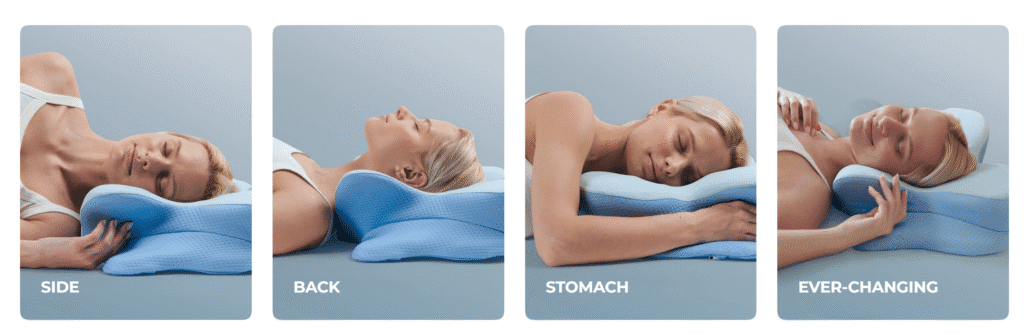
Material: High-density memory foam with butterfly contour design and cooling layer
Ideal For: Back and side sleepers who switch positions during the night and need comprehensive support
Key Features:
- Butterfly-shaped design creates support zones for head, neck, and shoulders
- Side wings provide stability and prevent your head from rolling off-center
- Central cavity cradles your head while maintaining proper neck positioning
- Cooling layer actively disperses heat without the brief relief that fades
- Hypoallergenic materials eliminate off-gassing concerns
How the Derila Ergo Supports Your Sleep Posture
The butterfly ergonomic design creates distinct support zones that work with your body’s natural contours. The wing structure cradles your head while simultaneously allowing your shoulders to settle below the pillow edge rather than compressing upward—a primary contributor to upper back tension.
The memory foam construction holds its shape when you shift from side to back sleeping, maintaining support regardless of your position, while the cooling layer uses heat dispersion technology rather than gel that warms up after the first hour.
Measuring 21.2 inches long by 14.1 inches wide, the pillow accommodates various body frames without overwhelming smaller sleepers or leaving larger individuals without adequate coverage.
The arch design specifically targets the shoulder-to-upper-back connection that often goes unsupported with standard rectangular pillows.
Who Should Consider the Derila Ergo
- Back and side sleepers who change positions throughout the night
- Those who wake with stiffness or tension from flat, unsupportive pillows
- Sleepers dealing with tech neck or forward head posture accumulated during desk work
- Anyone frustrated by memory foam pillows that sleep too hot
2. Best Adjustable Option – Coop Home Goods Original Crescent Pillow

Material: Shredded memory foam blend, CertiPUR-US certified
Ideal For: Combination sleepers and those who need to customize height for their specific body type
Key Features:
- Removable fill allows you to add or subtract material for exact loft needs
- Shredded construction creates airflow pathways for breathability
- CertiPUR-US certification indicates the foam meets standards
- Includes extra fill so you can adjust as your needs change
- Machine-washable cover makes regular washes easy
How the Coop Adjustable Pillow Gives You Control Over Support
Shredded memory foam filling lets you dial in the precise height that matches your shoulder width and sleep position. This eliminates the guesswork with fixed-height pillows where you’re stuck with whatever loft the manufacturer decided on.
The adjustment process takes some testing—you’ll likely need to try different fill amounts over several nights—but once you find the right configuration, the pillow maintains that height. Users with broad shoulders frequently add extra fill beyond what comes standard, while smaller-framed individuals remove filling to avoid neck cranking.
The shredded construction also helps with the heat retention problem that comes with with solid memory foam blocks. Air circulates through the pillow rather than getting trapped, which matters if you’ve been frustrated by “cooling gel” claims that don’t deliver.
Who Should Consider This Pillow
- Combination sleepers who need one pillow that works for multiple positions
- Those who’ve struggled to find the right pillow height with fixed-loft options
- People whose sleep needs have changed with weight fluctuations or aging
3. Best for Broad Shoulders – Pillow Cube

Material: High-density foam block with breathable cover
Ideal For: Dedicated side sleepers with athletic builds or wide shoulder spans
Key Features:
- 5-inch cube design specifically addresses the height gap for broader frames
- Firm foam construction maintains elevation without compressing under head weight
- Multiple firmness options let you choose between plush and extra-firm
- Ventilated design helps with temperature regulation
- Cube shape prevents the need to fold or stack pillows that can worsen upper back pain
How the Pillow Cube Fills the Gap for Side Sleepers
Pillow Cube’s 5-inch height focuses on addressing the support problem that plagues side sleepers with broad shoulders. Standard pillows compress too much, forcing you to fold them in half or stack multiple pillows just to get adequate elevation between your ear and mattress.
This supportive cube maintains its height throughout the night, keeping your spine straight from neck through upper back rather than allowing your head to sink downward while your shoulders hunch upward. The shape looks unusual but addresses a genuine biomechanical need—your head needs to be level with your spine when lying on your side.
The trade-off is position limitation. This works beautifully for dedicated side sleepers but becomes awkward if you shift to your back during the night. Athletes, gym-goers, and taller individuals who’ve struggled with standard pillow heights find the cube solves a problem nothing else has addressed.
Who Should Consider the Pillow Cube
- Side sleepers 5’8″ or taller with wider shoulder spans
- Athletes or gym-goers dealing with rotator cuff issues or shoulder impingement
- Those who’ve been folding pillows in half or stacking multiple pillows for height
- Anyone measuring their shoulder-to-ear gap at 5+ inches
4. Best for Spinal Support – Therapeutica Sleeping Pillow
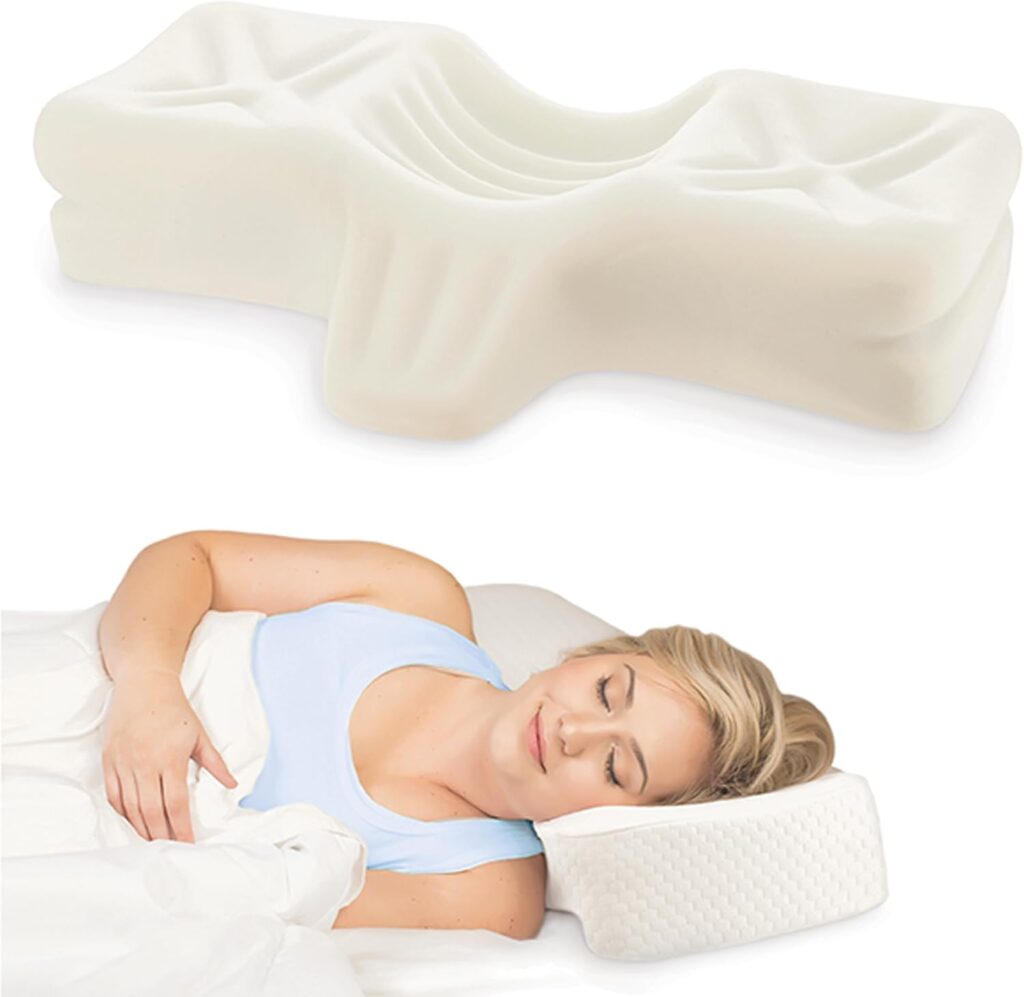
Material: Orthopedic foam contour with cervical cavity
Supports: Those managing diagnosed spine conditions or persistent upper back and neck pain
Key Features:
- Orthopedic contour design includes cervical cavity for neck curve support
- Firm density prevents sinking that causes misalignment during sleep
- Multiple size options account for different shoulder widths and body frames
- Clinical design developed with input from spine specialists
- Durable construction maintains therapeutic positioning over time
How the Therapeutica Pillow Supports Spinal Alignment
The cervical cavity supports your neck’s natural curve while maintaining the distance between your head and upper back. Firm density prevents the gradual sinking that allows misalignment to creep in as the night progresses.
The firmness level surprises many first-time users—this feels substantially firmer than memory foam or down alternatives. That firmness is intentional and maintains the therapeutic positioning needed for spinal conditions. Users report an adjustment period where the pillow feels too firm, followed by noticeable reduction in morning stiffness once muscles adapt to proper alignment.
Size options matter here more than with general-use pillows. When you’re dealing with diagnosed spinal issues, precise positioning can affect pain levels. The pillow comes in sizes that account for shoulder width differences, which is important for maintaining neutral spine positioning.
Who Should Consider the Therapeutica Pillow
- Sleepers willing to go through an adjustment period for therapeutic benefits
- Those managing herniated discs, degenerative disc disease, or post-injury recovery (speak with a healthcare professional first)
- People working with physical therapists or chiropractors on upper back pain
- Anyone who needs firm, structured support over plush comfort
5. No Memory Foam Option – Core Products Tri-Core Pillow
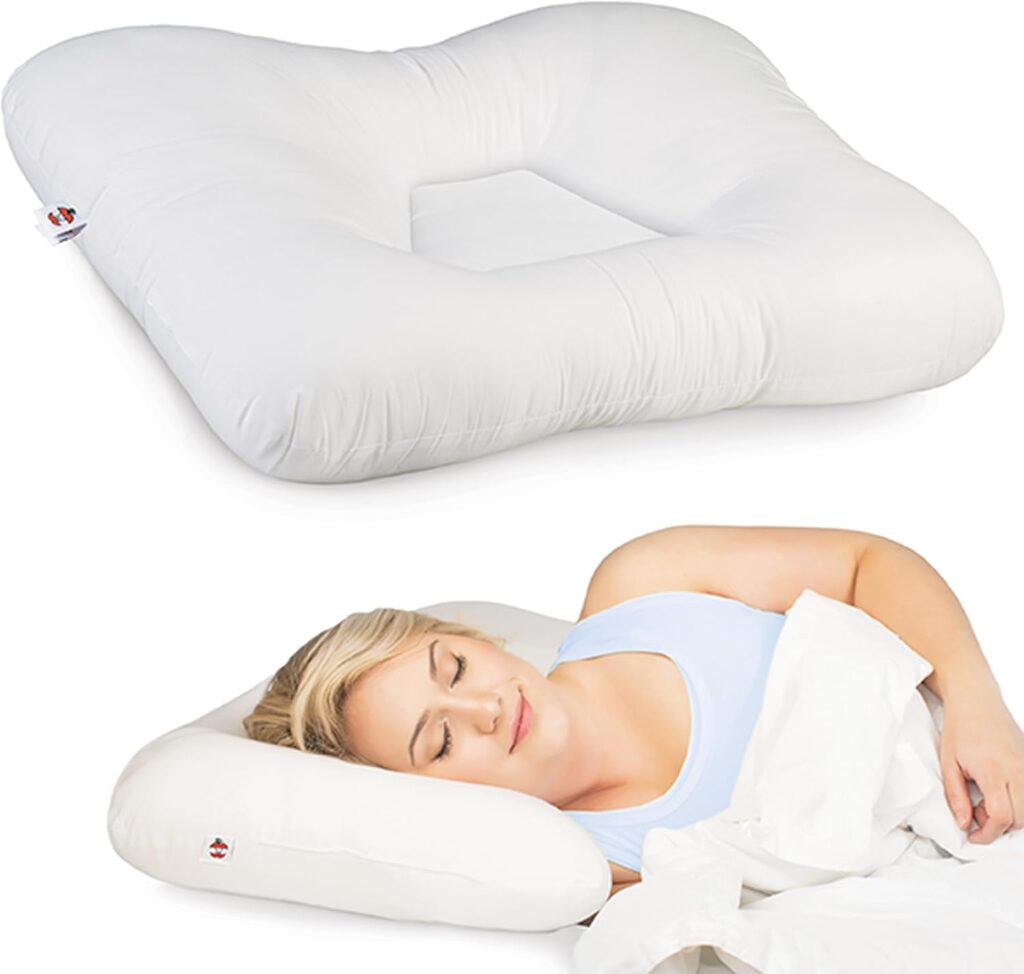
Material: Breathable fiber fill with trapezoid-shaped center and dual neck rolls
Ideal For: Back and side sleepers who want orthopedic cervical support without memory foam
Key Features:
- Two different-width neck rolls accommodate various neck lengths
- Trapezoid-shaped center cradles head for back sleeping
- Raised side lobes support head in natural position when side sleeping
- Breathable fiber fill eliminates odor and heat retention issues
- Multiple size options (Petite, Midsize, Full) match body height
- No latex materials
How the Tri-Core Pillow Supports Cervical Alignment
The trapezoid-shaped center creates a pocket that cradles your head when you’re on your back while the built-in neck roll supports your cervical curve. When you shift to your side, the raised lobes on either side provide the elevation needed to keep your head level with your spine.
The dual neck roll design addresses the fact that different body types need different support heights. The two rolls let you choose which orientation works better for your neck length—you can flip the pillow to use either the wider or narrower neck support.
The fiber fill construction distinguishes this from memory foam options. It’s breathable, doesn’t trap heat, and eliminates the tell-tale off-gassing smell. The trade-off is a firmer feel compared to conforming memory foam – the Tri-Core holds its shape rather than molding to your contours.
The first 2-3 nights may feel uncomfortable as your neck adapts to the structured support, but reviews have reported reduced morning headaches and better sleep posture once adjusted. The pillow measures 24 inches by 16 inches and fits standard pillowcases.
Who Should Consider the Tri-Core Pillow
- Back and side sleepers who want structured cervical support
- Those frustrated by memory foam heat retention or chemical smells
- People dealing with morning headaches related to poor neck positioning
- Anyone willing to go through a few nights’ adjustment period for orthopedic support
- Sleepers who need breathable, odor-free fill materials
Not recommended for stomach sleepers – the raised sides and contoured center make stomach sleeping uncomfortable and can strain the neck.
What to Look for in a Pillow for Upper Back Support
When selecting a pillow to reduce upper back pain, consider these key factors:
Sleep position
Different sleep positions need different levels of support. Side sleepers typically need a higher loft pillow to keep their spine aligned, while back sleepers may prefer a medium loft. Stomach sleepers often benefit from a thinner pillow to prevent neck strain.
Body type
Your height, weight, and shoulder width can affect which pillow works best for you. Larger people may need firmer pillows with higher lofts, while smaller people might find softer, lower-profile pillows more comfortable.
Pillow material
Memory foam, latex, down, and choice materials each have unique properties. Memory foam conforms to your shape but may keep heat, while latex offers bounce and breathability.
Down is soft and moldable but may not provide enough support for some.
Adjustability
Pillows with removable fill allow for customization, which can be particularly helpful if your pain levels or sleep preferences change over time.
Temperature regulation
If you sleep hot, look for pillows with cooling properties such as gel-infused memory foam or breathable natural materials like bamboo or kapok fibers.
Remember that finding the right pillow may involve some trial and error. Many companies offer sleep trials, allowing you to test the pillow before committing to it long-term.
Don’t be discouraged if the first pillow you try isn’t perfect – it may take some experimentation to find the ideal match for your needs.
Complementary Strategies for Upper Back Pain Relief
While a supportive pillow is crucial, combining it with other strategies can enhance your pain relief efforts:
Maintain good posture during the day
Be mindful of your posture while sitting, standing, and walking. Engage your core muscles and keep your shoulders back to reduce strain on your upper back.
If you work at a desk, ensure your workspace is ergonomically set up to promote good posture throughout the day.
Practice regular stretching and strengthening exercises
Incorporate exercises that target your upper back, neck, and shoulders into your daily routine. Yoga and Pilates can be particularly useful for improving posture and reducing pain. Simple exercises like shoulder blade squeezes, chin tucks, and gentle neck rotations can help reduce tension and strengthen the muscles supporting your upper back.
Use heat or cold therapy before bed
Applying heat can help relax tense muscles, while cold therapy can reduce inflammation (we recommend FlexiKold for this – pick it up from Amazon here). Experiment with both to see which provides more relief for your specific condition.
A warm shower or bath before bed can also help relax your muscles and prepare your body for sleep.
Invest in a supportive mattress
A good pillow can only do so much if your mattress isn’t providing adequate support. Consider upgrading to a mattress that aligns with your body type and sleep preferences.
Look for options that offer good support for your spine and pressure relief for your shoulders and hips.
Consider using a body pillow for extra support
A body pillow can help maintain proper alignment, especially for side sleepers. It can reduce pressure on your upper back and shoulders by providing support between your knees and arms.
This can help distribute your weight more evenly and reduce strain on your upper back.
Practice good sleep hygiene
Establish a consistent sleep schedule, create a relaxing bedtime routine, and ensure your sleep environment is dark, quiet, and cool. Avoid screens for at least an hour before bed, as the blue light can interfere with your body’s natural sleep-wake cycle.
Try gentle massage or self-massage techniques
Using a foam roller or massage ball on your upper back can help release tension and improve circulation before bed. You can also try gentle self-massage techniques, focusing on the areas where you feel the most tension. This can help relax your muscles and prepare your body for a more restful sleep.
By addressing upper back pain holistically, you’re more likely to find lasting relief and improve your overall sleep quality. Remember that consistency is key – it may take some time for your body to adjust to new sleep habits and postures.
Conclusion: Finding Your Perfect Pillow for Upper Back Pain Relief
Upper back pain doesn’t have to interfere with your sleep. The right pillow can provide the support your body needs for a more comfortable and restful night.
When choosing a pillow for upper back pain, it’s important to consider your sleep position, body type, and how much support you need across the neck and shoulders. Pillows with adjustable loft, ergonomic contours, or firmer core materials often do a better job of maintaining alignment and reducing pressure through the upper spine.
Whether you’re dealing with chronic tightness or occasional discomfort between the shoulder blades, upgrading your pillow can make a meaningful difference. Each option in this guide was selected to help improve posture and support healthier sleep—so you can wake up feeling refreshed, not stiff or sore.
And as always, if you’re dealing with ongoing pain or sleep issues, speak with your healthcare provider to rule out any underlying conditions and determine the best approach for your needs.
People Also Asked
What type of pillow is best for upper back pain?
Memory foam or latex pillows with ergonomic designs often provide excellent support for upper back pain. Adjustable pillows that allow you to customize the loft and firmness can also be beneficial.
Can a pillow really help with upper back pain?
Yes, a properly supportive pillow can help reduce upper back pain by promoting proper spinal alignment and reducing pressure on the neck and shoulders during sleep.
How often should I replace my pillow to prevent back pain?
Generally, pillows should be replaced every 1-2 years. However, if you notice your pillow losing its shape or support, it may be time to replace it sooner.
Are firm or soft pillows better for upper back pain?
The ideal firmness depends on your sleep position and personal preference. Side sleepers often benefit from firmer pillows, while back sleepers may prefer medium firmness.
Can sleeping without a pillow help upper back pain?
While some people find relief sleeping without a pillow, most benefit from proper support. Sleeping without a pillow can potentially strain your neck and upper back.
Is a cervical pillow good for upper back pain?
Cervical pillows, designed to support the natural curve of your neck, can be useful for some people with upper back pain. However, they may take some time to get used to.
How should I sleep to relieve upper back pain?
Sleeping on your back with a pillow supporting your neck’s natural curve, or on your side with a pillow that keeps your spine aligned, are often recommended positions for upper back pain relief.
How does pillow height affect upper back pain?
The ideal pillow height depends on your sleep position and body type. A pillow that’s too high or too low can strain your neck and upper back, potentially causing or exacerbating pain.
Key Takeaways
- Choosing the right pillow is crucial for alleviating upper back pain and improving sleep quality.
- Consider factors like sleep position, body type, and personal preferences when selecting a pillow.
- Adjustable pillows offer versatility and can be customized to your specific needs.
- Complementary strategies like maintaining good posture and practicing regular stretching can enhance pain relief efforts.
- Consistency is key – it may take time for your body to adjust to a new pillow or sleep routine.
Related Articles
- Best Orthopedic Pillow for Neck Pain
- Best Pillows for Neck and Shoulder Pain
- Top Pelvic Pillows for Stomach Sleepers
- Best Anti-Snore Pillows for Side Sleepers
- Best Pillows for Tension Headaches
- Are Memory Foam Pillows Good For Neck Pain
- Derila Memory Foam Pillow Review
Health Disclaimer: The information provided in this article is for educational purposes only and is not intended to be a substitute for professional medical advice, diagnosis, or treatment. Always seek the advice of your physician or other qualified healthcare provider with any questions you may have regarding a medical condition. If you experience persistent or worsening upper back pain, numbness, tingling, weakness, or other concerning symptoms, please consult a healthcare professional promptly. Chronic pain can indicate underlying conditions that require proper medical evaluation and treatment beyond pillow selection.