
Top Pelvic Pillows for Stomach Sleepers
Are you a stomach sleeper that’s tired of waking up with an achy back?
I’ve been there, and let me tell you – finding the right pelvis pillow for sleeping on your tummy changes the sleep game completely.
Whether you’re dealing with back pain, looking for proper pillow positioning, or simply looking to improve your sleep quality, the right support can transform your sleep experience.
Traditional pillows often fall short for stomach sleepers, leaving us tossing and turning all night. That’s why I’ve researched and compared the best pelvic pillows for stomach sleepers.
These innovative pillows are specifically designed to provide the targeted support we stomach sleepers need, supporting back support and helping to maintain proper spinal alignment throughout the night.
Disclosure: As an Amazon Associate I earn from qualifying purchases at no extra cost to you.
Understanding the Needs of Stomach Sleepers
Before we get into our top picks, it’s crucial to understand why stomach sleepers need special consideration when it comes to pelvic support. Sleeping on your stomach can put unnecessary strain on your lower back and neck, potentially leading to discomfort and long-term issues.
If your discomfort sits higher between the shoulder blades, a pillow designed for upper back pain may be more suitable than pelvic support alone.
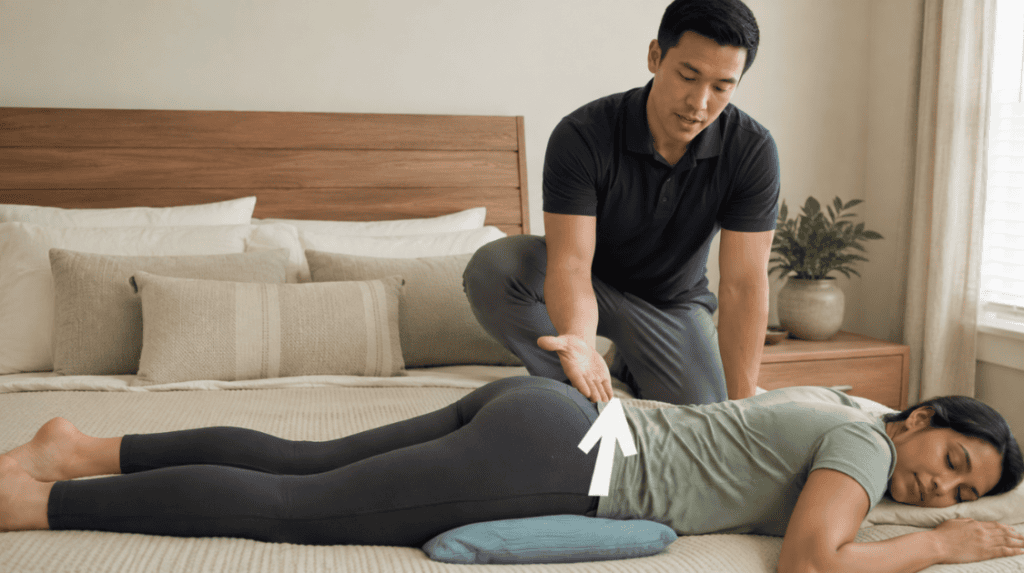
A well-designed pelvic pillow helps mitigate these concerns by promoting proper spinal alignment and reducing pressure on your hips and lower back. By slightly elevating your pelvis, these pillows maintain a more neutral spine position, alleviating stress on your lower back and improving overall sleep posture.
Top Pelvic Pillows for Stomach Sleepers
1. ComfiLife Lumbar Support Pillow
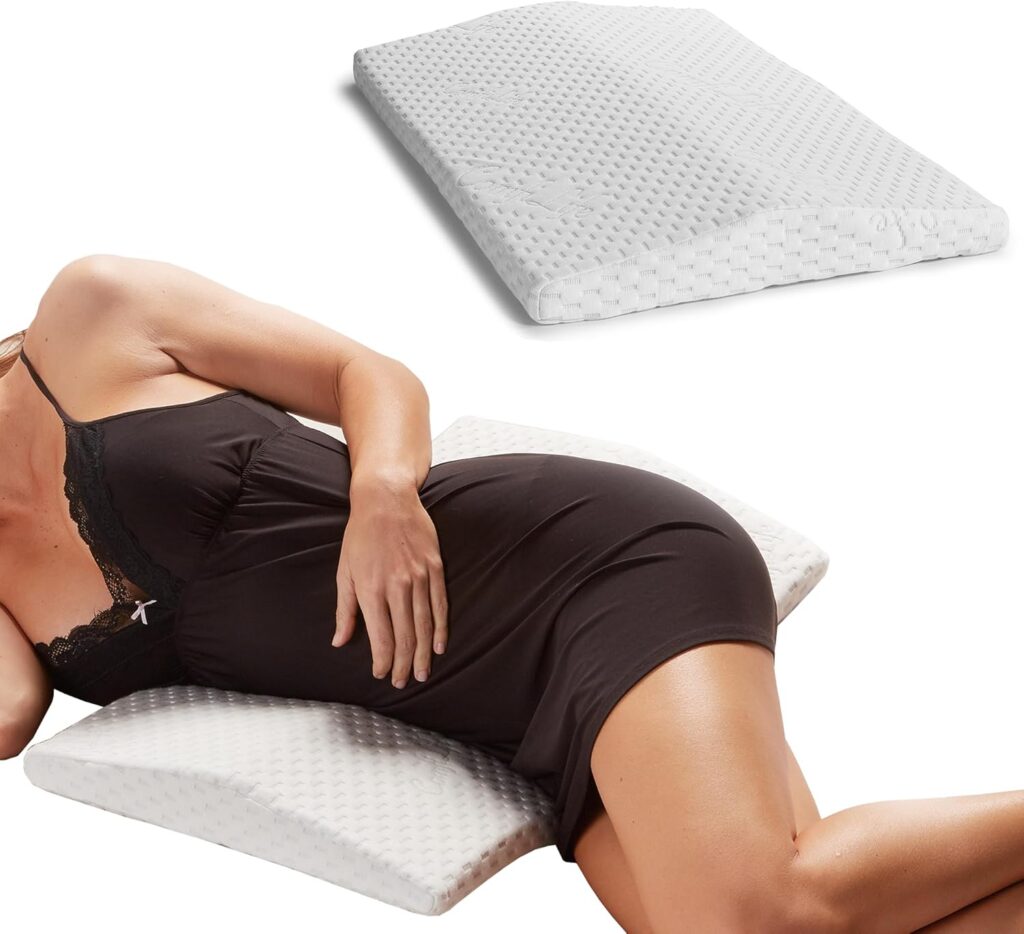
The ComfiLife pillow is designed to add extra support for people who wake up with lower back stiffness or discomfort after sleeping.
Its dense memory foam and contoured wedge shape are made to support the natural curve of the lower back, which may be helpful if you switch between stomach, back, and side sleeping during the night.
Pros:
- High-quality memory foam that maintains shape
- Breathable, machine-washable cover
- Versatile enough for multiple positions
- Excellent for transitioning away from stomach sleeping
- Works well for back support when sitting up in bed
Cons:
- May be too thick for some users
- May shift during the night
- Takes time to break in (initial firmness can be uncomfortable)
👉 Check Price of the ComfiLife pillow on Amazon
2. RESTCLOUD Adjustable Lumbar Support Pillow
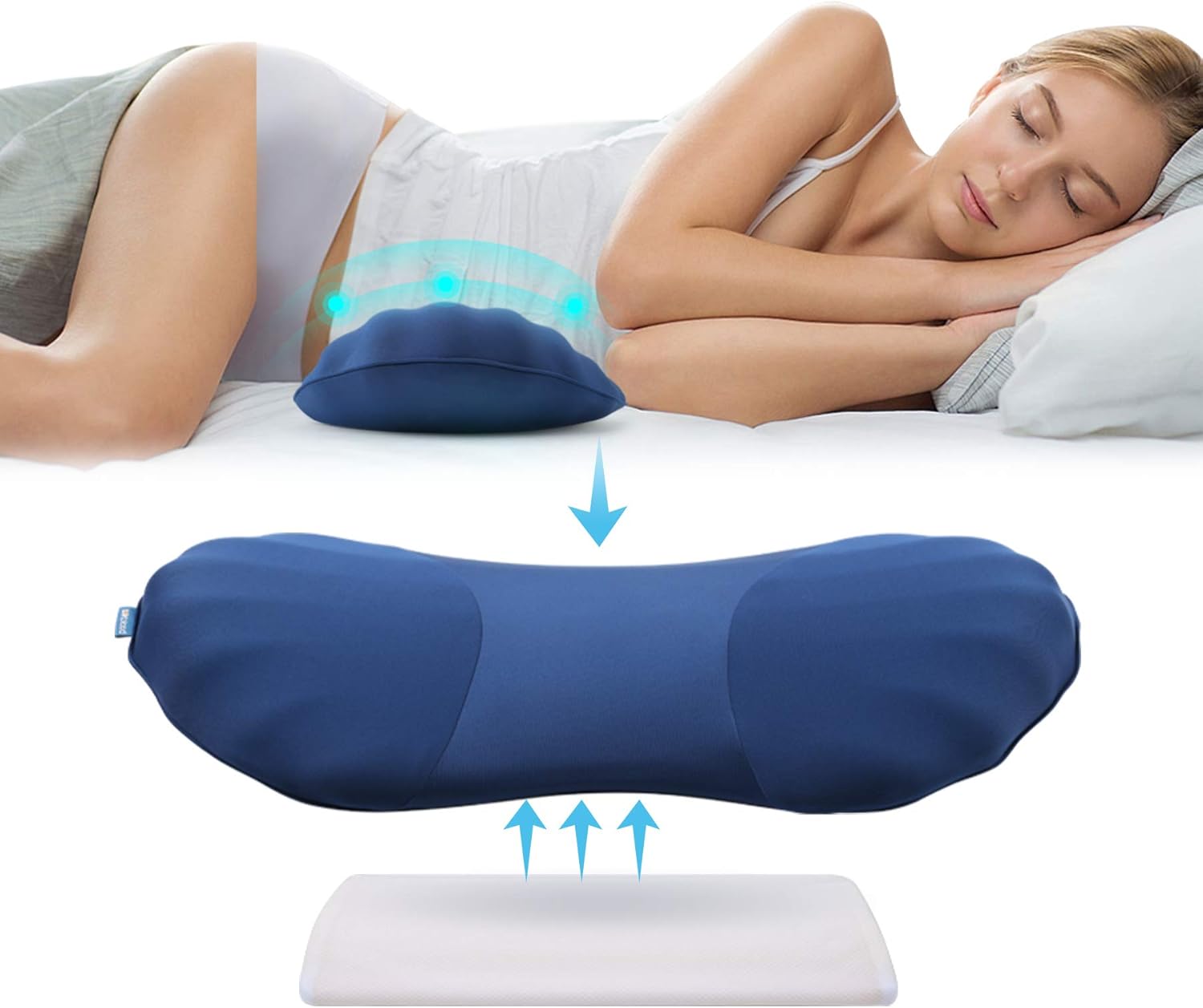
For stomach sleepers, the right pillow height can vary. The Restcloud support pillow stands out because its thickness can be adjusted by adding or removing the included pads.
At its lowest setting, it can go down to 1.38 inches, which may suit stomach sleepers who want to keep their hips and lower back from being raised too much.
The adjustable design can also work for combination sleepers who move between their stomach and side. You can add extra pads when you want more support and remove them again for a lower profile.
Pros:
- Adjustable height with removable pads for customized support
- Wide 23.6-inch design that stays in place during sleep
- Designed to reduce back, hip, and knee discomfort
- Suitable for multiple sleep positions
- Comes with a removable, washable cover
Cons:
- Takes time to find the right pad configuration
👉 Check Price of the Restcloud Support Pillow on Amazon
3. Vamorry Lumbar Support Pillow
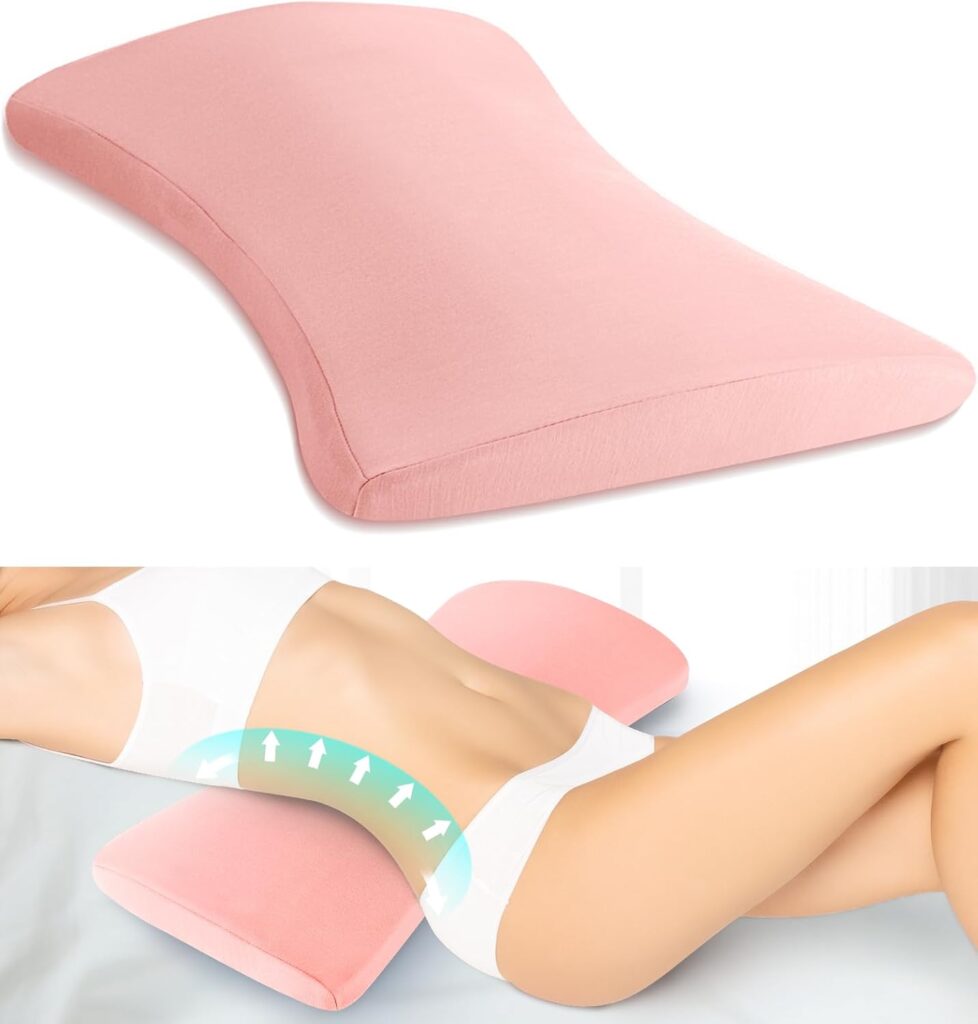
The Vamorry lumbar support pillow is a thinner option for sleepers who don’t want a bulky support pillow. At 5.5cm, or about 2.2 inches, it has a lower profile than many lumbar pillows, which may make it more suitable for stomach and side sleeping.
Pros:
- Lower-profile design that may help avoid raising the hips and lower back too much
- 26cm width gives it enough surface area to stay positioned as you move
- Cooling cover designed to reduce heat buildup
- Soft memory foam that still provides support
Cons:
- Takes a few nights to break in the memory foam
- Might be too long for some people
If you’ve tried other support pillows and found them too thick, this one’s worth a look. The lower height means you can slide it under your hip while stomach sleeping without feeling like you’re on a mountain. Plus, when you switch to your side, it doesn’t push your spine out of alignment.
You can find this pelvic pillow over at Amazon – they also have a gel version if you sleep hot. Just remember to give it a few nights to really get used to it – it feels much better after a short break-in period.
4. Coop Home Goods Adjustable Body Pillow
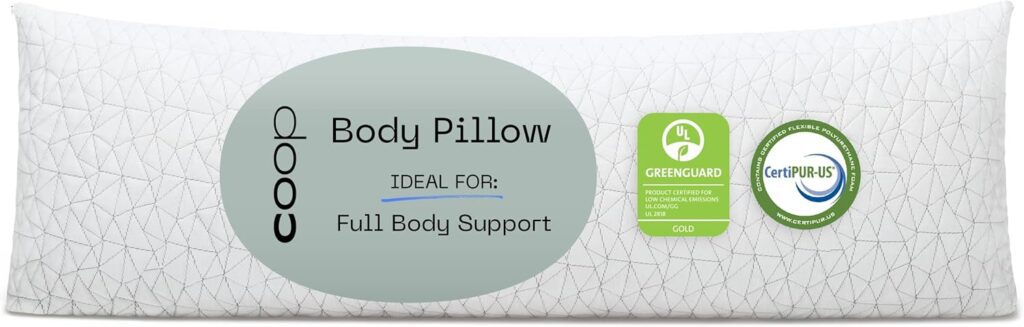
Looking for a pillow that can support more of your body while stomach sleeping? The Coop Home Goods body pillow stands out because you can unzip it and adjust the amount of fill instead of being stuck with one fixed height.
You can remove fill for a flatter profile under your hips or add more if you want extra support when you roll onto your side. Its full-length shape also gives you more flexibility than a small pelvic support pillow.
Pros:
- Adjustable fill allows you to add or remove filling to change the height and firmness
- Long enough to support the hips, legs, or knees depending on your sleep position
- Breathable cover designed to help reduce heat buildup around the pillow
- Easy to reposition if you switch between stomach and side sleeping
Cons:
- Takes up quite a bit of bed space
- Costs more than a small support pillow
The adjustable fill is the main reason to consider it over a fixed-height support pillow. For stomach sleeping, you can flatten the section under your hips, then reposition or add loft when you need support between your knees or along your side.
👉 Check Price of the Coop Home Goods body pillow on Amazon
How to Position Your Pillow as a Stomach Sleeper
Getting the most comfort out of your pillow depends on where and how you place it. Here are the two main positions that can help transform your sleep:
Under-Hip Positioning
The classic pelvis pillow for stomach sleepers works best when placed strategically under your hips:
- Place the pillow just below your hip bones
- Aim for a slight elevation (about 1-2 inches)
- Your lower back should feel supported, not strained
- Adjust until you feel your spine naturally aligning
Knee Pillow Adaptation
Many of our recommended pillows started as knee pillows – and there’s a good reason. They can be incredibly helpful for front sleepers when used correctly:
For Pure Stomach Sleeping:
- Place the knee pillow between your knees to support your hip area for proper alignment
- The contoured design actually works perfectly for hip support
- The firm density provides just the right amount of lift
For Combination Sleepers:
If you switch between stomach and side sleeping during the night:
- Keep the pillow nearby
- Place under leg (if you sleep with a leg out and bent) when on your stomach
- Shift between knees when rolling to your side
Pro Tips for Both Styles:
- Start with a lower elevation and adjust up if needed
- Your head pillow should be very thin or none at all
- Make sure your chosen pillow is firm enough to maintain support
- Consider getting two pillows if you move a lot at night
The goal is to support your natural sleep style while keeping your spine aligned. This also means pairing pelvic support with the right head pillow for front sleeping, since too much loft can still strain your neck even when your hips are supported.
Factors to Consider When Choosing a Pelvic Pillow
Features That May Help With Back Comfort
Memory Foam Quality
Not all memory foam holds up the same way. For stomach sleepers, look for a pelvic support pillow made with denser foam that can:
- Return to shape after use
- Stay cool as room temperatures change
- Resist flattening over time
👉 See the top memory foam pick with premium density
Size and Height
A pelvic pillow should support your hips without lifting them too far off the mattress. Look for:
- A width that covers your hip and pelvic area
- A low profile, often around 2-4 inches depending on your body and mattress
- A compact size if you plan to travel with it
Extra Comfort Features
Temperature Control
Memory foam can hold onto heat, so hot sleepers may want features such as:
- Cooling gel layers
- Ventilation holes or channels
- Breathable covers
Easy Care
A removable cover can make a pelvic pillow much easier to keep clean. Useful features include:
- Machine-washable covers
- Protective inner covers
- Materials that can be spot cleaned
Smart Design
A good pillow under the hips for stomach sleeping should:
- Hold its shape through the night
- Work with your usual sleep positions
- Use a shape that supports the hips without adding unnecessary height
7 Key Benefits of Pelvis Support While Stomach Sleeping
For stomach sleepers dealing with morning aches and pains, the right hip support can transform your sleep. Here’s how proper pelvis support while sleeping can help:
1. Better Spinal Alignment
Using a support pillow under your hips keeps your spine in a more natural position, reducing strain on both your lower back and neck.
2. Even Weight Distribution
The right support helps distribute your weight more evenly across your body. This means less pressure on common problem areas like your lower back, hips, and knees – especially helpful if you deal with chronic pain in these areas.
3. Improved Sleep Quality
When your body is properly aligned, you’ll toss and turn less. This leads to deeper, more restful sleep and fewer middle-of-the-night adjustments.
4. Better Blood Flow
That slight lift under your hips does more than just align your spine – it may help promote better circulation throughout your body, reducing that pins-and-needles feeling some stomach sleepers experience.
5. Long-term Back Health
Using proper support while sleeping helps prevent the development of chronic back problems. Think of it as an investment in your future comfort.
6. Easier Position Changes
Whether you’re transitioning from stomach to side sleeping (like during pregnancy) or just tend to switch positions at night, the right support makes these changes more comfortable.
7. Posture Benefits
The alignment benefits don’t stop when you wake up. Many users report better overall posture throughout their day after consistently using proper sleep support.
Maintaining Your Pelvic Pillow
To ensure your pelvic pillow continues to provide optimal support and comfort, proper maintenance is essential. Here are some tips to keep your pillow in top condition:
Regular cleaning
Follow the manufacturer’s instructions for cleaning your pillow. Most pelvic pillows come with removable, washable covers that should be cleaned regularly.
For the pillow itself, spot cleaning with a mild detergent is usually enough.
Rotating the pillow
If your pillow allows for it, rotate it regularly to ensure even wear and maintain its shape. This is particularly important for memory foam pillows.
Proper storage
When not in use, store your pelvic pillow in a cool, dry place. Avoid compressing it for long periods, as this can affect its shape and supportive properties.
Replacing when necessary
Even the highest quality pillows will eventually wear out. Pay attention to signs of wear, such as loss of shape or support, and replace your pillow when needed. Most quality pelvic pillows should last 1-2 years with proper care.
Combining Pelvic Pillows with Other Sleep Strategies
While a pelvic pillow can significantly improve your sleep as a stomach sleeper, combining it with other sleep strategies can enhance your overall sleep quality even further. Consider these extra tips:
Invest in a supportive mattress
A pelvic pillow can’t fully compensate for a mattress that lets your hips sink too far. Innerspring and hybrid mattresses support the midsection differently, so stomach sleepers should look for a surface that keeps the hips level with the shoulders.
Practice good sleep hygiene
Establish a consistent sleep schedule, create a relaxing bedtime routine, and ensure your sleep environment is dark, quiet, and cool.
Consider your overall sleeping position
A pelvic pillow can reduce some of the strain associated with stomach sleeping, but you may eventually feel more comfortable on your side or back. If you’re moving toward back sleeping, pillows made for back sleepers usually provide enough loft to support the neck without pushing the head forward.
Stay hydrated, but time it right
Proper hydration is essential for overall health and can contribute to better sleep quality. However, try to limit fluid intake close to bedtime to reduce nighttime disruptions.
Incorporate gentle stretching
Doing some light stretches before bed, particularly focusing on your back and hips, can help relax your muscles and prepare your body for restful sleep.
Addressing Common Concerns About Pelvic Pillows
As with any sleep accessory, some people may have concerns or reservations about using a pelvic pillow. Let’s address some common questions and concerns:
Will a pelvic pillow feel uncomfortable?
Initially, using a pelvic pillow may feel different or even slightly uncomfortable as your body adjusts to the new sleeping position. However, most users find that after a short adjustment period, the improved alignment and support lead to greater comfort and better sleep quality.
Can I still move around during sleep with a pelvic pillow?
Yes, you can still move during sleep with a pelvic pillow. Many pelvic pillows are designed to stay in place while allowing for natural movement.
Some users find that they move less during sleep because of increased comfort and support.
Are pelvic pillows only for people with back pain?
While pelvic pillows can be particularly useful for people who have back pain, they can be used by anyone looking to improve their sleep posture and overall sleep quality. Even if you don’t now experience pain, using a pelvic pillow can help prevent future issues.
How long does it take to see benefits from using a pelvic pillow?
The time it takes to experience benefits can vary from person to person. Some users report immediate improvement in comfort and sleep quality, while others may take a few weeks to fully adjust and notice significant changes.
Consistency is key – give yourself time to adapt to the new sleeping arrangement.
Can I use a pelvic pillow if I’m a combination sleeper?
Absolutely! Many pelvic pillows are versatile enough to be used in many sleeping positions.
If you often change positions during the night, look for a pillow that can be easily adjusted or repositioned to accommodate different sleep styles.
What is the best sleeping position for lower back pain?
The best sleeping position for lower back pain is typically on your back with a pillow under your knees, or on your side with a pillow between your knees. However, if you’re a committed stomach sleeper, using a pelvic pillow can help reduce lower back pain.
Can stomach sleeping cause neck pain?
Stomach sleeping can cause neck pain because your head remains turned to one side for long periods. A very thin head pillow, combined with support beneath the pelvis, may reduce some of this strain. If you regularly wake with discomfort across both areas, compare pillows designed for neck and shoulder pain.
How thick should a pelvic pillow be for stomach sleepers?
The ideal thickness of a pelvic pillow for stomach sleepers can vary depending on your body type and personal comfort. Generally, a pillow between 2-4 inches thick works well for most people.
It’s important to choose a thickness that provides enough elevation to maintain proper spinal alignment without causing discomfort.
Are memory foam pillows good for stomach sleepers?
Memory foam pillows can be excellent for stomach sleepers when used as pelvic pillows. They conform to your body shape, providing customized support.
However, for head support, stomach sleepers should opt for very thin pillows or no pillow at all to maintain proper neck alignment.
How often should I replace my pelvic pillow?
The lifespan of a pelvic pillow depends on its quality and how well it’s maintained. Generally, you should consider replacing your pelvic pillow every 1-2 years, or sooner if you notice it losing its shape or supportive properties.
Can using a pelvic pillow help with snoring?
While pelvic pillows are primarily designed for alignment and comfort, they may indirectly help with snoring by promoting better sleep posture. However, if snoring is a significant concern, it’s best to talk to a healthcare professional for targeted solutions.
Is it safe to use a pelvic pillow during pregnancy?
Pelvic pillows can be safe and useful during pregnancy, especially for those transitioning from stomach to side sleeping. However, it’s always best to talk to your healthcare provider before making changes to your sleep routine during pregnancy.
Do pelvic pillows work for all body types?
Pelvic pillows can be useful for various body types, but the ideal size and shape may vary depending on your person build. Some brands offer different sizes or adjustable options to accommodate different body types.
How long does it take to get used to sleeping with a pelvic pillow?
The adjustment period for using a pelvic pillow can vary from person to person. Some people adapt quickly within a few nights, while others may take a few weeks to fully adjust.
Consistency is key – give yourself time to get used to the new sleeping arrangement.
Key Takeaways
- Pelvic pillows can significantly improve sleep quality and comfort for stomach sleepers by promoting proper spinal alignment and reducing pressure on the lower back and hips.
- When choosing a pelvic pillow, consider factors such as material, size, firmness, breathability, and versatility to find the best option for your needs.
- Proper use and placement of a pelvic pillow are crucial for maximizing its benefits. Experiment with different positions to find what works best for you.
- Combining a pelvic pillow with other sleep strategies, such as a supportive mattress and good sleep hygiene, can further enhance your overall sleep quality.
- While it may take some time to adjust to using a pelvic pillow, the potential benefits for your sleep health and comfort make it a worthwhile investment for many stomach sleepers.
Disclaimer: The information provided in this article is for educational and informational purposes only and is not intended as health or medical advice. It should not be used to diagnose, treat, or replace professional medical guidance.

Sleep Essentials Hub is a sleep blog for readers who want helpful sleep guides and honest product recommendations. We’re passionate about better rest, with a focus on pillows and bedding, sleep aids, sleep apnea and CPAP gear, natural sleep supplements, sleep tech, and simple ways to improve your sleep environment. We’re here to help you choose products that support deeper sleep, greater comfort, and a better night’s rest without overspending.