
Do White Noise Machines Help You Sleep?
Have you ever had trouble sleeping through a partner’s snoring, city traffic, or a neighbor’s late-night television? You’ve probably wondered whether one of these machines is worth the investment.
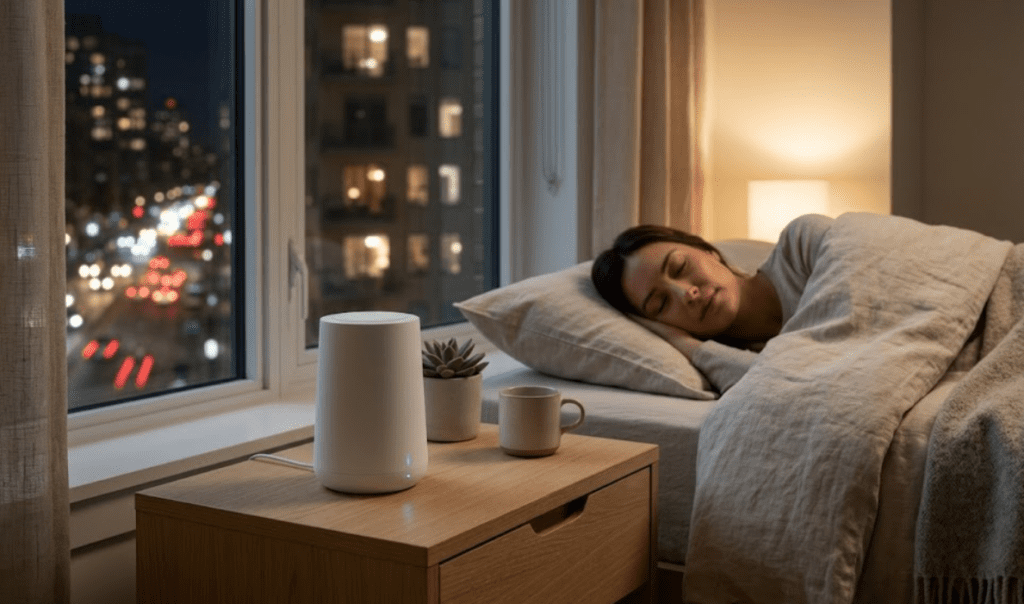
White noise machines are designed to create a steady sound backdrop that helps mask sudden noise changes, making them especially appealing for light sleepers, apartment dwellers, and anyone whose sleep gets broken by outside sounds.
But not every machine works the same way, and they are not a cure-all for insomnia or other sleep problems. In this guide, you’ll learn how white noise machines work, who they help most, what drawbacks to know about, and how to use one safely so you can decide whether it’s a smart buy for your bedroom.
Disclosure: This article is reader-supported and may contain affiliate links.
Understanding White Noise
White noise isn’t just any calming ambient noise. It has a specific definition that is grounded in acoustics and signal theory.
Playing All Sound Frequencies Simultaneously
White noise is a sound that combines all audible frequencies played at the same time and with the same intensity.
It’s similar to white light, which contains all colors in the visible spectrum. White noise contains every frequency that the human ear can hear, from the lowest rumble to the highest hiss. It sounds like the static you might hear from a television or radio that isn’t tuned to a station.
Because it plays all frequencies at the same time, it can drown out sudden changes in sound, like a door slamming or a car horn, that might wake you up.
Differentiating Between White, Pink, and Brown Noise
Not all noise colors are the same, and those differences can influence how they affect sleep. For a deeper look at white noise and sound machines, see our full guide.
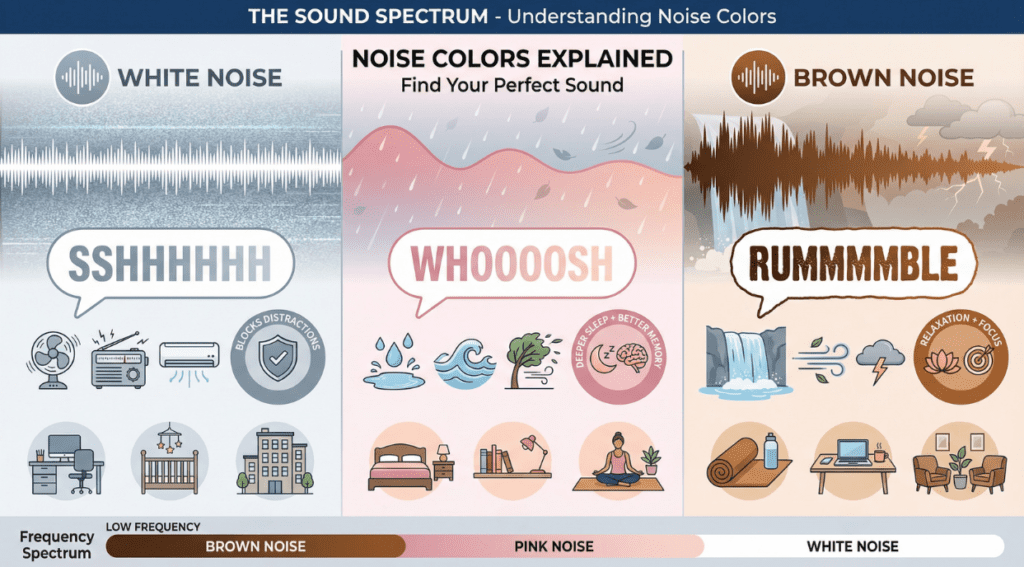
There’s a lot of new research on pink noise. Some studies suggest that it can help you sleep more deeply and remember things better.
Brown noise has even more power at lower frequencies. It sounds deeper and rougher, and many people find it more soothing than the sharp hiss of white noise. If you’ve tried white noise and it didn’t help, you might want to try pink or brown noise before you give up on sound machines.
How White Noise Can Help You Sleep Better
- It lessens the difference between background silence and sudden disruptive noises
- It produces a consistent sound environment that tells your brain it’s time for sleep
- It decreases cognitive arousal by providing your brain with something neutral and monotonous to process
- It can reduce how often you wake up in the middle of the night in noisy environments
It Drowns Out Disruptive Environmental Noises
The main way white noise works is through a process called sound masking.
Your brain doesn’t completely shut down when you sleep – it constantly checks your surroundings for possible threats. A sudden loud noise, like a car alarm or a door slamming, causes an arousal response that can pull you out of deep sleep even if you don’t fully wake up.
White noise works by increasing the overall sound level in your room, which lessens the relative contrast of those sudden noises. The noise spike that would normally be perceived as a threat becomes much less noticeable against a consistent audio background.
White Noise can be a Sleep Cue
White noise can also be a sleep trigger. If you turn on your white noise machine every night before bed, your brain will start to associate the noise with sleep.
It’s like having a bedtime routine. Eventually, just turning on the machine will make you sleepy. This is called stimulus control. It’s the same reason why sleep experts say you should only use your bed for sleep and sex. The sound of the white noise machine becomes a signal that it’s time to go to sleep.
White noise is a simple, low-risk intervention that can help people fall asleep faster by reducing the perceived intrusiveness of environmental sounds, particularly in urban settings where nighttime noise is unavoidable.
The Science Behind Sound Masking and the Brain
Research on white noise and sleep has produced encouraging but mixed findings. Some studies have found that white noise helps people (particularly those in noisy hospital environments or urban settings) fall asleep faster and experience fewer nighttime awakenings.
The mechanism appears to involve reducing activity in the brain’s arousal systems by providing a steady, non-threatening auditory stimulus. However, results vary depending on the individual, the type of noise used, and the volume level applied.
Remember that everyone is different. For some, any background noise – even the neutral white noise – can actually make them more alert rather than help them relax.
This is why people have such different experiences with white noise machines: what helps one person sleep like a baby can keep another person up all night.
Who Gains the Most from White Noise Machines
White noise machines do not work for everyone, but some groups of people consistently report getting the most benefit from them.
City Living and Light Sleepers
For those who are awakened by the smallest of sounds, white noise can be a real game-changer.
Light sleepers are more likely to be disturbed by sudden noises during the night, as their brains are more likely to wake them up when a sound reaches a certain level. By increasing the base level of noise in a room, white noise can help to reduce the number of times these levels are reached.
For those living in cities and dealing with traffic, sirens, noise from bars, or garbage trucks in the early morning, a white noise machine can act as a barrier between your bedroom and the outside world.
People With Tinnitus
Tinnitus is the ongoing ringing, buzzing, or hissing in the ears that affects millions of people, and it often feels most noticeable in complete silence.
At night, when there are no competing sounds to distract the brain, tinnitus can feel overwhelming and make sleep nearly impossible. White noise machines may help by providing a steady external sound that partially masks the internal noise of tinnitus, reducing its perceived intensity.
Many audiologists and sleep specialists recommend sound therapy as a frontline tool for managing tinnitus-related sleep disruption, and a dedicated white noise machine gives you far more control over frequency and volume than a phone app or fan.
Infants and Toddlers
Babies are actually used to constant noise since the womb is surprisingly loud, with sounds of blood circulation and digestion reaching around 72 decibels. This is why many newborns calm down quickly when they hear steady, shushing sounds like that from a baby shusher machine.
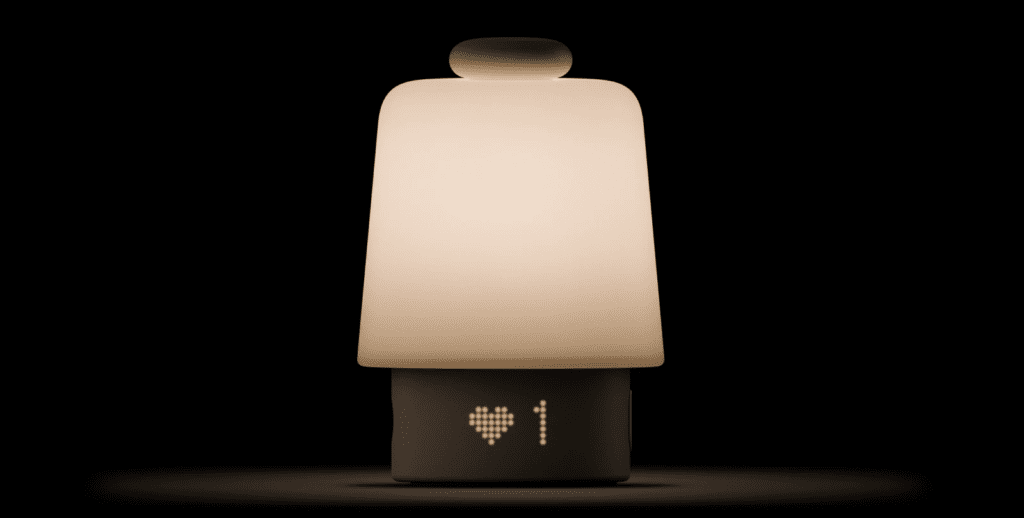
White noise machines designed for nurseries, such as the Hatch Rest 2nd Gen or the LectroFan Classic, can help babies fall asleep faster and stay asleep longer by replicating that familiar sound environment and buffering household noise.
The important thing to remember here is volume: machines used for infants should always be kept below 50 decibels and placed at least 7 feet away from the crib.
White Noise Machines Aren’t Without Their Flaws
Despite their many advantages, white noise machines do have some real drawbacks. Before you decide to use one every night, it’s important to know what these are.
Exposure to Noise Above 65 Decibels May Damage Hearing
One of the most overlooked risks of using white noise machines is the potential for hearing damage. The National Institute for Occupational Safety and Health (NIOSH) states that noise exposure over 85 decibels over an 8-hour workday can cause hearing damage.
However, when you’re sleeping, you’re exposed to the noise for 7 to 9 hours straight and at a close distance. There is concern that long-term exposure to white noise over 65 decibels, especially during sleep, could cause hearing stress and long-term changes in hearing, particularly in infants whose hearing systems are still developing.
A lot of the well-known machines out there can create noise that is far above safe levels when they are turned up to the maximum volume. Always use a decibel meter app that is free on your phone to check the actual level of output in your room before you sleep with a noise machine on all night.
Dependence Could Make It Difficult to Sleep Without One
Using a noise machine every night can condition your brain to associate sleep so strongly with white noise that sleeping without it becomes a real challenge. This is the same conditioning process that makes white noise effective as a sleep cue but it can work against you when the machine isn’t around.
Travelers have reported this issue: hotel rooms feel eerily quiet, or outside noise that would have been bearable before suddenly becomes unbearable without the machine to drown it out.
This isn’t to say that you should completely steer clear of white noise machines. Instead, you should use them in a smart way. Some sleep experts suggest taking a break from the machine every now and then to stop a heavy dependency from forming. Or, they recommend slowly turning down the volume over time instead of always having it on a loud setting.
White Noise Machines Can’t Cure Sleep Disorders
White noise machines can only help with one specific issue: unwanted noise in your environment. If you’re having trouble sleeping because of anxiety, sleep apnea, restless leg syndrome, chronic insomnia, or a disrupted circadian rhythm, a white noise machine isn’t going to fix those problems.
It might make your sleep environment a little bit better, but it’s only a band-aid solution. If you have a diagnosable sleep disorder and you’re using a white noise machine as your main treatment, you could be delaying getting the help you need and letting your condition get worse.
When you’ve been using a white noise machine for weeks and you’re still waking up tired, still having trouble falling asleep, or still waking up often during the night, that’s a sign that you should talk to a sleep specialist instead of just getting a louder machine.
How to Use a White Noise Machine Correctly
Getting real results from a white noise machine comes down to placement, volume, and consistency. Most people who report that these machines “didn’t work” were either using them at the wrong volume, in the wrong position, or expecting them to solve problems they aren’t designed to fix.
Where to Put It in Your Bedroom
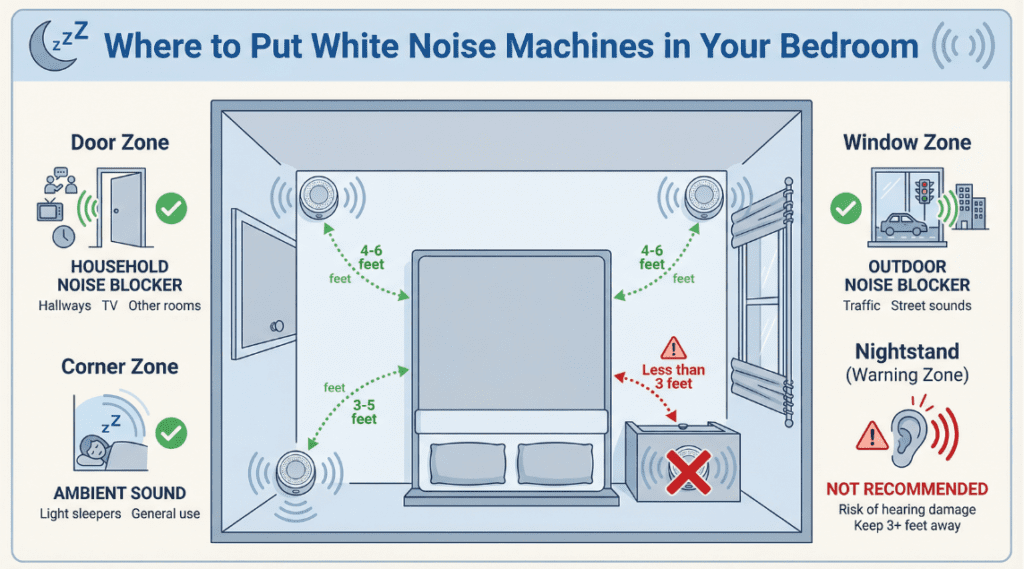
Where you put the white noise machine is important for both its effectiveness and safety. The idea is to create a uniform sound environment in the room without focusing the sound directly at your ears while you sleep.
Putting the machine right next to your head on a nightstand increases the volume you’re exposed to without significantly improving its ability to mask noise compared to a machine that’s better positioned.
For most bedrooms, the best place to put the machine is near the door or window where the most noise is coming from. If the noise is coming from inside the house, face the machine towards the door. If the noise is coming from the street, place it near the window.
This puts the machine between the source of the noise and where you sleep, which makes it more effective at masking the noise. This also means you can turn the volume down and still get the same effect.
Safe Volume Levels for Nightly Use
When using your white noise machine, it’s best to keep it between 50 and 60 decibels. This is about the same volume as a quiet conversation or light rainfall.
To check the volume, you can download a free sound meter app like NIOSH SLM or Decibel X. Take a reading at the level of your pillow before you go to sleep. If it’s above 65 decibels, you should move the machine farther away or turn down the volume before you make it a nightly routine.
Natural Alternatives That Function Similarly to White Noise
If you’re not prepared to purchase a dedicated machine, or if you’ve tried white noise and found it to be too much, there are several natural alternatives that can provide similar sound-masking effects without the disadvantages of a purpose-built device.
A box fan is a good example of a device that produces a constant, wide-ranging sound that is similar to white noise. It also circulates air and cools down your room, which can independently improve your sleep.
If you turn on a bathroom exhaust fan or a small air purifier like the Levoit Core 300, you can create a similar background noise that many people find even more bearable than conventional white noise machines.
- Box fan: This is a cheap option that also cools your room, and it produces natural broadband sound
- Air purifier (e.g., Levoit Core 300): This has a quieter hum and also improves your air quality
- Rainfall or nature sound apps: These offer a greater variety of sounds, but you have to have your phone or speaker on all night
- Bathroom exhaust fan: This is already installed in most homes and is surprisingly effective for bedrooms that are next to the bathroom
- Earplugs: These aren’t technically sound masking, but they are a no-cost, no-device option for people who are sensitive to noise
That being said, a dedicated white noise machine gives you the most control. You can adjust the frequency, the volume output is consistent, and there are no competing functions that draw power or attention overnight.
If you are dealing with serious noise disruption, the investment in a quality unit tends to be worth it in the long run.
The Verdict: Can White Noise Machines Help You Sleep?
For the right individual, absolutely. If you’re a light sleeper, live in a noisy neighborhood, struggle with tinnitus, or simply find that silence makes your mind race when you’re trying to sleep, a white noise machine is one of the most practical, low-cost sleep aids you can get without a prescription.
It’s important to use a white noise machine correctly. Keep the volume under 65 decibels, place it away from your head, and use it as a tool to improve your sleep environment, not as a cure.
If you have more serious sleep problems, such as chronic insomnia, suspected sleep apnea, or constant fatigue despite getting enough sleep, you should see a specialist before assuming that a machine will solve your problems.
These machines don’t work for everyone and the evidence isn’t flawless. But when it comes to sleep disruption due to noise, the combination of sound masking and conditioned sleep cueing makes them one of the most evidence-supported non-drug sleep aids available today.
Frequently Asked Questions
Is Pink Noise More Effective Than White Noise for Sleep?
Pink noise might actually be a better option for most adults. Unlike white noise, which equally distributes energy across all frequencies and can sound quite sharp or harsh, pink noise reduces energy in the higher frequencies, producing a softer, more natural sound similar to a steady rainfall or rustling leaves.
Some studies have suggested that pink noise may promote deeper slow-wave sleep and improve memory consolidation during the night, though the body of evidence is still developing. If you’ve tried white noise and found it too abrasive or stimulating, it might be worth giving pink noise a try before giving up on sound machines altogether.
What is a good white noise machine?
A good white noise machine should offer multiple sound options, precise volume control, and non-looping sound production. Look for features like timer functions, different noise colors (white, pink, brown), and quality speakers.
What’s the difference between brown noise and white noise?
Brown noise and white noise differ in their frequency distribution. While white noise contains all frequencies equally, brown noise emphasizes lower frequencies, creating a deeper, richer sound similar to ocean waves. Many white noise machines offer both options, allowing you to choose what works best for you.
Where is the best place to put a white noise machine?
The optimal placement for a white noise machine is 3-6 feet away from your head, positioned at or below ear level. This placement ensures even sound distribution while preventing the sound from being too direct or overwhelming.
Is it okay to sleep with white noise every night?
Yes, it’s safe to use a white noise machine every night when used properly. Keep the volume at a moderate level (50-65 decibels) and ensure you can still hear important sounds like smoke alarms or emergency alerts.
Can white noise machines damage your hearing?
When used at a reasonable volume, white noise machines are unlikely to damage hearing. However, prolonged exposure to high volumes could potentially cause harm.
It’s recommended to keep the volume at a comfortable, ambient level.
How long should you use a white noise machine?
There’s no set duration for using a white noise machine. Many people use them throughout the night, while others use timers to turn them off after they’ve fallen asleep.
The optimal duration depends on person needs and preferences.
Can white noise help with tinnitus?
Many people with tinnitus find white noise helpful in masking the ringing or buzzing in their ears. It can provide relief by making the tinnitus less noticeable, potentially improving sleep quality.
Do white noise machines use a lot of electricity?
Most white noise machines are energy-efficient and use minimal electricity. Many models use less power than a standard light bulb.
Can I use my phone as a white noise machine?
Yes, many smartphone apps can generate white noise and other soothing sounds. However, dedicated white noise machines often offer better sound quality and more features.
Is it better to sleep in silence or with white noise?
The choice between silence and white noise for sleep depends on personal preference and environment. Some people sleep better in silence, while others find white noise more conducive to sleep, especially in noisy environments.
How does white noise affect brain waves during sleep?
Some research suggests that certain types of noise, particularly pink noise, may help synchronize brain waves during sleep, potentially leading to more stable sleep patterns and improved memory consolidation.
What are the negatives of white noise machines?
The main drawbacks of white noise machines include potential sound dependency, the importance of proper volume management, and initial cost. Some people may also find them ineffective or distracting, which is why it’s important to choose a machine with multiple sound options.
Can white noise help with anxiety?
Some people find the constant, predictable nature of white noise calming, which can help reduce anxiety. However, its effectiveness for anxiety relief varies among people.
Health Disclaimer: This article is for informational purposes only and is not medical advice. White noise machines may help reduce sleep disruption from environmental noise, but they are not a treatment for insomnia, sleep apnea, tinnitus, anxiety, or any other medical condition. Always use sound machines at a safe volume, and speak with a qualified doctor or sleep specialist if you have ongoing sleep problems, hearing concerns, or symptoms of a sleep disorder.

Sleep Essentials Hub is a sleep blog for readers who want helpful sleep guides and honest product recommendations. We’re passionate about better rest, with a focus on pillows and bedding, sleep aids, sleep apnea and CPAP gear, natural sleep supplements, sleep tech, and simple ways to improve your sleep environment. We’re here to help you choose products that support deeper sleep, greater comfort, and a better night’s rest without overspending.