
7 Best Japanese Floor Mattresses for Back Pain
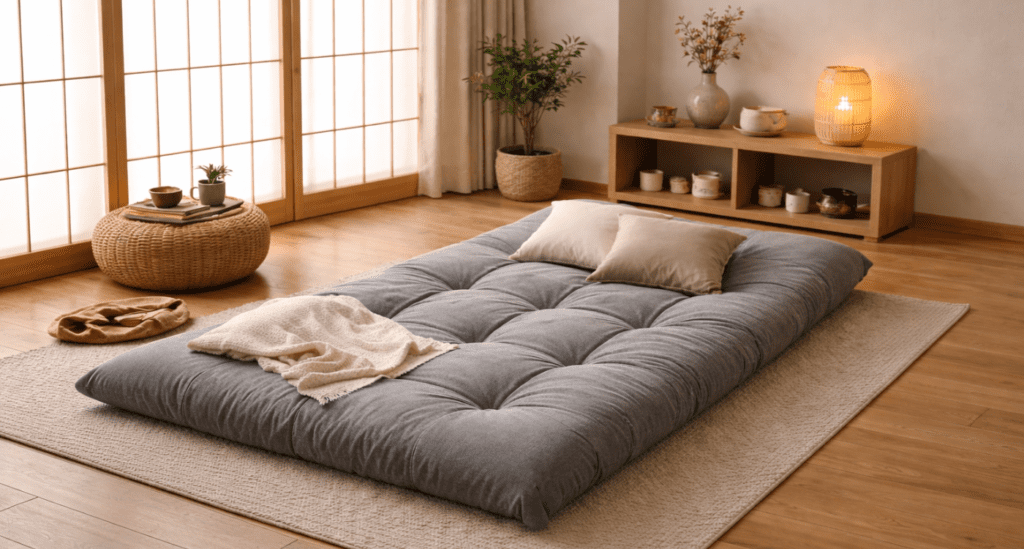
If you wake up stiff most mornings, your mattress may be part of the problem. The best Japanese floor mattress for back pain gives you a firm, flat surface that helps keep your spine in a neutral position instead of letting your hips and shoulders sink unevenly through the night.
In this article, we look at everything from traditionally handcrafted shikibutons to cooling hybrids and organic options, so you can find a Japanese floor mattress that works for your back.
Disclosure: As an Amazon Associate I earn from qualifying purchases at no extra cost to you.
Top 7 Japanese Floor Mattresses for Back Pain – Comparison Chart
| Pick | Product | Best For | Highlights | Check Price |
|---|---|---|---|---|
| Best Overall | EMOOR Japanese Traditional Futon Mattress | Back and stomach sleepers, morning stiffness | 185N urethane core, gusset edge, firm and flat | Check Price on Amazon |
| Best Authentic Pick | FULI Japanese Traditional Shiki Futon | Back sleepers, warm sleepers | 100% cotton surface, medium-firm | Check Price on Amazon |
| Best for Hot Sleepers | ZonLi Japanese Floor Futon Mattress | Back sleepers who run warm | Firm 25D foam base, washable cotton cover, hollow fiber fill | Check Price on Amazon |
| Best Affordable Japanese Floor Mattress | MAXYOYO Japanese Floor Mattress | First-time floor sleepers | Medium feel | Check Price on Amazon |
| Best for Multi-Position Sleepers | Dr. Futon Japanese Floor Futon Mattress | Side sleepers, hip and shoulder pressure | Memory foam fill, extra-plush, rollable | Check Price on Amazon |
| Best Western-Style Japanese Floor Mattress | D&D Futon Furniture Traditional Japanese Floor Mattress | Single-person use, natural materials | American-made cotton batting, firm, rollable | Check Price on Amazon |
| Best Natural Materials Option | The Futon Shop Organic Wool Shiki Futon | Hip and lower back pressure points | Dunlop latex core, organic cotton, natural wool | Check Price on Amazon |
How Japanese Floor Mattresses Can Help With Back Pain
A Japanese floor mattress, or shikibuton, works on one simple idea – removing one of the main reasons soft mattresses can lead to back pain. A plush mattress can let your hips sink lower than your shoulders, while a firm, floor level surface keeps your spine aligned through the night.
That support shows up in a few specific ways:
- A firm surface helps stop the lower back from collapsing out of neutral alignment.
- A floor level mattress gets rid of the uneven sinkage that is common with spring and foam mattresses.
- A tatami mat underneath adds a bit of natural give without taking away the firm support.
- The foldable, lightweight construction makes daily airing easy, which helps the fill stay resilient.
Top Picks: Japanese Floor Mattresses for Back Pain
Best Overall: EMOOR Machi Japanese Padded Futon Mattress
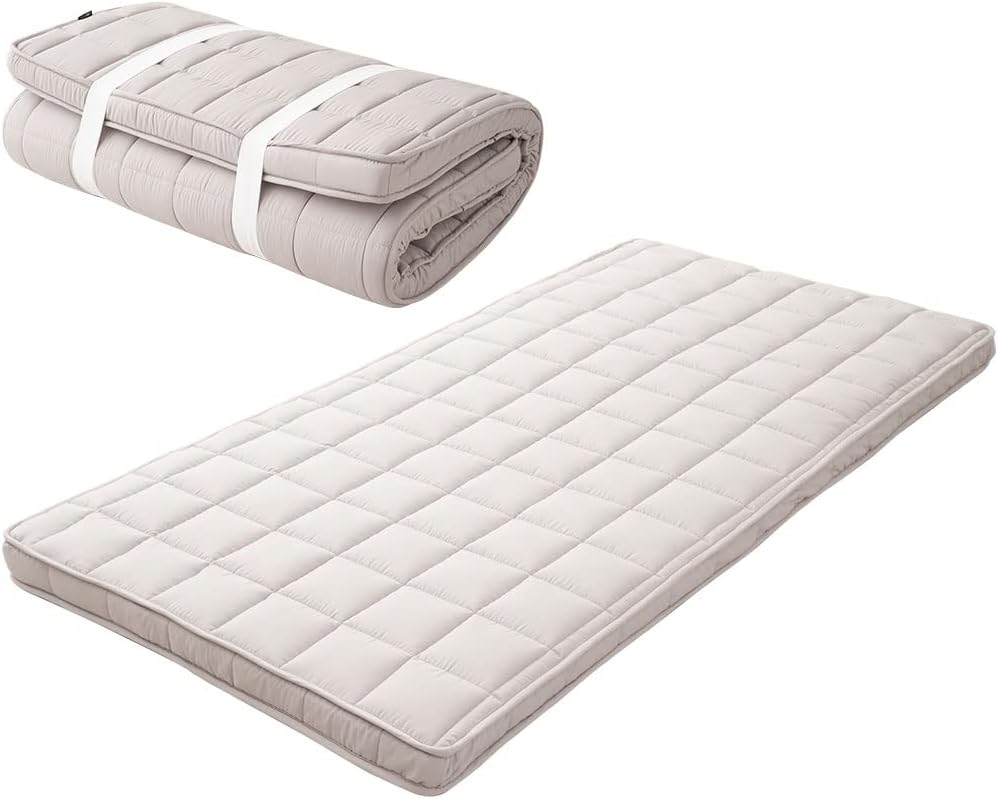
A key highlight of the Machi is its gusset edge. Most floor mattresses get thinner at the sides, which makes the perimeter softer than the center. The Machi keeps its thickness more even from edge to edge, which helps if you move around at night.
Its high resilience urethane foam core is rated at 185N, a Japanese firmness measure that shows how much the material resists compression under body weight. That added resistance helps the surface stay flat and stable instead of slowly sinking in the middle, which is often what leads to morning stiffness with softer mattresses.
It folds flat without creasing and comes with elastic bands for daily storage.
Key Features
- High-resilience 185N urethane core to resist compression and maintain a flat sleeping surface
- Gusset edge construction to keep thickness consistent from center to sides
- Firm, bounce-back feel for floor-level spinal support
- Three-layer polyester quilt build encasing the foam core
- Folds flat without creasing for easy daily storage
- Available in small-twin through king sizing
Who It’s Best For
Back and stomach sleepers who’ve been waking up stiff on a mattress that’s started to compress unevenly. The range of sizes makes it a realistic replacement for a Western mattress rather than just a supplementary sleeping option.
Good to Know
The polyester shell isn’t washable on its own. EMOOR recommends using a separate cotton cover and sun-drying regularly to keep the fill fresh and the foam resilient over time.
Best Authentic Pick: FULI Japanese Traditional Shiki Futon
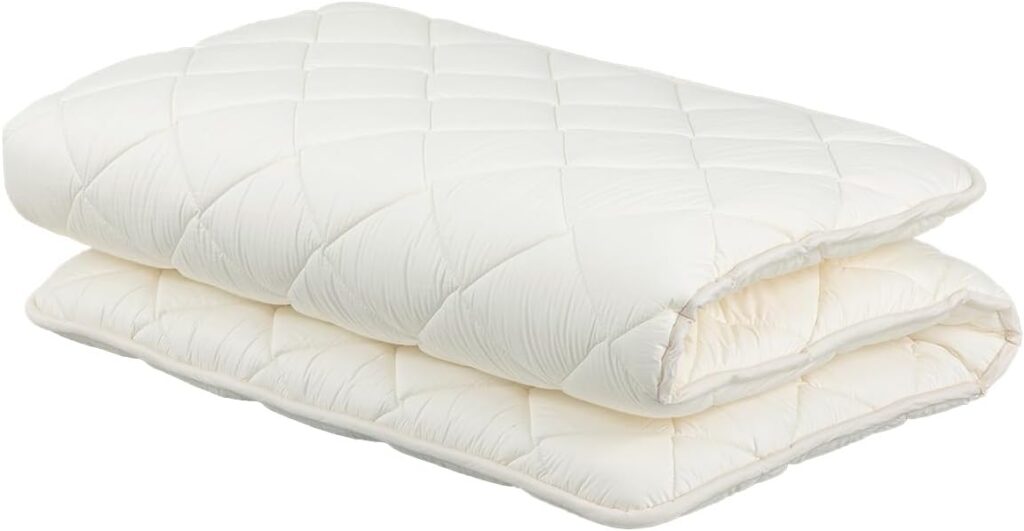
The FULI is built around a more traditional shikibuton approach, and that matters when you compare it with foam based options. Traditional shikibutons stay intentionally thin, which keeps your body closer to the floor and leaves less room for your spine to shift out of position overnight. That is one of the main reasons floor sleeping can help with back pain.
The 100% cotton quilted surface is also more breathable than polyester covered futons, and sleeping cooler can cut down on the tossing and turning that puts extra stress on the lower back.
The medium firm feel is softer than the firmest options here, but it is still much more supportive than most soft Western mattresses.
Key Features
- 100% cotton quilted surface for breathability through the night
- Medium-firm feel to keep the spine in a more neutral position than soft mattresses allow
- Thin traditional profile to keep the body close to the floor
- Lightweight and rollable for easy daily folding and storage
- Available in twin through king sizing
Who It’s Best For
Back sleepers who want a traditional Japanese futon feel with a natural cotton surface. It may also work well for warm sleepers who’ve found that overheating makes their back discomfort worse overnight.
What to Watch For
The thin profile is intentional but it may feel very different for anyone coming from a raised mattress.
Best for Hot Sleepers: ZonLi Japanese Floor Futon Mattress
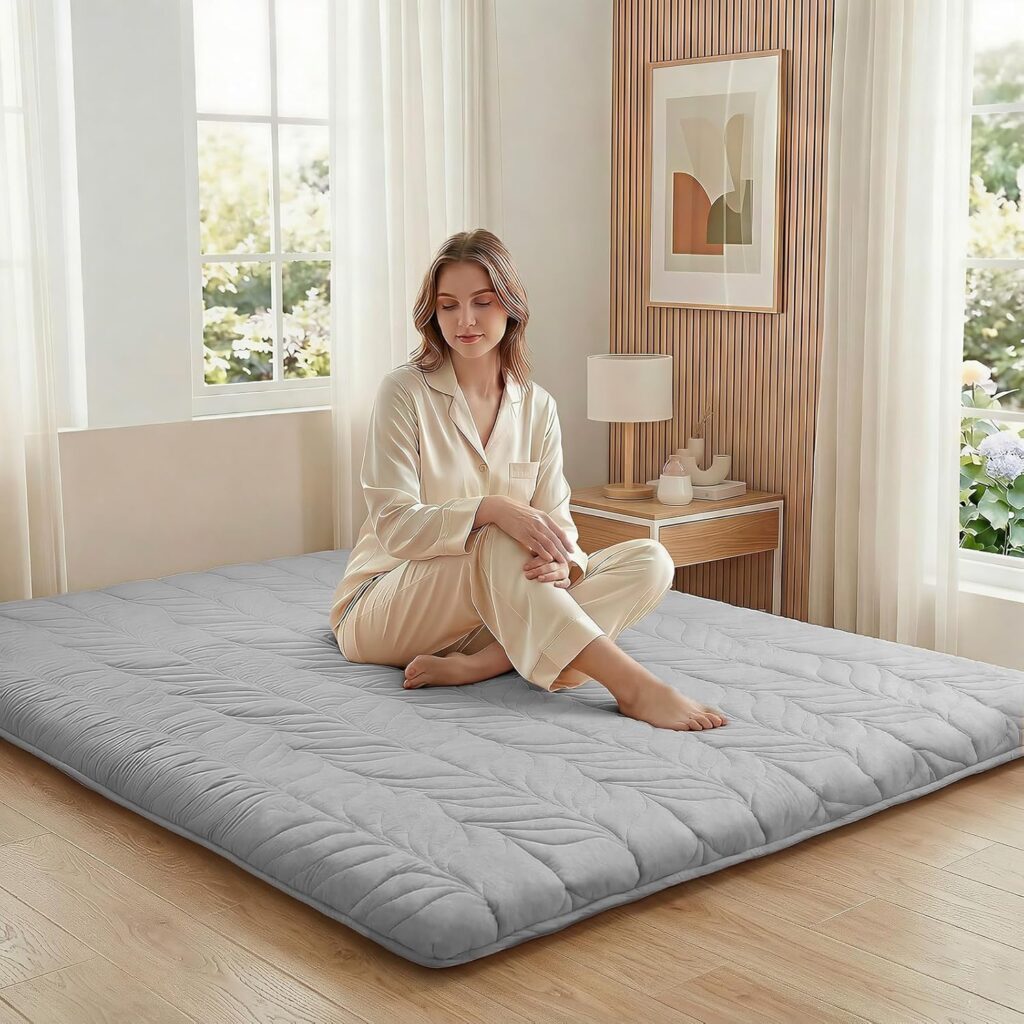
The ZonLi uses a firm 25D high density foam base, which helps with one of the biggest causes of mattress related back pain – too much sink.
The hollow fiber comfort layer and machine washable 100% cotton cover also make it easier to adjust to than a cotton only shikibuton. That can help if you need more support but find the firmest floor options too much right away.
The removable cotton cover is also handy for floor sleeping, since the mattress gets more direct contact with dust and dirt than it would on a raised bed frame.
Key Features
- Firm 25D high-density foam base for floor-level spinal support
- Hollow fiber comfort layer to soften the surface without compromising the firm base
- 100% cotton removable and machine-washable cover
- Breathable cotton and hollow fiber build for cooler sleeping
- Foldable with storage bag and elastic straps included
Who It’s Best For
Back sleepers who want firm, floor-level support but find straight shikibuton firmness too much as a starting point. It may also work well for people who run warm overnight, since overheating can make back discomfort worse and the cotton and hollow fiber build sleeps cooler than memory foam alternatives.
What to Watch For
The hollow fiber layer does soften the feel compared to the EMOOR or FULI. If maximum firmness is the priority, those two options deliver a much firmer floor sleeping experience.
Note: The tatami cover features delicate textures and is made of 100% pure cotton.
Best Affordable Japanese Floor Mattress: MAXYOYO Japanese Floor Mattress
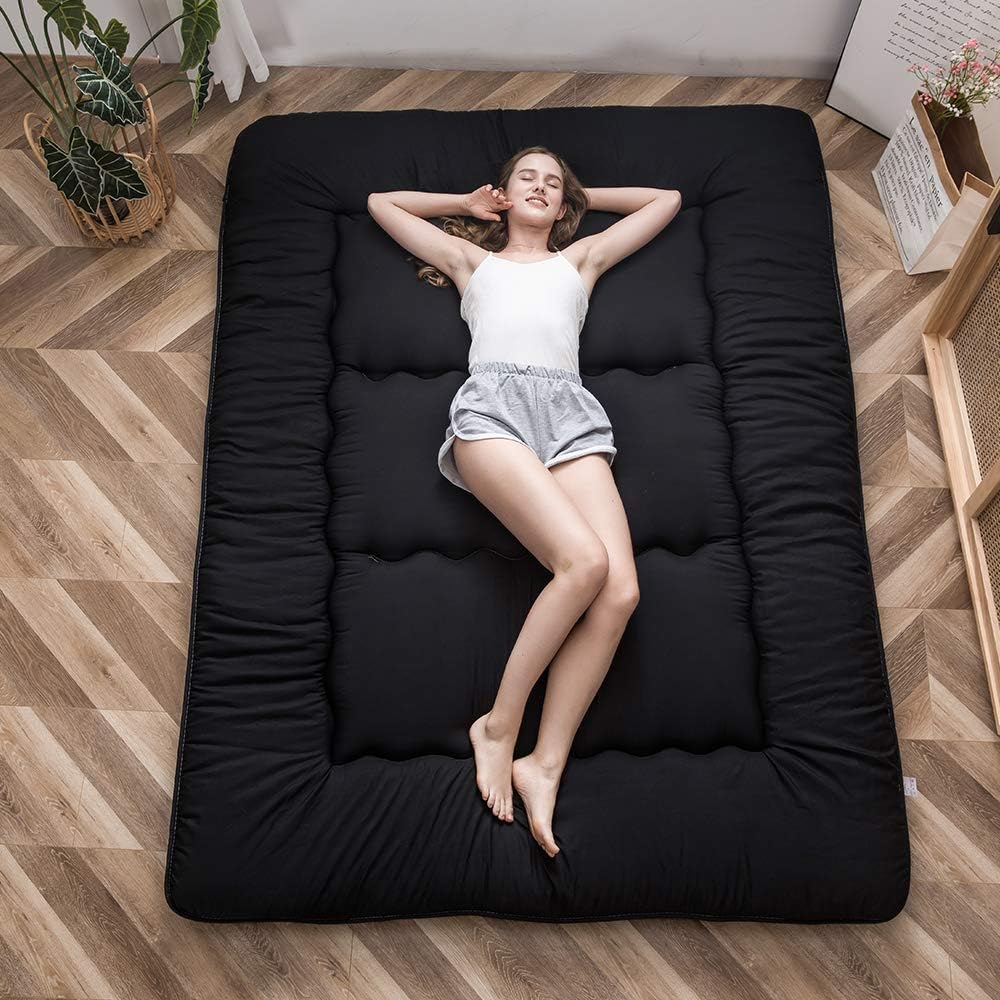
The MAXYOYO uses a high density foam base with polyester comfort layers for a medium feel. That makes it a more manageable starting point for people with back pain who are used to a soft mattress and do not want to jump straight to the firmest shikibutons.
Across reviews, people with different body types have mentioned less morning stiffness over multiple years.
Key Features
- High-density foam base for medium floor-level support
- Polyester comfort layers to ease the adjustment from a soft Western mattress
- Dustproof cover, storage straps, and storage bag included
- Entry-level price point for first-time floor sleepers
Who It’s Best For
People new to floor sleeping who want a medium feel as a gentler starting point than traditional shikibutons offer. It may also work well for anyone who’s been sleeping on a soft mattress with back issues and wants a noticeable firmness upgrade without going all the way to a cotton-only futon.
Good to Know
Some reviewers note the mattress measures thinner than the listing suggests once unpacked. Allowing a couple of days for the foam to expand after opening helps.
Best for Multi-Position Sleepers: Dr. Futon Japanese Floor Futon Mattress
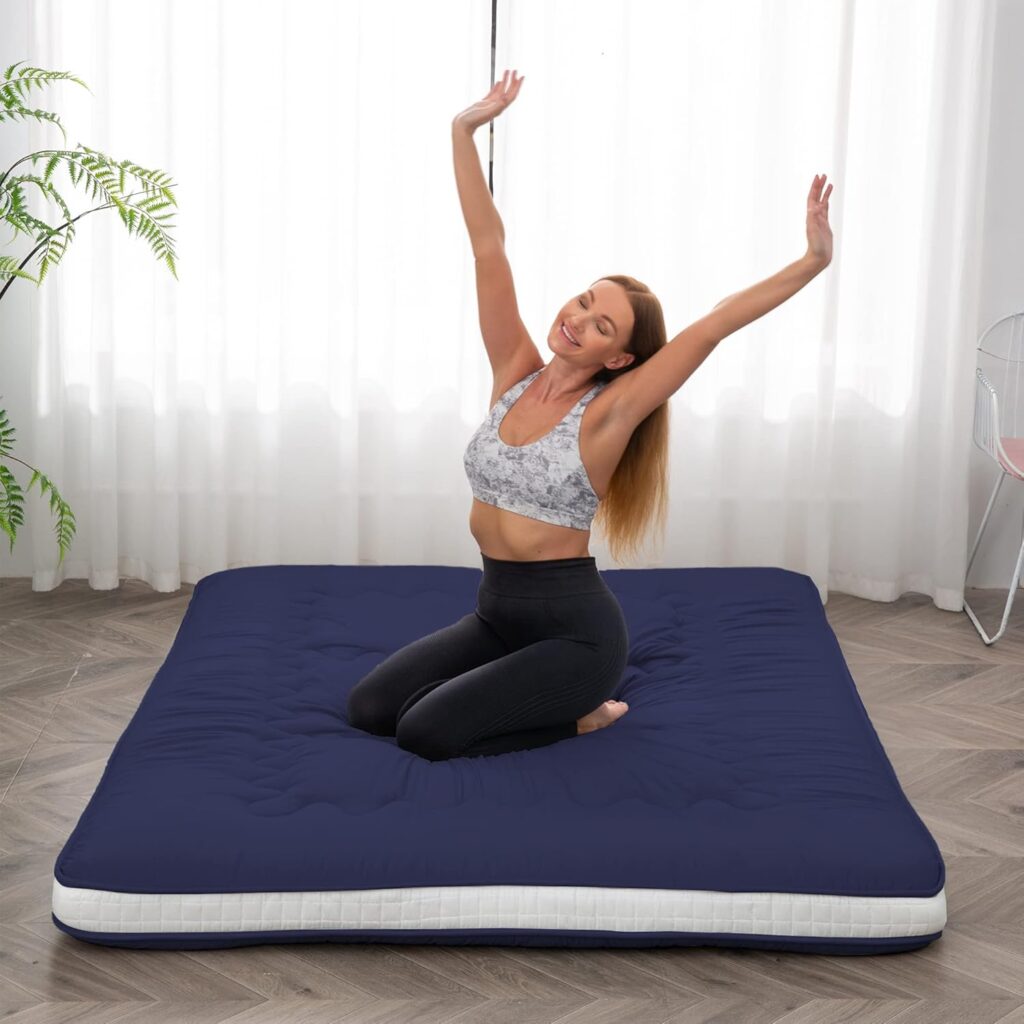
The Dr. Futon is the softest option on this list. It uses memory foam and has a much plusher build than the firm, flat surface you get with a traditional shikibuton.
This is important for side sleepers whose back pain starts around the hips or shoulders, where softer cushioning at those pressure points may help more than maximum firmness.
Key Features
- Memory foam fill for body-contouring comfort across sleeping positions
- Extra-plush feel to cushion pressure points at the hip and shoulder
- Cotton comfort layer beneath the jacquard cover
- Jacquard fabric cover for surface durability
- Rollable and foldable with straps and storage bag included
Who It’s Best For
Side sleepers and combination sleepers whose back pain originates from pressure at the hips and shoulders rather than from a mattress that’s too soft. It may also suit people who want the space-saving benefit of a rollable floor mattress without the style of a traditional shikibuton.
What to Watch For
Back sleepers who need flat, firm floor-level support for spinal alignment would do better with the EMOOR, FULI, or ZonLi. The extra-plush memory foam here won’t deliver that kind of even, firm surface.
Best Western-Style Japanese Floor Mattress: D&D Futon Furniture Traditional Japanese Floor Mattress
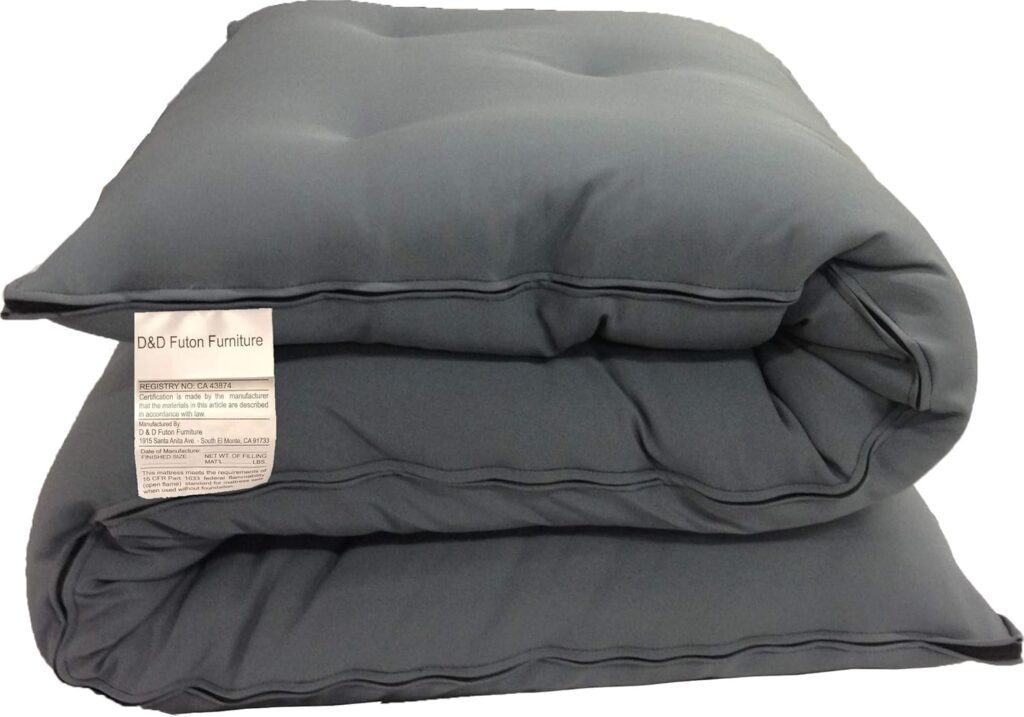
The D&D is an American made cotton batting floor mat, and its narrower than twin size makes it more of a one person option than a full mattress replacement.
For people with back pain who want natural materials instead of foam, it offers a breathable cotton surface with a firm feel at a lower price.
The cotton batting also holds its shape more consistently than many foam floor mats, which helps if you need a sleeping surface that does not soften unevenly over time.
Key Features
- American-made cotton batting fill for a natural, breathable surface
- Firm feel from cotton and foam layering for floor-level back support
- Narrower than a standard twin, suited to single-person use
- Rolls up for easy transport and storage
- Versatile across floor sleeping, yoga, meditation, and camping
Who It’s Best For
One person who wants a natural cotton floor mat for daily sleeping, yoga, or meditation in a smaller space. It may also suit someone who wants to try cotton-based floor sleeping before investing in a higher-end shikibuton.
What to Watch For
This runs notably narrower than a standard twin mattress, so it won’t work for two people or anyone who needs a full-sized sleeping surface.
Best Natural Materials Option: The Futon Shop Organic Wool Shiki Futon
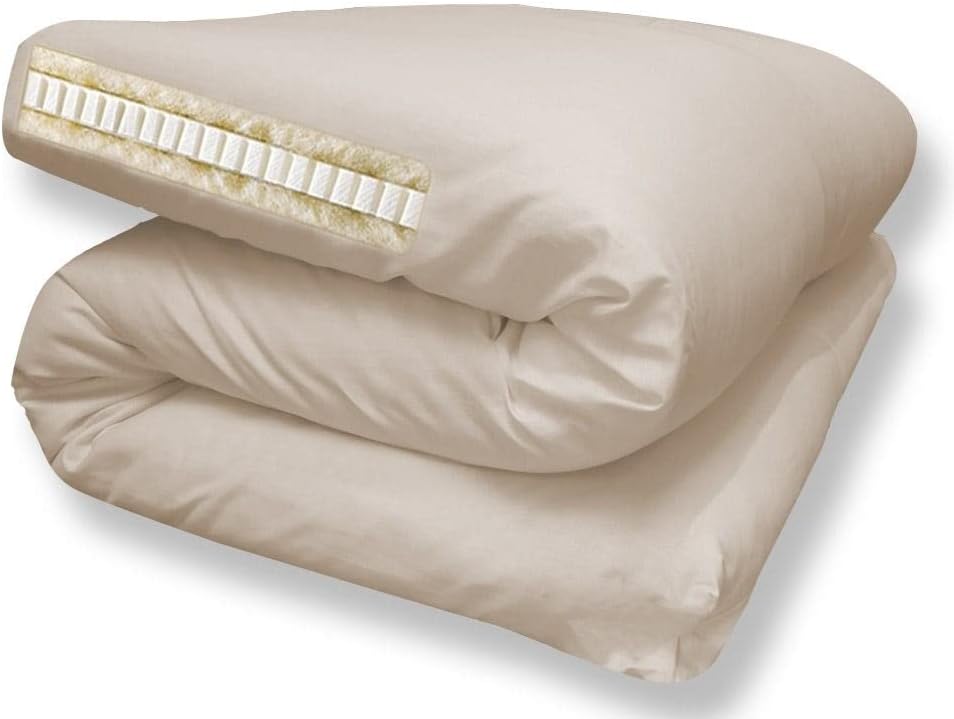
The Futon Shop handmakes this shikibuton with a natural Dunlop latex core, pure wool wrapping, and an organic cotton cover.
For back pain that shows up most around the hips or lower back, the latex core is the main reason to look at this one. Unlike cotton or foam, Dunlop latex compresses under body weight and springs back instead of staying compressed. That helps spread pressure across contact points instead of letting it build up through the night.
That can be especially helpful for people whose lower back or hip pain comes from hard pressure points rather than mattress sag.
Key Features
- Natural Dunlop latex core for body-responsive pressure distribution at the hips and lower back
- Pure wool filling for natural temperature regulation through the night
- Organic cotton case for a chemical-free, breathable surface
- Medium feel balancing firmness with body responsiveness
- Foldable and rollable for daily storage
- Higher-end price reflecting natural latex and organic wool construction
Who It’s Best For
Sleepers who prefer organic, chemical-free materials and want a body-responsive surface that’s firmer than a soft Western mattress but more forgiving at pressure points than a cotton-only shikibuton. It may work particularly well for people whose lower back or hip discomfort comes from hard contact points rather than from mattress sag.
What to Watch For
The Futon Shop recommends pairing this with a tatami mat or coconut coir pad rather than placing it directly on bare floor, which affects airflow and extends the futon’s life.
How to Choose the Right Japanese Floor Mattress for Your Sleep
The most important decision is firmness, and it helps to be clear about what firm means with a shikibuton. Traditional Japanese futons are much firmer than even firm Western mattresses. They are made to stay flat, not cushion your body.
If you’re coming from a plush mattress, that difference can take some getting used to. Starting with a medium-firm hybrid can make the transition easier.
- Sleeping position: Back and stomach sleepers tend to adapt most naturally to a standard shikibuton. Side sleepers need more cushioning at the hip and shoulder, so a thicker model or one with a comfort layer is worth prioritizing.
- Materials: Traditional cotton breathes well and ages predictably. Wool and latex add pressure management but come at a higher price point. Foam-based options feel more familiar but may retain more heat.
- Surface underneath: A tatami mat makes a notable difference. Its natural compressibility reduces peak pressure at the sacrum and shoulder blades that a bare floor creates, while the woven construction keeps airflow moving beneath the futon.
- Size: Most shikibutons come in standard US sizing, but measuring floor space before buying is worth the effort, especially if you plan to fold and store the mattress each morning.
- Maintenance: Traditional futons need daily folding and regular airing. Periodic sun-drying restores loft. It’s a small habit that significantly extends mattress life.
Final Thoughts on Japanese Floor Mattresses for Back Pain
Japanese futons can be a strong option for people dealing with back pain, especially if a soft mattress leaves them waking up stiff or sore. The main benefit is the firm, flat sleeping surface, which can help keep the spine in a more neutral position and reduce the uneven sink that often leads to morning discomfort.
That said, Japanese futons are not the right fit for every sleeper. Back sleepers and stomach sleepers often do best with this style, while side sleepers may need a little more cushioning depending on where their pressure points show up. If you’re used to a plush mattress, the adjustment can take time, so it helps to give your body a chance to adapt before deciding how well it works.
When choosing the best Japanese futon for back pain, focus on firmness, support, breathability, and the materials inside the futon. A well-made futon paired with a tatami mat or other supportive base can create a more stable sleep surface and help the futon hold its shape over time.
For anyone looking for a simpler, firmer sleep setup, a Japanese futon can be a practical way to support better spinal alignment and wake up feeling more rested.
Frequently Asked Questions
What is a Japanese floor bed called?
A traditional Japanese floor bed is called a futon. It typically consists of a thin mattress (shikibuton) and a thick comforter (kakebuton) that are laid directly on the floor or on a tatami mat.
Are Japanese floor beds good for your back?
Many people find that Japanese floor beds can be useful for back health. The firm surface promotes proper spinal alignment, which may help reduce back pain. However, person experiences can vary, and it’s always best to ask with a healthcare professional about specific back issues.
How thick should a Japanese floor mattress be?
Traditional Japanese floor mattresses, or shikibutons, are typically between 2 to 4 inches thick. However, modern versions designed for Western users may be thicker, ranging from 3 to 6 inches, to provide extra comfort while maintaining the low-profile aesthetic.
What is the difference between a futon and a Japanese floor bed?
While often used interchangeably, there is a distinction between a futon and Japanese floor bed. A traditional Japanese futon is a thin mattress designed to be folded and stored during the day.
A Japanese floor bed can refer to this traditional futon setup or to more modern interpretations that include a low platform frame.
Are Japanese floor beds suitable for people with mobility issues?
Traditional Japanese floor beds may be challenging for people with mobility issues because of their extremely low profile. However, many modern Japanese-inspired bed frames offer a slightly higher profile that can be more accessible while still maintaining a low-to-the-ground aesthetic.
Can Japanese floor beds help with temperature regulation during sleep?
Yes, many people find that sleeping closer to the ground can help with temperature regulation. Cool air tends to settle near the floor, which can be useful for sleep, especially in warmer climates or during summer months.
How long do Japanese floor beds typically last?
The lifespan of a Japanese floor bed depends on the materials and construction. High-quality futons can last 8-10 years with proper care.
Tatami mats typically need replacement every 5-7 years.
Wooden or metal bed frames can last many years with proper maintenance.

Sleep Essentials Hub is a sleep blog for readers who want helpful sleep guides and honest product recommendations. We’re passionate about better rest, with a focus on pillows and bedding, sleep aids, sleep apnea and CPAP gear, natural sleep supplements, sleep tech, and simple ways to improve your sleep environment. We’re here to help you choose products that support deeper sleep, greater comfort, and a better night’s rest without overspending.