
Do Weighted Blankets Help You Sleep Better?
Sleep problems are common, so it’s easy to see why weighted blankets appeal to people looking for a non-medicated sleep aid. Weighted blankets are backed by some research, but the benefits are not quite as simple or universal.
For some people, they can be genuinely helpful. For others, the difference may be small or not noticeable at all. This guide looks at what weighted blankets may do, who they may help, and what to think about before buying one.
If you’re ready to try one, our guide to the best weighted blankets for sleep and anxiety makes it easier to compare the top options and choose one that suits how you sleep.
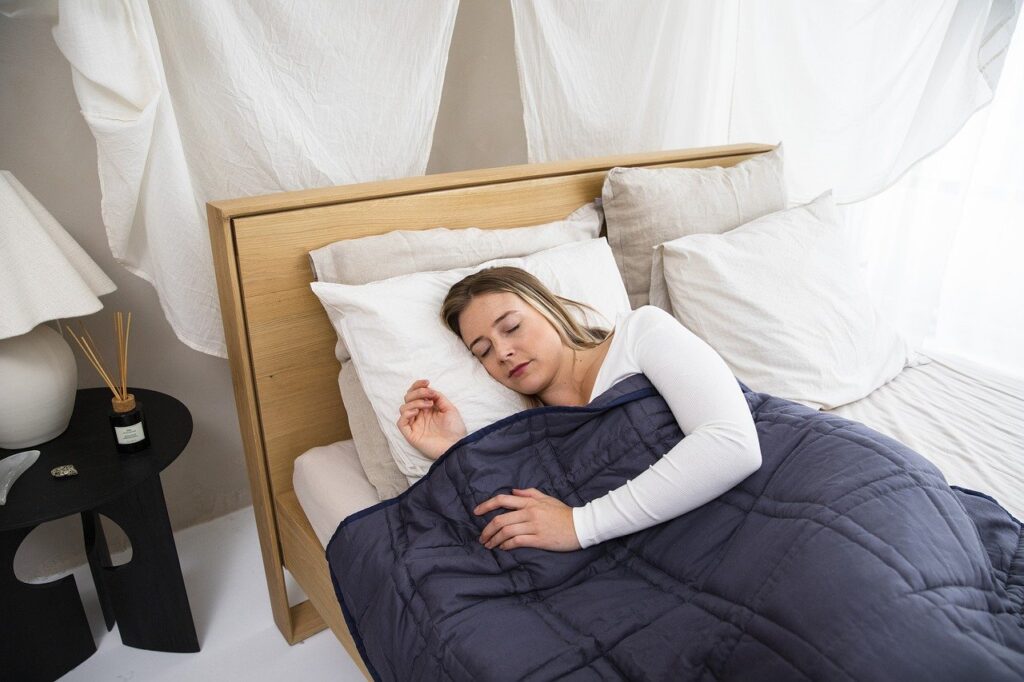
Disclosure: This article is reader-supported and may contain affiliate links.
How Weighted Blankets Work: The Science of Deep Pressure Stimulation
Weighted blankets are generally thought to work through deep pressure touch, which is a type of steady, evenly distributed pressure on the body.
Researchers believe this kind of pressure may help some people feel calmer and less physically restless at bedtime, but the exact mechanism is still being studied.
The basic idea is simple: for some people, added weight can feel grounding and soothing in a way that lighter bedding does not. That may be one reason weighted blankets are often discussed in connection with anxiety, restlessness, and trouble winding down at night.
Mayo Clinic has also weighed in, noting that weighted blankets may help lift anxiety by creating a calming effect on the nervous system.
Here’s what published research on weighted blankets shows:
- A 2023 study in the Journal of Sleep Research found that people using a weighted blanket had a larger rise in pre-sleep melatonin than those using a light blanket. The study was small, and the researchers said larger and longer studies are still needed to understand whether that effect holds up over time.
- A 2020 randomized controlled trial found that adults with insomnia and co-occurring psychiatric disorders were much more likely to have a meaningful reduction in insomnia severity when using a weighted chain blanket than a light control blanket. The researchers also reported maintained improvement during follow-up.
Note that broader evidence base is still limited. A 2024 review concluded that weighted blankets may improve sleep quality and related symptoms in some groups, but also noted that more high-quality studies are needed.
How to Choose the Right Weighted Blanket Weight
The most common starting point is a weighted blanket that weighs about 10% of your body weight. That is best treated as a rule of thumb, not a hard rule. Comfort varies, and a blanket that feels calming to one person may feel too heavy or restrictive to someone else.
If you are unsure, starting a little lighter is often the safer option.
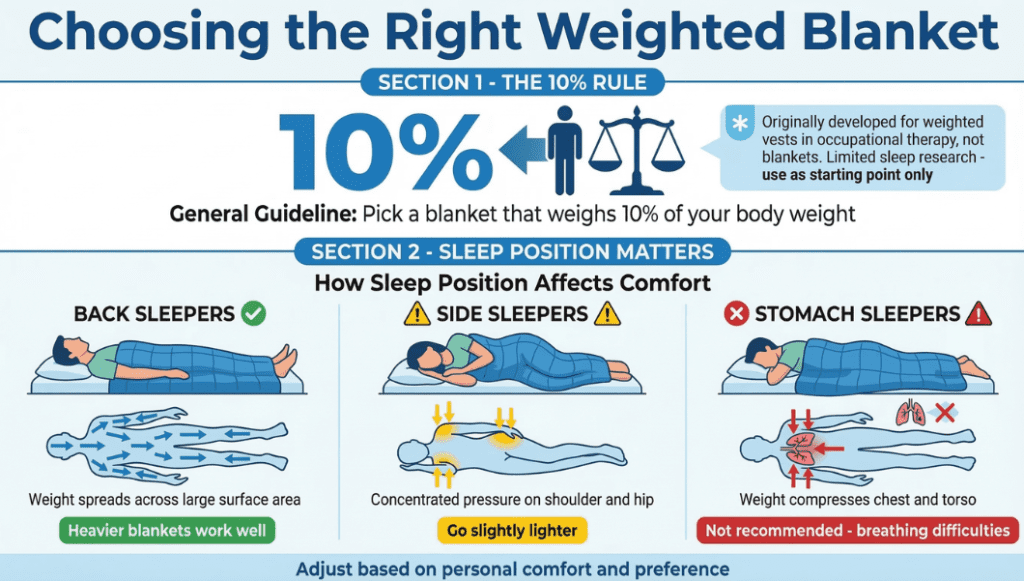
Sleep position can also affect comfort. People who sleep on their stomach may want to be especially cautious, since added weight across the chest or torso can feel uncomfortable or restrictive.
Sensory preference also shapes what weight will feel comfortable. Some people naturally love pressure. They pile on the blankets, love tight hugs, and gravitate toward compression clothing. These people may find lighter weighted blankets underwhelming and do better toward the higher end of the weight range.
Others find pressure uncomfortable or irritating. Pushing through that discomfort rarely leads to the calming effect weighted blankets are meant to create.
Physical safety is non-negotiable regardless of weight preference. Anyone using a weighted blanket needs to be able to remove it on their own, easily and without help. This is especially important for older adults, people with limited strength or mobility, and anyone recovering from surgery.
For most adults, trying something in the 10 to 15 pound range and adjusting from there makes more practical sense than trying to calculate an exact percentage.
Weighted Blanket Filling Types: Glass Beads vs Poly Pellets
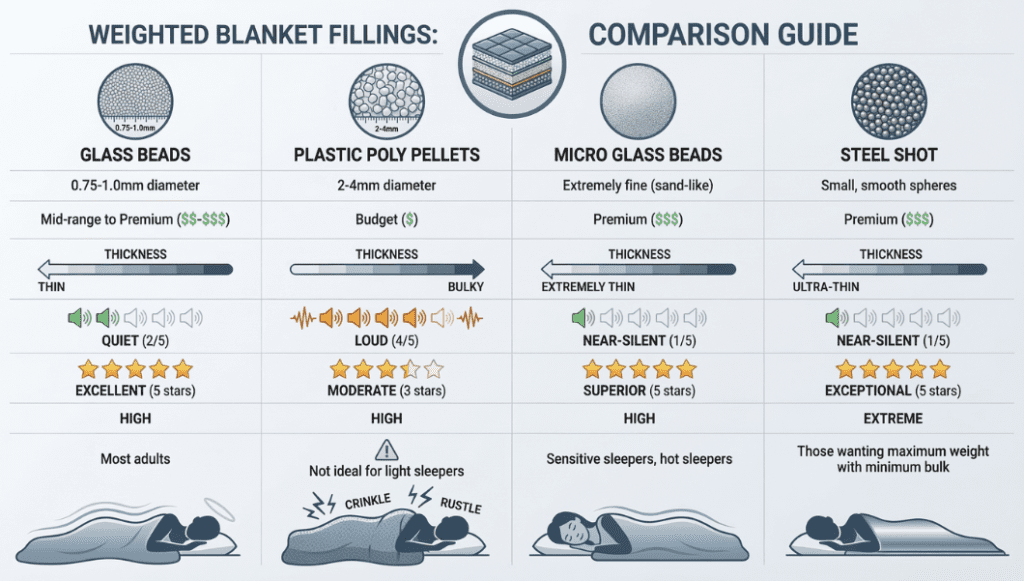
What’s inside the blanket affects how it feels, how loud it is when moving around, and how well it holds up over time.
- Glass beads are the most common filling in mid-range and premium weighted blankets. They’re small, around the 0.8 to 1.2mm range, which means the blanket can be thinner, drape well over the body, and stay relatively quiet when shifting positions at night. For most adults, glass beads offer the best combination of comfort and durability.
- Plastic poly pellets are what’s typically found in cheaper blankets. They’re bigger, which makes the blanket bulkier, and they make a noticeable rustling sound when moving. They hold up well over time, but the noise can be a real problem for light sleepers.
- Micro glass beads are finer than standard glass beads, almost like sand, and drape well while making very little noise. They cost more and need tightly woven fabric to stop them leaking through, but they produce a noticeably more refined feel.
- Natural fills like rice, beans, or sand aren’t great for regular sleep use. They can absorb moisture, develop mold, attract pests, and break down unevenly over time.
Weighted Blanket Fabrics for Hot Sleepers and Cold Sleepers
Fabric plays a big role in comfort, especially if you run hot at night:
- Cotton is the easiest all-round option. It breathes well, handles moisture reasonably, is familiar, and is easy to care for.
- Bamboo-derived fabrics is worth paying more for if running hot at night is a regular problem as it feels cooler against skin.
- Plush fabrics like minky or sherpa feel incredibly soft and warm. Cold sleepers maybe prefer this type of fabric, however it can trap heat and lacks the breathability of cotton, so anyone who tends to overheat may find it uncomfortable.
For anyone with skin sensitivities, it’s also worth exploring organic cotton weighted blankets, which skip the chemical finishes that can irritate sensitive skin.
Weighted Blanket Construction: Compartment Stitching vs Channel Stitching
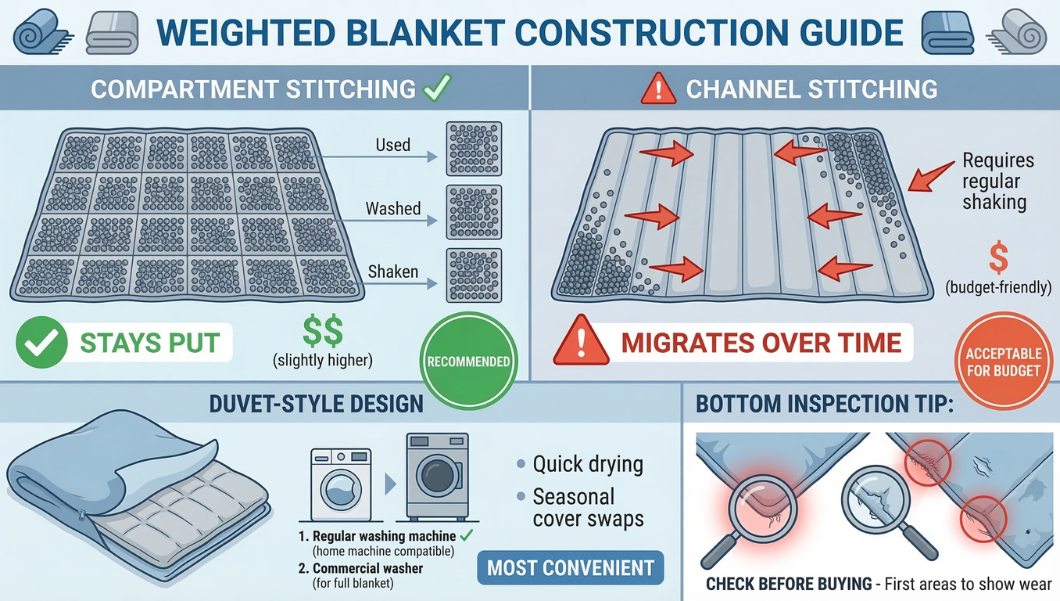
How a blanket is stitched together determines whether the filling stays spread out evenly or migrates into clumps and heavy patches over time.
- Grid or Compartment stitching is generally preferred because it helps keep the weight spread more evenly across the blanket. The filling is sealed inside each individual square so it stays put whether the blanket is being used, washed, or shaken out.
- Channel stitching creates long vertical or horizontal tunnels instead. The filling can slowly slide toward the ends of those tunnels, leaving some areas too heavy and others too light. Regular shaking helps redistribute it, but the ongoing upkeep gets old fast. It’s acceptable at a budget price point, but worth factoring in before buying.
- Duvet-style weighted blankets come with a removable outer cover that can be washed separately from the weighted insert. This is the most convenient design for everyday use. Washing a full weighted blanket requires a commercial-sized machine and takes a long time to dry, but a removable cover goes through a regular home machine in minutes. Being able to swap covers by season is a practical bonus too.
Before buying any weighted blanket, it’s worth checking the corners and edges closely. These areas take the most wear during regular use and washing, and they’re usually where blankets start falling apart first.
Potential Benefits of Weighted Blankets
Weighted blankets may help with sleep in a few different ways, but the effect is not the same for everyone. Research is most promising in people with insomnia, anxiety-related sleep problems, or nighttime restlessness, though results are still mixed overall.
Fall Asleep Faster
Some people find it easier to drift off under a weighted blanket than a regular one. In research, weighted blankets have been linked with improvements in sleep onset and insomnia severity in some groups, especially adults with insomnia and related psychiatric symptoms.
Wake Less During the Night
Some studies and user reports suggest weighted blankets may help reduce nighttime waking and improve overall sleep continuity. This does not happen for everyone, but it is one of the main reasons people love using weighted blankets for sleep.
Calming at Bedtime
The steady pressure of a weighted blanket may help some people feel calmer when they get into bed. Researchers think deep pressure touch may promote relaxation, which may be one reason weighted blankets appeal to people who feel mentally wired or physically tense at night.
Restlessness at Night
Weighted blankets can also appeal to people who move around a lot at night or struggle to get comfortable. For these sleepers, the main benefit may be that the blanket feels more grounding and secure than a lighter blanket.
Who Should Not Use a Weighted Blanket
Weighted blankets are not a good fit for everyone. Some people find them calming, while others find them too warm, too heavy, or too restrictive to sleep under comfortably.
People who sleep hot may find that a weighted blanket adds more warmth than they want, even in a lighter weight or a more breathable fabric. People who move around a lot at night may also find the extra weight makes it harder to change positions comfortably.
Some people with claustrophobia or a history of physical restraint trauma may find the pressure uncomfortable too.
Weighted blankets should never be used for infants.
For older children, the blanket should be age- and size-appropriate, and the child should be able to remove it easily on their own. Older adults and anyone with limited strength or mobility should follow the same rule.
Anyone with breathing problems, obstructive sleep apnea, circulatory concerns, or limited mobility should check with a doctor before using a weighted blanket. If you are unsure whether one is appropriate for you, it is best to ask a healthcare professional first.
Weighted Blanket Price Guide: Budget vs Premium
- Budget ($50 to $80): Poly pellets and channel stitching. A low-cost way to find out whether weighted blankets work for a particular person before spending more, but expect a bulkier feel, more noise, and more upkeep
- Mid-range ($100 to $180): Glass beads, compartment stitching, and better fabric. The best starting point for most first-time buyers
- Premium ($200 and above): Duvet-style construction with removable covers, higher-quality fabrics, and longer trial periods. Often worth it for people who run hot, want better fabrics, or already know they like sleeping under a weighted blanket.
With nightly use over three years, the cost usually comes out to just a few cents per night, often less than many over-the-counter sleep aids. It’s also worth prioritizing a return window of at least 60 days, since weighted blankets are not a good fit for everyone.
Do Weighted Blankets Actually Improve Sleep Quality?
Weighted blankets are not a cure-all, but they can be a helpful sleep tool for the right person. People who feel anxious, overstimulated, or physically restless at night are often the most likely to notice a difference, especially when the blanket’s weight, fabric, and construction actually suit how they sleep.
That said, comfort is highly individual. The same blanket that feels calming to one person can feel too warm, too heavy, or too restrictive to someone else. That’s why it’s recommended to focus on breathable fabric, sensible weight, and good construction than to get pulled in by big promises.
If you’re curious about trying one, start with realistic expectations and buy from a reputable brand with a decent return window. A well-made weighted blanket may not improve the sleep quality for everyone, but for some people, it can become one of the simplest ways to make bedtime feel calmer and more settled.
For readers looking for a recommended weighted blanket for sleep and anxiety, the BareEarth Weighted Blanket is an easy one to shortlist thanks to its balanced feel, breathable design, and 90-day trial.
Video Guide: Weighted Blankets Explained
Frequently Asked Questions
How heavy should a weighted blanket be?
The general recommendation is to choose a weighted blanket that weighs about ten percent of your body weight. For a 150-pound person, this would mean a fifteen-pound blanket.
However, personal preference plays a significant role, and some people prefer slightly lighter or heavier options.
If you’re new to weighted blankets, starting on the lighter side allows you to adjust to the sensation before potentially moving to a heavier blanket.
Can weighted blankets help with restless leg syndrome?
Some people with restless leg syndrome report relief from using weighted blankets. The constant, gentle pressure on the legs seems to calm the uncomfortable sensations and irresistible urges to move that characterize this condition.
The proprioceptive input from the weight helps the nervous system settle, reducing the restlessness that makes sleep difficult for people with RLS.
Are weighted blankets safe for children?
Weighted blankets should never be used with infants or very young children who cannot remove the blanket independently. For older children, weighted blankets can be beneficial for sleep issues, ADHD, autism, or anxiety, but should only be used under professional guidance from an occupational therapist or pediatrician.
The child must be physically capable of removing the blanket themselves if they become uncomfortable.
Do weighted blankets make you hot at night?
Temperature regulation varies significantly based on the blanket’s materials and construction. Weighted blankets with plastic pellet filling and synthetic fabrics tend to trap more heat, while those made with glass beads and breathable fabrics like cotton or bamboo stay cooler.
If you sleep hot or live in a warm climate, look for blankets specifically designed with cooling properties or breathable materials.
Can weighted blankets help with ADHD symptoms?
Research and anecdotal evidence suggest that weighted blankets can help people with ADHD by providing calming proprioceptive input that helps settle restlessness and improve focus. Some children and adults with ADHD report better sleep quality, reduced nighttime restlessness, and improved ability to concentrate when using weighted lap pads during tasks requiring sustained attention.
How do you wash a weighted blanket?
Most weighted blankets can be machine washed on gentle cycles with cold water, but check the manufacturer’s instructions for your specific blanket. The main challenge is that weighted blankets are heavy, especially when wet, which can strain standard washing machines.
Blankets over fifteen pounds often need commercial-sized machines.
Air drying is typically recommended to avoid damaging your dryer, though this takes considerable time.
Can weighted blankets help with fibromyalgia pain?
Some fibromyalgia patients report that weighted blankets help reduce pain and improve sleep quality. The deep pressure stimulation triggers endorphin release, which may provide natural pain relief.
Additionally, firm pressure is often better tolerated than light touch for people with fibromyalgia who experience allodynia (pain from normally non-painful stimuli).
The improved sleep quality may also help with overall pain management.
Are weighted blankets good for autism?
Weighted blankets are commonly recommended by occupational therapists as part of sensory diets for autistic people. The consistent proprioceptive input helps organize the sensory system and can reduce anxiety, improve sleep, and provide a calming effect during sensory overload.
However, preferences vary among autistic people, and some may find weighted blankets uncomfortable or triggering.
Can you use a weighted blanket all night?
Yes, most people can safely use weighted blankets throughout the night. The benefits for sleep quality often come from using the blanket for your entire sleep period.
However, you should be able to remove the blanket easily if you become uncomfortable.
Some people prefer to use the blanket for part of the night or only on certain body parts, which is perfectly fine.
Do weighted blankets help with panic attacks?
Weighted blankets can serve as a grounding tool during panic attacks by providing intense sensory input that helps interrupt the panic cycle. The deep pressure gives your mind something concrete to focus on rather than overwhelming fear, and the physiological calming response can help prevent panic from escalating.
However, weighted blankets should complement, not replace, professional treatment for panic disorder.
What’s the difference between glass beads and plastic pellets in weighted blankets?
Glass beads are smaller, denser, and quieter than plastic pellets, creating a smoother feel and allowing for thinner blankets. They also provide better temperature regulation since they don’t trap heat as much as plastic.
Plastic pellets are more affordable and durable but can be noisier when you move and may keep more heat.
The choice often comes down to budget and personal preference.
Can weighted blankets help with insomnia?
Weighted blankets address several factors that contribute to insomnia. The deep pressure stimulation promotes relaxation and triggers the release of sleep-promoting hormones like melatonin. The grounding sensation helps quiet racing thoughts, and the reduced movement throughout the night leads to fewer awakenings.
Some insomnia sufferers report improved sleep onset time and better overall sleep quality with weighted blankets.
Disclaimer: This article is for informational purposes only and is not medical advice. Weighted blankets are not suitable for everyone. If you have a medical condition, breathing or circulation concerns, limited mobility, or questions about whether a weighted blanket is safe for you or your child, speak with a qualified healthcare professional before use.

Sleep Essentials Hub is a sleep blog for readers who want helpful sleep guides and honest product recommendations. We’re passionate about better rest, with a focus on pillows and bedding, sleep aids, sleep apnea and CPAP gear, natural sleep supplements, sleep tech, and simple ways to improve your sleep environment. We’re here to help you choose products that support deeper sleep, greater comfort, and a better night’s rest without overspending.