
How to Choose the Best Pillow for Front Sleepers
Finding the right pillow can help front sleepers maintain a more comfortable neck position and reduce morning stiffness.
This guide explains what to look for in the best pillow for front sleepers, including loft, firmness, fill, and shape, so you can choose one that suits your body and sleeping preferences.

Disclosure: As an Amazon Associate I earn from qualifying purchases at no extra cost to you.
Why Front Sleepers Need a Different Pillow
Sleeping on your stomach places the head and neck in a rotated position for long periods. A pillow that is too thick can push the neck farther backward, which may contribute to stiffness or discomfort by morning.
Front sleepers may also notice:
- Neck discomfort from keeping the head turned to one side
- Lower back pressure if the mattress allows the midsection to sink too deeply
- Pressure around the face or difficulty settling comfortably on a thick pillow
A thin, supportive pillow can limit excessive neck extension while still providing enough cushioning for comfort. If your lower back arches uncomfortably, a pelvic pillow for stomach sleepers can provide support beneath the pelvis without raising your head.
What to Look for in a Front Sleeper Pillow
Front sleepers usually need less loft than back or side sleepers because a thick pillow can tilt the head backward. The best height and firmness will depend on your body size, mattress firmness, and how much the pillow compresses under your head.
Low Loft
Choose a thin pillow that compresses easily under your head. For many stomach sleepers, a loft of around 3 inches or less can work well, but the height after compression matters more than the listed loft.
Soft to Medium Firmness
A soft or medium-firm pillow can provide cushioning without lifting the head too far from the mattress. Very firm pillows tend to maintain more height, while an overly soft pillow may flatten enough to leave your face resting against the mattress.
Fill Material
Each pillow fill behaves differently:
- Memory foam: A low-profile memory foam pillow contours around the head but may retain heat, depending on its construction.
- Down or down alternative: Compresses easily and allows the fill to be shifted away from pressure points.
- Latex: Feels responsive and retains its shape, but higher-loft models may elevate the head too much.
Breathability
Front sleepers often keep more of their face in contact with the pillow. Breathable covers and fills can help heat and moisture escape, although cooling claims vary between products.
Adjustable Loft
An adjustable pillow allows you to remove fill until the height feels comfortable. This can be helpful if you’re unsure how much loft you need or frequently move between stomach and side sleeping.
Top Front Sleeper Pillows Picks
Here you’ll find a selection of the top pillows for front sleepers, each offering unique features designed to cater to a variety of preferences.
1. SofGlowly Ultra Thin Flat Pillows, 2.75 Inch Cooling Memory Foam (Set of 2)
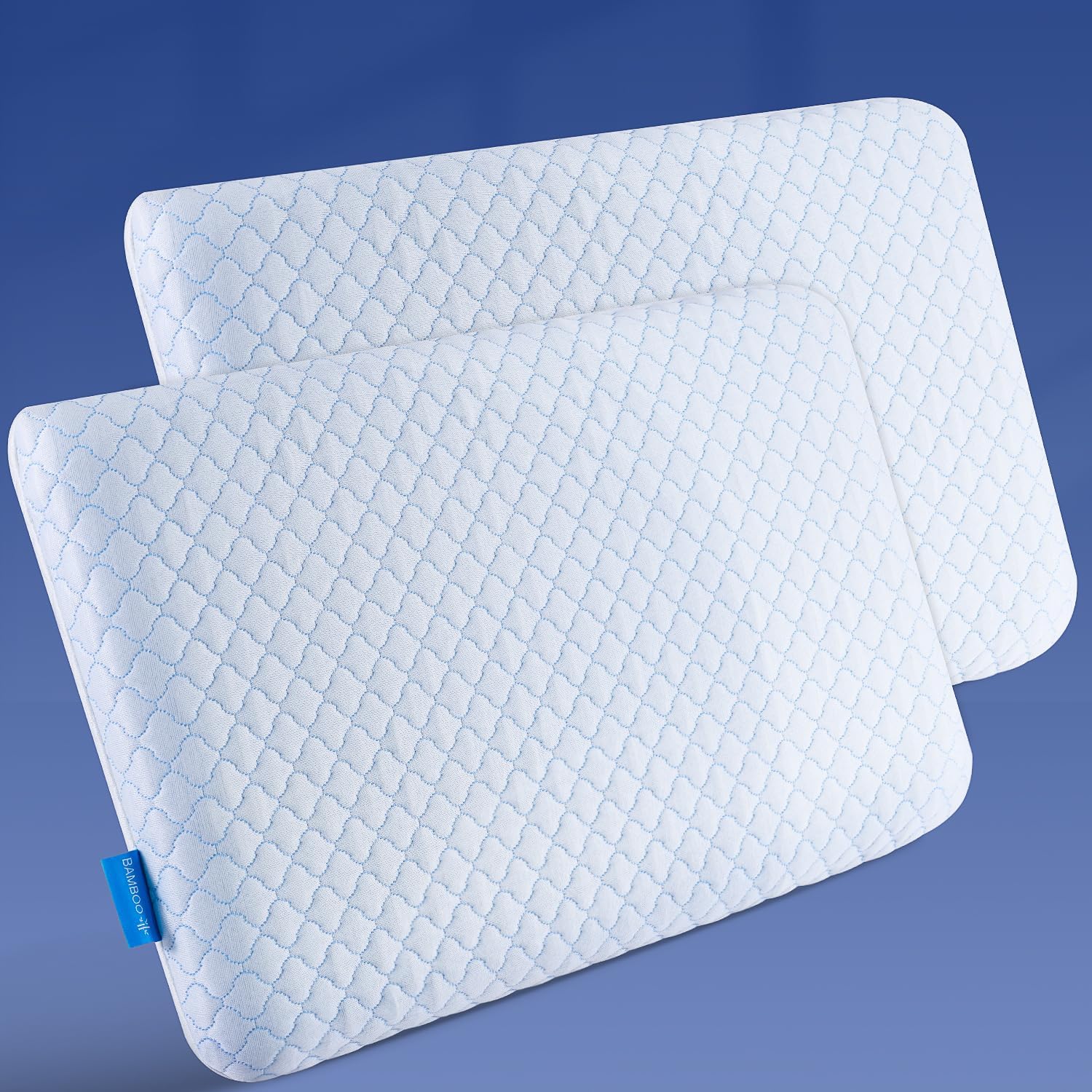
The SofGlowly Ultra Thin Flat Pillows give stomach sleepers a low profile without having to adjust fill or remove layers. Each pillow has 2.75 inches of solid gel-infused memory foam, so the loft stays fixed rather than changing with adjustable filling.
They come as a set of two in a 16 x 25 inch standard size, which is narrower than the usual 20 x 26 inch standard pillow. The smaller footprint may suit stomach sleepers who tuck an arm under the pillow or sleep closer to the edge.
Key Features:
- Ultra-thin 2.75 inch profile. Low enough to keep the head close to the mattress and limit backward neck extension.
- Gel-infused open-cell memory foam. Ventilation holes through the foam help air move rather than sitting trapped under your face.
- Washable cover. Removable and machine washable, so oils and sweat don’t build up in the foam.
- Set of two. One for you and one for a partner, or a spare while the first is in the wash.
- Certified materials. Listed with sustainability certifications for chemicals used in manufacturing.
Cons:
- Fixed loft. No fill to add or remove, so the height either works for you or it doesn’t.
- Not suited to side sleeping. SofGlowly says people who sleep on their side or prefer a taller pillow may want another option.
- Possible new-foam scent. Like many memory foam pillows, it can have a mild odor for the first few days while it airs out.
2. Bluewave Bedding Ultra Slim Gel Memory Foam Pillow
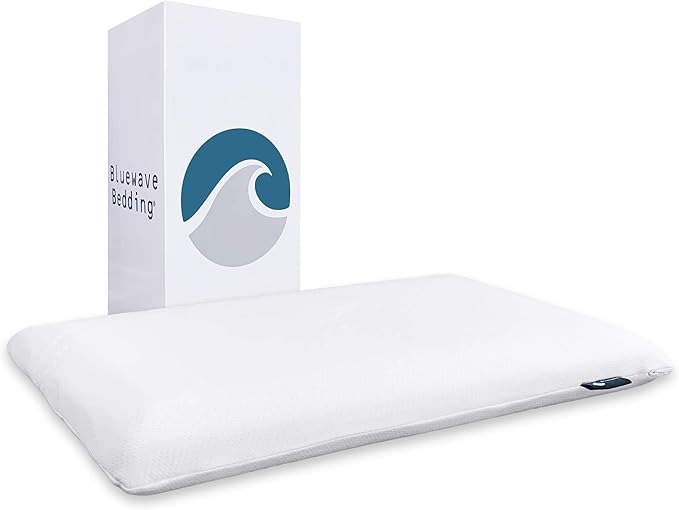
Bluewave’s pillow range focuses on low-profile pillows for stomach sleepers, and the brand describes the Ultra Slim as its most popular height. Made from a single piece of solid gel memory foam, this 2.75 inch thin pillow has a fixed loft that stays more consistent than shredded-fill designs.
Bluewave also offers the same pillow at 1.75, 2.25, 3.25, and 4 inches. If 2.75 inches isn’t quite right, you can move up or down in height without switching to a different pillow design.
Key Features:
- Exact 2.75 inch loft. The solid memory foam is cut to a fixed thickness, so the height doesn’t shift the way shredded fill can.
- Five loft options. Bluewave offers several pillow heights, making it easier to move up or down if 2.75 inches isn’t right for you.
- CertiPUR-US certified gel memory foam. The pillow uses medium-firm 3 lb density foam with gel infusion and ventilation holes to improve airflow.
- Removable, washable cover. The zippered cover is made from 60% polyester and 40% viscose and can be machine washed.
Cons:
- Fixed loft. You can’t add or remove fill, so choosing a different height means exchanging the pillow.
- Smaller than a standard pillow. At roughly 16 x 24 inches, it may look loose inside a larger standard or oversized pillowcase.
- Medium-firm feel. Stomach sleepers who prefer a softer pillow with more sink may find the solid foam too firm.
3. DreamyBlue Signature Adjustable Shredded Memory Foam Pillow
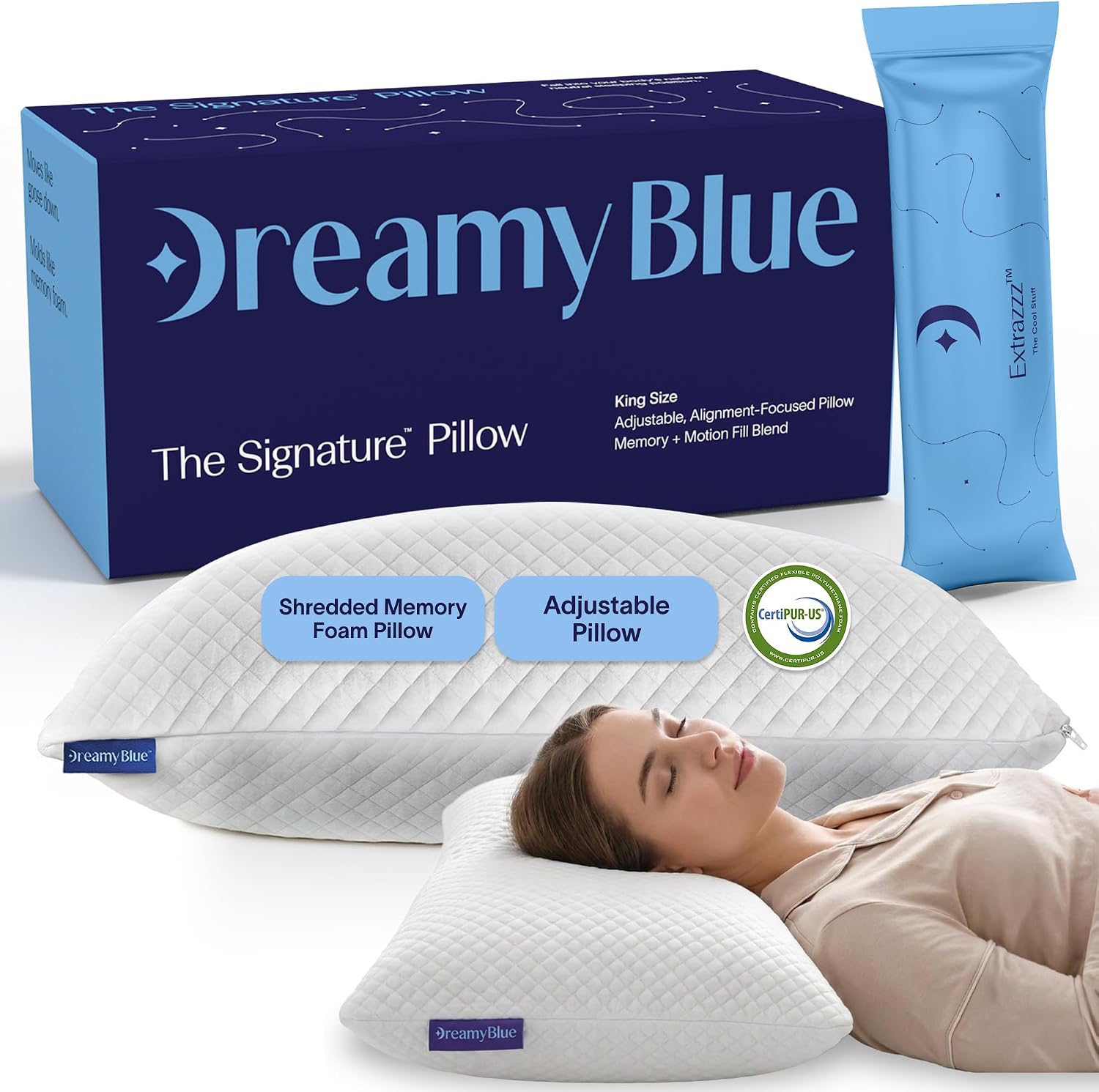
The DreamyBlue Signature takes a different approach from fixed-loft memory foam pillows. It uses cross-cut shredded memory foam blended with down-like poly tufts, and the zippered inner cover lets you remove fill until the pillow reaches a lower height for stomach sleeping.
Key Features:
- Adjustable loft via zipper access. Remove fill until the pillow sits low enough for stomach sleeping.
- Shredded memory foam and poly tuft blend. Moves like down while molding like foam.
- Washable bamboo rayon cover. Soft, breathable, and removable for cleaning.
- CertiPUR-US certified foam. Tested for content, emissions, and durability.
- Bonus fill bag included. Extra fill is included, so you can add height back later if needed.
Cons:
- Too lofty for stomach sleeping out of the box. The pillow arrives at around 4.7 inches, so most front sleepers will need to remove a fair amount of fill before using it.
- May take a few nights to adjust. Finding the right loft can take some trial and error as you remove or add fill.
4. Pancake Pillow Adjustable Layer Pillow
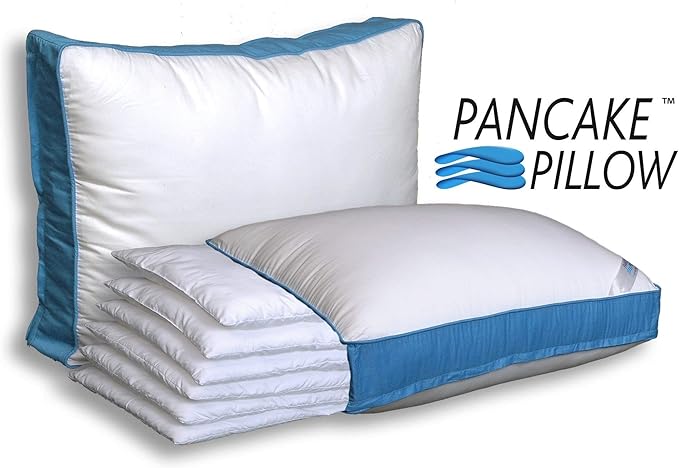
The Pancake Pillow offers adjustable loft without the mess of loose fill. It comes with six soft inner layers inside a zippered cotton case, so you can remove layers until the pillow reaches the height you want.
For many stomach sleepers, one or two layers may be enough to create a low-profile pillow. The unused layers can also be placed in a separate case to make a second thin pillow.
Key Features:
- Six removable inner layers. Add or subtract layers to set your height in clean, repeatable steps.
- 300 thread count 100% cotton case. Zippered on three sides for easy access to the layers.
- Down alternative microfiber fill. Hypoallergenic and soft, with a plush down-like feel rather than a foam feel.
- No loose fill to handle. Adjustment takes seconds and leaves nothing to clean up.
- Machine washable. Wash warm and tumble dry medium.
Cons:
- Higher Price Point: The layered construction costs more than a single thin pillow.
- Finding your layer count takes time. Expect a few nights of testing before you settle.
- Spare layers need storage. Four unused layers have to live somewhere once you’ve thinned it out.
- Down alternative flattens more than foam. The layers need occasional fluffing to keep their height.
5. BLISSBURY Stomach Sleeping Pillow
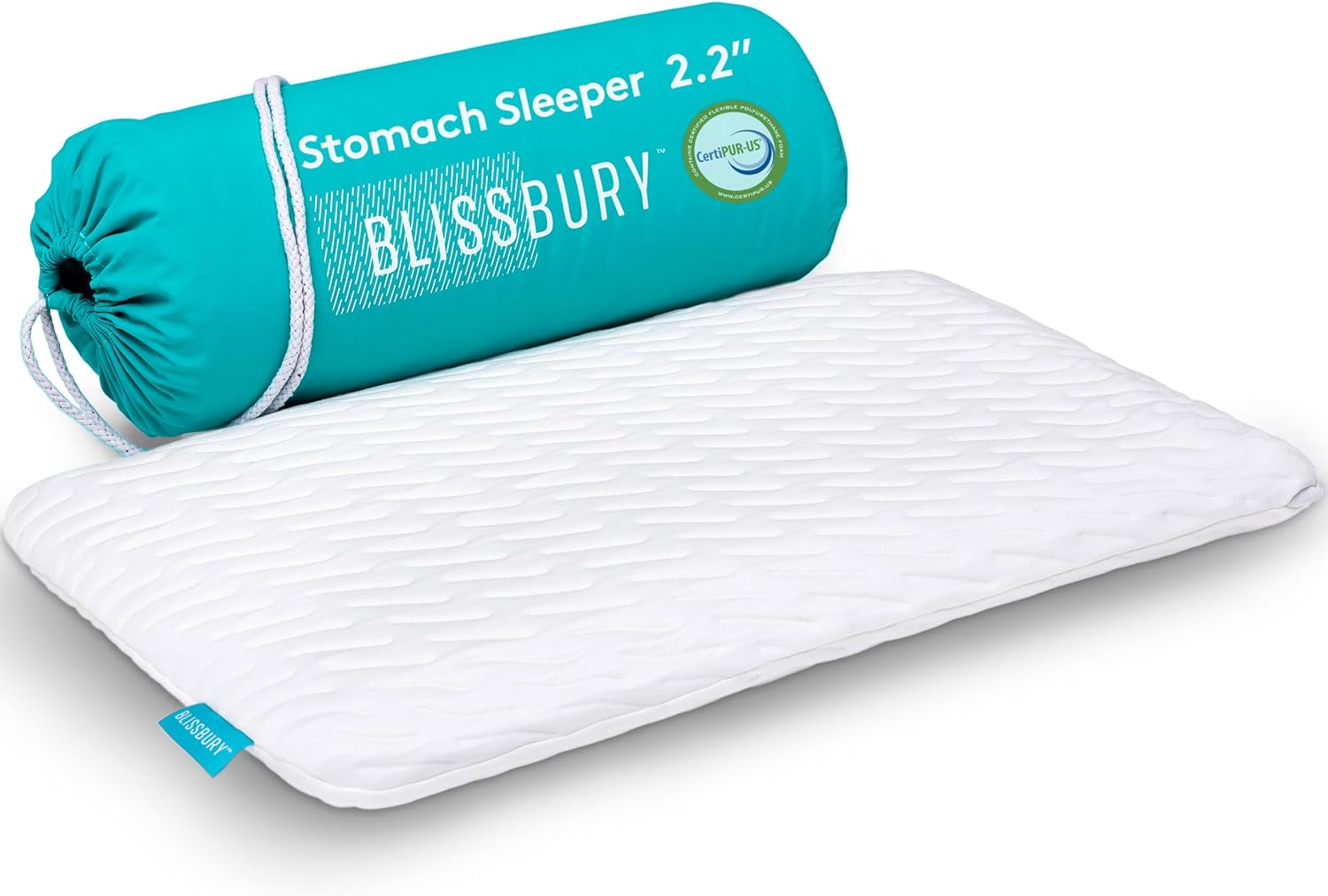
At just 2.2 inches, this is the thinnest pillow on the list. BLISSBURY designed this ultra-thin pillow for stomach and belly sleepers, especially those who still find a 2.5 or 2.75 inch pillow too high for comfortable neck alignment.
It also works well as a travel pillow for stomach sleepers. The pillow comes with a cover and carry bag, making it easier to bring your preferred low-loft pillow when hotel pillows are too thick.
Key Features:
- 2.2 inch ultra flat profile. One of the lowest loft options available, designed for stomach sleepers who need to keep their head close to the mattress.
- Premium 50D memory foam. Dense foam helps prevent the pillow from flattening too much despite its slim 2.2 inch profile.
- Gel-infused with ventilation holes. The gel memory foam and perforated design help improve airflow around the face-down sleeping surface.
- Certified for safety. Uses CertiPUR-US certified memory foam with an OEKO-TEX certified pillowcase.
- Cover and carry bag included. Easy to pack for hotels, holidays, and other travel.
Cons:
- Very flat for some sleepers. At 2.2 inches, anyone who occasionally rolls onto their side will feel the lack of height immediately.
- Not adjustable. The loft is fixed, so there’s no fine-tuning.
- Possible new-foam scent. New memory foam can carry a mild smell for the first few days.
6. Coop Home Goods Eden Adjustable Pillow
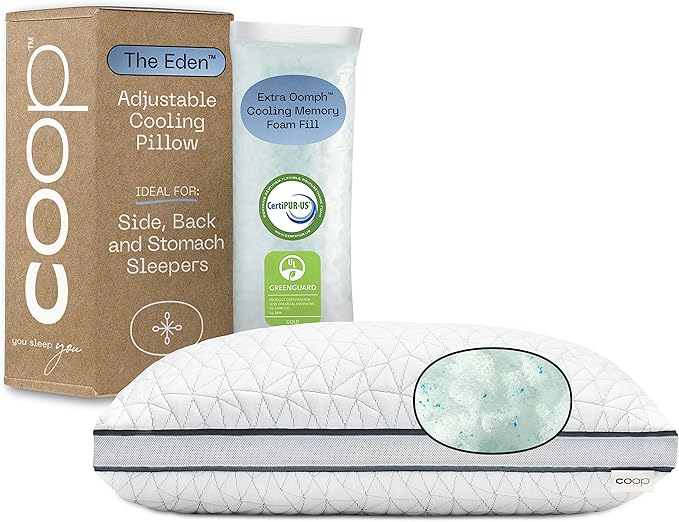
The Coop Eden is the premium adjustable pillow on this list, with more attention paid to materials and construction. Its fill combines gel-infused cross-cut memory foam with microfiber, giving it a softer, lighter feel than shredded memory foam.
Gusseted edges help keep the pillow’s loft more even from edge to edge. For stomach sleepers, that can reduce the raised center and flatter sides that some adjustable pillows develop.
Key Features:
- Fully adjustable fill. Unzip and remove fill until the loft suits stomach sleeping.
- Gel-infused memory foam and microfiber blend. Softer and more breathable than solid or plain shredded foam.
- Gusseted edge construction. Even support across the pillow rather than a domed center.
- Lulltra cover. A breathable polyester and rayon blend that’s removable and machine washable.
- CertiPUR-US and GREENGUARD Gold certified. Third-party lab tested for emissions and content.
- Extra fill bag included. A half pound of additional fill ships with the pillow.
Cons:
- Ships at a side-sleeper loft. Front sleepers will remove a substantial amount of fill before the first night.
- Higher price point. More expensive than the fixed-loft foam pillows on this list.
- Adjustment takes experimentation. Reaching your ideal firmness and height may mean several rounds of removing fill.
Caring for Your Front Sleeper Pillow
Proper care can help your pillow retain its shape and remain comfortable for longer.
- Fluff it regularly: Down, down-alternative, and shredded foam pillows may need frequent fluffing to redistribute the fill and prevent clumping.
- Use a pillow protector: A washable protector limits contact with sweat, skin oils, moisture, and dust.
- Check the care label: Washing instructions vary by fill. Some pillows can go in the washing machine, while solid memory foam and latex pillows usually require spot cleaning.
- Replace it when support declines: Replacement schedules vary, so judge the pillow by its condition rather than its age alone. Sagging, permanent lumps, odors, or discomfort can indicate that it is time for a new one.
- Let it air out: Place the pillow in a dry, well-ventilated area occasionally, provided this is consistent with the manufacturer’s instructions.
- Store it without compression: Keep the pillow flat or loosely stored so the fill and foam aren’t crushed for long periods.
A pillowcase and protector provide two washable layers between your skin and the pillow. However, they should still be cleaned as directed to prevent moisture and oils from accumulating.
How to Transition From Front Sleeping
Stomach sleeping can place the neck in a rotated position and increase the arch in the lower back.
If this position causes recurring discomfort, gradually moving to your side may reduce the amount of neck rotation required during the night. Your symptoms and sleep needs can also help determine which of the best sleeping positions is more suitable.
- Begin on your side: Settle into a comfortable side-sleeping position at bedtime, even if you occasionally move onto your stomach later.
- Use a body pillow: Holding a full-length pillow can support the upper leg and make it harder to roll fully onto your stomach.
- Place a pillow behind your back: This creates a physical barrier that may help you remain on your side.
- Adjust your head pillow: Side sleeping generally requires more loft than stomach sleeping, so your current thin pillow may not adequately fill the space between your head and shoulder.
- Allow time to adapt: Sleep-position habits can take time to change, and returning to your usual position during the night is common.
If you continue to experience neck or lower back pain, speak with a doctor or physical therapist. People with snoring or obstructive sleep apnea should also seek medical advice before switching to back sleeping, since this position can worsen airway obstruction for some people.
Final Thoughts
The best pillow for a front sleeper is usually thin enough to limit backward neck extension while still providing comfortable cushioning. Your body size, mattress firmness, and preferred fill will influence which option feels best, so the pillows listed above provide a useful place to begin.
If a sleep trial is available, use that time to assess how your neck and shoulders feel in the morning. The right pillow won’t remove the neck rotation caused by stomach sleeping, but it can help you rest in a more comfortable position and reduce unnecessary strain.
Frequently Asked Questions
What is the best pillow thickness for stomach sleepers?
Stomach sleepers generally benefit from pillows that are 3 inches thick or less when compressed. This low profile helps maintain proper spinal alignment and reduces neck strain.
Can memory foam pillows work for front sleepers?
Yes, memory foam pillows can be excellent for front sleepers, especially those with shredded or adjustable fill. Look for low-profile options or pillows that allow you to remove excess filling.
How often should I replace my pillow as a stomach sleeper?
It’s generally recommend replacing pillows every 1-2 years, regardless of sleeping position. However, stomach sleepers may need to replace pillows more frequently if they lose their shape or support.
Are down pillows good for stomach sleepers?
Down pillows can work for stomach sleepers if they’re thin enough. Look for low-loft down pillows or consider down choice options that may offer more consistent support.
Can the wrong pillow cause neck pain for stomach sleepers?
Absolutely. Using a pillow that’s too thick or firm can force your neck into an unnatural position, leading to pain and stiffness.
This is why choosing the right pillow is crucial for front sleepers.
Is it possible to find a pillow that works for both stomach and side sleeping?
Yes, adjustable pillows like the Pancake Pillow or Coop Home Goods Eden can be customized to work for many sleep positions. This makes them ideal for combination sleepers or those transitioning away from stomach sleeping.
How can I make my current pillow more suitable for stomach sleeping?
If your current pillow is too thick, try removing some of the filling (if possible) or compressing it overnight with a heavy object. You can also try folding a thin pillow in half for added support under your chest.
Are cooling pillows necessary for stomach sleepers?
While not strictly necessary, many stomach sleepers find cooling pillows useful. Front sleeping can trap heat between your face and the pillow, so cooling technologies can help prevent overheating.
Can stomach sleeping cause wrinkles?
Some studies suggest that stomach sleeping may contribute to the formation of facial wrinkles because of the constant pressure on your face.
A smooth pillowcase for face wrinkles can reduce friction against the skin, although it cannot remove the facial compression caused by stomach sleeping.
Key Takeaways:
- Front sleepers need thin, supportive pillows to maintain proper spinal alignment
- Look for pillows with adjustable loft, cooling properties, and comfortable materials
- Consider transitioning to side or back sleeping for optimal spinal health
- Replace your pillow every 1-2 years to ensure continued support and comfort

Sleep Essentials Hub is a sleep blog for readers who want helpful sleep guides and honest product recommendations. We’re passionate about better rest, with a focus on pillows and bedding, sleep aids, sleep apnea and CPAP gear, natural sleep supplements, sleep tech, and simple ways to improve your sleep environment. We’re here to help you choose products that support deeper sleep, greater comfort, and a better night’s rest without overspending.