
Insomnia vs. Bad Sleep Schedule: Wide Awake at 3am?
You’re lying awake, staring at the ceiling, listening to the clock tick, and your brain won’t shut off. Is this insomnia, or is it just the result of a disrupted sleep schedule?
Understanding the difference between a bad sleep schedule and insomnia is more important than many people realize. Misinterpreting a bad sleep schedule as insomnia, or worse, dismissing true insomnia as merely “a couple of bad nights,” can trap you in a cycle of tiredness that worsens over time.
Identifying whether you’re dealing with a bad sleep schedule or insomnia can mean the difference between needing a simple lifestyle change or requiring actual medical assistance. The silver lining is that both conditions can be greatly improved with natural remedies and consistent habits, once you understand what you’re really facing.
Key Takeaways
- Insomnia is a medically recognized condition, not just a temporary period of poor sleep. It’s estimated that close to 30% of U.S. adults suffer from some form of insomnia.
- While a disrupted sleep schedule and insomnia may appear similar, they have different causes and solutions.
- Many sleep issues begin with habits that you may not even realize are disrupting your body’s natural rhythm. There’s a simple way to identify which issue you’re experiencing.
- Chronic insomnia is defined as having difficulty sleeping at least three times per week for three or more months. Anything less than this may just be poor sleep hygiene.
- There are natural strategies backed by scientific evidence that can help with both conditions. However, the first step is to identify which condition you’re dealing with.
What is Insomnia?
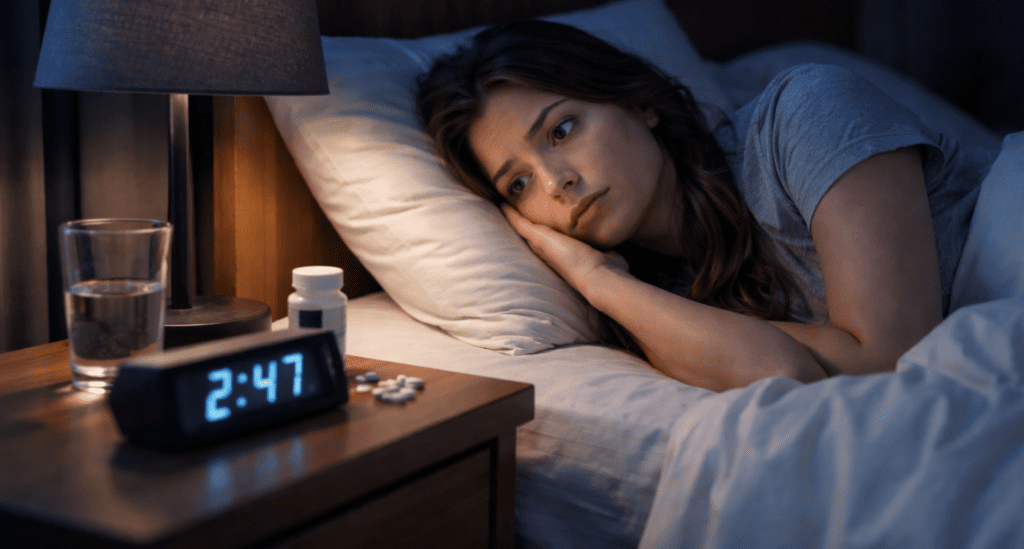
Insomnia isn’t just about feeling sleepy or struggling to fall asleep occasionally. It’s a bona fide sleep disorder that involves ongoing trouble getting to sleep, staying asleep, or waking up too early, even when you have plenty of time and the right conditions to sleep.
The Misunderstood Clinical Term
The term “insomnia” is often used incorrectly by many people. According to the clinical definition in sleep medicine, insomnia is a sleep disorder that causes significant daytime impairments.
These impairments include fatigue, mood swings, difficulty focusing, and low energy levels. Insomnia is not just about being a night owl or staying up late because of phone usage. For it to be considered insomnia, the lack of sleep must be persistent, unwanted, and disruptive to your daily life.
Short-term vs. Long-term Insomnia
There are two types of insomnia, and knowing the difference between them is key to setting achievable goals for improvement.
- Acute insomnia is a short-term condition often caused by a stressful life event, such as a job interview, a breakup, or a significant life change. It can last anywhere from one night to several weeks. Most people recover once the stressful event has passed, although in some cases it can develop into a more long-term condition.
- Long-term insomnia is the more severe type. It means having trouble sleeping at least three nights a week for at least three months. This is the kind that really needs a structured approach to treatment, whether that’s cognitive behavioral therapy for insomnia (CBT-I), natural sleep aids, or seeing a doctor.
The Impact of Insomnia: More Than Just Fatigue
Insomnia’s impact extends far beyond simply feeling tired. Those who suffer from chronic insomnia often struggle with mood swings, impaired immune response, memory and concentration difficulties, and a decreased overall quality of life.
It can also exacerbate pre-existing health issues, creating a vicious cycle that makes both sleep and health more challenging to manage. This is why it’s crucial to address insomnia promptly and with the right strategy.
What is a Bad Sleep Schedule?
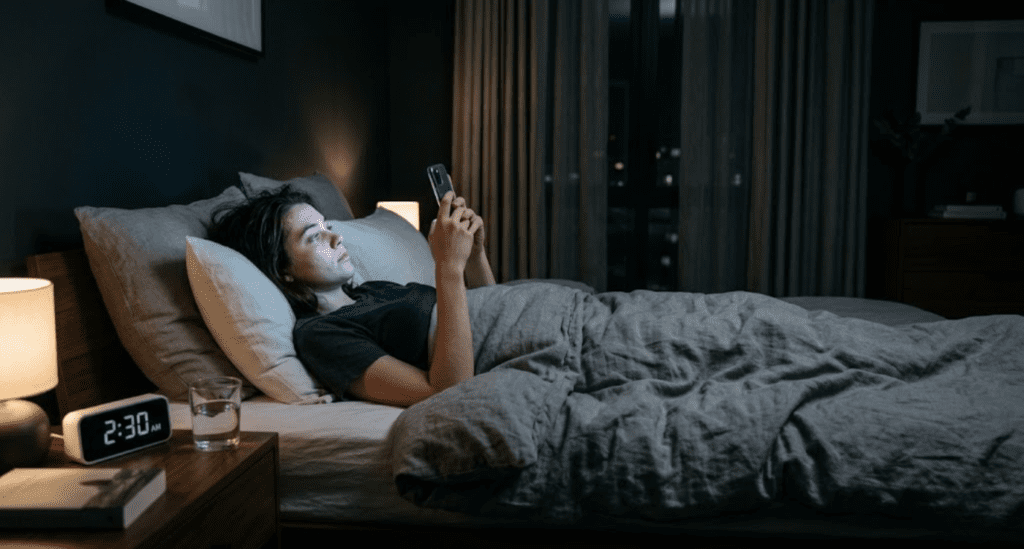
When we talk about a bad sleep schedule, we’re referring to the fact that the times you go to sleep and wake up are erratic, inconsistent, or don’t line up with your body’s internal clock.
This is a behavioral problem rather than a physiological one, unlike insomnia, so it’s usually possible to address it by changing your habits.
Your body operates on a circadian rhythm, an internal clock of about 24 hours that determines when you feel tired and when you feel awake.
When you frequently change your daily routine such as sleeping late on weekends, staying up late, or taking naps at irregular times, then you give conflicting messages to that internal clock. The outcome feels much like insomnia, but the underlying cause is very different.
Bad Sleep Schedule vs. Insomnia
A bad sleep schedule can be caused by habits and behaviors that interfere with sleep, such as using electronic devices before bed, drinking caffeinated beverages in the evening, or sleeping in a room that is too hot or too bright.
Insomnia, on the other hand, is a more serious condition where there is a real mismatch between when your body wants to sleep and when you need to be awake. Both can lead to significant sleep problems, but both can be managed without the use of drugs.
Usual Habits That Ruin Your Sleep Schedule
Some of the most usual sleep-ruining habits are so regular that people don’t even see them as issues. Here’s what to look out for:
- Inconsistent bed and wake times can throw off your circadian rhythm, and even a one to two hour difference on weekends can have an effect. Using a sleep debt calculator can help you see how those schedule changes add up.
- Blue light exposure from phones, tablets, or TVs within an hour of bedtime, which suppresses melatonin production. Using blue-light blocking glasses before bed may help
- Consuming caffeine after 2 p.m., which has a half-life of around five to six hours and can delay sleep onset. To find your best cutoff time, try our caffeine cutoff calculator.
- Long or late day naps can lower sleep pressure and make it harder to fall asleep at night. You can use this nap calculator to work out the best nap length and timing.
- Eating large meals close to bedtime, which activates digestion and raises core body temperature
- Irregular exposure to natural light is one of the strongest cues for resetting your internal clock. If morning sun isn’t always accessible, a quality light therapy lamp can serve as a practical alternative for anchoring your circadian rhythm.
Key Differences Between Insomnia and a Bad Sleep Schedule
Insomnia and a bad sleep schedule can look very similar at first. You are not sleeping well, you feel tired during the day, and bedtime starts to feel frustrating. But the cause is different, and that changes what usually helps.
Duration of the Issue
Once you start making consistent changes, a bad sleep schedule will often improve fairly quickly.
A lot of people notice a clear change within one to two weeks of sticking to a fixed sleep and wake time. Insomnia is different because it sticks around. It usually does not improve just because you went to bed at the same time for a few nights in a row.
How long the problem has been going on is often one of the first signs that helps separate the two.
Does Your Sleep Environment Matter?
For those with a bad sleep schedule, improving their sleep environment can often lead to better sleep.
This can include things like lowering the room temperature, using blackout curtains, adding white noise, and eliminating screen time. This works because the body’s sleep system is functioning; it just needs the right conditions and consistency to work properly.
If you’re suffering from real insomnia, making changes to your environment can help, but it’s unlikely to completely solve the issue.
Often, the brain has been conditioned to become overly alert around sleep – this means that the bedroom can actually make you feel more awake rather than sleepy. This is a main sign that differentiates a problem with your schedule from a real sleep disorder.
What Happens When You Try to Rectify the Issue
The best way to tell the difference between the two is by trying to adjust your sleep schedule.
If you start going to bed and waking up at the same time every day, avoid caffeine in the evening, get some sunlight in the morning, and establish a relaxing bedtime routine, and you find that your sleep improves within a couple of weeks, then you probably just had a bad sleep schedule.
If you do all of this and you’re still lying awake for hours, waking up multiple times throughout the night, or feeling unrefreshed no matter how much sleep you get, then it’s more likely that you have insomnia and you should look into it further.
What Triggers Insomnia?
Insomnia doesn’t just pop up out of the blue. It usually has recognizable triggers, and knowing what those triggers are is key to treating the condition effectively, whether through natural remedies, behavior therapy, or medical treatment.
The reasons for this can be psychological or physiological, and in many cases, there are several overlapping factors. This complexity is part of why insomnia can be so persistent even when people are really trying to improve their sleep.
Mental Health Disorders and Stress
Mental health issues and stress are some of the biggest drivers of insomnia. Stress is one of the main causes of short-term insomnia, and when that stress keeps going, the insomnia can become chronic.
Anxiety keeps the nervous system in a constant state of low-level alertness that is fundamentally incompatible with sleep. Depression also disrupts the structure of sleep – often causing early morning awakening rather than difficulty falling asleep, which is a clinically useful distinction.
Insomnia and mental health are interrelated. A lack of sleep can exacerbate feelings of anxiety and depression, and vice versa. To break this cycle, it’s often necessary to tackle both issues at the same time.
This is why mindfulness, breathwork, and cognitive behavioral techniques can help, since they work on calming the nervous system.
The Navy SEAL breathing technique is one simple, evidence-adjacent method for downregulating before bed that many people find surprisingly effective.
Drugs That Can Disturb Your Sleep
Many commonly prescribed drugs have insomnia as a side effect. These include some antidepressants, beta-blockers for blood pressure, corticosteroids, stimulant-based ADHD drugs, and some thyroid drugs.
If you noticed your sleep issues started or got worse when you started a new drug, it’s worth talking to your doctor about this before you assume you have a primary sleep disorder.
Health Problems That Can Cause Insomnia
There are many health problems that can lead to sleep disruption. In these cases, the best way to improve sleep is to treat the underlying health problem. If your insomnia is caused by a physical health problem, it’s unlikely that changes to your sleep hygiene alone will fix the problem.
Long-term pain conditions such as arthritis or fibromyalgia can make it physically challenging to remain comfortable throughout the night. Breathing problems like asthma or sleep apnea disrupt the sleep cycle repeatedly, even if the person doesn’t fully awaken.
Hormonal shifts, particularly during perimenopause and menopause, can cause significant insomnia that is largely physiological.
Typical Health Issues Linked to Insomnia
Issue How It Affects Sleep Anxiety & Depression Hyperarousal, waking up early, racing thoughts Chronic Pain Physical discomfort stops sustained sleep Sleep Apnea Repeated breathing pauses fragment sleep cycles Hormonal Imbalances Night sweats and hormonal changes disrupt deep sleep Thyroid Disorders Hyperactive thyroid causes hyperarousal and restlessness GERD / Acid Reflux Lying down makes symptoms worse and disrupts sleep onset
How to Determine Which One You Have
The most effective way to determine which issue you’re struggling with is to conduct a truthful two-week sleep reset test.
Fully commit to a set wake time every day (including weekends), get natural light within 30 minutes of waking, cut out caffeine after noon, and establish a regular 30-minute wind-down routine before bed. Monitor how you feel at the end of those two weeks.
Should you notice a substantial improvement, it’s safe to assume that your sleep schedule was the primary problem. If, despite your best efforts, you’re still having a tough time most nights, it’s probable that there’s a more serious underlying issue.
Regardless of the outcome, this experiment provides you with concrete data, rather than leaving you to speculate.
How to Tell If It’s a Sleep Schedule Issue
When you take a closer look at a sleep schedule problem, you’ll notice a distinct pattern. You’ll likely sleep better when you’re physically tired or when you manage to maintain a regular bedtime.
If your sleep troubles are more severe on Sunday nights or after you’ve traveled across time zones, it’s a clear sign of a circadian misalignment rather than a clinical disorder.
It’s also possible that when your life is less hectic, such as on vacation with no alarm and no stress, you sleep pretty well. This is a good sign that your sleep system is working; it’s just being constantly interrupted by your lifestyle habits.
How to Tell If It’s Insomnia
Insomnia has its own unique characteristics. You head to bed at a decent time, you’re honestly fatigued, there’s no clear reason why you’re still awake, but sleep remains elusive.
Or you have no trouble falling asleep but find yourself wide awake at 2 or 3 in the morning, your thoughts running wild, and no matter what you do, you can’t fall back asleep. This issue continues night after night, week after week, no matter how tired you are.
Other signs include waking up feeling unrefreshed even after a full night’s sleep, having difficulty concentrating or mood swings during the day, and feeling anxious or dreading bedtime because you anticipate having trouble sleeping.
That last one, sleep-related anxiety, is a clinical sign of insomnia and indicates that the brain has developed a conditioned response to the bedroom.
If anxiety around sleep is a big factor for you, weighted blankets are one sleep aid that some people find helpful for easing that tension before bed.
When to Consult a Healthcare Provider
If you have been dealing with sleep problems for more than three months, if it is happening at least three nights a week, and if it is affecting how you function during the day even after trying to improve your sleep habits, it may be time to speak with a healthcare provider.
It’s also worth getting help if you think something else could be behind it, such as sleep apnea, a new medication, anxiety, or depression.
A 2012 comparative effectiveness review found that CBT I produced more durable improvements than sleep medication, especially at follow up 6 months or later. A healthcare provider can help you access this treatment.
Don’t Assume the Worst, Fix Your Sleep Schedule First
Before you start self-diagnosing, try a full reset of your sleep schedule. Most people have never truly committed to maintaining a regular sleep schedule. They’ve tried it for a few nights and then stopped. It’s worth giving the strategies below a real shot for at least two weeks before you make any conclusions.
- Wake up at the same time every day. Choose a time and stick to it every day, including weekends, no exceptions.
- Get some morning sunlight. Go outside within 30 minutes of waking for at least 10 minutes to set your circadian rhythm.
- Stop drinking caffeine by noon. Caffeine has a half-life of five to six hours, meaning an afternoon coffee is still active in your system at bedtime.
- Develop a pre-sleep routine. A consistent 30-minute pre-sleep routine (dim lights, no screens, light stretching or reading) tells your brain that sleep is coming. If you struggle to wind down on your own, a device like the Dodow uses a paced light rhythm to slow your breathing and ease the transition to sleep.
- Keep your bedroom cool and dark. Core body temperature needs to drop to initiate sleep; aim for 65 to 68 degrees Fahrenheit
- Avoid long or late naps. If you nap, keep it under 20 minutes and before 2 p.m. to preserve nighttime sleep pressure
- Try magnesium glycinate. This form of magnesium supports the nervous system’s ability to downregulate and is one of the most widely used natural sleep aids, typically taken 30 to 60 minutes before bed
Two weeks of doing this consistently will tell you more than guessing will. If your sleep improves in a noticeable way, the issue was more likely your schedule.
If you followed through and still struggled most nights, that points more toward insomnia, and it’s a good idea to speak with a healthcare provider about what to do next.
Frequently Asked Questions
Can a poor sleep schedule eventually lead to insomnia?
A poor sleep schedule can contribute to insomnia, but it is not the only cause. Insomnia means difficulty falling asleep, staying asleep, or waking too early despite having the chance to sleep, and irregular sleep timing can make that more likely by disrupting the sleep-wake cycle. In some cases, the main problem is a circadian rhythm disorder rather than insomnia, or both can overlap.
What constitutes insomnia?
Insomnia is a sleep disorder involving repeated trouble falling asleep, staying asleep, or waking too early, even when there is enough opportunity to sleep. It also typically causes daytime effects such as fatigue, poor concentration, low mood, or reduced functioning. A common clinical benchmark is symptoms at least 3 nights a week, and chronic insomnia means this has lasted 3 months or longer.
Is it possible to have both insomnia and a poor sleep schedule simultaneously?
Yes, it is possible to have both at the same time. A person can have an irregular or delayed sleep schedule and also have persistent difficulty sleeping during the time they are trying to sleep. In practice, clinicians often consider whether the problem is insomnia, a circadian rhythm disorder, or a combination of both because treatment can differ.
Can insomnia disappear by itself?
Yes, insomnia can sometimes resolve on its own, especially when it is short-term and linked to stress, illness, travel, or temporary schedule disruption. However, it can also persist and become chronic, particularly if unhelpful sleep habits or other medical, mental health, or sleep conditions are involved. Ongoing symptoms should not be assumed to go away without evaluation.
What should you do first if you suspect you have insomnia?
The first step is to track the pattern clearly and discuss it with a doctor or other qualified clinician if it is affecting daytime function or happening regularly. A sleep diary for about 1 to 2 weeks can help show bedtime, wake time, awakenings, naps, caffeine, alcohol, and medicines, which are all relevant to diagnosis. Clinicians usually review sleep habits, symptoms, medical and mental health history, and possible causes before deciding on treatment.
Health Disclaimer: The information on this page is for educational purposes only and is not intended as medical advice, diagnosis, or treatment. Sleep experiences vary from person to person, and nothing here should replace guidance from a qualified healthcare provider. If you are experiencing persistent sleep difficulties, mental health concerns, or symptoms you believe may be linked to an underlying condition, please consult a licensed physician or sleep specialist.

Sleep Essentials Hub is a sleep blog for readers who want helpful sleep guides and honest product recommendations. We’re passionate about better rest, with a focus on pillows and bedding, sleep aids, sleep apnea and CPAP gear, natural sleep supplements, sleep tech, and simple ways to improve your sleep environment. We’re here to help you choose products that support deeper sleep, greater comfort, and a better night’s rest without overspending.