
Why Do I Drool In My Sleep? Tips to Stop Nighttime Drooling
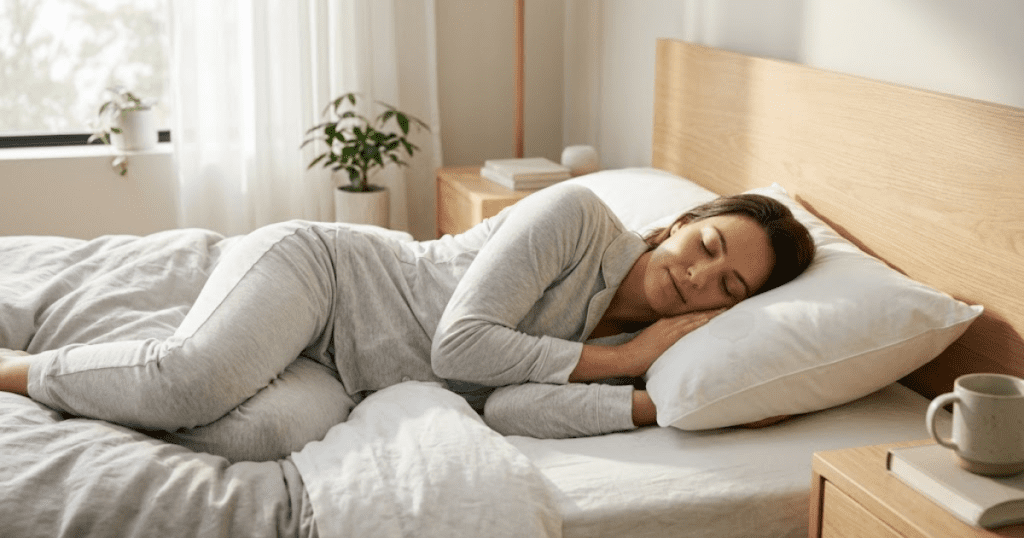
Drooling in sleep is more common than most people think, but a wet pillow every morning can be a sign that something about sleep position, breathing, or pillow support is off.
When the facial muscles relax during sleep, the mouth can fall open and saliva may escape instead of being swallowed.
Side sleepers often notice it more because gravity pulls saliva toward the pillow. Mouth breathers may wake up with drool, a dry mouth, or a sore throat. And when neck pain or shoulder tension shows up too, the pillow may not be keeping the head and jaw supported through the night.
That doesn’t mean the pillow is always the only cause. But if the drooling happens alongside poor neck alignment, a flat pillow, or an awkward sleeping angle, it’s worth paying attention to the support under the head.
Quick recommendation
For side and back sleepers who wake up with drool, neck tension, or a pillow that feels too flat, the Derila Ergo is worth considering. Its contoured memory foam design supports the natural curve of the neck and may help keep the head in a more stable position overnight.
Check Price of Derila Ergo →
Disclosure: This article contains affiliate links. We may earn on qualifying purchases at no extra cost to you. Read more.
What Causes Drooling During Sleep?
Drooling during sleep, also known as sialorrhea, usually happens when saliva leaves the mouth instead of being swallowed. In most everyday cases, it’s not because the body is making too much saliva. It’s more often a mix of relaxed facial muscles, open-mouth sleeping, gravity, and sleep position.
Facial Muscle Relaxation During Deep Sleep
During deeper sleep stages and REM sleep, the muscles around the jaw, lips, tongue, and throat become less active. This is a normal part of sleep, but it can also make the mouth more likely to fall open.
When the lips relax and the swallowing reflex slows down, saliva can pool near the front or side of the mouth. If the head is turned sideways, that saliva has a much easier path onto the pillow.
Why Saliva Pools When the Mouth Falls Open
Most people produce less saliva during sleep than they do while awake. That is why nighttime drooling is usually not a “too much saliva” issue.
The bigger issue is often mouth position. A relaxed jaw, blocked nose, poor sleep posture, or unsupportive pillow can all encourage open-mouth sleeping. Once the mouth stays open, saliva is more likely to escape instead of being swallowed naturally.
Is Drooling in Your Sleep Normal?
Occasional drooling is normal, especially during deep sleep, side sleeping, allergies, or a stuffy nose. It can also happen after an especially tiring day, when the body falls into deeper sleep and the jaw relaxes more than usual.
Drooling deserves more attention when it starts suddenly, happens during the day, comes with loud snoring or gasping, or appears alongside trouble swallowing, facial weakness, or speech changes. Those signs are worth discussing with a healthcare professional.
Common Reasons You Wake Up With Drool on Your Pillow
Most nighttime drooling traces back to one or more everyday triggers. The sections below cover the most common causes, starting with sleep position.
Sleeping on Your Side or Stomach
Side sleepers and stomach sleepers are more likely to wake up with drool on the pillow because gravity is working against them. When the head turns to one side and the jaw relaxes, saliva can drain out of the corner of the mouth.
Side sleeping can be comfortable, but pillow loft matters. If the pillow is too low, the head drops toward the mattress. If it is too high, the neck bends upward. Both positions can affect jaw position and make open-mouth sleeping more likely.
Stomach sleeping can be even tougher on the neck. The head usually has to twist to one side, which can strain the cervical spine and encourage the mouth to fall open against the pillow.
For a deeper look at position changes, read our guide to the best sleeping positions.
Mouth Breathing While Sleeping
Mouth breathing is one of the biggest reasons saliva escapes during sleep. When the lips stay parted, saliva has a clear path out of the mouth.
This often happens when nasal breathing is harder than usual. A blocked nose, allergies, dry air, sinus pressure, a deviated septum, or chronic congestion can all push the body toward mouth breathing at night.
Common signs include waking up with a dry mouth, sore throat, bad breath, cracked lips, or a wet pillow. Snoring may also show up because the mouth and throat tissues are more relaxed.
Nasal Congestion, Allergies, and Blocked Sinuses
A stuffy nose can turn a normal sleeper into a mouth breather. Seasonal allergies, dust, pet dander, mold, dry air, and sinus irritation can all make nasal airflow worse at night.
When the nose is blocked, the mouth opens to bring in more air. From there, drooling becomes easier because saliva is no longer contained behind closed lips.
A humidifier, saline spray, nasal strips, allergen control, and cleaner bedding can all help support easier nasal breathing. Our guide to the best bedroom humidifiers for sinus problems covers options for dry air and congestion.
Snoring and Open-Mouth Sleeping
Snoring and drooling often overlap because both can involve an open mouth and relaxed jaw. When air moves through relaxed tissues in the throat, those tissues can vibrate and create snoring. At the same time, saliva can escape more easily.
Not all snoring is serious. Occasional snoring during a cold or allergy flare-up is common. Loud snoring, gasping, choking, witnessed pauses in breathing, or severe daytime fatigue can be signs of possible sleep apnea and should be discussed with a doctor.
For non-medical snoring tips, see our guide on natural remedies to stop snoring.
Poor Pillow Support and Neck Alignment
A pillow can make drooling worse when it does not keep the head, neck, and jaw in a comfortable position.
A pillow that is too flat may let the head sink and the chin tilt down. A pillow that is too high may push the head forward. A pillow that is too soft may collapse during the night, forcing the neck and jaw to keep adjusting.
For side sleepers, the pillow should fill the space between the shoulder and ear. For back sleepers, it should support the natural curve of the neck without pushing the chin toward the chest.
If drooling comes with morning neck pain, shoulder tension, or a pillow that no longer holds its shape, pillow support is worth looking at closely.
Acid Reflux
Acid reflux can sometimes increase saliva in the mouth because saliva helps neutralize acid. If reflux flares at night, extra saliva may pool while the body is lying down.
This can be more noticeable after heavy meals, spicy food, alcohol, or eating too close to bedtime. Some people also notice a sour taste, throat irritation, coughing, or hoarseness in the morning.
A wedge pillow or slight head elevation may help some people with nighttime reflux symptoms. Our guide to the best wedge pillows for sleep apnea also covers elevated pillow styles used for breathing and positioning support.
Medications
Some medications can increase saliva production or affect muscle control. These may include certain antipsychotics, anticonvulsants, antidepressants, muscle relaxants, and cholinesterase inhibitors.
If drooling began after starting or changing a medication, speak with the prescribing doctor. Do not stop or adjust medication without medical guidance.
Sleep Disorders and Medical Conditions
Sleep disorders can contribute to drooling when they affect breathing, muscle tone, or how often the body wakes during the night. Sleep apnea, snoring disorders, and disrupted swallowing patterns can all play a role.
Less commonly, drooling can be linked to neurological conditions that affect the muscles of the face, mouth, or throat. Parkinson’s disease, stroke, multiple sclerosis, cerebral palsy, and Bell’s palsy are examples.
Persistent, unexplained drooling with daytime symptoms, facial weakness, speech changes, or trouble swallowing needs medical evaluation.
Can the Wrong Pillow Make Drooling Worse?
Yes, the wrong pillow can make nighttime drooling worse for some people, especially when drooling happens with side sleeping, mouth breathing, neck pain, or jaw slackening.
The pillow controls more than comfort. It influences head angle, jaw position, neck alignment, and how stable the body stays through the night.
When a pillow is too flat, the head can drop and the jaw may fall open. When a pillow is too tall, the chin can tuck forward and the airway may feel more restricted. When a pillow collapses, the head shifts around and the neck loses support.
For side sleepers, pillow height matters because the pillow needs to fill the space between the shoulder and the ear.
If it doesn’t, the head can tilt downward and the jaw may fall open. That can leave you sleeping with your mouth open, which may make drooling more likely.
This is where a contoured memory foam pillow can help. It won’t stop drooling the way a medical treatment would. The idea is to keep your head and neck better supported, so your mouth and jaw are less likely to end up at an awkward angle while you sleep.
Derila Ergo is designed to help with that. It has a butterfly-shaped contour that supports the neck’s natural curve while cradling the head. The memory foam also holds its shape better than a flat fiber-fill pillow, which can help side and back sleepers who need a pillow that doesn’t flatten as much.
For a broader look at foam and contour, read our guide on whether memory foam pillows are good for neck pain.
Best Pillow for Drooling, Mouth Breathing, and Neck Support
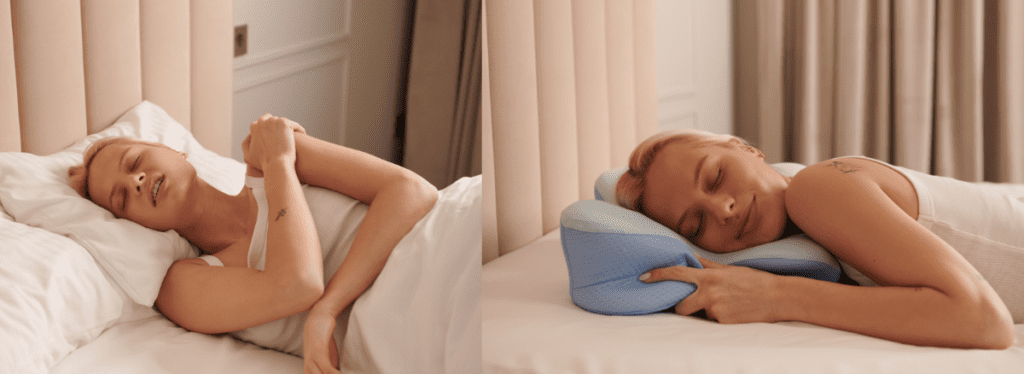
The best pillow for drooling is usually one that supports the head, neck, and jaw in a more neutral position. This matters most for side sleepers and back sleepers, since both positions rely heavily on pillow height and shape.
What to Look for in a Pillow for Drooling
Look for these features:
- A contoured shape that supports the neck, not just the head
- Enough loft to keep the head level with the spine
- Stable memory foam that does not flatten overnight
- A shape that works for side and back sleeping
- Pressure relief around the shoulders
- Breathable materials or ventilation if overheating is a concern
- A washable pillowcase or protector for easier hygiene
The pillow should keep the ears, shoulders, and spine roughly aligned. The chin should not be tucked toward the chest or tilted sharply upward.
Why Contoured Memory Foam May Help Side Sleepers
Side sleepers often need more structure than a soft flat pillow can offer. A contoured memory foam pillow can help fill the shoulder-to-ear gap and keep the head from dropping downward.
That positioning may reduce the jaw slackening and mouth opening that often lead to drooling. It may also feel more supportive for people who wake up with neck stiffness or shoulder tension.
Derila Ergo Pillow for Side and Back Sleepers
Derila Ergo is a strong option for side and back sleepers who want a more supportive pillow shape. Its butterfly contour is designed to cradle the head, support the cervical curve, and give the neck a more stable base.
It may help people who wake up with drool and neck tension, or those who think their current pillow lets their head sink too far. It is not a medical treatment for snoring, sleep apnea, reflux, or neurological causes of drooling, but it may be a practical pillow upgrade when sleep posture is part of the problem.
See If Derila Ergo Is Right for You →
How to Stop Drooling in Your Sleep
The right fix depends on what is causing the drooling. For most people, the biggest wins come from improving sleep position, nasal airflow, and pillow support.
Sleep on Your Back If Side Sleeping Makes Drooling Worse
Back sleeping can reduce drooling because saliva is less likely to drain out of the side of the mouth. Gravity pulls saliva toward the throat instead of toward the pillow.
The challenge is staying on the back long enough for it to become comfortable. A supportive pillow under the head and a small pillow under the knees can make the position easier to maintain.
Our list of the best pillows for back sleepers can help if the current pillow makes back sleeping feel awkward.
Support Your Neck and Jaw Position
A neutral neck position can help the jaw stay more stable. The pillow should hold the head steady without forcing the chin down or tilting the head too far back.
A contoured pillow can be helpful here because it gives the neck a defined place to rest. That is different from stacking flat pillows, which often creates uneven height and pushes the head forward.
If drooling comes with morning stiffness, our guide to the best orthopedic pillows for neck pain covers more supportive pillow shapes.
Clear Nasal Congestion Before Bed
If nasal congestion is causing mouth breathing, pillow support alone may not be enough. The nose needs to be clear enough for comfortable breathing.
A few simple options may help:
- Saline spray before bed
- A neti pot used safely with sterile or distilled water
- Nasal strips to gently widen the nasal passages
- A humidifier for dry bedroom air
- Frequent washing of pillowcases and bedding
- Allergen control for dust, pollen, pet dander, or mold
For product ideas, see our guide to the best nasal dilators for snoring.
Reduce Mouth Breathing Triggers
Some habits make mouth breathing more likely. Heavy meals, alcohol, late caffeine, dehydration, and dry bedroom air can all make sleep feel more disrupted.
Keeping the room cool, dark, and reasonably humid may help. Treating allergies early can also make a difference, especially during high-pollen seasons.
Some people explore mouth tape for nasal breathing, but it is not suitable for everyone. Avoid it if there is nasal blockage, breathing difficulty, suspected sleep apnea, or any medical concern unless a healthcare professional says it is safe.
Keep Your Pillow and Bedding Clean
Drooling can leave moisture in the pillowcase and pillow surface. Over time, that can create an unpleasant sleep environment and may worsen exposure to dust mites or allergens.
Wash pillowcases regularly, use a pillow protector, and replace pillows that have gone flat or lumpy. A pillow that no longer holds its shape can make both drooling and neck discomfort worse.
Drooling, Snoring, and Mouth Breathing While Sleeping
Drooling, snoring, and mouth breathing often show up together because they share a similar sleep pattern: relaxed mouth muscles, open lips, and airflow moving through the mouth.
When the mouth falls open, air can dry the throat and move across relaxed tissues. Those tissues may vibrate, creating snoring. At the same time, saliva can escape more easily because the mouth is not sealed.
For some people, improving nasal airflow and head position may reduce the open-mouth pattern. A supportive pillow may also help keep the head and neck in a more comfortable angle.
Still, snoring needs context. Mild snoring during congestion is one thing. Loud snoring with choking, gasping, pauses in breathing, morning headaches, or daytime sleepiness can point to sleep apnea and needs medical advice.
When Is Drooling in Sleep a Sign of Something More Serious?
Most sleep drooling is harmless. It becomes more concerning when the pattern changes suddenly or appears with symptoms beyond a wet pillow.
Talk to a healthcare professional if drooling comes with:
- Daytime drooling
- Trouble swallowing
- Choking or coughing while eating or drinking
- Facial weakness, drooping, or numbness
- Slurred speech or speech changes
- Loud snoring with gasping or pauses in breathing
- Severe daytime fatigue
- Sudden onset with no clear cause
- A new medication that lines up with the change
- Unexplained weight loss or ongoing fatigue
These signs can point to sleep apnea, medication side effects, swallowing issues, or neurological conditions. A primary care doctor, ENT, sleep specialist, or neurologist can help narrow down the cause.
Final Thoughts on Nighttime Drooling and Pillow Support
Nighttime drooling usually comes back to a few common factors: relaxed facial muscles, side sleeping, mouth breathing, nasal congestion, and pillow support.
When the pattern includes a wet pillow plus neck tension, shoulder discomfort, or a flat pillow that lets the head sink, your pillow may be one of the first things to look at. Better support may help keep the head, neck, and jaw in a more stable position while sleeping.
Derila Ergo fits that need well for side and back sleepers. Its contoured memory foam shape supports the neck’s natural curve and helps reduce the unstable head position that can happen with soft, flat, or collapsed pillows.
It won’t replace medical advice for sleep apnea, reflux, neurological symptoms, or sudden severe drooling, but if drooling seems linked to your sleep position or a pillow that doesn’t support your head and neck well, it may be a simple upgrade to consider.
Frequently Asked Questions
Why do I drool more when I sleep on my side?
Side sleeping makes drooling more likely because gravity pulls saliva toward the pillow. If the pillow is too flat or too soft, the head can tilt and the jaw may relax open, making saliva escape more easily.
Can mouth breathing cause drooling?
Yes. Mouth breathing makes drooling more likely because the lips stay open during sleep. Nasal congestion, allergies, dry air, snoring, and some sleep disorders can all contribute to mouth breathing.
Does drooling mean I’m sleeping deeply?
Sometimes, but not always. Drooling can happen during deeper sleep stages when facial muscles relax. It can also happen because of mouth breathing, nasal congestion, poor pillow support, or snoring.
Can the wrong pillow make drooling worse?
Yes, a pillow that is too flat, too high, or too soft can affect head, neck, and jaw position. If the mouth falls open because the head is poorly supported, drooling may become more likely.
What is the best pillow for drooling?
The best pillow for drooling is usually a supportive pillow that keeps the head, neck, and jaw in a more neutral position. Side and back sleepers may benefit from a contoured memory foam pillow with stable loft, neck support, and pressure relief around the shoulders.
Can snoring and drooling be connected?
Yes. Snoring and drooling can both involve open-mouth sleeping and a relaxed jaw. Loud snoring, gasping, choking, or pauses in breathing should be checked by a healthcare professional.
When should I see a doctor about drooling?
See a doctor if drooling is sudden, severe, happens during the day, or comes with trouble swallowing, facial weakness, slurred speech, choking, gasping, loud snoring, or ongoing fatigue.
Health Disclaimer: This article is for general informational purposes only and is not medical advice. Sleep drooling can be common and harmless, but it can also be linked to nasal congestion, mouth breathing, snoring, reflux, medication side effects, sleep apnea, or other health conditions. If drooling starts suddenly, happens during the day, or comes with trouble swallowing, facial weakness, choking, gasping, loud snoring, pauses in breathing, or ongoing daytime fatigue, speak with a qualified healthcare professional. Pillows and sleep products may support comfort, sleep posture, and neck alignment, but they are not intended to diagnose, treat, cure, or prevent any medical condition.

Sleep Essentials Hub is a sleep blog for readers who want helpful sleep guides and honest product recommendations. We’re passionate about better rest, with a focus on pillows and bedding, sleep aids, sleep apnea and CPAP gear, natural sleep supplements, sleep tech, and simple ways to improve your sleep environment. We’re here to help you choose products that support deeper sleep, greater comfort, and a better night’s rest without overspending.