
Ashwagandha vs Valerian Root for Sleep: Which Ancient Herb Works Better?
Ashwagandha and valerian root often get lumped together as natural sleep aids, but they work in very different ways and suit very different sleep problems.
Ashwagandha targets the daytime stress and cortisol side, while valerian acts on the calming GABA pathway closer to bedtime. The one that fits your sleep pattern depends on what is actually keeping you up at night.
Key Takeaways
- Ashwagandha may suit you better if poor sleep is tied to ongoing stress or feeling wired at night, with some studies linking it to lower stress and cortisol.
- Valerian root is a traditional bedtime herb for mild sleep difficulties and nervous tension, though clinical results for insomnia are mixed.
- Ashwagandha is taken daily for several weeks before effects build. Valerian is taken closer to bedtime per the product label.
- Your sleep pattern guides the better choice. Understanding what is driving your sleep issue is the difference between guessing and choosing.
Ashwagandha vs Valerian Root: Quick Comparison
| Feature | Ashwagandha | Valerian Root |
|---|---|---|
| Best for | Stress-driven sleep issues, racing thoughts | Mild trouble falling asleep, nervous tension |
| Main mechanism | Lowers cortisol via the HPA axis | Influences GABA activity in the brain |
| When to take | Morning, afternoon, or split dosing | 30 minutes to 2 hours before bed |
| Time to effect | 4 to 12 weeks of daily use | Some respond first night, others need a week or more |
| Botanical name | Withania somnifera | Valeriana officinalis |
| Daytime use | Yes | Not recommended |
Disclosure: As an Amazon Associate I earn on qualifying purchases at no extra cost to you.
How to Choose Between Ashwagandha and Valerian Root for Sleep
The kind of sleep disruption you experience points to which herbal sleep aid is worth trying first. Stress-driven insomnia, with racing thoughts and a body that won’t switch off, calls for a different approach than acute difficulty getting to sleep on an otherwise calm night.
The first step is working out whether you are dealing with chronic insomnia or a disrupted sleep schedule, since the two have different approaches.
Matching the herb to the pattern beats picking one at random. Chronic stress creates a cascade of changes that interfere with natural sleep cycles, and elevated cortisol can keep the body alert when it should be winding down. Acute sleep difficulties often come from immediate factors like caffeine, screens, or temporary anxiety that won’t let the brain transition into sleep mode.
Ashwagandha vs Valerian Root for Different Sleep Disruptions
How Ashwagandha Works for Sleep and Stress
Ashwagandha (Withania somnifera) is classified as an adaptogen, meaning it may help the body adapt to stress. Its active compounds, called withanolides, are thought to influence the hypothalamic-pituitary-adrenal (HPA) axis, the system that regulates cortisol output and the stress response.
Several clinical studies have reported that ashwagandha supplementation can lower self-reported stress, anxiety, and cortisol levels in stressed adults. Lower stress and a more balanced cortisol pattern may create better conditions for natural sleep onset, rather than forcing sleep directly.
Effects usually build gradually, not overnight. Sleep quality changes are usually noticed in the 4 to 12 week range.
The herb is available in several forms, including capsules, tinctures, and ashwagandha gummies for people who prefer not to swallow pills.
How Valerian Root Works for Sleep
Valerian root (Valeriana officinalis) works through a different mechanism than ashwagandha or melatonin. While melatonin signals the body it is nighttime, valerian is thought to influence gamma-aminobutyric acid (GABA) activity in the brain, which is the system involved in calming neural activity.
That makes it one of the more popular natural sleep aids that don’t rely on melatonin.
The exact mechanism is not fully understood. The Office of Dietary Supplements notes that valerian’s effects may come from multiple constituents working together rather than any single compound, and there is no clear scientific consensus on how it works.
Clinical evidence on valerian for insomnia is mixed. Some studies report improvements in sleep quality and reduced sleep latency, while others show little difference from placebo.
Some users notice a relaxing effect within 30 to 60 minutes of taking it, while others feel nothing on the first night and prefer to give it a week or two of nightly use before deciding.
When to Take Ashwagandha and Valerian for Sleep
Optimal timing helps each herb do its job and prevents unwanted next-day effects. Ashwagandha’s stress and cortisol effects make it suitable for morning or early afternoon use, though some people prefer evening or split dosing depending on how their body responds.
Taking ashwagandha late at night does not cause problems for everyone, but a small number of people report feeling slightly energized by it. If that happens to you, move the dose earlier in the day.
Valerian is generally taken closer to bedtime, around 30 minutes to 2 hours before bed, depending on the product. Always follow the label on your specific product, since timing and dose vary between extracts, tinctures, capsules, and gummies.
The History of Ashwagandha and Valerian as Sleep Aids
Ashwagandha in Ayurvedic Tradition
Ashwagandha has been used in Ayurvedic medicine for more than 3,000 years. Native to India and parts of North Africa, it earned the Sanskrit name meaning “smell of horse,” a reference to both its distinctive odor and its traditional reputation for promoting strength and vitality.
Traditional Ayurvedic practitioners classified Withania somnifera as a rasayana, a rejuvenative herb. Modern research has begun to support some of the traditional uses, particularly around stress, anxiety, and sleep quality, though long-term safety has not been firmly established.
Valerian Root in European Herbal Tradition
Valeriana officinalis has equally deep historical roots, with documented use in ancient Greece and Rome for nervous conditions and trouble sleeping. European herbalists have relied on it for centuries, and its use spread through medieval monasteries and Renaissance courts.
During World War II, civilians in England reportedly used valerian to help calm nerves during air raids. That historical use reflects how long it has been the go-to bedtime herb in European tradition, though it is not by itself evidence of effectiveness.
Traditional European medicine described valerian as a remedy for “nervous afflictions” and “restless sleep,” language that lines up well with how mild, stress-related sleep difficulties are described today.
How to Take Ashwagandha and Valerian Root for Sleep
How to Take Ashwagandha for Sleep
Clinical studies on ashwagandha for stress and sleep have used a range of doses and extracts. Most fall somewhere between 250 mg and 600 mg per day of a standardized root extract, often taken once or twice daily. KSM-66 and Sensoril are two of the most studied branded extracts.
Some people split the dose, taking half in the morning and half in the early afternoon. Others take a single dose with breakfast. Starting at the lower end of the range for a couple of weeks before adjusting is the simplest way to learn how your body responds.
Effects build over time. Most ashwagandha sleep and stress studies lasted about 6 to 12 weeks, so it makes more sense to judge results after consistent use rather than after one or two nights
If you want a clinically studied standardized extract, VitaUp Ashwagandha KSM-66 with Black Pepper is one to consider. It delivers 600 mg of the KSM-66 extract per capsule, one of the most studied branded forms of the herb, paired with black pepper extract for absorption support. Each batch is third-party lab tested for purity and potency, the formula is vegan and free from gluten and GMOs, and it is produced in a GMP-registered facility in the USA.
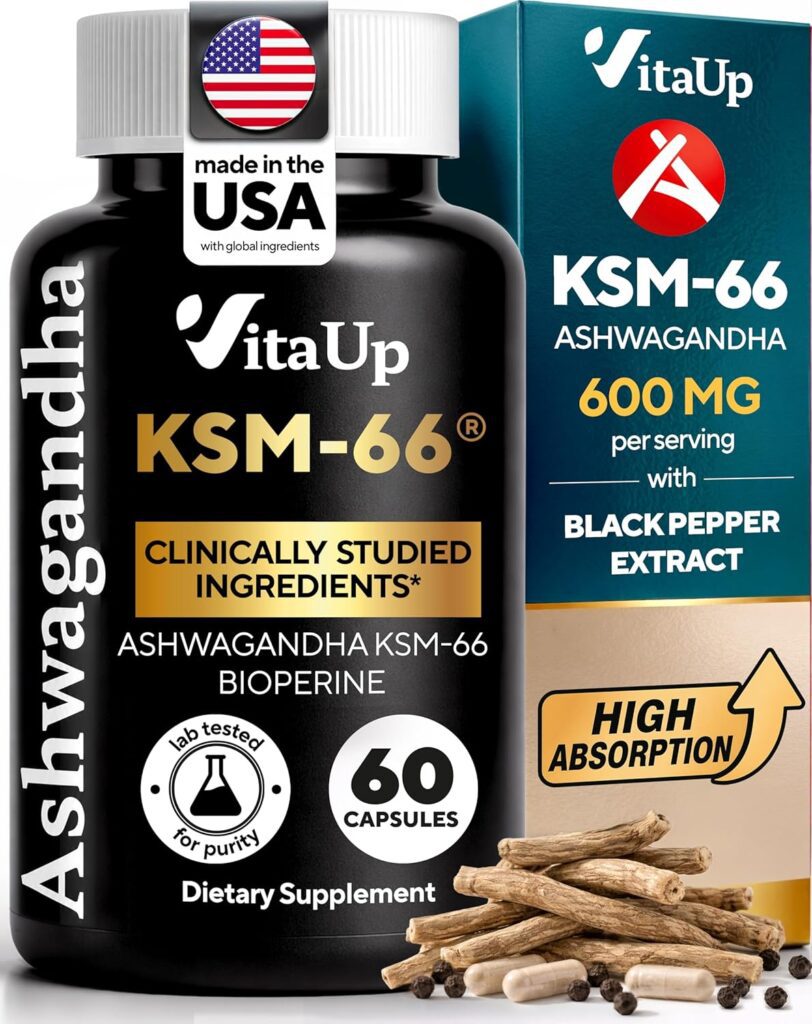
👉 Check Price of VitaUp Ashwagandha KSM 66 with Black Pepper on Amazon
How to Take Valerian Root for Sleep
Valerian root extract doses in clinical studies typically range from 300 mg to 600 mg of standardized extract taken around 30 minutes to 2 hours before bed. Always follow the label on the specific product you choose, since the right dose depends on the extract ratio and form.
Starting at the lower end helps you gauge tolerance, since a small percentage of users experience strong drowsiness even at modest doses. The dose can be adjusted upward if needed.
Regular nightly use gives a better read on whether valerian works for you than a single night. Some people respond on the first night, others feel nothing for the first few nights, and a small group experiences the opposite of the intended effect, feeling more alert rather than relaxed.
If you prefer not to swallow capsules at bedtime, Vitamatic Valerian Root & Chamomile Gummies are a gentler option. Each serving of two gummies delivers a concentrated 50:1 valerian root extract paired with chamomile, another long-standing bedtime herb.
The formula is sweetened without sugar, naturally flavored mixed berry, and free from gelatin, gluten, dairy, soy, and artificial colors. Made in the USA in a GMP-certified facility with third-party testing for purity and potency.
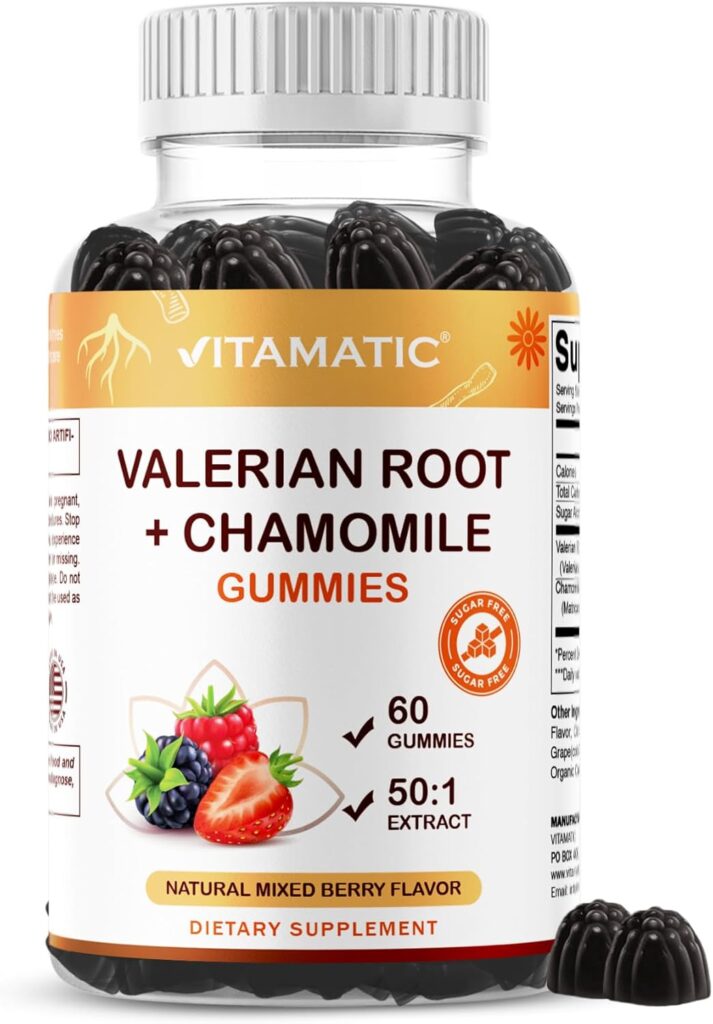
👉 Check Price of Vitamatic Valerian Root & Chamomile Gummies on Amazon
Can You Take Ashwagandha and Valerian Root Together?
Some people use ashwagandha during the day for stress support and valerian at night for sleep support. The herbs work through different pathways, so the pairing has some logic to it, but direct evidence on the combination is limited.
If you take medications, especially sedatives, sleep aids, antidepressants, blood pressure medications, diabetes medications, thyroid medications, or immunosuppressants, talk with a healthcare provider before combining them. Both herbs can interact with prescription drugs, and valerian can add to the sedating effect of other CNS depressants, including alcohol.
Ashwagandha and Valerian Root Side Effects and Safety
Who Should Check With a Doctor First
The National Center for Complementary and Integrative Health and the European Medicines Agency advise against using ashwagandha or valerian root during pregnancy and breastfeeding, as safety data in these groups is insufficient.
People taking sedatives, sleep medications, antidepressants, or anti-anxiety drugs may face increased interaction risks with both herbs. Valerian in particular can add to the sedative effects of other medications and alcohol, which may cause excessive drowsiness or impaired alertness, so this is a conversation worth having with your doctor before starting.
People with autoimmune conditions, thyroid conditions, or a history of liver issues are also generally advised to speak with a healthcare provider before trying ashwagandha. The herb may stimulate immune activity, can influence thyroid hormone levels, and has been linked in rare reports to liver injury.
Common Side Effects of Ashwagandha and Valerian Root
Reported side effects with ashwagandha include digestive upset, drowsiness, or headache in some users. A small number of people report vivid dreams or feeling slightly stimulated when taking it close to bed.
Valerian root may cause headache, dizziness, or stomach discomfort, especially at higher doses or when first starting. A small percentage of people get the opposite of the expected effect and feel more alert. Morning grogginess is possible if the dose is too high or taken too late in the evening.
If you decide to try either herb, starting at a low dose and tracking how you feel can help you spot any reaction early. Anyone unsure about whether a supplement is appropriate for them should check with a healthcare provider before starting.
Ashwagandha or Valerian: Which Is Right for You?
The choice between ashwagandha and valerian root comes down to what is actually keeping you up. Ongoing stress, anxiety, and a wired-but-tired feeling point toward ashwagandha. Mild trouble falling asleep on a stressful night, or general nervous tension at bedtime, points toward valerian.
Some people experience both patterns and may benefit from layering the two with proper timing. Ashwagandha during the day to soften the stress response, valerian closer to bedtime to ease the wind-down.
Either herbal sleep aid works best alongside the basics of sleep hygiene. A dark, cool room. A wind-down window away from screens. Supplements support sleep, they do not replace the conditions that make sleep possible.
Related Articles
- Diet for Better Sleep
- Navy SEAL Breathing Technique for Sleep
- The Best Magnesium Supplements for Sleep
- How to Sleep Better at Night Naturally
Health Disclaimer: This article is for general informational and editorial purposes only. It is not medical advice, and the information shared here is not a substitute for guidance from a qualified healthcare professional. Ashwagandha, valerian root, and other herbal supplements can interact with medications and may not be appropriate for everyone, including people who are pregnant, breastfeeding, managing a chronic condition, or scheduled for surgery. Always consult your doctor, pharmacist, or another licensed healthcare provider before starting, stopping, or combining any supplement, especially if you have a diagnosed sleep disorder, mental health condition, autoimmune issue, thyroid condition, liver condition, or are taking prescription medication. Statements about dietary supplements have not been evaluated by the FDA and are not intended to diagnose, treat, cure, or prevent any disease.

Sleep Essentials Hub is a sleep blog for readers who want helpful sleep guides and honest product recommendations. We’re passionate about better rest, with a focus on pillows and bedding, sleep aids, sleep apnea and CPAP gear, natural sleep supplements, sleep tech, and simple ways to improve your sleep environment. We’re here to help you choose products that support deeper sleep, greater comfort, and a better night’s rest without overspending.