
Best Magnesium Supplements for Sleep: 5 Options Compared
If you’ve been lying awake night after night, choosing a magnesium supplement starts with understanding what you’re taking. A bottle of glycinate, a magnesium blend, and a flavored powder can provide very different amounts of magnesium, even when they’re all marketed for sleep.
The best magnesium supplement for sleep depends on the dose you need and which form you’re comfortable taking. Magnesium glycinate and L-threonate have shown some promise in sleep research, but neither has been proven to work best for everyone.
The guide below explains how these forms differ, then compares five magnesium supplements you may want to consider for sleep support.
Disclosure: This article contains affiliate links. As an Amazon Associate I may earn a small commission for qualifying purchases at no additional cost to you.
Magnesium for Sleep at a Glance
- Choose a supplement you can tolerate. A smaller capsule dose or a measured powder serving may be easier to adjust than a high-dose blend.
- Glycinate has some direct sleep evidence. A small trial found a modest improvement in insomnia symptoms, rather than a guaranteed faster route to sleep.
- L-threonate has also been studied for sleep. Its research doesn’t establish that it outperforms other magnesium forms.
- Check elemental magnesium on the label. This is the amount of magnesium you’re getting, which can be much lower than the weight of the entire compound.
Understanding the Role of Magnesium in Sleep
Magnesium helps support normal nerve and muscle function, which has led researchers to study whether supplements may also help with sleep. A review of trials in older adults with insomnia found that magnesium may reduce the time it takes to fall asleep, but the quality of the evidence was low or very low. Researchers are still studying how magnesium might affect sleep.
Magnesium and the Nervous System
Magnesium plays a role in nerve signaling. Researchers have proposed that its effects on GABA, a neurotransmitter that reduces nerve-cell activity, may help explain a possible link with sleep.
Magnesium and Melatonin
Melatonin helps regulate the sleep-wake cycle. A small trial in older adults with insomnia reported changes in melatonin alongside improvements in some sleep measures after magnesium supplementation. However, this finding doesn’t establish that every magnesium product raises melatonin or works like a melatonin supplement.
Magnesium and Muscle Function
Magnesium helps support normal muscle function, and low magnesium levels can cause muscle cramps. But having muscle discomfort at night doesn’t necessarily mean you’re deficient.
According to MedlinePlus, magnesium deficiency is assessed by looking at the broader health picture, including symptoms and possible causes.
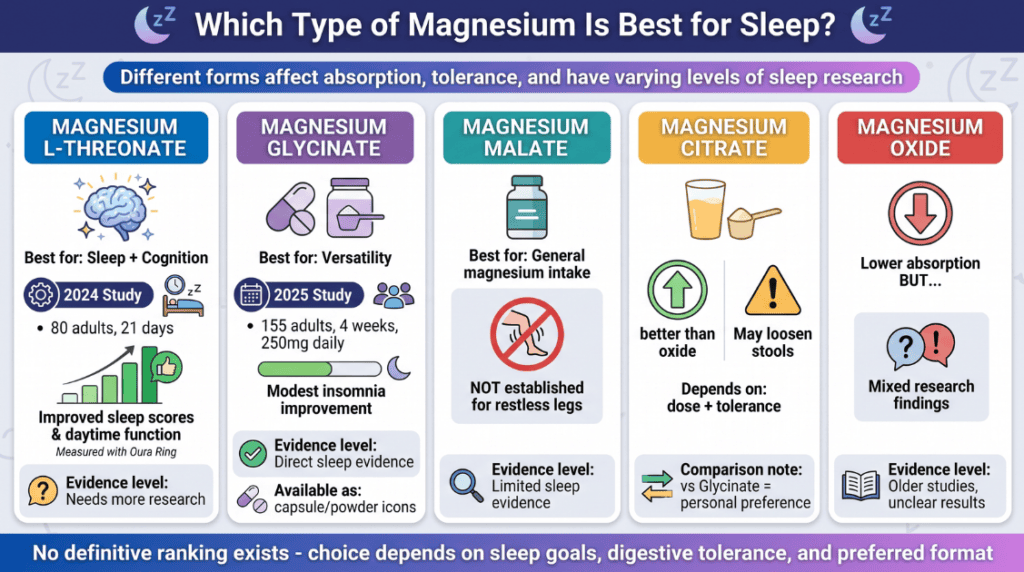
Which Type of Magnesium Is Best for Sleep?
Magnesium L-Threonate for Sleep Quality
Magnesium L-threonate has attracted attention because of research into brain magnesium and cognition. Its potential sleep benefits have also been studied in humans.
A 2024 randomized trial enrolled 80 adults with self-reported sleep problems. Participants took magnesium L-threonate or a placebo for 21 days. The magnesium group had better results on some sleep-related scores and measures of daytime functioning.
The study was small, and some sleep data came from an Oura Ring. The findings support more research, but they don’t show that L-threonate is the best treatment for stress-related insomnia.
If you’re comparing sleep support with possible cognitive benefits, it helps to understand the differences between magnesium L-threonate and glycinate.
Magnesium Glycinate for a Capsule or Powder
Magnesium glycinate, often labeled magnesium bisglycinate, combines magnesium with the amino acid glycine. It’s available in both capsules and powders, giving you several ways to take the same form.
A 2025 randomized trial enrolled 155 adults with poor sleep. After four weeks, 250 mg of elemental magnesium daily as bisglycinate produced a modest improvement in insomnia symptom scores compared with placebo.
That gives glycinate some direct sleep evidence, although it doesn’t prove that it works immediately or that every brand will produce the same result. Capsule strength and additional ingredients still deserve a closer look.
Magnesium Malate for General Magnesium Intake
Magnesium malate combines magnesium with malic acid. It supplies magnesium and appears in some blends, including Magnesium Breakthrough, but it hasn’t been established as the best form for restless legs or nighttime muscle tension.
If an urge to move your legs repeatedly interrupts sleep, get the symptoms assessed rather than choosing malate solely on that basis. The evidence for magnesium as a treatment for sleep-related movement problems remains limited.
Magnesium Citrate and Digestive Tolerance
Magnesium citrate is generally absorbed better than magnesium oxide, according to the NIH’s overview of magnesium supplements. It can also loosen stools, with the effect depending partly on dose and individual tolerance.
That doesn’t automatically rule out a citrate powder for evening use. If you prefer a drink, start by comparing its labeled serving with your intended magnesium intake. The choice between magnesium glycinate and citrate often comes down to how you tolerate them and whether you prefer capsules or powder.
Magnesium Oxide and Sleep Research
Magnesium oxide is less readily absorbed than several other forms, but calling it ineffective for sleep goes beyond the evidence. The older trials included in the review above used oxide or citrate and reported mixed findings.
Absorption and sleep improvement aren’t the same outcome. A product can supply magnesium without having strong evidence that it treats insomnia.
Best Magnesium Supplements for Sleep: Compare the Products
Once you’ve narrowed down the form, the next decision is the product. These five options cover a magnesium blend, single-form glycinate, and drink mixes. The comparisons below are based on manufacturer information and the format each product offers.
| Supplement | Best Fit | Format | Elemental Magnesium |
|---|---|---|---|
| BIOptimizers Magnesium Breakthrough | Several magnesium forms in one formula | Capsules | 500 mg per 2 capsules |
| Pure Encapsulations Magnesium Glycinate | A single-form capsule with a smaller dose | Capsules | 120 mg per capsule |
| Natural Vitality CALM | A flavored citrate drink | Powder | 325 mg per full serving of the standard citrate formula |
| USA Magnesium by USA Medical | Magnesium glycinate in capsule form | Capsules | 350 mg per 2 capsules |
| Doctor’s Best High Absorption Magnesium | Chelated magnesium in tablets | Tablets | 200 mg per 2 tablets |
Amounts describe the listed formulas, not a recommended dose for every reader. Check the exact product label before ordering, especially when a listing offers multiple versions.
1. Top Pick – BIOptimizers Magnesium Breakthrough

Magnesium Breakthrough is the option to consider if you prefer several magnesium forms in one formula. BIOptimizers lists a seven-form blend that includes glycinate, citrate, and malate, along with vitamin B6 and other ingredients. Its current product information lists 500 mg of elemental magnesium per two-capsule serving.
The capsule format is convenient if you don’t want to mix a drink, and the blend gives you several forms of magnesium in one bottle.
2. Pure Encapsulations Magnesium Glycinate
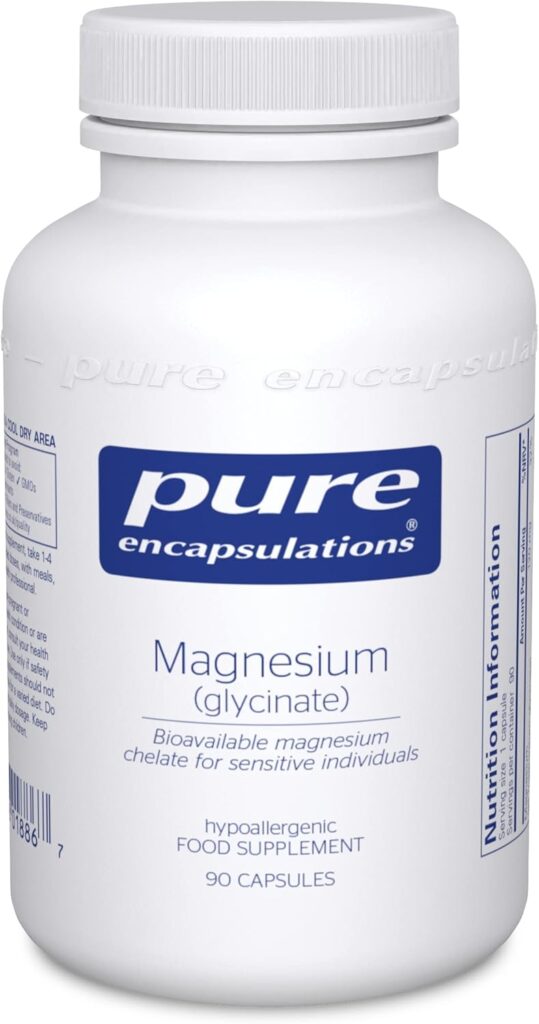
Pure Encapsulations suits someone who wants glycinate without a blend of other magnesium forms. Each capsule supplies 120 mg of elemental magnesium, so the amount is easier to adjust in smaller steps than a serving that delivers several hundred milligrams at once.
The manufacturer describes the formula as suitable for sensitive individuals and lists it as vegan and gluten-free. Capsules also avoid the flavor and sweeteners found in some drink mixes. Pure Encapsulations states that the capsules should be taken with food.
3. Natural Vitality Calm Magnesium Powder

Natural Vitality CALM fits someone who would rather mix a drink than swallow capsules. The standard citrate powder provides 325 mg of elemental magnesium per full serving. The manufacturer explains that magnesium citrate forms when the powder is mixed with water.
The powder format also gives you more control over how much magnesium you take. You can measure a smaller amount and adjust based on your needs and digestive tolerance. Follow the label’s measuring instructions so you know how much magnesium you’re getting.
Magnesium citrate can have a laxative effect, especially at higher amounts. If you develop diarrhea or ongoing stomach discomfort, reduce the amount or speak with a clinician about an appropriate dose.
For straightforward magnesium supplementation, choose the standard CALM magnesium powder. Other products in the CALM range, including CALM Sleep, may contain added ingredients such as melatonin, so check the label to make sure you’re buying the formula you want.
4. USA Magnesium by USA Medical Magnesium Glycinate Capsules
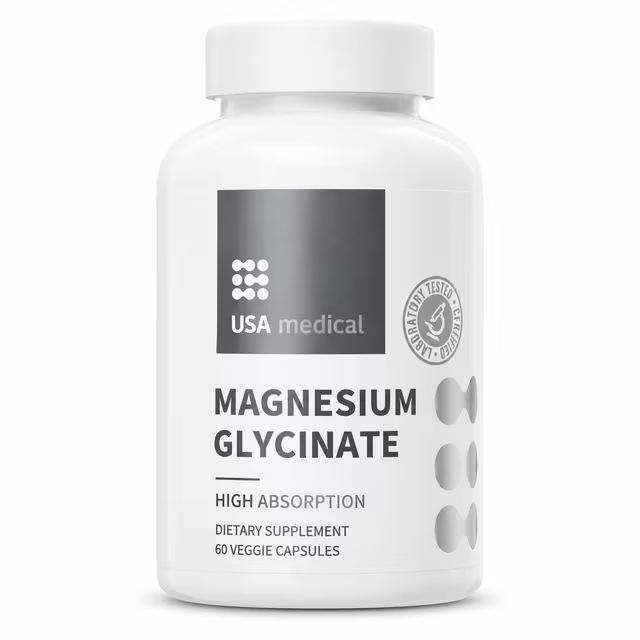
USA Magnesium is a straightforward magnesium glycinate supplement for sleep support without flavored powders or added sleep ingredients. Each two-capsule serving provides 350 mg of elemental magnesium, with 60 capsules per bottle for 30 full servings.
USA Medical lists magnesium glycinate and a vegetable capsule shell as the ingredients. The simple formula makes it easy to take magnesium on its own if you prefer to keep it separate from melatonin or herbal sleep products.
Pay attention to your total daily magnesium intake. A full serving provides 350 mg, which reaches the usual U.S. adult upper limit for magnesium from supplements and medications. Count any magnesium you already take, and check with a clinician before using the full serving if you’re unsure whether that amount is appropriate for you.
5. Doctor’s Best High Absorption Magnesium

Doctor’s Best offers magnesium in tablet form without a drink mix. It uses magnesium lysinate glycinate chelate, with 100 mg of elemental magnesium per tablet, or 200 mg per two-tablet serving.
The manufacturer’s label clearly lists the elemental magnesium amount separately from the total weight of the chelated compound. That makes it easier to compare the actual magnesium dose across different supplements.
The tablet format works well for anyone who prefers a measured dose without mixing a powder or drink. The larger bottle sizes can also make it easier to plan a regular magnesium routine. If you have trouble swallowing tablets, check the tablet size before buying.
The manufacturer suggests taking two tablets twice daily, which provides 400 mg of supplemental magnesium. Since that amount is on the higher end, it’s best to confirm the right daily dose with a clinician rather than using the full label dose specifically for sleep.
How Much Magnesium Should You Take for Sleep?
There’s no established magnesium dose specifically for sleep. The right amount to look for in a supplement depends on how much magnesium you already get from food, multivitamins, and other products.
Daily Magnesium Needs vs. a Supplement Dose
For adults ages 19 and older, recommended daily magnesium intake is generally 310 to 320 mg for women and 400 to 420 mg for men. These totals include magnesium from both food and supplements, so they shouldn’t be read as a target amount to get from capsules or powder alone.
The U.S. adult upper limit is 350 mg a day from supplements and magnesium-containing medications. Magnesium that comes naturally from food doesn’t count toward that limit.
Check the Elemental Magnesium Amount
When comparing magnesium supplements for sleep, focus on the elemental magnesium listed in the Supplement Facts panel.
For example, Doctor’s Best lists 2,000 mg of magnesium lysinate glycinate chelate as the source of 200 mg of magnesium. The 200 mg figure is the amount of elemental magnesium that counts toward your daily supplemental intake.
It also helps to add up magnesium from every supplement you take, including multivitamins and nighttime formulas. Looking at each product separately can make your total intake harder to spot.
Compare the Dose Per Serving
Lower-dose magnesium supplements can give you more flexibility than products that provide several hundred milligrams in one serving. Check both the elemental magnesium per serving and the serving size before comparing products.
A higher magnesium dose doesn’t automatically mean better sleep. For a fair comparison, focus on the form of magnesium, the amount of elemental magnesium, and how much you’re already getting from other sources.
When Is the Best Time to Take Magnesium for Sleep?
No single time has been proven best. The bisglycinate trial used an evening schedule, while the L-threonate trial gave its supplement two hours before bed. Neither study compared morning use with evening use.
Choose a time that fits the product’s directions and any medication-spacing advice. If the label specifies taking it with food, an evening meal may be more convenient than taking it immediately before bed. There’s no established short window after which its supposed calming effect has worn off.
How Long Does Magnesium Take to Work for Sleep?
Magnesium sleep studies usually track results over several weeks rather than judging the effect of a single serving. The magnesium L-threonate trial lasted three weeks, while the magnesium bisglycinate trial lasted four weeks.
That doesn’t mean everyone will notice the same changes or notice them on the same schedule. The bisglycinate study found only a small difference between magnesium and placebo on its main sleep measure, which is another reason not to assume faster or larger results from a higher dose.
A simple sleep diary can help you compare your nights over time. Record when you take your supplement, roughly how long it takes you to fall asleep, how often you wake up, and how rested you feel the next day.
Sleep Habits to Use Alongside Magnesium
The National Heart, Lung, and Blood Institute’s sleep guidance recommends a consistent sleep schedule and a bedroom that’s cool, quiet, and dark. Keep your wake-up time reasonably steady, including on weekends, and choose bedding that lets you stay comfortable through the night.
Reduce bright light before bed, especially if you spend the evening looking at a phone or tablet. The way blue light affects sleep is one reason to pay attention to evening screen habits as well as supplements.
You may want to consider blue-light blocking glasses to help with this.
Caffeine can interfere with sleep for hours after you consume it. Instead of treating 2 p.m. as a universal cutoff, consider how close your last coffee is to bedtime and move it earlier if you’re having trouble sleeping. Our caffeine calculator can help with cut-off times. Alcohol near bedtime can also disrupt sleep.
When to Get Medical Advice About Magnesium and Sleep
Ask a clinician before supplementing if you have kidney disease, because impaired kidneys can allow magnesium to accumulate. Magnesium can also interfere with certain antibiotics and osteoporosis medications, so check timing with a pharmacist.
If sleep problems persist, consider whether you’re dealing with insomnia or an irregular sleep schedule. Loud snoring or gasping during sleep warrants assessment, particularly when you also feel sleepy during the day.
For chronic insomnia, cognitive behavioral therapy for insomnia, or CBT-I, is a strongly recommended treatment. A supplement shouldn’t delay an assessment when poor sleep is affecting daily life.
Choosing the Best Magnesium Supplement for Sleep
The best magnesium supplement for sleep should fit your magnesium needs and be comfortable to take consistently. Start by comparing the form and elemental magnesium per serving, then choose capsules or powder based on your preferences. A larger dose or a blend with more forms doesn’t automatically mean better sleep.
If you decide to try magnesium, keep a brief sleep diary so you can assess whether your sleep changes over time. Record how long you spend awake at night and how rested you feel the next day.
Keep a consistent sleep schedule alongside supplementation. If poor sleep continues, discuss it with a healthcare professional rather than increasing your magnesium dose.
Frequently Asked Questions About Magnesium for Sleep
Which Type Of Magnesium Is Best For Sleep?
No magnesium form has been proven best for everyone. Glycinate and L-threonate have some direct sleep research, but the studies don’t establish which is superior. Choose based on the dose you need and how well you tolerate the product.
Is It Safe To Take Magnesium Every Night?
Nightly magnesium may be appropriate for some adults, depending on the dose and their health. Count magnesium from all supplements and medications, and get advice first if you have kidney disease or take medication that interacts with magnesium.
Can Magnesium Replace Sleeping Pills?
Magnesium isn’t an established replacement for prescribed sleep medication. Don’t stop or reduce a prescription without medical advice. If insomnia persists, discuss treatments with stronger evidence, including CBT-I, instead of relying on a supplement alone.
Can You Take Too Much Magnesium Before Bed?
Yes. Excess supplemental magnesium can cause diarrhea and nausea, while very high levels can be dangerous, especially with impaired kidney function. The adult supplemental upper limit of 350 mg isn’t a poisoning threshold; it’s a limit intended to reduce the risk of adverse effects.
Does Magnesium Spray Help You Sleep?
There isn’t strong clinical evidence that magnesium spray improves sleep or reliably corrects low magnesium levels. A review of transdermal magnesium research found insufficient evidence for claims about absorption through the skin. A spray should not replace treatment for a diagnosed magnesium deficiency.
Disclaimer: This article is for general information and isn’t personal medical advice. Check with a qualified healthcare professional before using a supplement if you’re pregnant or breastfeeding, take medication, or have a health condition.

Sleep Essentials Hub is a sleep blog for readers who want helpful sleep guides and honest product recommendations. We’re passionate about better rest, with a focus on pillows and bedding, sleep aids, sleep apnea and CPAP gear, natural sleep supplements, sleep tech, and simple ways to improve your sleep environment. We’re here to help you choose products that support deeper sleep, greater comfort, and a better night’s rest without overspending.