
QuietLab Pro Review – Can this Adjustable Anti-Snoring Mouthpiece Stop Snoring For Good?
Most snoring solutions promise a quieter night, but the right device depends on what’s actually causing the noise. If your snoring comes from the jaw relaxing backward and narrowing the airway, an anti-snoring mouthpiece may be more useful than nasal strips, mouth tape, or an anti-snoring pillow.
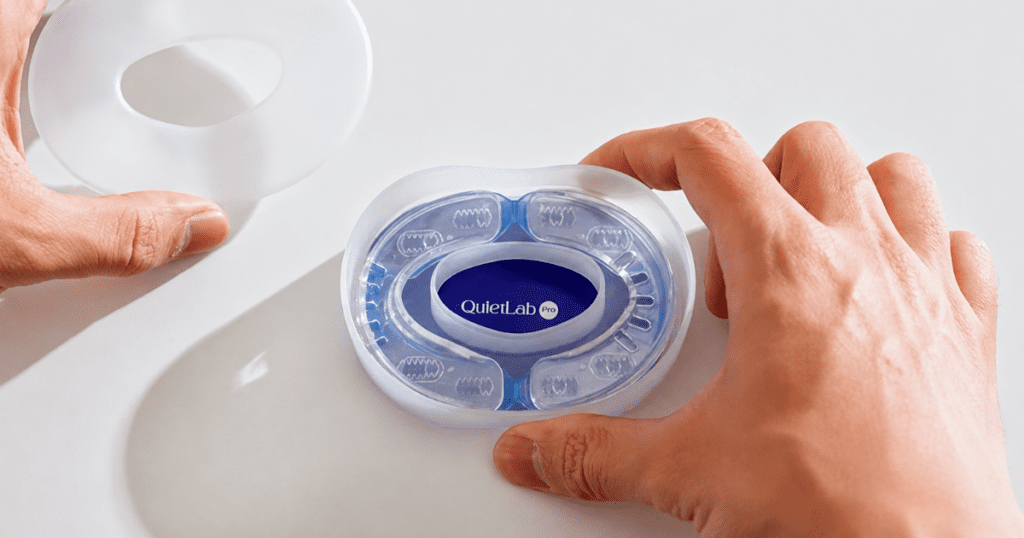
QuietLab Pro is the newer upgrade from QuietLab Plus, designed as an adjustable mandibular advancement mouthpiece for people who want a low-cost, at-home option before considering a custom dental appliance.
In this QuietLab Pro review, we’ll look at how it works, how it compares with the older QuietLab Plus, who it may suit, and whether it delivers better comfort, fit, and snoring results than other anti-snoring mouthguards.
Disclosure: This article contains affiliate links. We may earn on qualifying purchases at no extra cost to you.
What is the QuietLab Pro Mouthpiece?
QuietLab Pro is an over-the-counter mandibular advancement device (MAD) that moves the lower jaw gently forward during sleep. The forward jaw position widens the airway and stops the soft tissue at the back of the throat from vibrating, which is the actual source of the snoring noise.
How it helps with snoring:
- Built for mild to moderate snorers whose snoring is jaw-driven
- Features a thin, soft profile that many users find comfortable after a short break-in
- 25 upper and lower tray adjustment settings, with no boil-and-bite molding required
- Freebite design that lets the mouth open slightly for natural breathing
For mild to moderate snorers who don’t want to go through a sleep dentist for a custom-fitted appliance, QuietLab Pro offers a more accessible over-the-counter option.
QuietLab Pro vs QuietLab Plus: What’s the Difference?
QuietLab Pro is the upgraded version of QuietLab Plus, and the main improvement is comfort. Both mouthpieces use the same jaw-forward approach to help reduce snoring, but the Pro is designed to feel slimmer, less bulky, and easier to adjust.
The biggest advantage is the 0.06-inch Freebite design, which gives the mouth more room to move while still holding the lower jaw forward. That can be helpful if you’ve tried older anti-snoring mouthguards and found them too thick, stiff, or hard to sleep with.
QuietLab Pro also gives you 25 adjustment settings across the upper and lower trays, so you can fine-tune the fit instead of being locked into one position. That makes the Pro the better choice if comfort, adjustability, and a slimmer profile are your deciding factors.
How the QuietLab Pro Anti-Snoring Mouthpiece Works
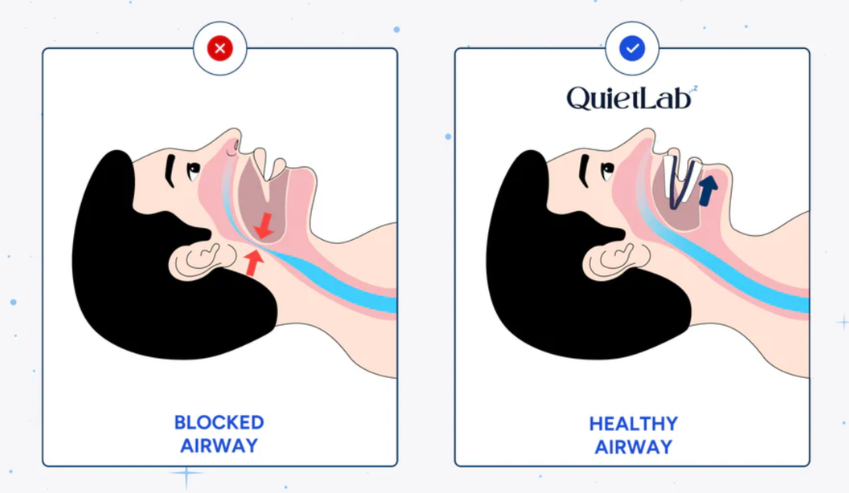
Most snoring starts at the back of the throat. When the jaw relaxes during sleep, the tongue and soft palate slide backward and partially block the airway. Air squeezes through the narrowed passage, the surrounding tissue flutters, and that’s the noise driving partners up the wall.
Nasal strips, mouth tape, and anti-snore pillows can take some edge off, but none of them stop the jaw from sliding back.
A mandibular advancement device works on that directly. By holding the lower jaw a few millimeters forward, the MAD widens the space at the back of the throat so air moves through without vibration. Sleep dentists have been fitting custom appliances on this exact principle for years.
QuietLab Pro packages the same idea into a one-size, fully adjustable design. No boiling, no impressions, no months-long wait. The upper and lower trays pull into the position that fits an individual bite and snap into place.
The FreeBite design is intended to allow some natural mouth movement and easier mouth breathing, so the device feels less restrictive than mouthpieces that clamp the jaw shut. The plastic itself sits at 0.06 inches thick in most areas, made from soft medical-grade, BPA-free materials.
The bulky feeling that may hit in the first night or two fades quickly for many users once the mouth adjusts.
Key Features of the QuietLab Pro Adjustable Mouthpiece
A handful of design choices set QuietLab Pro apart from cheaper over-the-counter mouthguards and the older-style boil-and-bite MADs.
- 25 micro-adjustable settings. Both the upper and lower trays move independently, so jaw position can be dialed in over a few nights rather than locked into one setting
- Freebite movement. The mouth isn’t clamped shut. Opening slightly, breathing through the mouth, or moving the jaw mid-sleep all happen naturally
- Ultra-thin profile. 0.06 inches for a ‘barely there’ feel, slimmer than most over-the-counter mouthguards and far easier on the gag reflex
- Soft medical-grade materials. Also BPA-free.
- 30-night home trial. A refund window on the product cost direct from the manufacturer
How to Use the QuietLab Pro Anti-Snoring Mouthpiece
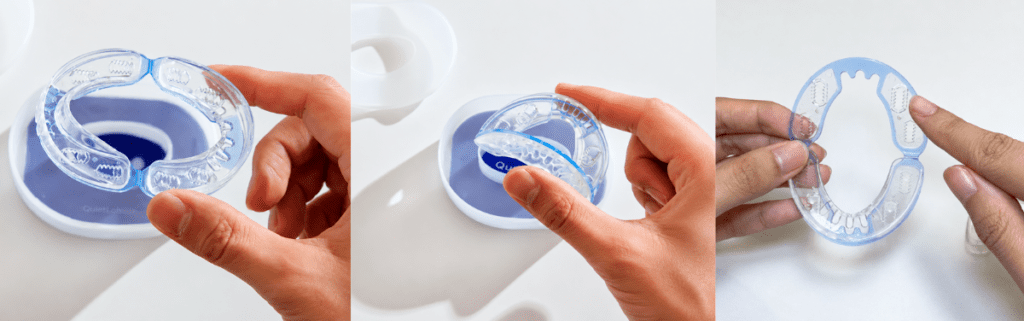
QuietLab Pro is built to skip the parts that make custom dentist appliances and boil-and-bite mouthpieces a hassle. No boiling water, no impression kits, no waiting for plastic to cool. Out of the box, the device is ready to adjust and wear the same night.
Here’s the basic flow for first-time use.
- Start with a conservative jaw position. Adjust the upper and lower trays to a small forward setting and snap them into place. Starting conservatively gives the jaw time to adapt to the forward position over the first few nights.
- Test the fit before bed. Place the device in the mouth like a sports mouthguard, with the upper tray on the top teeth and the lower tray on the bottom teeth. The Freebite design lets the mouth open and close naturally. There should be no sharp pressure on individual teeth.
- Wear it overnight. Sleep with the device in place for a full night. Some morning stiffness or extra saliva is normal during the first few nights as the jaw adapts to the forward position.
- Adjust forward gradually. If snoring continues after the first or second night, advance the lower tray one setting forward and try again. Repeat over a few nights until the snoring stops or drops sharply. The 25-setting range gives enough room for most jaw shapes to find the sweet spot.
- Clean it in the morning. Rinse the device under warm water and brush it gently with a toothbrush. The trays come apart for a deeper clean. Hot water and harsh chemicals can warp soft thermoplastic over time, so mild soap is the safest choice when more than a brush is needed.
- Store it dry. Let the device air dry before putting it back in the travel case. A wet mouthpiece shortens the lifespan and can encourage bacterial buildup.
A few extra notes that come up in customer feedback:
- First-night discomfort is common and usually fades within a week as the jaw adjusts
- Drooling in the early nights is also common and lessens once the mouth gets used to the device
- If jaw or tooth soreness lingers past the first week, ease the lower tray back one setting and stay there longer before advancing again
QuietLab also includes adjustment guidance in the box, and the brand’s customer service team can help buyers who want a second opinion on the right starting position.
Who Should Buy the QuietLab Pro Mouthpiece
QuietLab Pro is best suited to adults with mild to moderate snoring who want to try an adjustable mouthpiece before paying for a (often expensive) custom dental appliance. It’s a stronger match when your snoring gets worse because your lower jaw drops back during sleep, rather than when your nose is blocked or congested.
It’s a good fit for:
- Mild to moderate snorers whose snoring seems jaw-driven, not tied to diagnosed moderate or severe obstructive sleep apnea
- Couples losing sleep because one partner’s snoring keeps waking the other up or sending them to another room
- People who want to try a jaw-forward mouthpiece before paying for a custom dental appliance
- People looking for a lower-commitment first step before trying more involved snoring treatments
A few groups should be more cautious. If you’ve been diagnosed with moderate to severe sleep apnea, follow the treatment plan recommended by your doctor rather than relying on an over-the-counter mouthpiece.
People with significant dental or jaw concerns should also check first. That includes loose teeth, advanced gum disease, TMJ issues, recent dental implants, dentures, severe respiratory conditions, or asthma.
For the right person, QuietLab Pro gives you a lower-cost way to try mandibular advancement before committing to a custom dental device.
Check the latest QuietLab Pro offer →
QuietLab Pro Drawbacks and Limitations to Consider
No mouthpiece review is complete without the rough edges. A few honest caveats stand out across customer feedback.
A short adjustment period. Holding the jaw forward during sleep is unfamiliar at first, and some users report mild morning stiffness, tooth sensitivity, or extra drooling for the first few nights. For many snorers in the mild to moderate bracket, this should clear up within a week and the device becomes easy to forget by morning.
Returns ship back to the manufacturer. QuietLab offers a 30-day money-back guarantee from delivery. If you’re not satisfied, contact support for return instructions. Shipping costs are non-refundable, and the buyer covers the return fee.
QuietLab Pro vs CPAP and Custom Dentist Devices
For most snorers, the real comparison is QuietLab Pro versus a CPAP machine or a custom-fitted dentist appliance.
| QuietLab Pro | Custom Dentist MAD | CPAP Machine | |
| Best for | Mild to moderate jaw-driven snoring | Custom fit, dental oversight, or a professionally monitored oral appliance | Diagnosed moderate to severe obstructive sleep apnea |
| Realistic cost | A small fraction of a custom appliance | $1,800 to $2,500, often not covered by insurance | $500 to $1,000 before accessories, insurance, or upgrades |
| Fitting process | 25 micro-adjustable settings, no impressions or boil-and-bite | Custom bite impression with a sleep dentist | Sleep study and mask fitting required |
| Time to first night | Ships within days of order | Several months across multiple appointments | Sleep study, prescription, then equipment setup |
| Comfort | 0.06-inch profile with Freebite technology allows natural mouth movement and breathing | Custom fit, but built from rigid materials | Mask, hose, and motor noise are common reasons users may drop the therapy |
| Medical oversight | Not required for typical buyers | Monitored by a sleep dentist | Prescribed and monitored by a sleep doctor |
For snorers without severe sleep apnea and without the appetite to spend thousands on a custom appliance, QuietLab Pro uses the same jaw-forward principle at a small fraction of the cost. Check today’s deal on QuietLab Pro.
Where to Buy QuietLab Pro
QuietLab Pro is listed on a few third-party marketplaces but the official QuietLab site is the better place to order. Direct buyers get the full 30-night refund window, the active deal that’s running at the time of purchase, and access to the brand’s customer service team for adjustment questions and replacement parts.
Customers who don’t see results inside the 30 day returns window can return the product for a refund on the unit cost, with return shipping handled by the buyer.
Final Verdict on the QuietLab Pro Anti-Snoring Mouthpiece
Among over-the-counter snoring mouthpieces, QuietLab Pro stands out for its adjustable jaw-forward design, 0.06-inch profile, and FreeBite movement. It won’t be the right fix for every type of snoring, but it’s a practical option for adults who suspect their snoring is linked to the lower jaw relaxing backward during sleep.
The 25 adjustment settings let you fine-tune the jaw position, while the slim profile may feel less bulky than many traditional mouthguards.
QuietLab Pro is an OTC anti-snoring device, not a treatment for obstructive sleep apnea. If your snoring comes with choking, gasping, pauses in breathing, or daytime sleepiness that doesn’t improve with rest, speak with a sleep specialist before relying on any mouthpiece.
For jaw-related snoring, QuietLab Pro gives adults a lower-cost way to try mandibular advancement before paying for a custom dental appliance.
QuietLab Pro FAQs
Does the QuietLab Pro Mouthpiece Actually Work?
QuietLab Pro may work for people whose snoring is mainly caused by the lower jaw relaxing backward and narrowing the airway. It uses the mandibular advancement approach, which moves the lower jaw forward to create more room for airflow. Results vary, especially if snoring is caused by nasal congestion, sleep position, alcohol, excess throat tissue, or obstructive sleep apnea.
Is QuietLab Pro FDA-Cleared?
Yes. The FDA 510(k) database lists QuietLab Pro as a cleared Class II anti-snoring device under K253868. Its cleared use is as an over-the-counter aid to reduce snoring in adults 18 and older. That does not mean it treats obstructive sleep apnea.
Is the QuietLab Pro Safe to Use?
QuietLab Pro is generally safe for healthy adults. The soft medical-grade plastic, BPA-free materials, and adjustable design follow the same conventions as other over-the-counter mandibular advancement devices on the market. People with TMJ disorders, loose teeth, advanced gum disease, recent dental work, dentures, or diagnosed moderate to severe sleep apnea should consult a dentist or sleep doctor before using any anti-snoring mouthguards.
How Long Does QuietLab Pro Take to Work?
QuietLab Pro users may start noticing a difference within the first few nights, while others need more time to adjust the jaw position and find the right setting. Snorers who see no change after two weeks of consistent nightly use may have non-jaw-driven snoring and should look at other approaches.
Can QuietLab Pro Treat Sleep Apnea?
QuietLab Pro is not a treatment for obstructive sleep apnea. Snorers diagnosed with sleep apnea should work with their doctor on the prescribed therapy.
Is QuietLab Pro Worth It?
For mild to moderate snorers whose snoring is jaw-driven, QuietLab Pro is one of the strongest value picks in the over-the-counter category. It delivers the same jaw-forward principle as a custom dentist appliance without the multi-thousand-dollar bill, multiple appointments, and months-long wait.
How Does QuietLab Pro Compare to Custom Dentist Devices?
A custom dentist-made MAD is fitted to an individual bite and monitored by a sleep professional, with realistic out-of-pocket costs between $1,800 and $2,500 and a wait of several months.
QuietLab Pro applies the same jaw-forward principle in a one-size, adjustable design that ships within days at a small fraction of the cost. For the right mild to moderate snorer, QuietLab Pro offers a simpler way to test the mandibular advancement approach before paying for a custom dental appliance.
Who should not use QuietLab Pro?
QuietLab Pro is intended for adults 18 and older. According to QuietLab, it should not be used by people with central sleep apnea, severe respiratory disorder, asthma, loose teeth, advanced periodontal disease, temporomandibular disorder, a dental implant less than one year old, or anyone under 18. Oral appliances may also cause temporary soreness, excess saliva, bite changes, or tooth movement in some users.
Where Is the QuietLab Pro Mouthpiece Sold?
QuietLab Pro is sold through the official QuietLab website.
Disclaimer: This article is for general informational purposes only and does not replace medical or dental advice. Individual results vary.

Sleep Essentials Hub is a sleep blog for readers who want helpful sleep guides and honest product recommendations. We’re passionate about better rest, with a focus on pillows and bedding, sleep aids, sleep apnea and CPAP gear, natural sleep supplements, sleep tech, and simple ways to improve your sleep environment. We’re here to help you choose products that support deeper sleep, greater comfort, and a better night’s rest without overspending.