
Silk Sleeping Cap vs Silk Pillowcase: What’s Actually Better for Your Hair?
If you’re waking up with frizzy, tangled hair or flat, crushed curls on one side, your pillowcase is probably working against you.
Cotton’s rougher weave creates friction that can rough up your hair cuticle overnight, which shows up as frizz, tangles and more time fixing your hair in the morning.
Silk sleeping caps and silk pillowcases protect your hair in very different ways, and the right choice depends almost entirely on your hair type, your styling habits, and how you sleep.
Here’s the honest breakdown so you can stop guessing and start waking up with hair that actually cooperates.

Disclosure: This article is reader-supported and contains affiliate links.
What Is a Silk Sleeping Cap?
A silk sleeping cap (also called a silk bonnet) is a lightweight cover that wraps around your entire head, enclosing all of your hair in a smooth, low-friction environment while you sleep.
The key difference between a cap and a pillowcase is containment. A silk cap holds your hair in place, keeping every strand protected from rubbing against your pillow, your sheets, or itself. This full coverage is what makes it so effective for preserving styles overnight.
Silk is a smooth natural protein fiber, so hair glides over it with less friction than cotton. It also soaks up less of your leave-in conditioner and hair oil, so more of it stays in your hair instead of on your bedding.
Silk bonnets are especially beneficial for:
- Curly, coily, and textured hair (Type 3 and 4 curls). These hair types are naturally drier because scalp oils have a harder time traveling down curved and twisted hair shafts. A silk cap keeps curls gathered, which helps preserve curl definition overnight.
- Protective styles like braids, twists, locs, and silk presses. If you’ve invested time or money in a style, a bonnet keeps it intact while you sleep. Pillowcases alone, even silk ones, don’t offer enough hold to prevent movement and reshaping during the night.
- Long or thick hair that tangles easily. Containing your hair inside a cap reduces the friction and tangling that happens when loose hair moves freely against a pillow surface.
- Anyone who dislikes the feel of silk on their face. Some people find sleeping directly on silk uncomfortable or too slippery. A bonnet lets you protect your hair while keeping your preferred cotton or linen pillowcase.
What a Silk Pillowcase Does for Hair and Skin
A silk pillowcase replaces your standard cotton pillowcase with a smooth, low-friction sleeping surface. Instead of enclosing your hair, it reduces the roughness of the surface your hair moves against throughout the night.
The result is less snagging, less static, and less disruption to your hair’s cuticle layer. For some people, that means noticeably less frizz and fewer tangles, which may mean less breakage over time.
But silk pillowcases have a dual benefit that sleeping caps don’t offer: they’re also gentle on your skin.
Hair Benefits of a Silk Pillowcase
A quality silk pillowcase may help reduce breakage caused by overnight friction. It’s gentle on color-treated and chemically processed hair, and it helps maintain shorter styles that don’t need the full containment of a bonnet.
For people with straight, wavy, or loosely curly hair, a silk pillowcase often provides enough friction reduction to make a real difference in morning frizz and manageability.
You can read more about the best silk pillowcases specifically for hair breakage here if frayed or split ends are your main concern.
Skin Benefits of a Silk Pillowcase
This is where pillowcases pull ahead of caps. Silk lets your face slide instead of being gripped, so side sleepers often see fewer temporary pillow creases in the morning.
Silk absorbs less moisture than cotton, so less of your night cream may end up in the pillowcase while you sleep.
Its smooth surface also creates less friction against the skin, which can feel more comfortable if rougher fabrics leave your face irritated. For acne-prone skin, the main benefit is the smoother surface and lower friction, not treatment. See our guide to pillowcases for acne-prone skin for the best options.
Concerned about sleep lines? We break down the best pillowcases for face wrinkles in a separate guide.
How to Choose Based on Your Hair Type and Priorities
The honest answer is that one is not always better than the other. Each one solves a different problem, and the best choice depends on what you are actually trying to protect.
A silk sleeping cap is best if:
- Your hair is curly, coily, or in a protective style. Bonnets keep curl patterns defined and styles intact overnight. A pillowcase reduces friction, but it can’t prevent your curls from getting flattened on the side you sleep on.
- You spend time or money on styles you want to last. Braids, twist-outs, roller sets, heatless curls, and salon blowouts all benefit from the containment a silk cap provides. Many people find their styles last a lot longer when they cap their hair at night.
- Your hair is long or thick and tangles overnight. The enclosed environment of a bonnet protects your ends and prevents the tangling that happens when hair moves freely across a pillow.
- You want to keep product off your pillow. Oils, creams, and leave-in treatments transfer to pillowcases overnight. A cap keeps those products in your hair and off your bedding and your face.
A silk pillowcase is best if:
- Your hair is straight, wavy, or loosely curled and doesn’t need style preservation. A smooth sleeping surface is often enough to reduce morning frizz and tangles without wearing a hair wrap.
- Skin protection is your primary concern. If you want fewer morning pillow creases and less night cream on your pillowcase, a silk pillowcase is the better pick.
- You’re a restless sleeper who finds sleep bonnets uncomfortable. Some people find that caps feel too warm, too tight, or give them headaches. If you’ve tried bonnets and can’t tolerate them, a pillowcase gives you friction reduction without anything on your head.
- You want the lowest-effort change to your nights. Swapping a pillowcase takes seconds and requires zero technique. No learning how to tie a scarf, no adjusting elastic bands, no middle-of-the-night readjustments.
Consider using both together if:
- Your bonnet slips off during the night. A silk pillowcase acts as backup protection for any hair that escapes while you toss and turn. Some find this combination outperforms either option on its own.
- You care about both hair and skin. A cap protects your style, while the pillowcase reduces friction against your face and preserves your skincare.
- You have high-maintenance hair and a dedicated skincare regimen. If you’re already investing in both, pairing a bonnet with a silk pillowcase gives you full-coverage protection.
Silk vs Satin: Why Fabric Quality Changes Everything
Before you buy either product, it’s important to understand the difference between silk and satin:
- Silk is a natural fiber produced by silkworms. Mulberry silk (from silkworms fed exclusively on mulberry leaves) is considered the highest quality, with a smooth texture that feels cool to the touch. You can read more about why mulberry silk specifically is so beneficial for hair, skin, and sleep here.
- Satin is a weave pattern, not a fiber. Satin can be made from silk, but most affordable “satin” pillowcases and bonnets are made from polyester. Polyester satin may feel smooth at first, but it doesn’t breathe well, can cause sweating, and often pills or loses its texture after a few washes.
Satin can give hair a similar smooth surface, however silk is the upgrade if satin feels hot, sweaty or staticky.
What to Look for in a Quality Silk Sleeping Cap
Not all silk bonnets are created equal. The most common complaints are caps that slip off during the night, feel too tight around the hairline, or trap heat against the scalp.
When shopping for a silk sleeping cap, look for:
- 100% mulberry silk lining (not polyester satin marketed as “silk”)
- An adjustable or gently elasticized band that stays in place without pulling on your edges or causing headaches
- Breathable construction that allows airflow so your head doesn’t overheat
- Enough room to comfortably fit your hair volume, especially if you have thick, long, or styled hair
Top Pick: Promeed Moisturized Mulberry Silk Bonnet
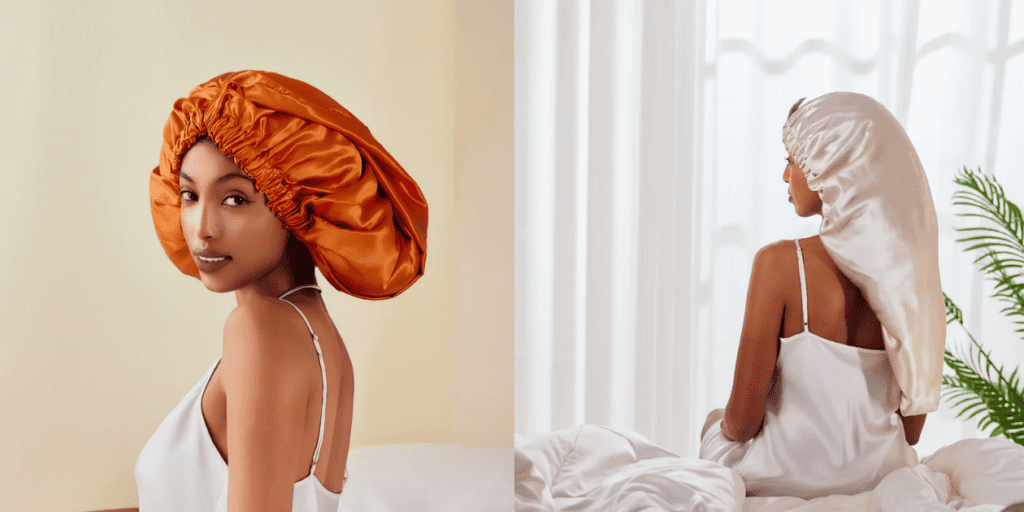
The Promeed silk bonnet is one we keep coming back to. It’s made from 23-momme 6A+ grade mulberry silk (a step above what most bonnets offer), and Promeed describes the interior as infused with hyaluronic acid.
What really sets it apart is the adjustable drawstring band. Instead of a one-size elastic that either squeezes your forehead or slides off while sleeping, you can customize the fit to your head. The adjustable band is designed to stay put without the tight elastic that causes marks and headaches.
It’s also OEKO-TEX Standard 100 certified (meaning the fabric is tested and free from harmful chemicals) and comes with a mesh laundry bag for easy washing.
What to Look for in a Quality Silk Pillowcase
The most important factors in a silk pillowcase are the fiber content, the momme weight, and the closure design.
When shopping for a silk pillowcase, look for:
- 22-momme mulberry silk for the best balance of smoothness, durability, and breathability
- A hidden zipper closure so the pillowcase stays in place and there are no exposed seams that can snag hair
- OEKO-TEX or similar certification to verify the silk is free from harmful chemicals
- Machine-washable construction so maintenance doesn’t become a burden
Top Pick: Blissy 22-Momme Mulberry Silk Pillowcase
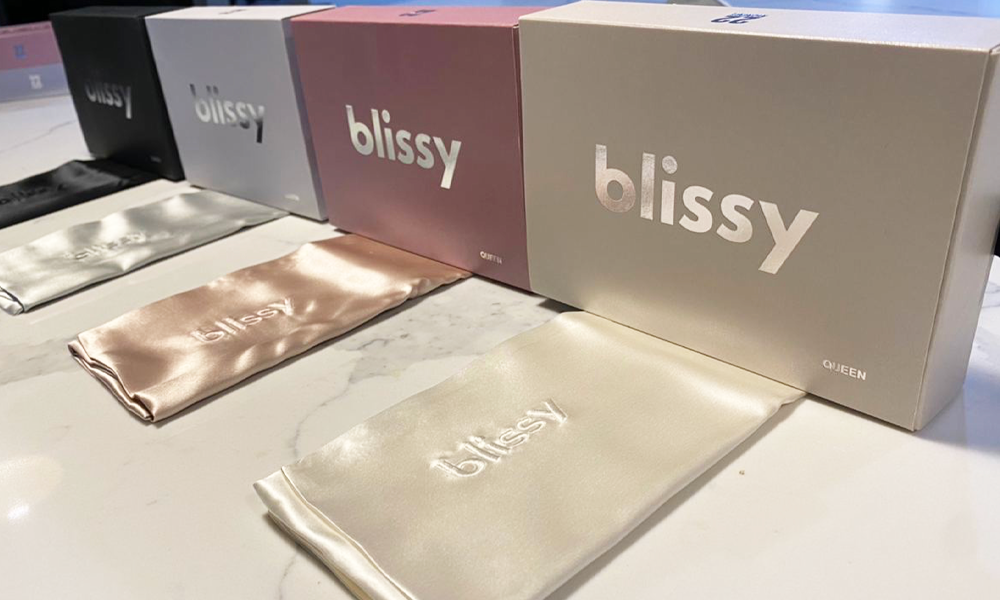
The Blissy silk pillowcase uses 22-momme, 6A grade 100% mulberry silk with a hidden zipper that keeps it snug on the pillow (no bunching, no slipping, no exposed seams catching on your hair).
It’s OEKO-TEX certified, machine washable on a gentle cycle, and available in a wide range of colors and sizes. Less frizz by morning is the change owners notice first. You can read our full Blissy silk pillowcase review here.
For anyone who wants a single swap that benefits both hair and skin overnight, this is an easy place to start.
How to Care for Silk Products So They Last
Silk does need a little more care than cotton, but it is not as complicated as it sounds. Here’s how to help it last.
Washing: Most quality silk pillowcases and caps can be machine washed on a gentle or delicate cycle with cold water. Use a mild, pH-neutral detergent. Avoid bleach and fabric softeners, which can break down silk fibers.
Drying: Air drying is ideal. If you use a dryer, choose the lowest heat setting. High heat damages silk’s protein structure and shortens its lifespan.
Frequency: Wash your silk pillowcase every one to two weeks (more often if you have oily skin or use heavy hair products). Wash your bonnet weekly too, since it holds hair oils and leave-ins.
With proper care, a quality silk pillowcase or sleep cap can last for several years.
Silk Sleeping Cap vs Silk Pillowcase: Which is Best for You?
A silk sleeping cap and a silk pillowcase help with related but different needs. If your main goal is to preserve curls and protect styles for textured or high-maintenance hair, a good silk bonnet is usually the better place to start.
The Promeed silk bonnet is our top pick for its 23-momme 6A+ silk, adjustable fit, and hyaluronic acid-infused interior.
If you want a simple upgrade that benefits both hair and skin, a 22 momme mulberry silk pillowcase is the easier starting point.
The Blissy silk pillowcase is our go-to for its quality, durability, and hidden zipper design.
And if you’re dealing with both hair and skin concerns (or your bonnet has a habit of slipping off at night), using both together may give you the best results.
Whatever you choose, the most important thing is the quality of the silk. Look for 100 percent mulberry silk, check the momme weight, and avoid polyester satin disguised as the real thing.
Silk Sleeping Cap Vs Silk Pillowcase: Frequently Asked Questions
Are silk bonnets better than silk pillowcases?
Silk bonnets provide full coverage and better protect curly or textured hair overnight. Silk pillowcases offer hair and skin benefits with more comfort and ease of use. The best choice depends on your hair type and sleep preferences.
How does a silk pillowcase benefit skin?
A silk pillowcase gives your face a smoother, gentler surface than cotton, which can mean fewer temporary pillow creases for side sleepers. It also absorbs less night cream. It doesn’t prevent wrinkles.
Can silk sleeping caps help with hair growth?
While silk sleeping caps don’t directly promote hair growth, they can help create an environment that’s conducive to healthy hair. By reducing friction and tangling overnight, they may help you keep more of the length you grow.
Are silk sleeping caps good for curly hair?
Yes, silk sleeping caps are excellent for curly hair. They help maintain curl definition, and reduce frizz by keeping curls gathered overnight.
How often should I wash my silk pillowcase?
It’s recommended to wash your silk pillowcase once a week to remove oil, sweat, and product buildup. However, if you have oily skin or hair, you might want to wash it more frequently.
Can men use silk sleeping caps?
Absolutely! Silk sleeping caps can benefit anyone looking to protect their hair, regardless of gender.
Do silk pillowcases really help with acne?
There’s no evidence silk pillowcases prevent or treat acne. Some people find silk gentler on their skin, while others break out more if oils build up on the surface. Washing your pillowcase often helps acne-prone skin more than the fabric does.
How long do silk pillowcases typically last?
With proper care, a high-quality silk pillowcase can last for several years. However, the lifespan can vary depending on factors like frequency of use, washing habits, and overall care.
Can silk sleeping caps help with hair breakage?
Yes, silk sleeping caps can help to reduce hair breakage. By minimizing friction and keeping hair contained, they may help reduce the tangling and rubbing that can lead to breakage, especially for people who have fragile or processed hair.
Are there choices to silk for sleeping caps and pillowcases?
Yes, satin is a common choice to silk. While not a natural fiber like silk, high-quality satin can provide many similar benefits at a lower cost. Some people also use bamboo fabric, which has natural moisture-wicking properties.
Disclaimer: Silk bonnets and pillowcases are not intended to diagnose, treat or prevent hair loss or any skin or scalp condition, and individual results vary.

Sleep Essentials Hub is a sleep blog for readers who want helpful sleep guides and honest product recommendations. We’re passionate about better rest, with a focus on pillows and bedding, sleep aids, sleep apnea and CPAP gear, natural sleep supplements, sleep tech, and simple ways to improve your sleep environment. We’re here to help you choose products that support deeper sleep, greater comfort, and a better night’s rest without overspending.